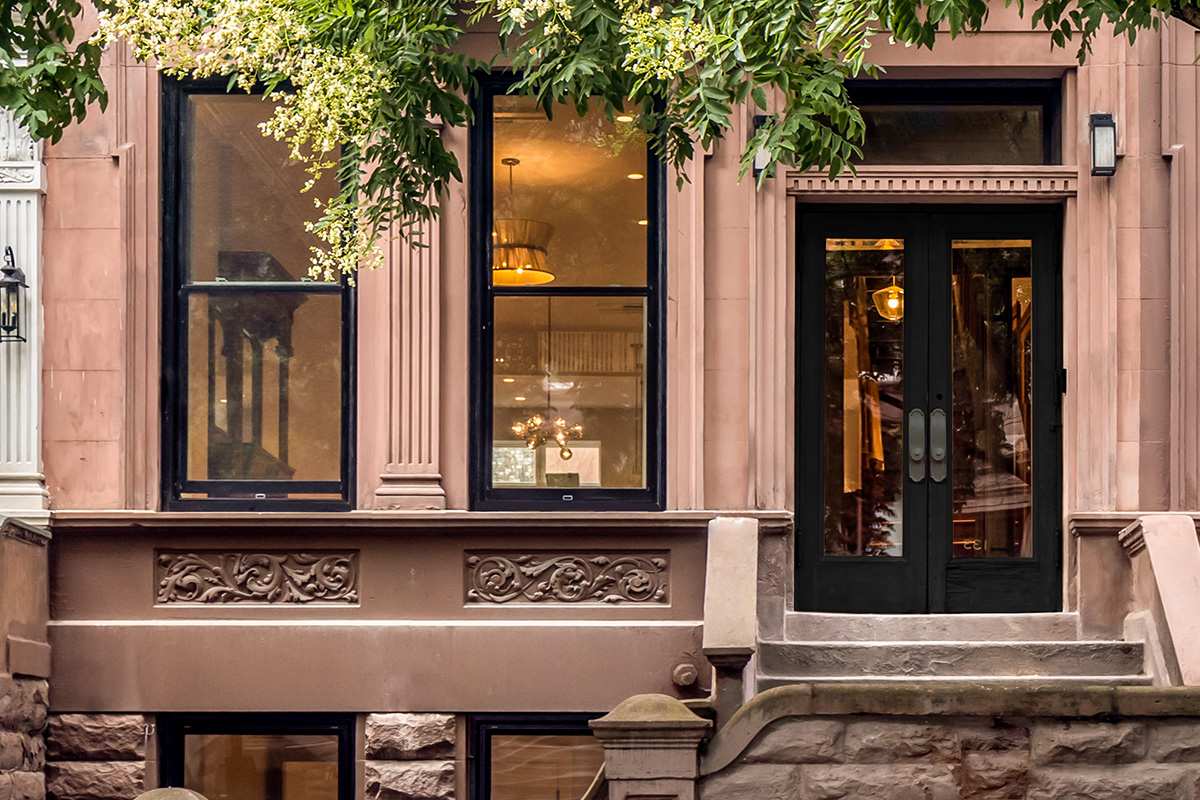
Brownstone renovations in Harlem require a comprehensive architectural strategy that balances historic preservation with modern residential design. Many Harlem townhouses were built in the late 19th and early 20th centuries and present a mix of aging infrastructure, landmark considerations, and complex existing layouts. A successful renovation begins with a clear evaluation of the property and a defined plan to adapt the home for contemporary living.
A Harlem brownstone renovation typically involves full architectural coordination, including approvals from the New York City Landmarks Preservation Commission (LPC), filings with the New York City Department of Buildings (DOB), structural upgrades, and a complete interior reconfiguration. The goal is to transform an outdated or altered building into a cohesive, high-performing single-family residence.
I am Jorge Fontan, owner of Fontan Architecture, a New York City–based architecture firm specializing in high-end townhouse renovations. Our work focuses on aligning design decisions with each client’s lifestyle while navigating zoning, landmark regulations, and construction execution. Every project is developed as a tailored solution, with careful attention to proportion, materials, and long-term performance.
Table of Contents
Fully Renovated Harlem Brownstone Video Walkthrough
This video walkthrough presents the completed brownstone renovation, including the spatial organization, architectural detailing, and key design decisions that shaped the project. The walkthrough provides a clear understanding of how the house was transformed from an SRO configuration into a unified single-family residence.
Brownstone Renovation Project Overview
This Harlem brownstone was originally constructed in the late 1800s as a single-family residence and later converted into a Single Room Occupancy (SRO) building in the mid-20th century. Like many properties in Harlem, the building had undergone multiple alterations over time, resulting in a fragmented layout and outdated systems.
We were brought in early to evaluate the property prior to closing and establish a clear path forward. The scope included a full gut renovation, legal conversion from SRO to single-family use, restoration of select historic features, and the addition of new architectural elements.
Early involvement allowed us to coordinate feasibility, design, and approvals from the outset, ensuring that the project aligned with both regulatory requirements and the client’s goals.
For additional guidance, see our article on Consulting With an Architect Before Buying a Townhouse in NYC.
Permits and Approvals
Many Harlem brownstones are located within historic districts, requiring review by the Landmarks Preservation Commission. Any work affecting the exterior—including windows, doors, or rooftop additions—must be carefully designed and documented for approval.
We developed proposals that met LPC guidelines while supporting the overall design intent of the project. This included detailed drawings, material specifications, and coordination throughout the review process.
At the same time, we filed with the Department of Buildings for a change of use, structural work, and a new Certificate of Occupancy. Converting an SRO to a single-family home requires thorough documentation and careful sequencing to ensure compliance.
Evaluating Existing Conditions
A detailed assessment of existing conditions is critical in any Harlem brownstone renovation. These buildings often include a combination of deteriorated systems, structural challenges, and original architectural elements worth preserving.
In this project, we identified which components required full replacement and which could be restored. The original staircase, wood banisters, paneling, and decorative features were preserved as key elements of the home’s character.
During construction, these features were protected, repaired, and refinished. This approach maintains the architectural integrity of the brownstone while integrating new work seamlessly.
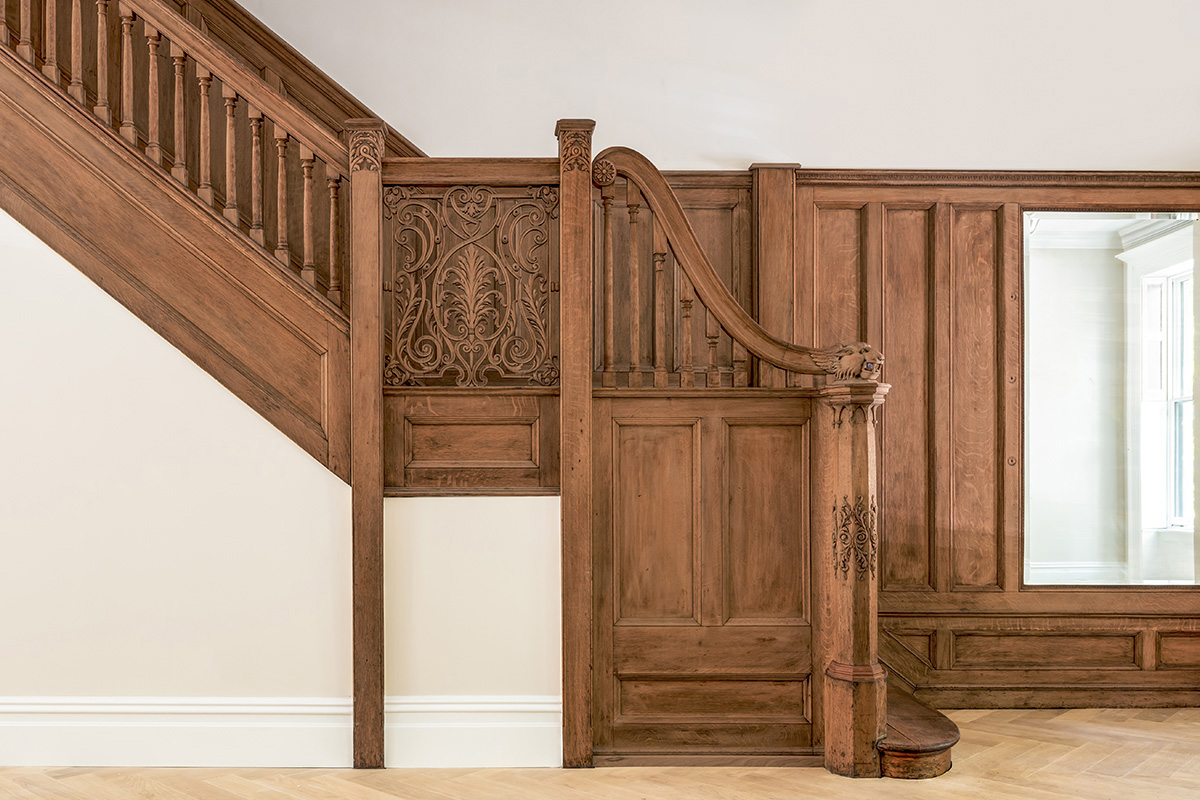
Restored Stair and Banister in a Brownstone
Window Replacement in a Landmark Property
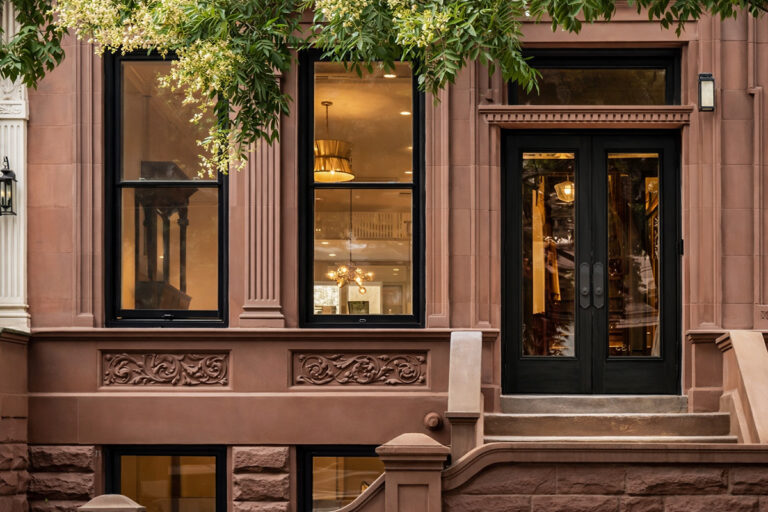
The existing windows were beyond their service life and required replacement. Because the façade is part of a historic district, the new windows needed to match the proportions and detailing of the original design.
We developed a window package that satisfied LPC requirements while improving performance and durability. This ensures the exterior remains consistent with the historic streetscape while enhancing the building envelope.
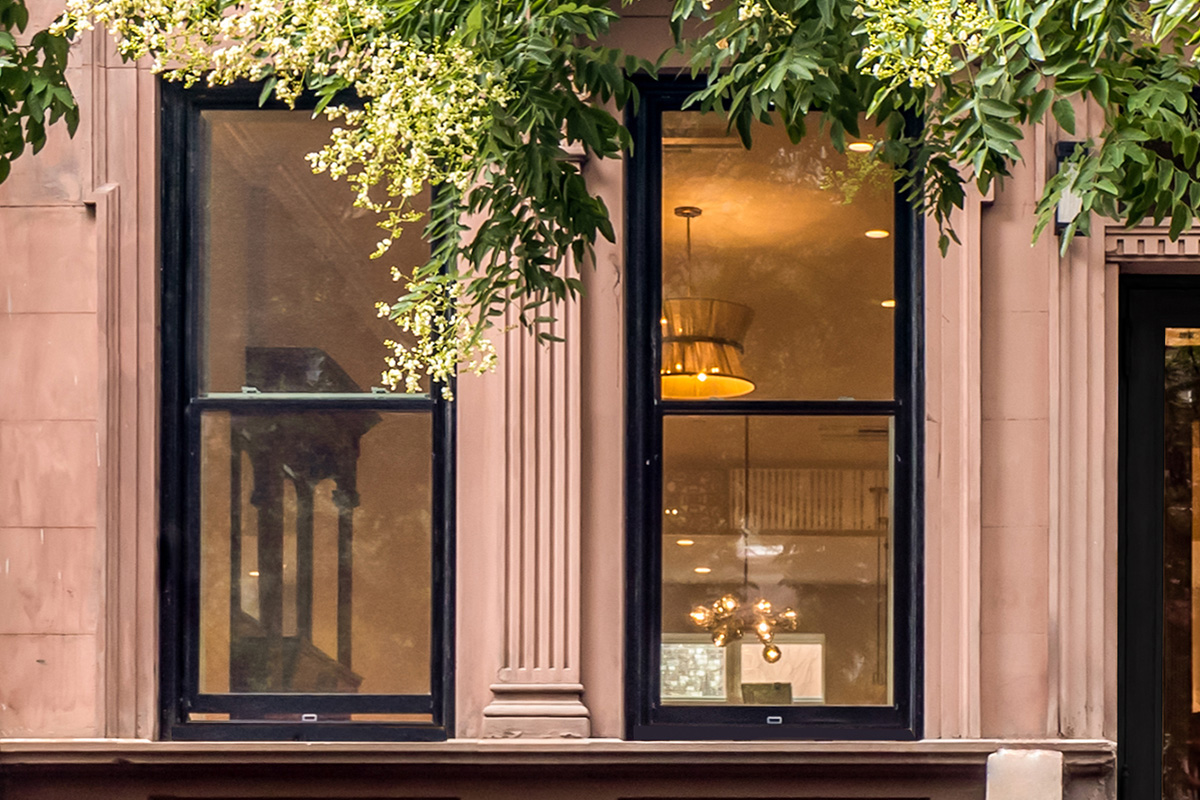
Landmark Brownstone with New Replacement Windows
Kitchen Design in a Harlem Brownstone
The kitchen was located on the parlor floor, which serves as the primary living and entertaining level. We positioned the kitchen toward the rear, where we introduced larger openings for natural light and direct access to the outdoor deck.
The design focuses on circulation, proportion, and integration with adjacent spaces. In larger Harlem brownstones, the kitchen often functions as a central gathering space, making layout and scale critical to the success of the renovation.
Material selections and detailing were coordinated with the overall architectural language to create a cohesive interior.
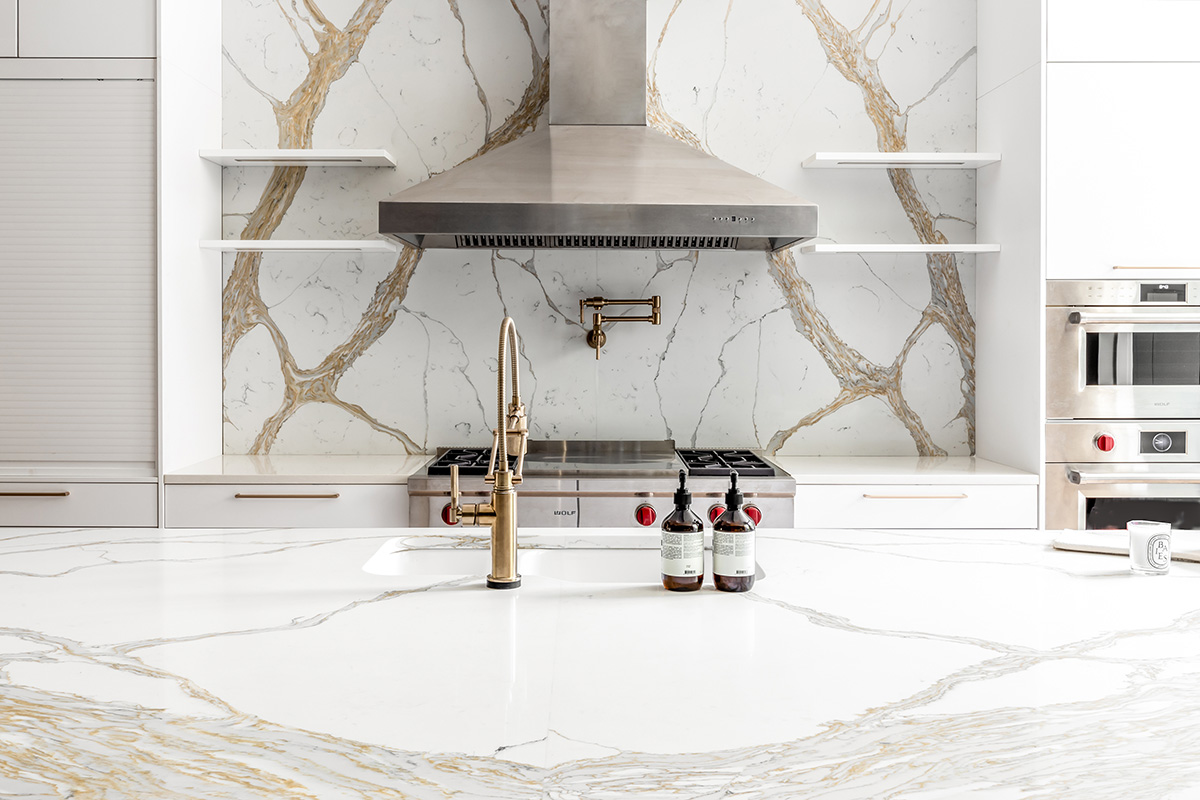
Brownstone Kitchen Redesign
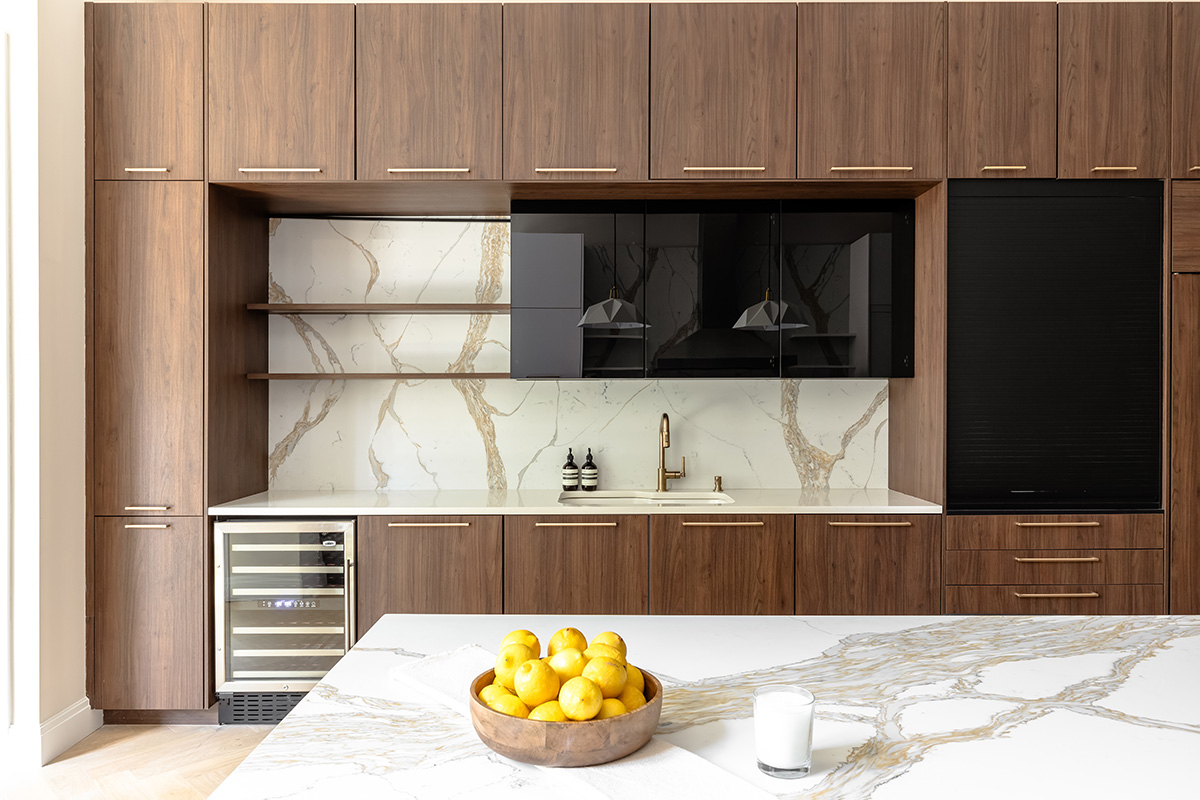
New Kitchen in a Manhattan Townhouse (Harlem)
Primary Bathroom Design
The primary bathroom was designed to reflect the scale and quality of the residence. The layout provides clear organization, generous spacing, and balanced proportions.
Materials and finishes were selected for durability and refinement, creating a space that aligns with the broader design intent. In high-end brownstone renovations, bathrooms are treated with the same level of consideration as primary living areas.
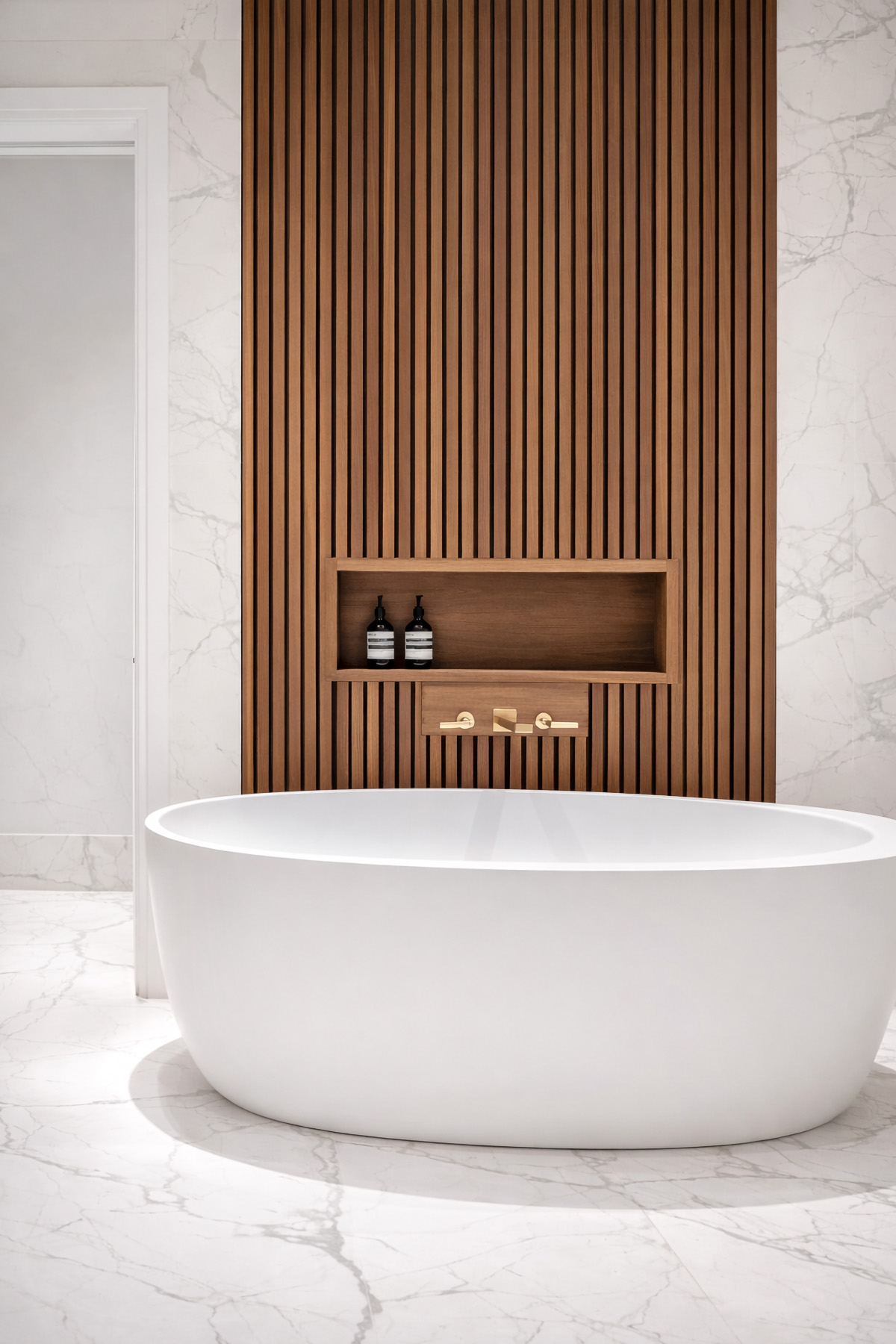
Modern Brownstone Bathroom with Free Standing Tub
Powder Room Integration
A new powder room was introduced on the parlor floor to support entertaining and improve functionality. Its placement was carefully coordinated within the existing structure to maintain efficient circulation.
We incorporated reclaimed wood paneling from another part of the house as wainscoting, preserving historic material while giving it new purpose. This creates continuity with the original architecture while adding texture and depth.
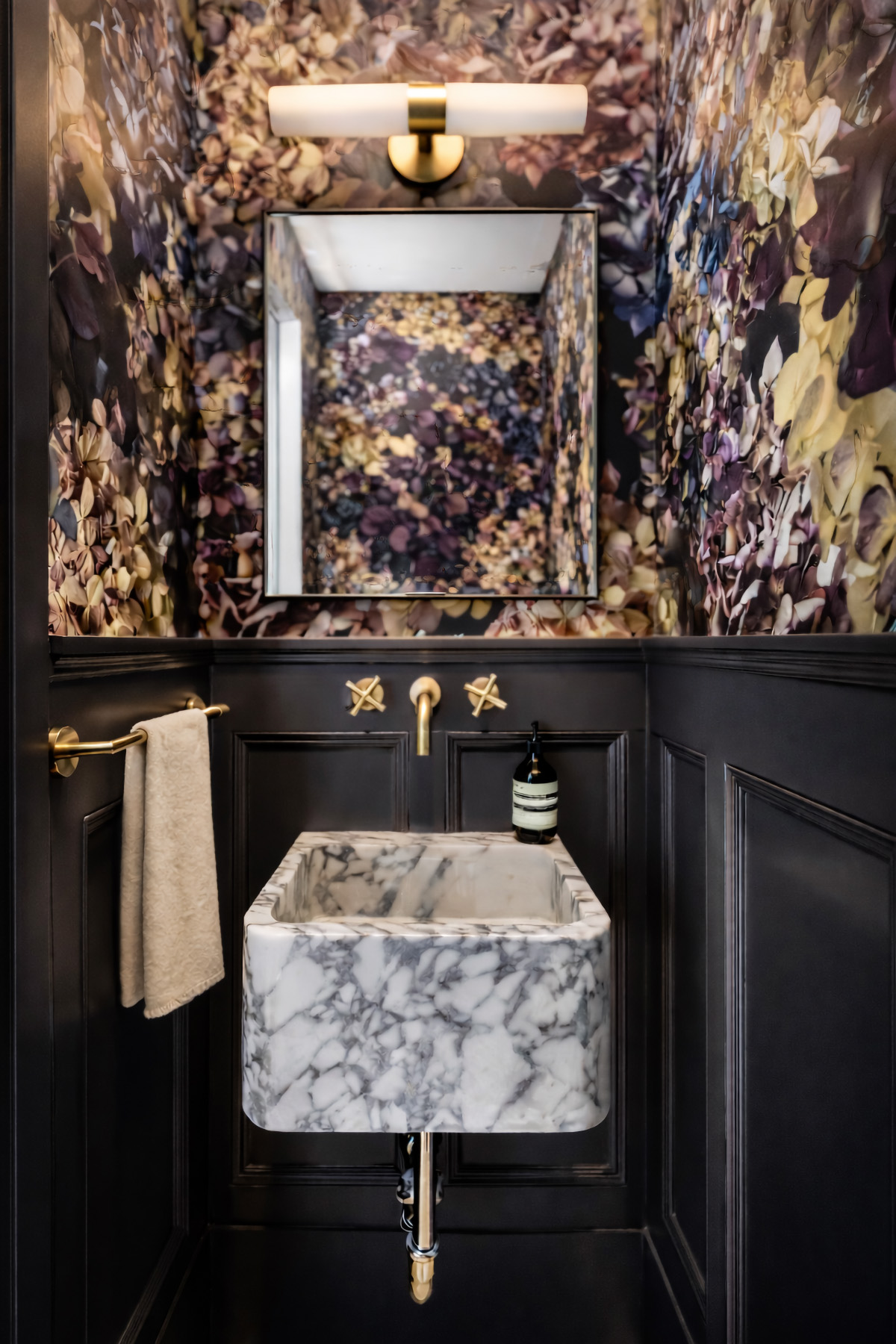
Brownstone Powder Room with Reclaimed Wood Paneling
Roof Deck and Outdoor Space
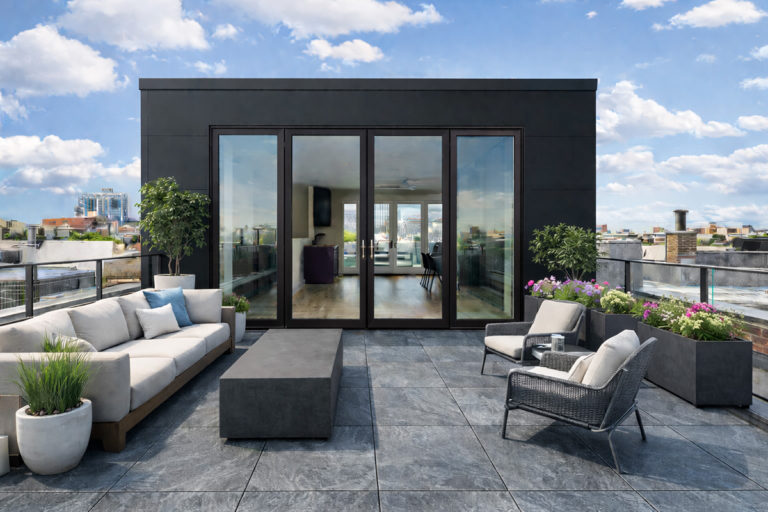
We designed a roof deck to extend the living space and provide a private outdoor environment. Rooftop additions in Harlem must comply with zoning regulations and, where applicable, LPC visibility requirements.
The roof deck functions as an extension of the home, supporting both daily use and entertaining. Well-designed outdoor space significantly enhances the value and usability of a townhouse.
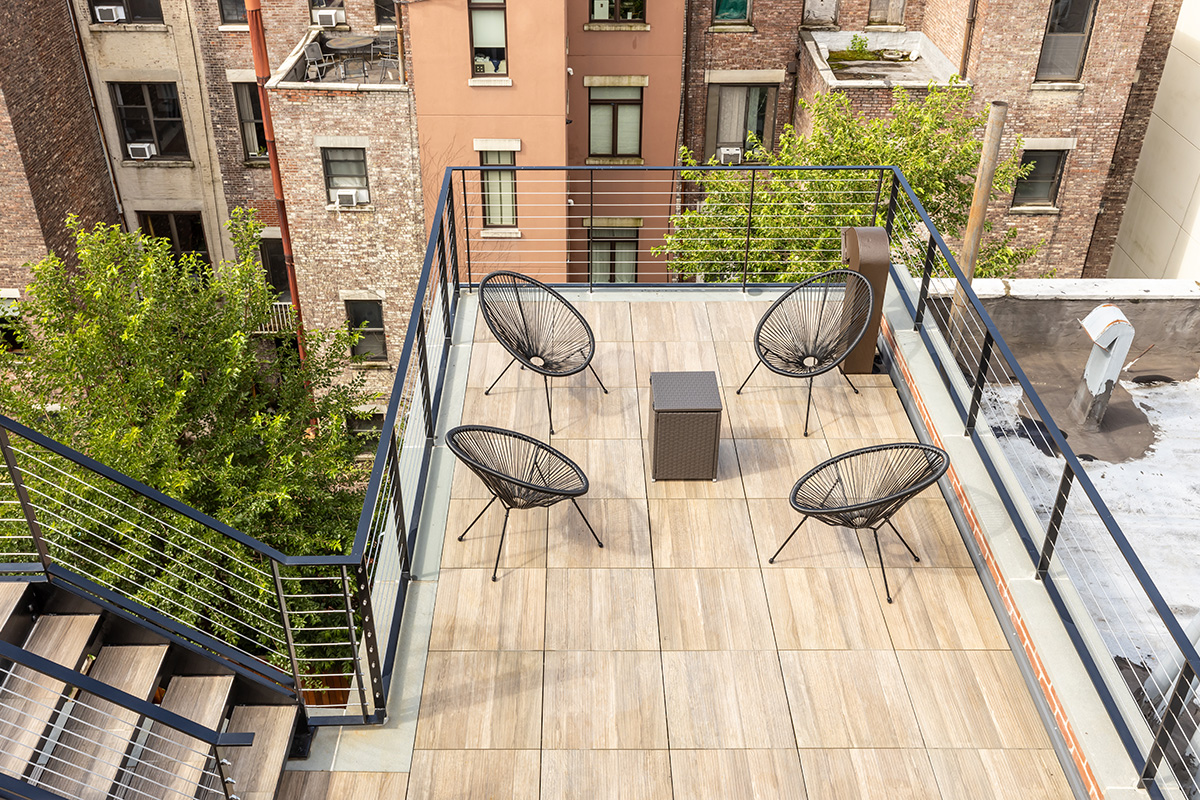
New Manhattan Roof Deck
Transforming a Historic Harlem Brownstone
A successful Harlem brownstone renovation requires a holistic architectural approach. The process integrates preservation, structural upgrades, regulatory approvals, and modern design to create a cohesive home.
This project demonstrates how a former SRO can be transformed into a unified single-family residence through careful planning and execution. Restored historic elements combined with new interventions create a balanced, high-performing home tailored to contemporary living.
In Harlem, the quality of a renovation is defined by how well new work integrates with the original structure. The objective is to create a home that feels cohesive, intentional, and aligned with both its history and the owner’s needs.
To learn more you can see our related article on Renovating a Brownstone in New York City: Planning, Preservation, and Modernization.
At Fontan Architecture, we specialize in brownstone renovations throughout Harlem and New York City. We guide clients through the full process—from feasibility and design to approvals and construction—with a focus on precision and execution.
If you are planning a brownstone renovation, we can help you develop a clear architectural strategy tailored to your property and goals.
Request a Consultation with Fontan Architecture - 212 321 0194
Jorge Fontan, AIA, is an architect and founder of Fontan Architecture based in New York City. The firm focuses on residential design, including new homes and extensive renovations for discerning clients. Through collaborative dialogue that draws on the individuality of each client, projects develop as distinct architectural responses guided by thoughtful planning, precise detailing, and a commitment to creating enduring value.
Jorge Fontan, AIA, is an architect and founder of Fontan Architecture based in New York City. The firm focuses on residential design, including new homes and extensive renovations for discerning clients. Through collaborative dialogue that draws on the individuality of each client, projects develop as distinct architectural responses guided by thoughtful planning, precise detailing, and a commitment to creating enduring value.