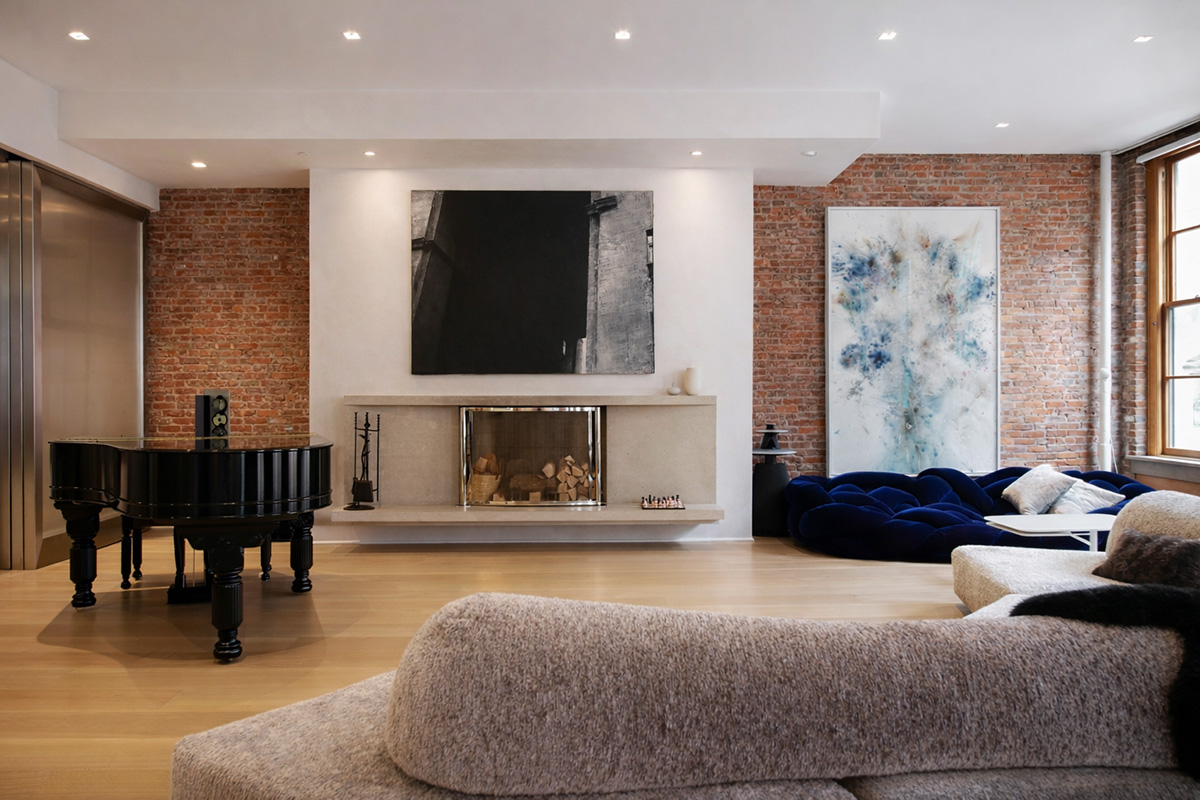
Many of New York City’s most iconic loft apartments were never intended to be homes. Originally constructed as commercial and manufacturing buildings, these spaces were informally occupied by artists seeking large, affordable studios in neighborhoods like SoHo and NoHo.
In response, New York City established a legal framework in the 1980s to protect these occupants and formalize residential use. The result was the designation known as Joint Live-Work Quarters for Artists (JLWQA), codified under Use Group 17D of the New York City Zoning Resolution. This classification allowed artists to legally reside in converted manufacturing lofts, provided buildings were brought into compliance with residential code requirements.
Today, JLWQA remains a unique zoning and occupancy designation that continues to shape how loft buildings are renovated, purchased, and occupied in certain areas of NYC.
I am Jorge Fontan, a New York architect and owner of Fontan Architecture. Our office has renovated numerous lofts throughout the city. In this article, I will explain what JLWQA means and how it affects loft ownership and renovation.
Table of Contents
SoHo and NoHo Rezoning
With the approval of the SoHo–NoHo Rezoning Plan, significant changes were made to the regulatory framework governing loft buildings in these neighborhoods. Historically, properties located in M1-5A and M1-5B zoning districts required a Joint Live-Work Quarters for Artists (JLWQA) designation for legal residential occupancy.
Under the updated zoning regulations, many of these buildings may now qualify for broader residential use, allowing owners to remove the artist certification requirement in certain circumstances. This shift has meaningful implications for property value, marketability, and long-term flexibility.
If you are considering converting a JLWQA loft to standard residential use, I have written a separate article explaining the process and regulatory considerations in more detail:
Converting JLWQA Artist Lofts to Residential in SoHo and NoHo.
How to Qualify for Joint Live-Work Quarters for Artists
The Joint Live-Work Quarters for Artists (JLWQA) designation was created specifically for certified artists. To legally occupy a JLWQA loft, an individual must generally obtain artist certification through the New York City Department of Cultural Affairs.
The Zoning Resolution also permits occupancy by “any person entitled to occupancy by any other provision of law.” This language is intentionally broad and can apply in limited circumstances, such as succession rights or other legally recognized occupancy claims. Because these situations are highly fact-specific, it is advisable to consult a qualified housing attorney if you believe you may qualify under this provision.
Codes for JLWQA Lofts
The New York City Multiple Dwelling Law contains specific provisions for Joint Live-Work Quarters for Artists (JLWQA). While these regulations provide some flexibility compared to standard residential apartments, they also impose unique constraints that influence how lofts can be designed and renovated.
Below are several key requirements that commonly affect layout and architectural planning.
Fire Separation
Each dwelling unit must be separated from adjacent units by fire-rated wall assemblies. However, no fire separation is required between the living and working areas within a single JLWQA unit.
This distinction preserves the open character historically associated with artist lofts, allowing expansive, uninterrupted interior spaces. At the same time, perimeter separations between units must meet strict fire-resistance standards, which can affect wall thickness and detailing during renovation.
Light and Air Requirements
Natural light requirements are a defining factor in loft planning.
Windows may not be located within five feet of a rear lot line. In addition, habitable rooms must meet minimum window area requirements:
-
Rooms under 500 square feet must have window area equal to at least 10% of the floor area.
-
For rooms over 500 square feet, the required percentage may decrease incrementally to a minimum of 5%.
-
At least half of the required window area must be operable.
These requirements directly influence room placement. In many loft renovations, enclosed bedrooms are carefully positioned to maintain legal light and air compliance while preserving the openness of the primary living space.
Kitchens in JLWQA Lofts
Kitchens larger than 80 square feet must have windows. Smaller kitchens (under 80 square feet) may be vented mechanically.
An open kitchen is considered part of the adjoining space if it is at least 40% open, which can provide greater flexibility in layout design.
Because lofts are often deep floor plates with limited window frontage, kitchen placement requires careful coordination between code compliance and spatial composition.
Doors and Egress
Doors leading to public corridors must be fire-rated and equipped with self-closing hardware.
In addition, no more than two dwelling units may open directly onto a standard stair without an intervening enclosed hallway, which must be fire-rated.
These egress requirements can affect how common areas are configured within smaller loft buildings and may influence the feasibility of subdividing existing units.
NYC Lofts and JLWQA
Not all New York City lofts are designated as Joint Live-Work Quarters for Artists (JLWQA), but every JLWQA unit is, by definition, a loft within a converted commercial or manufacturing building.
Because the term “loft” is often used informally in real estate marketing, the most reliable way to determine a unit’s legal designation is to review the building’s Certificate of Occupancy. The Certificate of Occupancy will identify the permitted use classification for each unit within the building.
Zoning Use Group for JLWQA
Joint Live-Work Quarters for Artists are classified under Use Group 17D of the New York City Zoning Resolution.
If a building’s Certificate of Occupancy lists Use Group 17D for residential units, those units are legally designated as JLWQA.
Understanding this distinction is essential for buyers and owners, as JLWQA status affects occupancy requirements, renovation strategy, and potential future conversion.
Below is an example of a Certificate of Occupancy for a loft building in SoHo showing the JLWQA designation.
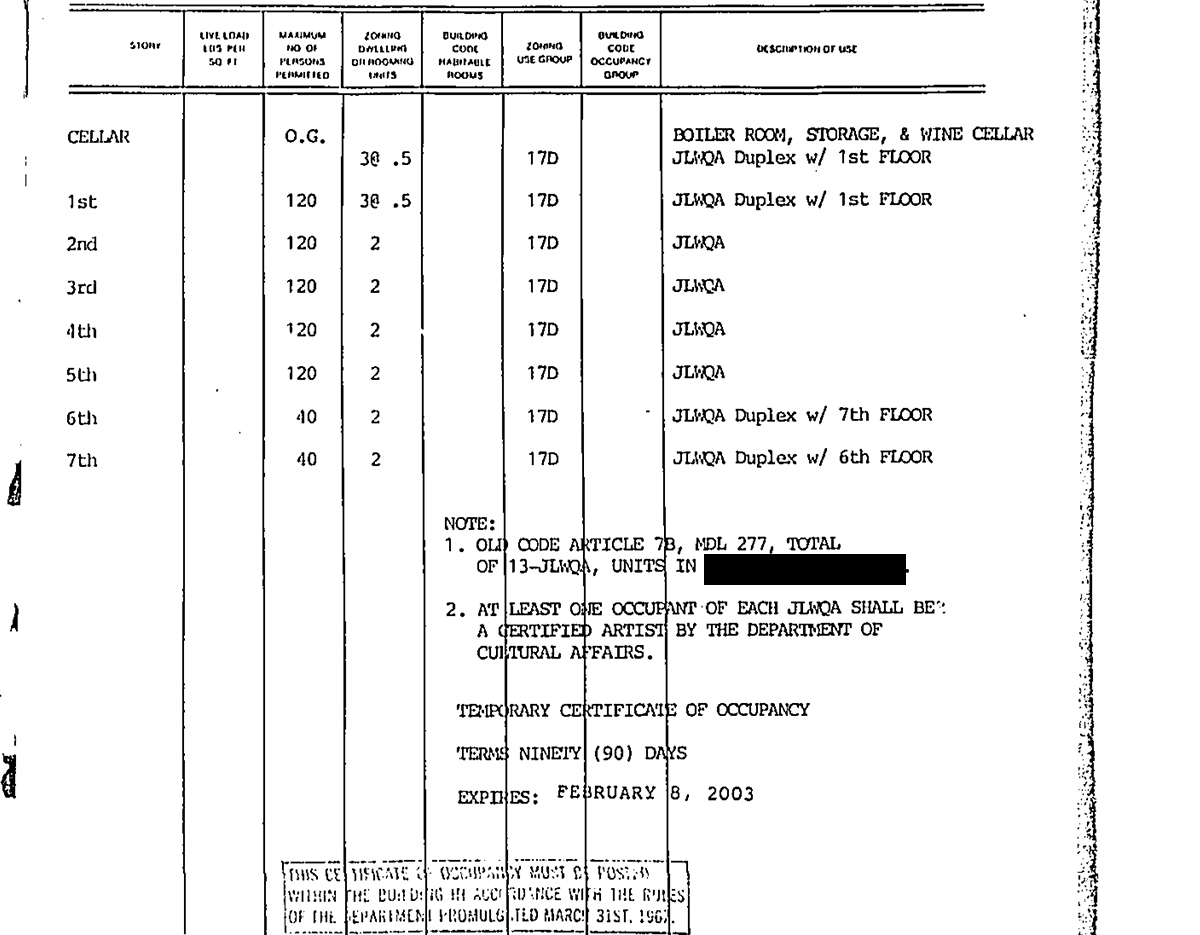
JLWQA Loft Certificate of Occupancy
Joint Live-Work Quarters for Artists
Not all lofts in New York City are designated as Joint Live-Work Quarters for Artists, and the distinction carries meaningful legal and design implications. Before purchasing or renovating a loft, it is important to understand the building’s Certificate of Occupancy, zoning classification, and occupancy restrictions.
Fontan Architecture is a New York–based firm specializing in high-end loft and residential renovations. We advise clients from early property evaluation and feasibility analysis through architectural design, regulatory approvals, and construction oversight.
If you are considering a loft renovation in New York City and value a thoughtful, detail-driven architectural approach, we would welcome the opportunity to discuss your project.
Request a Consultation with Fontan Architecture - 212 321 0194
Jorge Fontan, AIA, is an architect and founder of Fontan Architecture based in New York City. The firm focuses on residential design, including new homes and extensive renovations for discerning clients. Through collaborative dialogue that draws on the individuality of each client, projects develop as distinct architectural responses guided by thoughtful planning, precise detailing, and a commitment to creating enduring value.
Jorge Fontan, AIA, is an architect and founder of Fontan Architecture based in New York City. The firm focuses on residential design, including new homes and extensive renovations for discerning clients. Through collaborative dialogue that draws on the individuality of each client, projects develop as distinct architectural responses guided by thoughtful planning, precise detailing, and a commitment to creating enduring value.