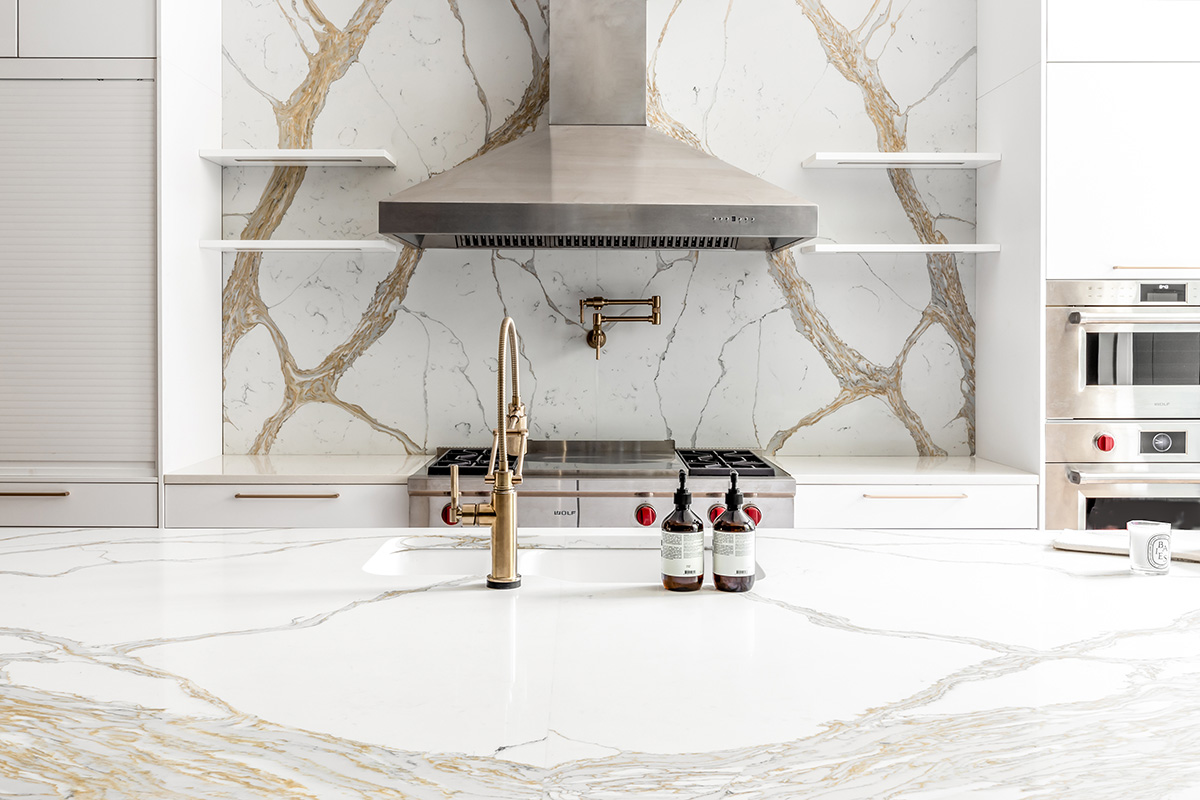
Designing a kitchen is about more than selecting cabinets and appliances. It is about composing a space that balances performance, proportion, and material expression. Every decision — from millwork detailing to appliance integration — contributes to how the kitchen functions and how it feels.
I am Jorge Fontan, AIA, a New York architect and founder of Fontan Architecture, a Manhattan-based firm specializing in high-end residential design. In this article, I will review modern kitchen design ideas using examples from our projects, highlighting both practical considerations and the design principles behind them.
Table of Contents
Maximize the Kitchen
When space allows, we prioritize creating a generous, well-proportioned kitchen anchored by a substantial island. A larger footprint allows for proper circulation, dedicated work zones, and comfortable seating without compromising efficiency. In high-end homes, the kitchen is often the primary gathering space, so scale and layout are critical to both performance and presence.
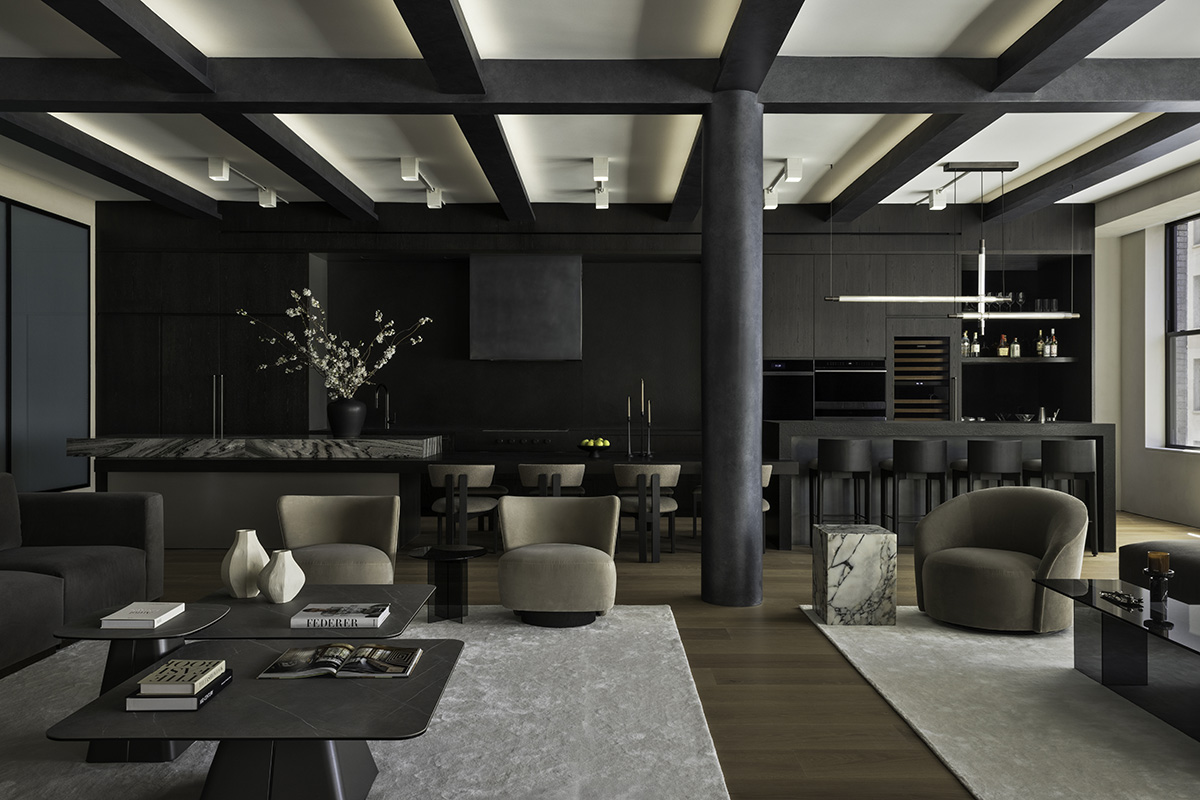
custom-40-foot-long-kitchen-in-a-manhattan-loft
Marble Slab Backsplash
The backsplash plays an important role in the overall composition of a kitchen. Using a full marble slab creates material continuity and eliminates grout lines, resulting in a clean, uninterrupted surface. When properly detailed, a single slab introduces subtle veining and texture without visual clutter. This approach works particularly well in modern kitchens where restraint and precision are key to achieving a refined result.
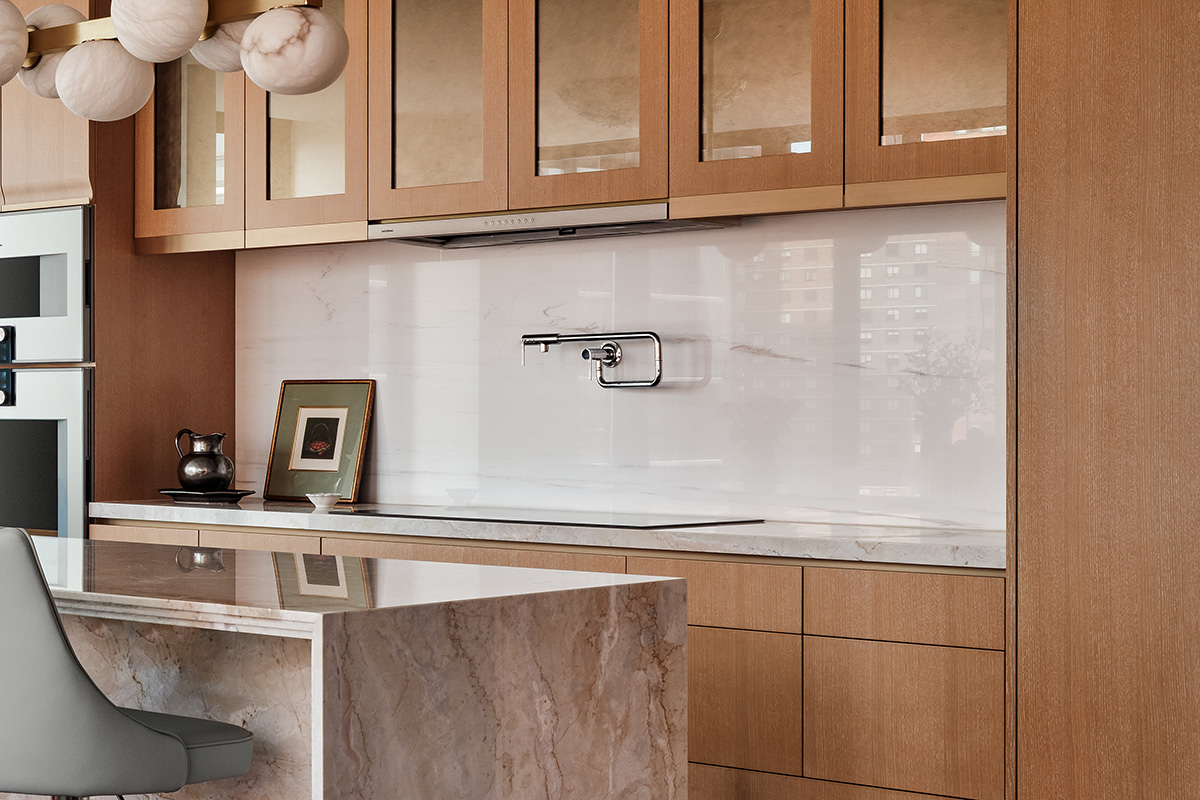
Marble Slab Backsplash
Second Row of Upper Cabinets
In kitchens with generous ceiling heights, introducing a second tier of upper cabinetry can enhance both storage capacity and vertical proportion. Extending millwork upward creates a more architectural composition while reducing visual gaps above the cabinets. The upper tier is well suited for infrequently used items, allowing the primary cabinetry to remain streamlined and uncluttered.
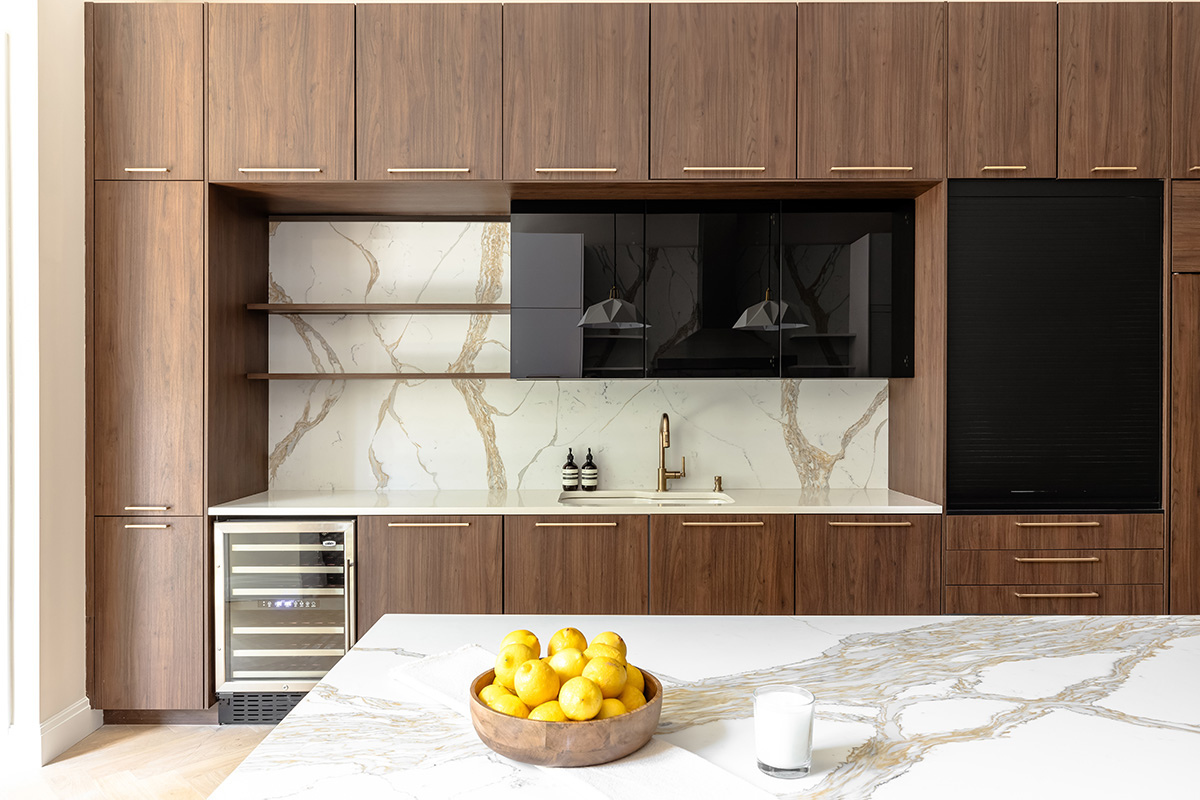
Kitchen with Upper Cabinets in an NYC Brownstone
Pot Filler
A pot filler is a secondary wall-mounted faucet typically installed above the cooktop. Although not necessary in every kitchen, it can enhance convenience by allowing water to be filled directly at the stove, eliminating the need to carry heavy pots across the kitchen. In larger kitchens where the sink and range are separated by distance, this feature can improve workflow while maintaining a streamlined layout.
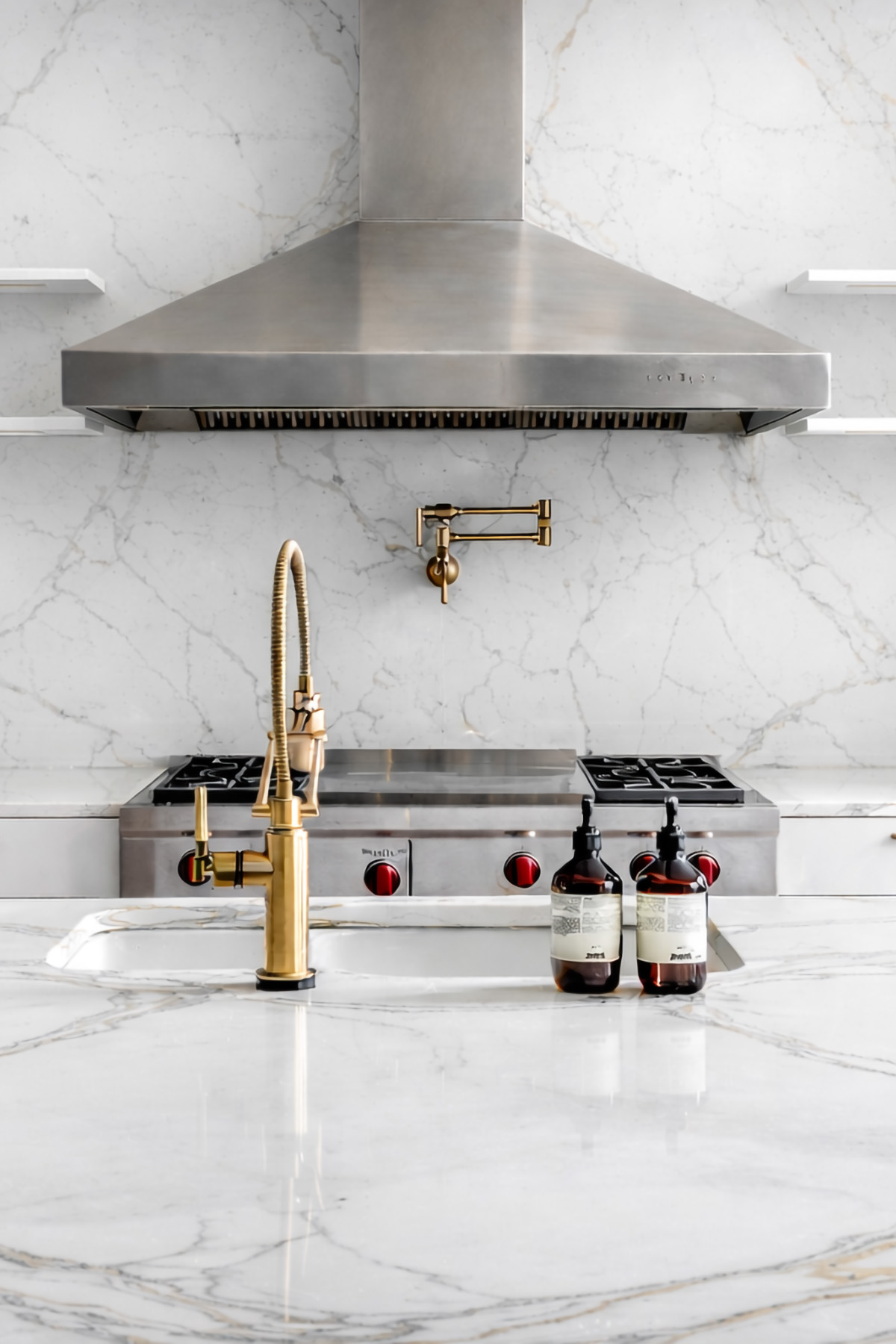
Pot Filler
Kitchen Counter Bar Seating
Incorporating counter seating at a kitchen island can transform the space into a social hub. A properly designed overhang allows for comfortable seating while maintaining adequate circulation around the island. Careful attention to depth, leg clearance, and stool selection ensures the seating feels intentional rather than improvised. When proportioned correctly, island seating supports casual dining, conversation, and entertaining without compromising workspace efficiency.
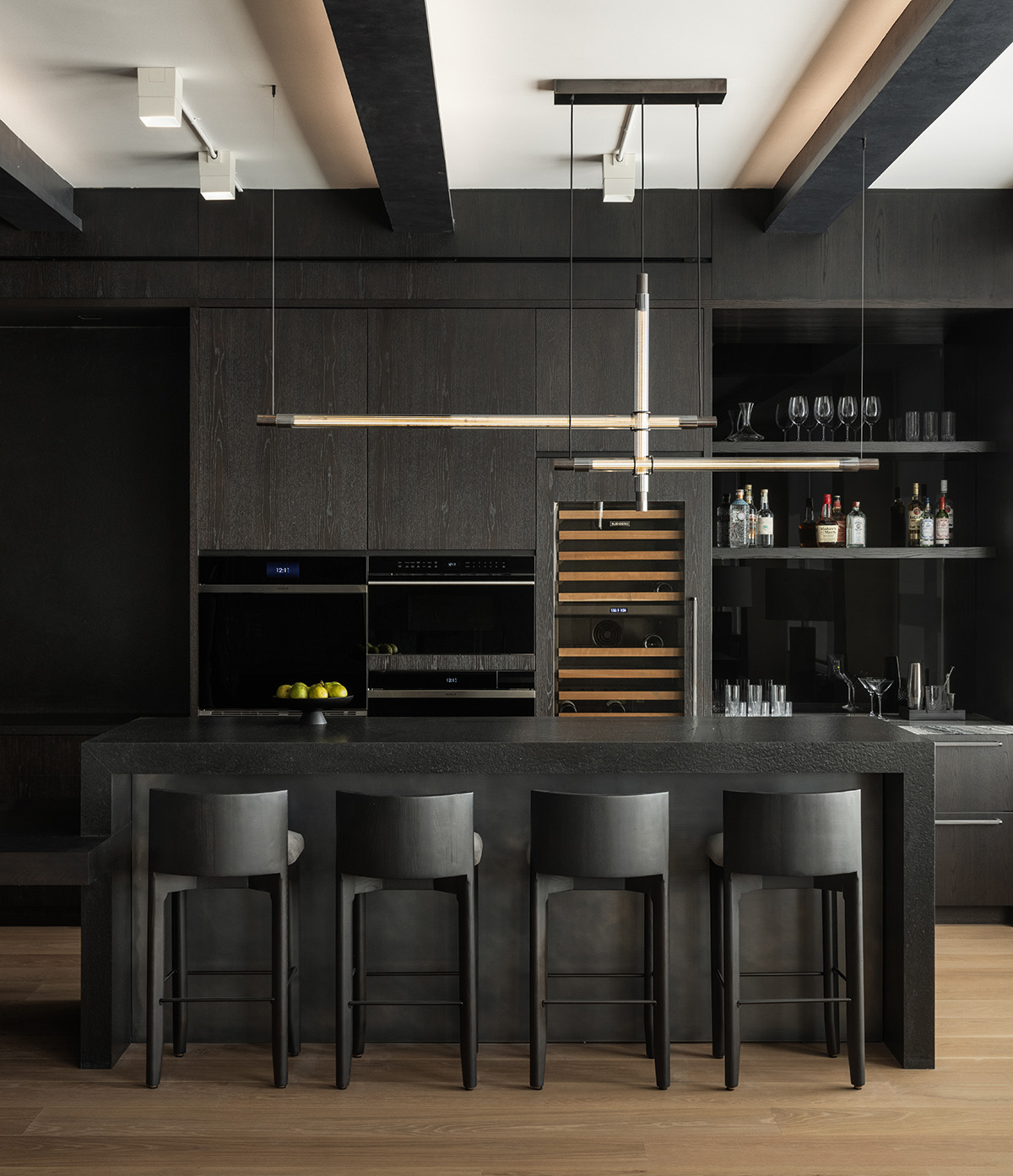
Kitchen Island with Bar Stool Seating in NYC
Unique Fixtures
Fixtures are small elements with a large impact on a kitchen’s overall composition. Faucets, cabinet hardware, and lighting should be selected as a coordinated system rather than as isolated pieces. Finish, profile, and scale must align with the cabinetry and material palette to create a cohesive result. When thoughtfully specified, fixtures reinforce the design language of the space rather than competing with it.
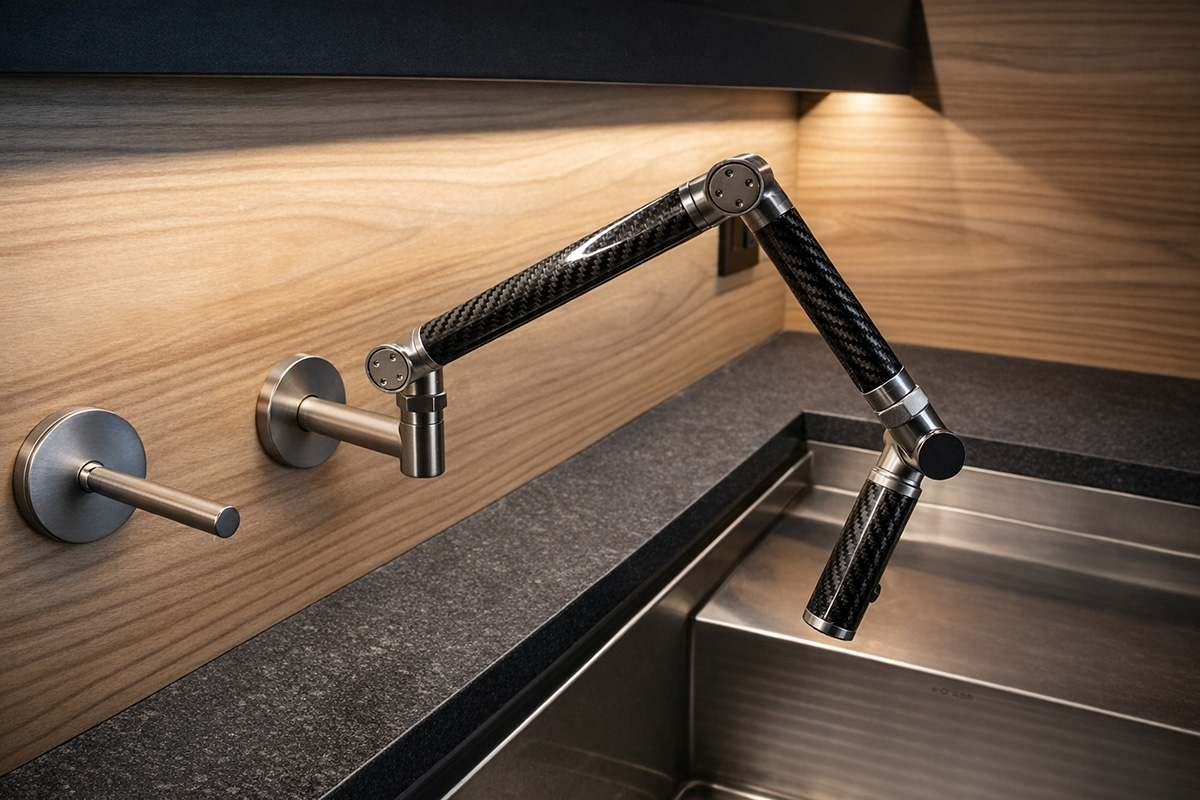
Modern Industrial Kitchen Faucet Design in a Manhattan Loft
Wall Ovens
Wall ovens are often preferable in contemporary kitchen design because they improve ergonomics and allow the appliance to be positioned at a comfortable working height. Integrating ovens into a dedicated appliance wall creates a cleaner composition and frees up space below the cooktop for storage. When carefully aligned within custom millwork, wall ovens contribute to a more balanced and intentional layout.

Wall Ovens
Open Kitchen Design
Opening a kitchen to adjacent living or dining areas can dramatically transform the spatial experience of a home. By removing visual and physical barriers, the kitchen becomes integrated into the larger architectural composition rather than functioning as an isolated room. Careful planning is essential to maintain clear circulation paths, balanced proportions, and cohesive material transitions throughout the space.
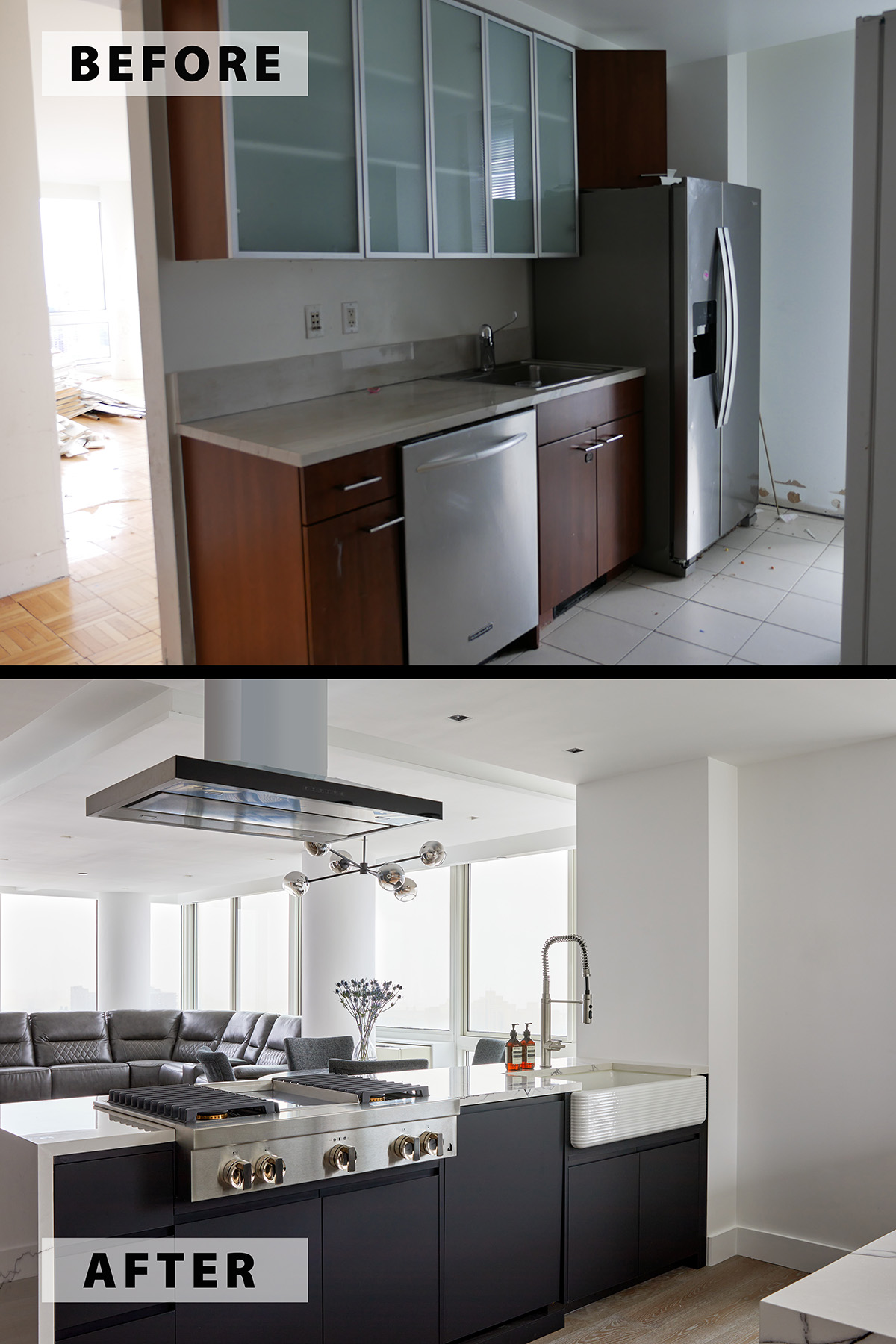
Opening a Kitchen in Manhattan before and after
Kitchen Island
The kitchen island often serves as the visual and functional anchor of the space. Its size, proportion, and placement must be carefully considered to ensure proper circulation and efficient workflow. In open-plan homes, the island frequently becomes the primary gathering point, making scale and detailing especially important.
When designing an island, several key decisions shape the final result:
- Whether to integrate appliances or maintain a clean work surface
- Placement of a primary or secondary sink
- Incorporating seating and determining appropriate overhang depth
- Establishing a single plane or introducing varied countertop heights
- Selecting a waterfall edge or exposed panel detailing
- Determining whether the island blends with or contrasts against the perimeter cabinetry
- Ensuring proper clearance on all sides for comfortable circulation
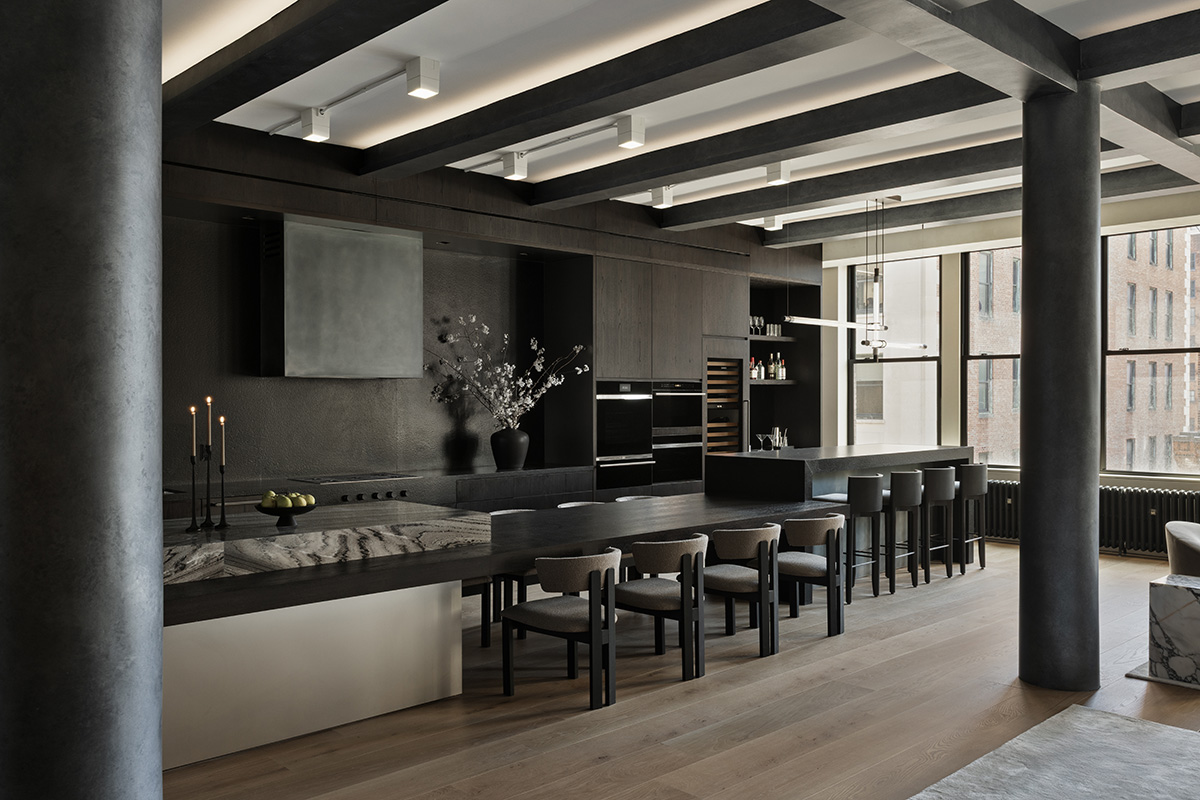
Custom NYC Kitchen Design With Island
Waterfall Countertop
In modern kitchen design, a waterfall edge extends the countertop material down the side of an island or peninsula, creating a continuous architectural surface. When executed in natural stone, careful slab selection and bookmatching can align veining to reinforce material continuity. The result is a clean, monolithic form that emphasizes precision and proportion while protecting the cabinetry below.
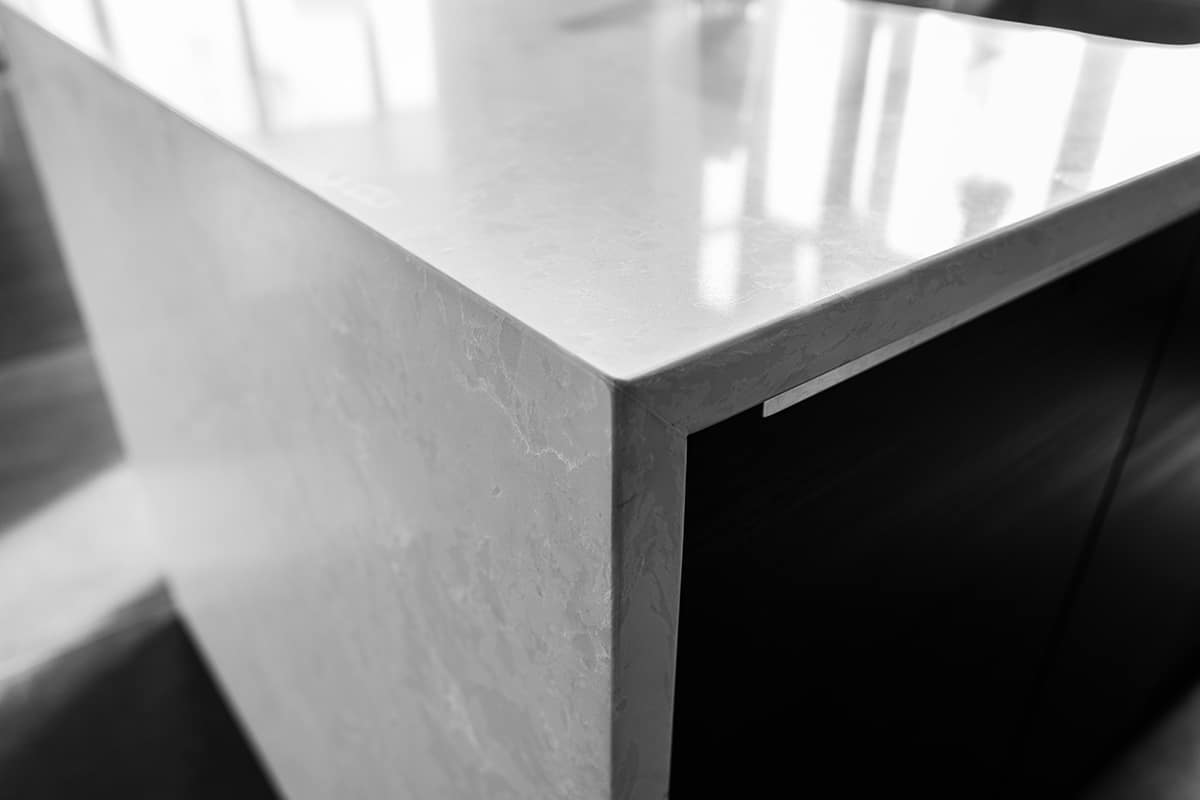
waterfall kitchen countertop
Pendant Lighting
Pendant lighting can play both a functional and compositional role above a kitchen island or peninsula. Properly scaled fixtures provide focused task lighting while reinforcing the linear rhythm of the island below. Spacing, alignment, and ceiling height must be carefully considered to ensure the pendants feel intentional rather than decorative. In more minimalist designs, recessed lighting may be preferable to maintain a clean ceiling plane.
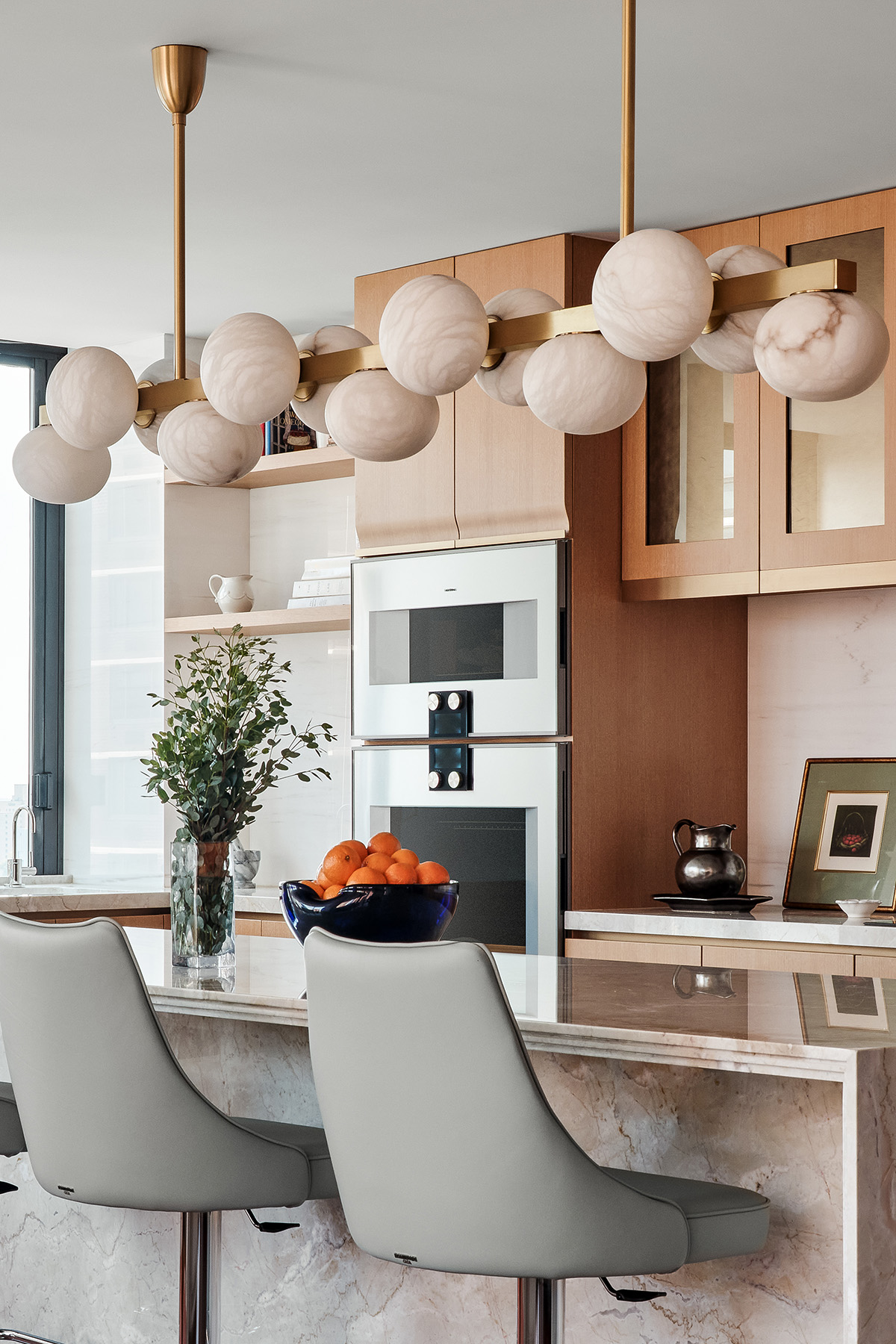
Kitchen Island Pendant Lighting
Unique Finishes That Stand Out
Contemporary kitchens often rely on a restrained palette of materials and finishes. Introducing a contrasting element — whether through metal, stone, color, or texture — can add depth and visual interest when applied with intention. The key is hierarchy: one or two distinctive finishes should act as accents while the primary materials remain cohesive and controlled.
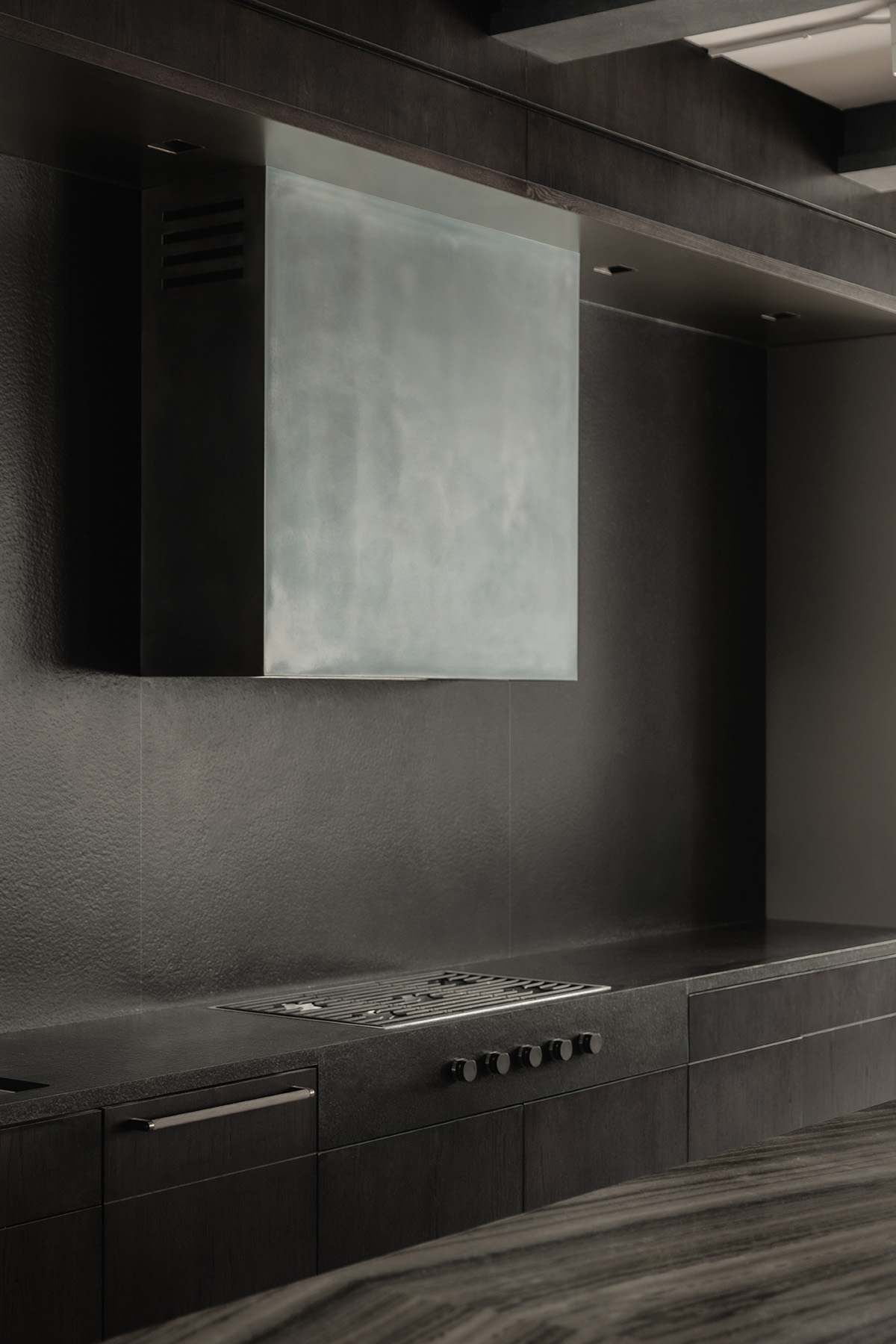
Modern Kitchen Design Details – Burnished Metal Custom hood Enclosure
Under Cabinet Lighting
Under-cabinet lighting plays a critical role in both functionality and atmosphere. By illuminating the countertop directly, it reduces shadows and improves task visibility. When carefully concealed within the millwork, it provides a soft, even wash of light that enhances material texture without drawing attention to the fixture itself.
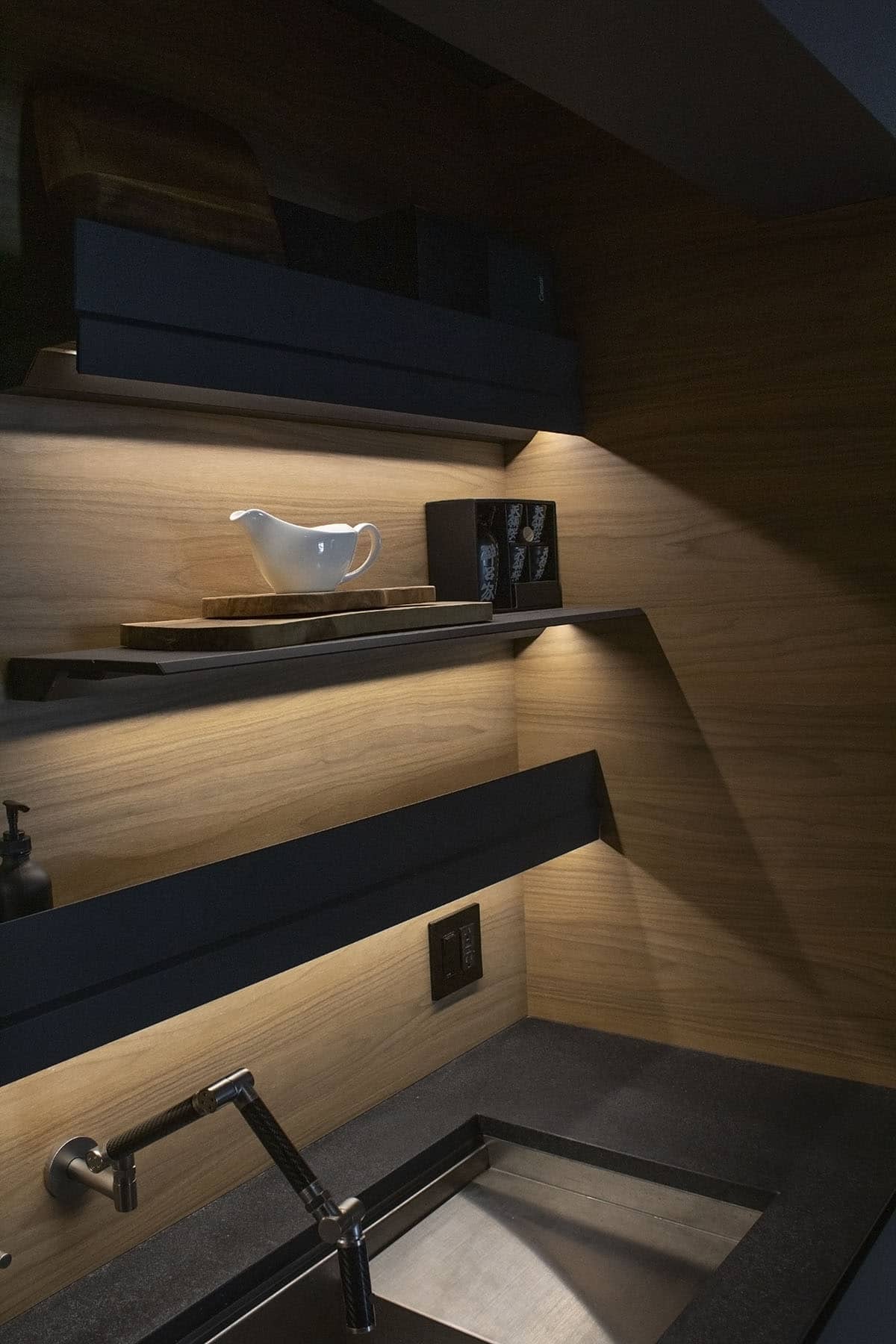
Under Cabinet Lighting
Farmhouse Sink With a Large Faucet
A farmhouse, or apron-front, sink projects slightly beyond the face of the cabinetry, creating a distinct visual profile. While traditionally associated with more classic or transitional kitchens, it can also introduce contrast within a contemporary design. When specifying an apron-front sink, faucet scale and proportion are critical — a substantial fixture helps maintain visual balance and prevents the sink from feeling underscaled within the composition.
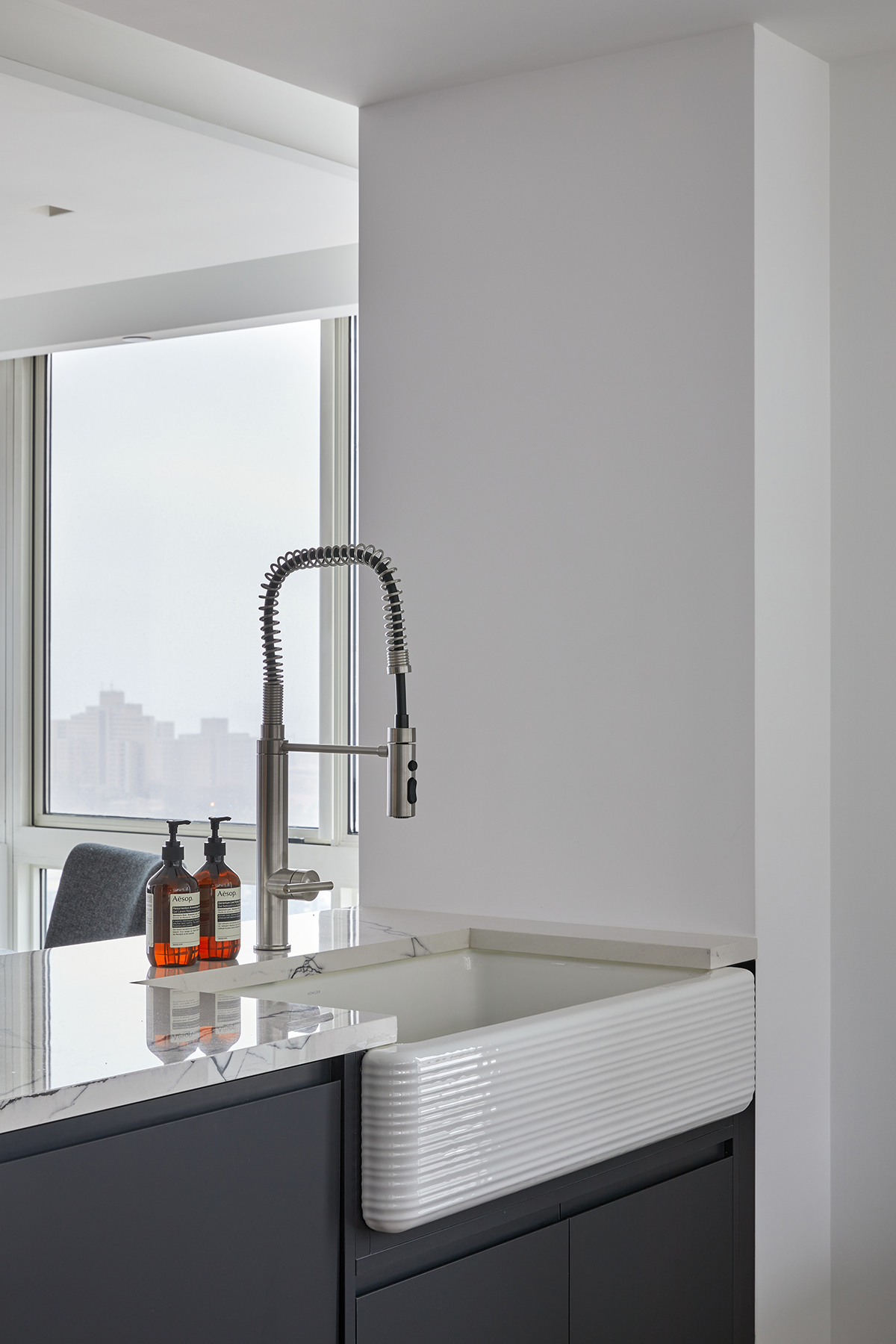
Large Kitchen Faucet and Farmhouse Sink
Drawer Microwave
A microwave drawer can be integrated into lower cabinetry, maintaining a cleaner and more streamlined elevation at the cooking wall. By relocating the microwave below the countertop, the primary sightlines remain focused on the cooktop and surrounding millwork rather than secondary appliances. This approach is particularly effective in contemporary kitchens where visual simplicity is a priority.
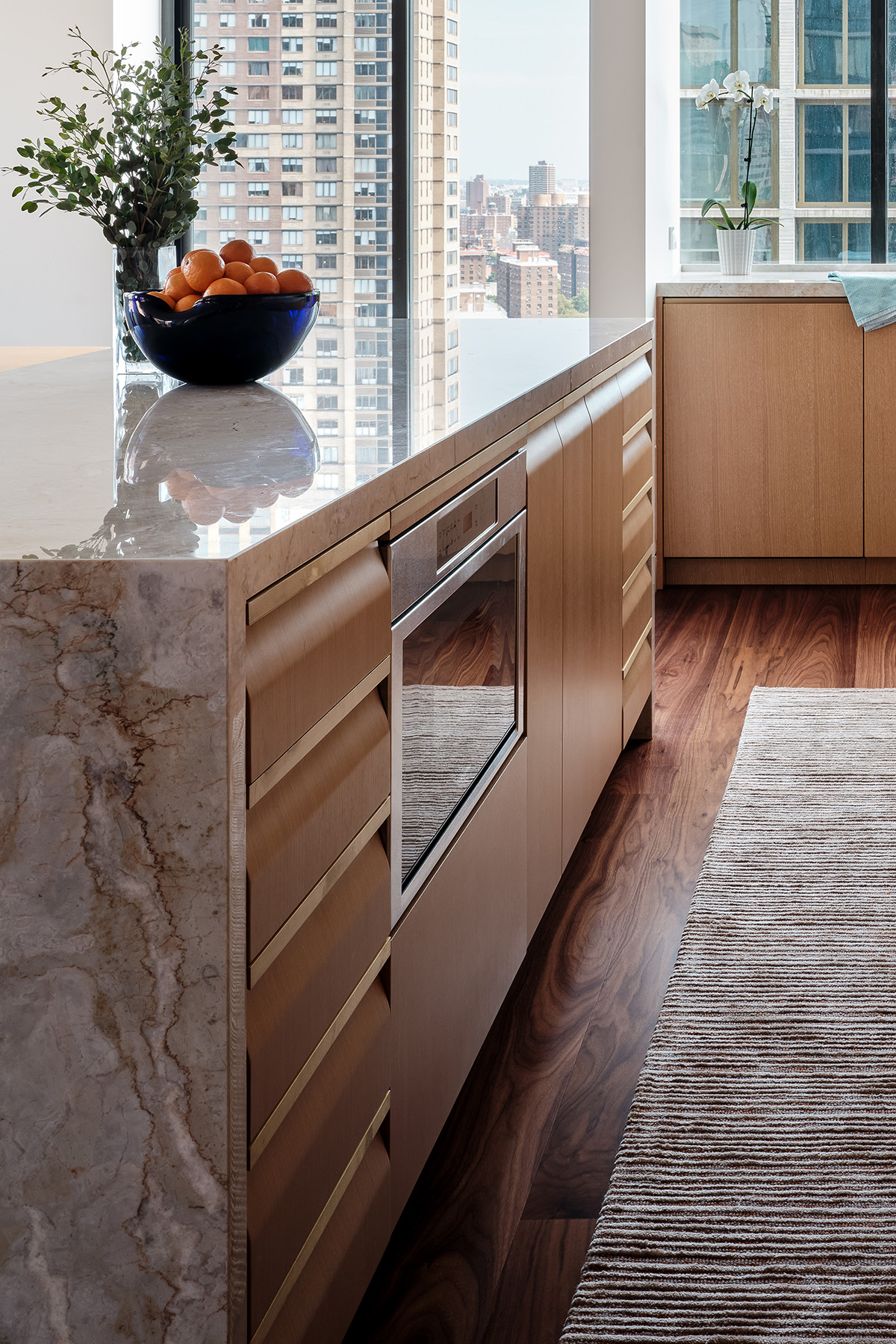
Drawer Microwave
Custom Details
A fully custom kitchen allows every dimension, material, and detail to be tailored to the architecture of the home. Cabinet proportions, integrated appliances, and millwork profiles can be precisely coordinated to create a cohesive and intentional result. Custom fabrication also allows for refined detailing that is not achievable with standard cabinetry systems. This level of control ensures the kitchen feels integrated into the architecture rather than simply installed within it.
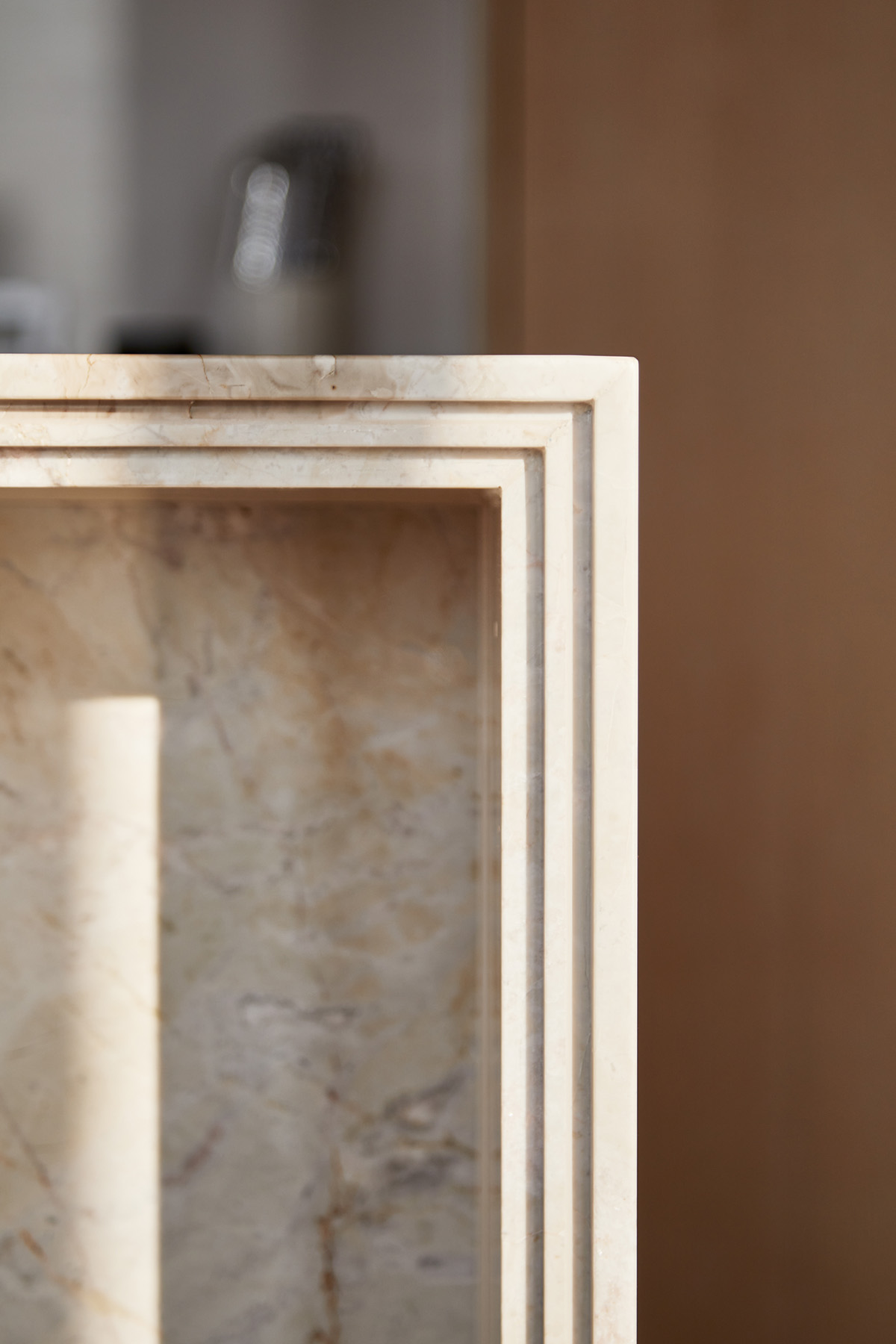
Unique Countertop Detail from an UES Apartment Renovation
Kitchen Design
A well-designed kitchen is the result of thoughtful planning, careful proportioning, and disciplined material selection. Every decision — from layout to lighting to millwork detailing — contributes to the overall clarity and functionality of the space.
At Fontan Architecture, we approach kitchen design as part of the larger architectural composition of the home. Our work emphasizes integration, precision, and long-term durability.
If you are considering a kitchen renovation, we would be happy to discuss your project and explore how thoughtful design can elevate your home.
Request a Consultation with Fontan Architecture - 212 321 0194
Jorge Fontan, AIA, is an architect and founder of Fontan Architecture based in New York City. The firm focuses on residential design, including new homes and extensive renovations for discerning clients. Through collaborative dialogue that draws on the individuality of each client, projects develop as distinct architectural responses guided by thoughtful planning, precise detailing, and a commitment to creating enduring value.

Jorge Fontan, AIA, is an architect and founder of Fontan Architecture based in New York City. The firm focuses on residential design, including new homes and extensive renovations for discerning clients. Through collaborative dialogue that draws on the individuality of each client, projects develop as distinct architectural responses guided by thoughtful planning, precise detailing, and a commitment to creating enduring value.