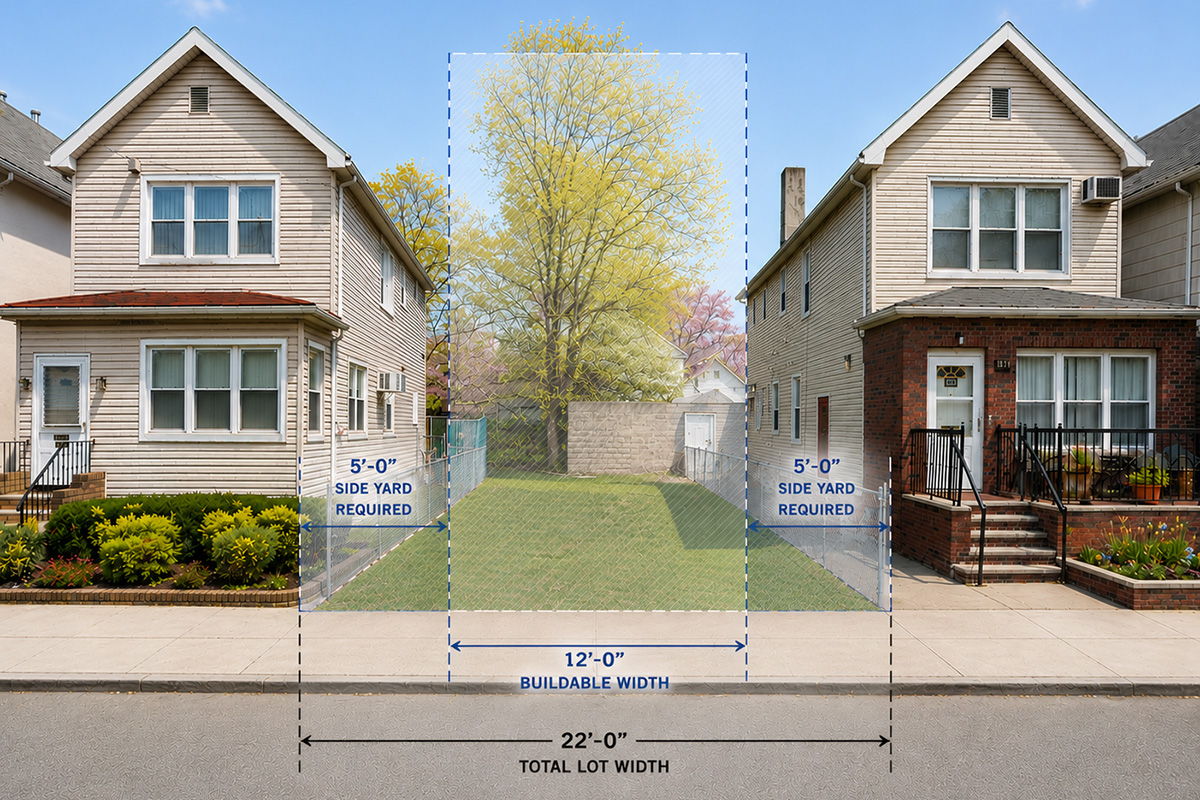
In New York City, residential zoning districts often require side yards or minimum open areas between buildings. On narrow properties, side yard requirements can significantly affect the width, layout, and overall feasibility of a new home or residential enlargement. The NYC Zoning Resolution includes provisions for existing narrow zoning lots that allow side yard and open area requirements to be reduced under specific conditions.
A narrow zoning lot in NYC is generally a residential zoning lot that is narrower than the minimum lot width required by the applicable zoning district regulations. In qualifying cases, side yard widths, open areas along side lot lines, and required distances between adjacent buildings may be reduced for existing narrow lots. These provisions can create important opportunities for residential development on constrained urban sites where standard side yard requirements would substantially limit the buildable width of the property.
I am Jorge Fontan, owner of Fontan Architecture, a Manhattan-based architecture firm specializing in high-quality residential projects. Our firm has experience designing homes and residential additions on constrained NYC zoning lots, including projects involving complex zoning analysis, narrow sites, and custom residential design. In this article, I will explain how narrow lot zoning works in NYC and how side yard regulations affect architectural design and development potential.
Table of Contents
Narrow Lots in NYC
Narrow lot provisions apply to residential zoning lots that are narrower than the minimum lot width required by the zoning district. These regulations are intended to address existing undersized lots where standard side yard requirements would significantly constrain residential development.
The narrow lot provisions only apply where the narrow lot condition existed on December 15, 1961, and where the lot width has not subsequently increased or decreased. Qualifying narrow lots may reduce required side yards, open areas along side lot lines, and minimum distances between adjacent residences under specific zoning conditions.
Narrow lot regulations can substantially affect the design and feasibility of new homes, enlargements, and residential development projects on constrained sites. Even relatively small reductions in side yard requirements can significantly improve floor plan efficiency and usable interior space.
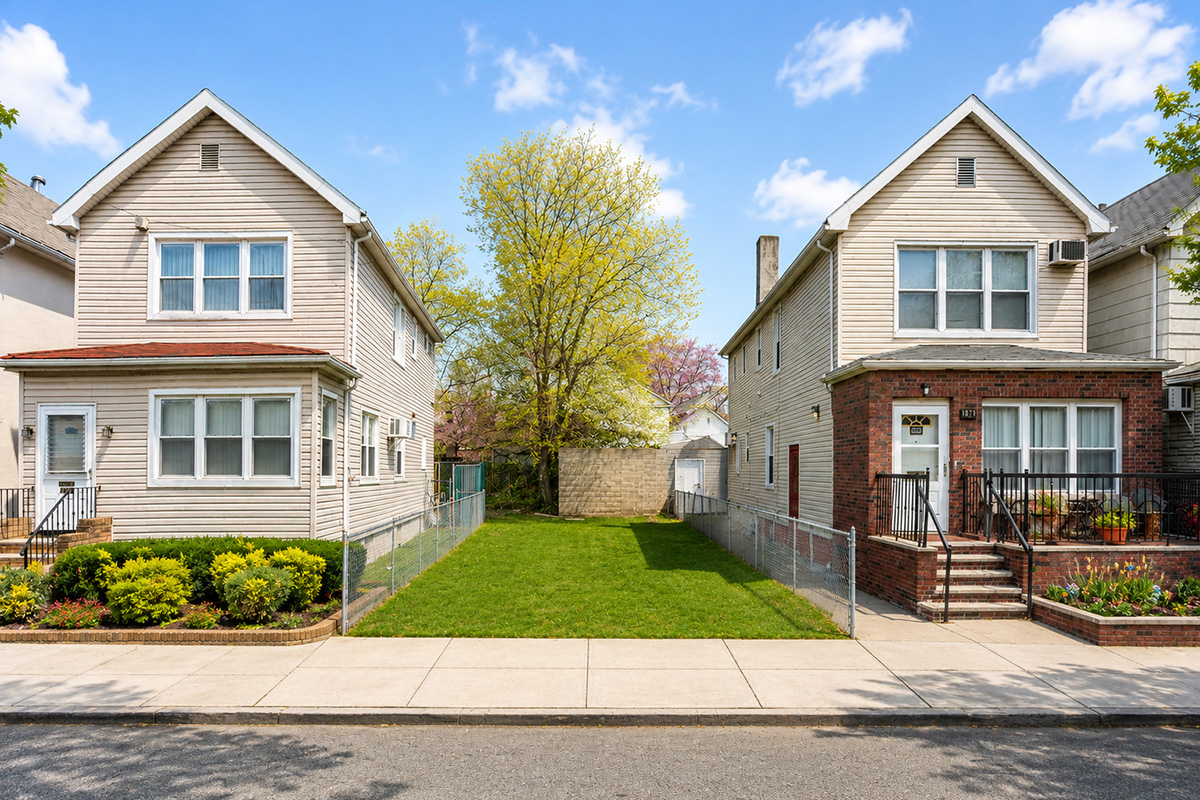
NYC Narrow Lot
NYC Side Yard Requirements
New York City zoning regulations establish side yard requirements for many residential developments in R1 through R5 zoning districts. Side yard requirements vary based on the building type and zoning district.
Detached Buildings
For single- and two-family detached homes in R1 through R5 districts, two side yards are required. In R1 districts, each side yard must be at least 8 feet wide. In R2 through R5 districts, each side yard must be at least 5 feet wide.
Semi-Detached and Zero Lot Line Buildings
For single- and two-family semi-detached or zero lot line residences in R3 through R5 districts, one side yard with a minimum width of 5 feet is required.
Where an adjacent zoning lot contains a detached, semi-detached, or zero lot line residence, a minimum total open area of 8 feet is required between the buildings.
Other Residential Buildings
Certain residential developments in R3-2 through R5D districts are not required to provide side yards. However, if an open area is provided along a side lot line, it must have a minimum width of 5 feet.
Where a zoning lot adjoins a lot containing exclusively single- or two-family residences, additional open area requirements may apply between buildings.
Modified Side Yard Requirements for Narrow Lots
NYC zoning permits reduced side yard requirements for qualifying narrow zoning lots. Where the lot width is less than the minimum width otherwise required by zoning, the required total width of side yards or open areas may be reduced by 4 inches for every foot the zoning lot is narrower than the required width.
In addition, where applicable, the required distance between residences on adjacent zoning lots may be reduced by 6 inches for every foot the zoning lot is narrower than required.
These reductions only apply to qualifying narrow lots that existed in their current condition on December 15, 1961.
However, the minimum width of a side yard or open area may not be reduced below 3 feet. The minimum required distance between adjacent residences may not be reduced below 5 feet.
Designing Homes on Narrow Lots
Narrow residential lots present unique architectural and planning challenges. Reduced building width affects floor plan organization, circulation, stair design, room proportions, natural light, structural systems, and overall spatial efficiency.
Careful architectural planning is essential on narrow sites because relatively small dimensional changes can significantly affect the functionality and livability of a home. Narrow lot zoning provisions can create important opportunities to improve layouts and increase usable interior space within the limits of NYC zoning regulations.
We have worked on residential projects where side yard reductions substantially improved the usability of the home by allowing more efficient room layouts, better stair placement, and improved circulation patterns. On constrained urban sites, even modest increases in buildable width can have a major impact on the overall design.
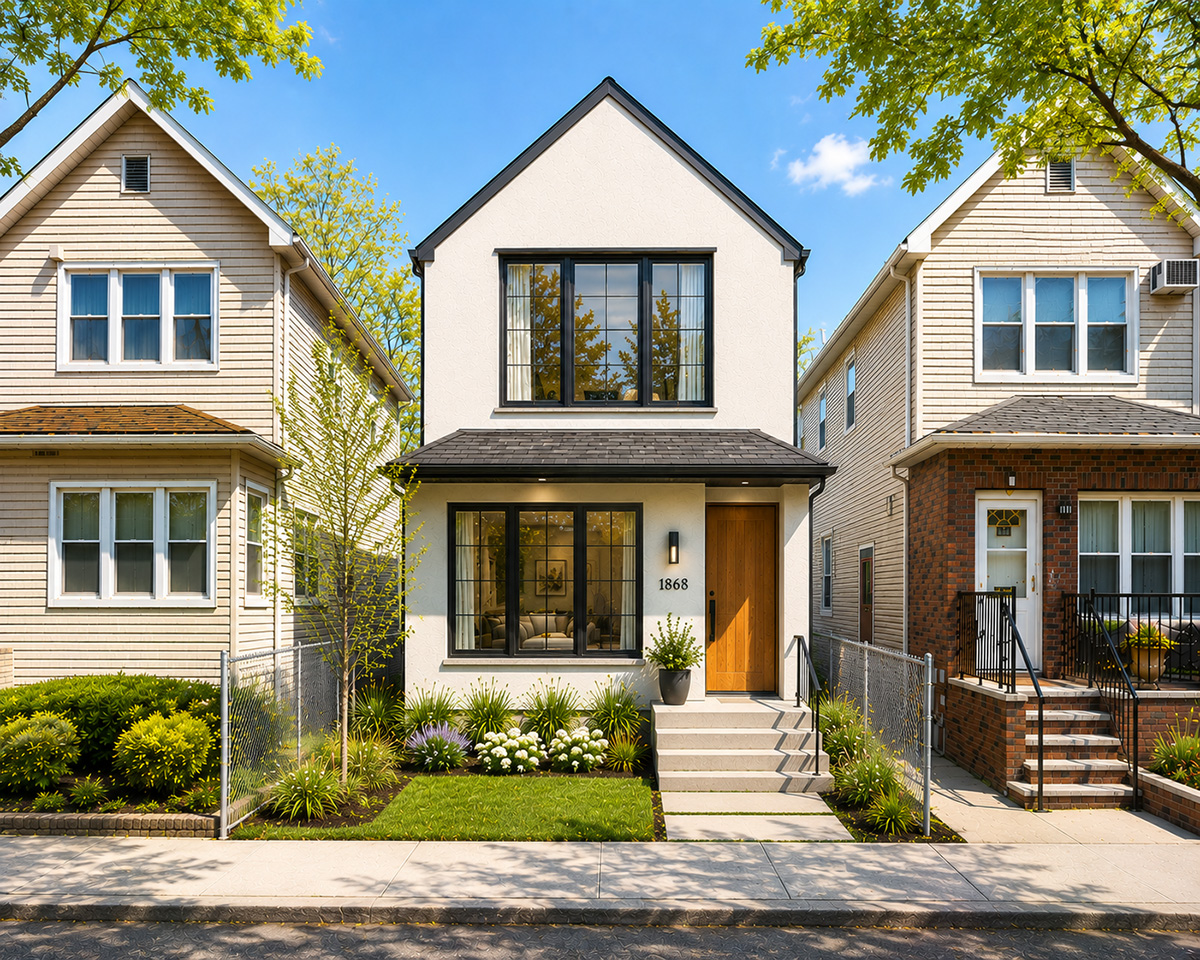
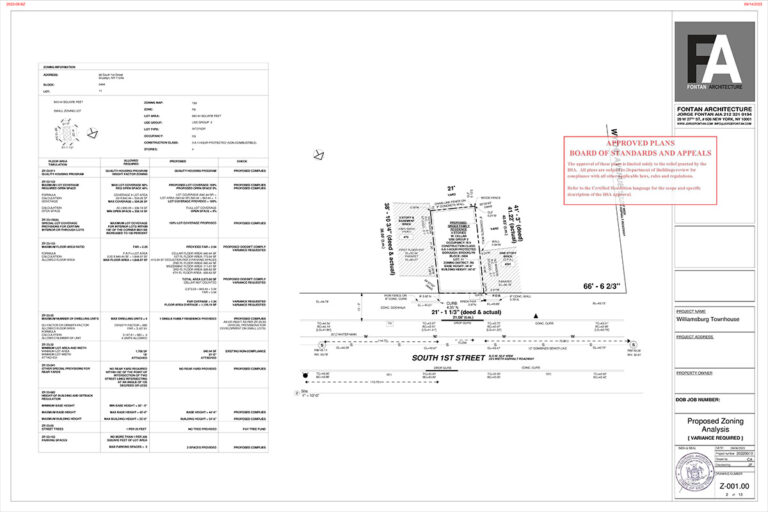
New House Design for a Narrow Lot in NYC
Assessing Narrow Lots in NYC
Narrow lot regulations in NYC create important development opportunities for constrained residential properties. Reduced side yard requirements can significantly affect the design and feasibility of new homes, additions, and enlargements on undersized zoning lots.
Successful narrow lot projects require careful coordination of zoning regulations, building code requirements, structural planning, light and air considerations, and overall architectural design. Understanding how narrow lot provisions apply is an important part of residential project planning and zoning analysis in New York City.
I am Jorge Fontan, owner of Fontan Architecture, a Manhattan-based architecture firm specializing in high-quality residential projects. Our firm has experience designing homes and residential additions on constrained NYC zoning lots, including projects involving complex zoning analysis and custom residential design. If you are planning a new home, enlargement, or residential renovation in New York City, it is important to work with an architect who understands how zoning regulations affect design and development potential.
Request a Consultation with Fontan Architecture - 212 321 0194
Jorge Fontan, AIA, is an architect and founder of Fontan Architecture based in New York City. The firm focuses on residential design, including new homes and extensive renovations for discerning clients. Through collaborative dialogue that draws on the individuality of each client, projects develop as distinct architectural responses guided by thoughtful planning, precise detailing, and a commitment to creating enduring value.

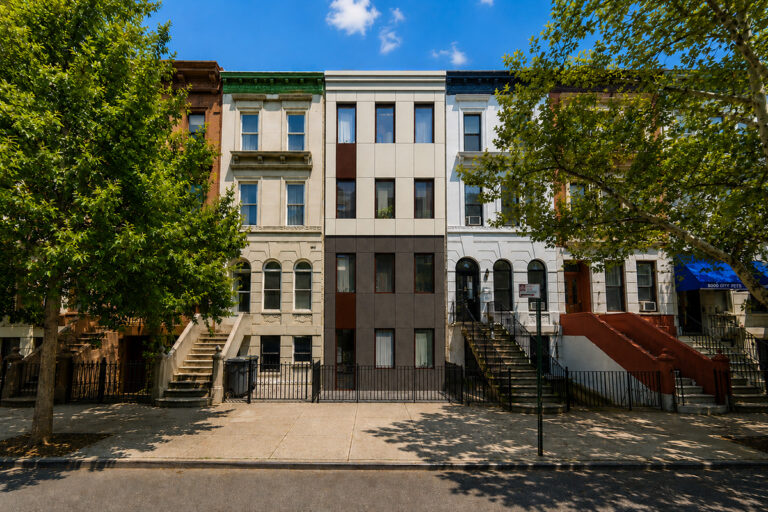
Jorge Fontan, AIA, is an architect and founder of Fontan Architecture based in New York City. The firm focuses on residential design, including new homes and extensive renovations for discerning clients. Through collaborative dialogue that draws on the individuality of each client, projects develop as distinct architectural responses guided by thoughtful planning, precise detailing, and a commitment to creating enduring value.