The kitchen has become one of the most important spaces in the modern home. Beyond its practical function, the kitchen serves as a place for gathering, entertaining, dining, and everyday living. As kitchens have become increasingly integrated with adjacent living spaces, their design has taken on a more central role in the overall architecture of the home.
A successful kitchen design balances aesthetics and functionality while contributing to the character of the entire residence. Layout, materials, lighting, storage, and appliances all play a role in shaping how a kitchen looks, feels, and functions. The most successful kitchens are carefully considered spaces designed around the people who use them.
I am Jorge Fontan, an architect and owner of Fontan Architecture, a Manhattan-based architecture and design firm. We design kitchen renovations as part of apartment, loft, penthouse, townhouse, and brownstone renovations throughout New York City. In this article, we share kitchen design ideas and examples from homes we have designed across Manhattan, including projects on the Upper East Side, Upper West Side, Tribeca, Flatiron District, Financial District, and historic brownstones throughout the city. The examples in this article come from apartment, loft, penthouse, townhouse, and brownstone renovations we have designed throughout New York City.
Table of Contents
Open Kitchen Design
In contemporary home design, the open kitchen has become a defining feature of how people live and entertain. Rather than separating cooking from the rest of the home, an open kitchen integrates food preparation, dining, and gathering into a single connected space. The kitchen becomes part of the architecture of the home rather than a separate room.
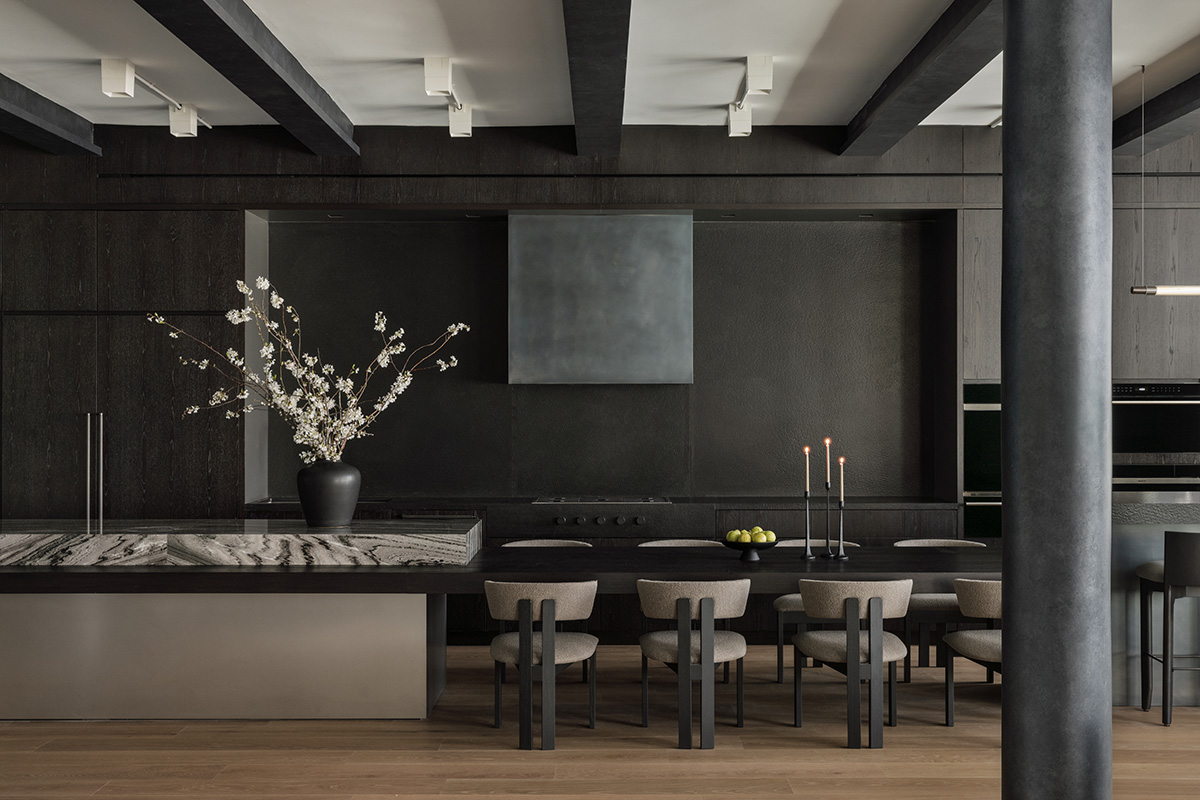
In this Flatiron District loft, we redesigned and gut renovated the apartment and positioned the kitchen directly opposite the main entrance. We designed the kitchen as a continuous architectural composition, with dark wood cabinetry, integrated appliances, and a large island that organizes the space. Because the kitchen is visible immediately upon entering the apartment, it serves as both a functional workspace and one of the primary design features of the home. Learn more about this project in our article, 40 Foot Modern Kitchen in a Luxury NYC Loft.
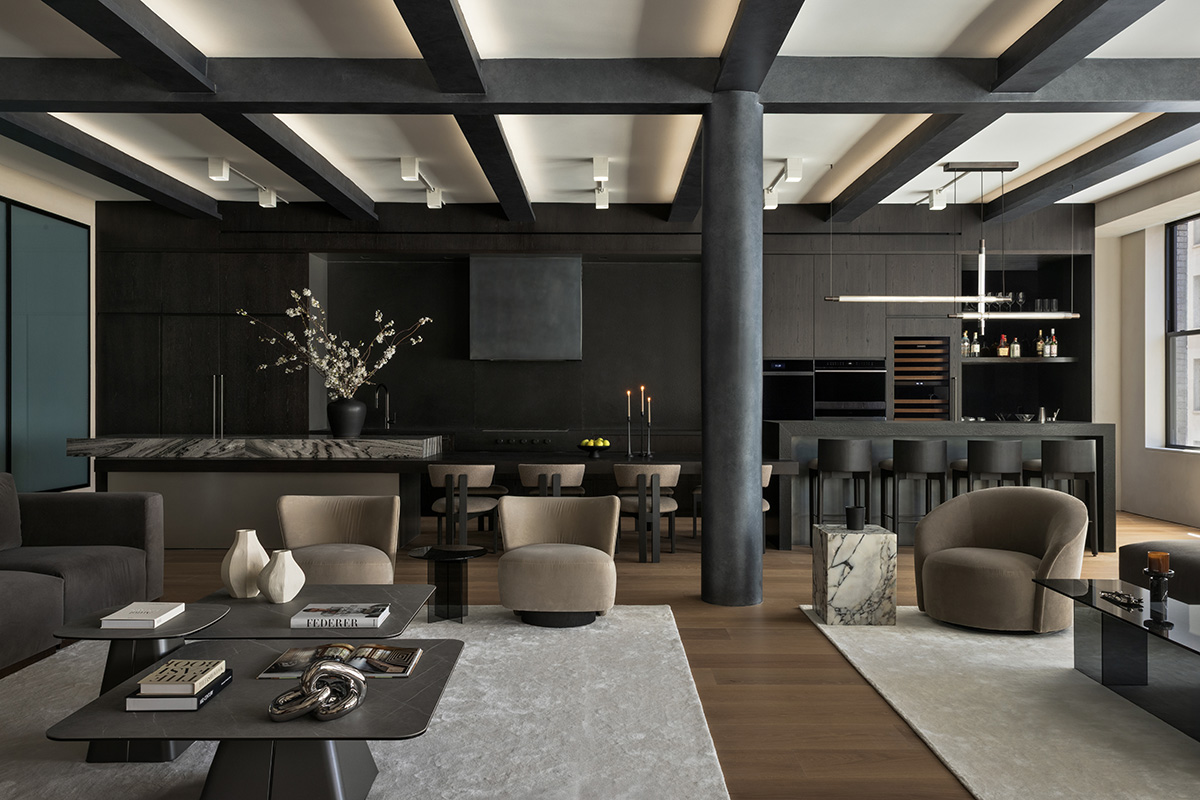
Open Kitchen in an Loft Apartment (Flatiron District)
Kitchen Island
A kitchen island can be one of the most functional elements in an open kitchen design. In addition to providing additional countertop space, an island can incorporate seating, storage, appliances, or a sink while helping to organize circulation and define the kitchen within a larger living area. Because of its prominent position, the island often becomes a focal point of the room and an opportunity to introduce a distinctive material or design feature.
In this Upper East Side apartment, we designed and fully renovated the residence with the kitchen island serving as the centerpiece of the space. We designed the island to function as both a workspace and a gathering place, with seating and a generous countertop that extends the length of the kitchen. The island helps organize the room while creating a natural connection between the kitchen and the adjacent living areas.
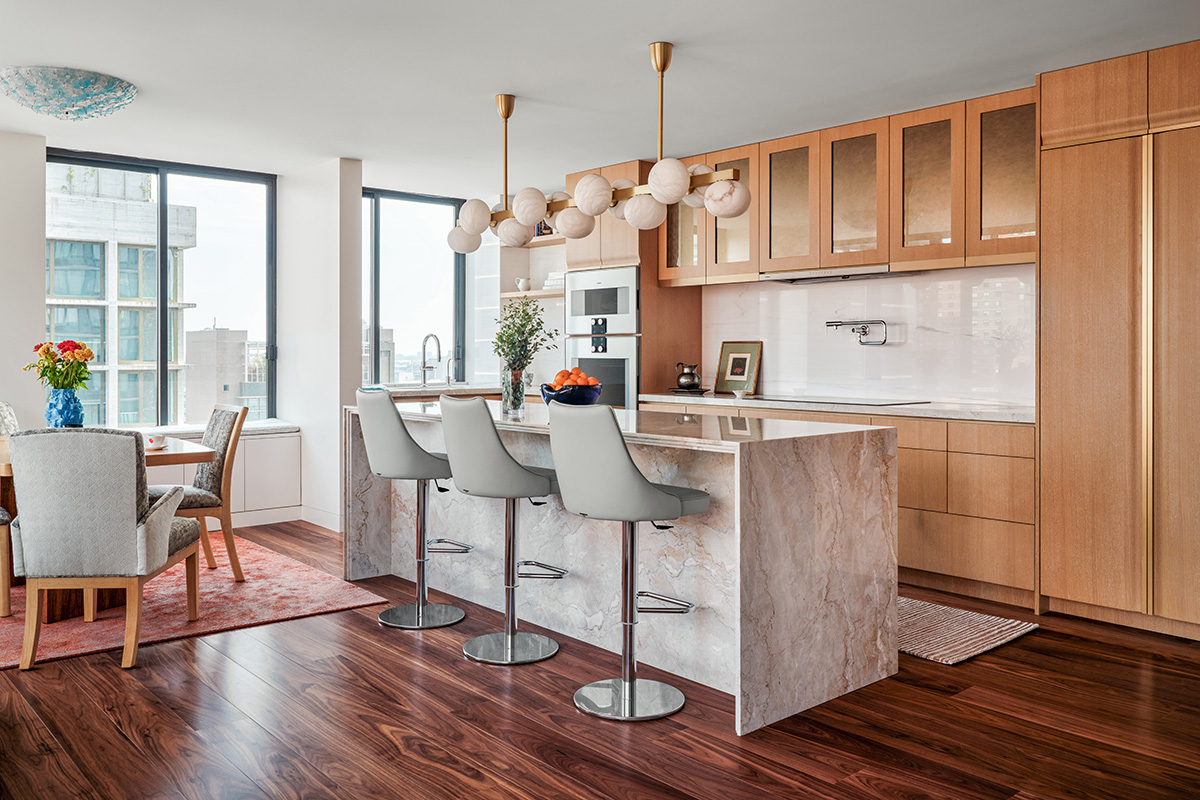
Open Kitchen With Island (Upper East Side)
Matching Backsplash and Countertop
Using the same material for both the countertop and backsplash can create a clean and cohesive kitchen design. Extending a material from the countertop onto the wall eliminates visual breaks and allows the natural character of the stone to become a defining feature of the space. This approach can simplify the overall composition of the kitchen while creating a timeless and elegant appearance.
In this Manhattan brownstone renovation, we used the same material for both the countertops and backsplash to create a continuous surface throughout the kitchen. The uninterrupted veining becomes a focal point of the design, while the consistent material palette allows the cabinetry, fixtures, and appliances to work together as a unified composition. The result is a kitchen that feels refined, cohesive, and visually calm.
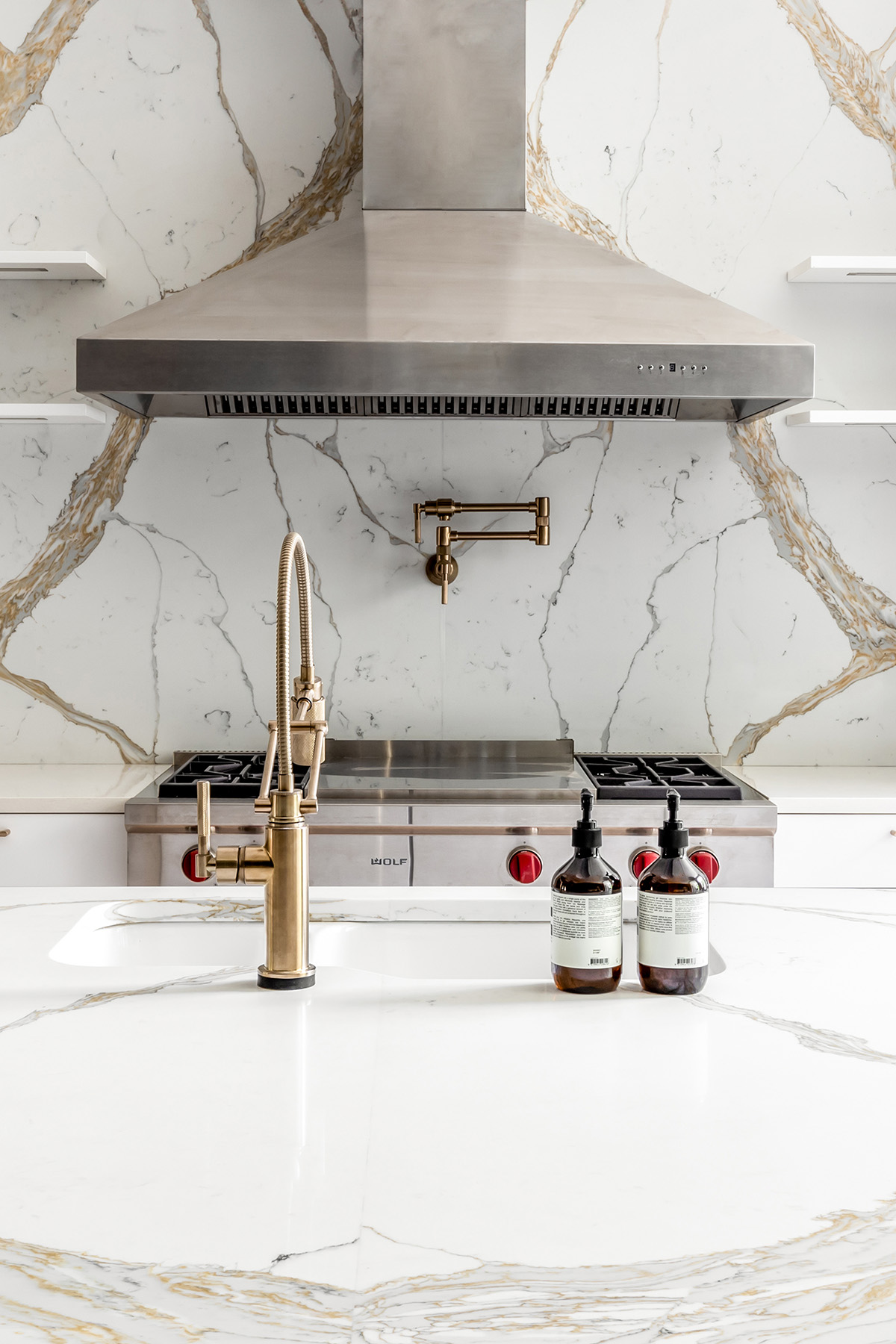
Matching Kitchen Countertop and Backsplash (Manhattan Townhouse)
Kitchen Bar Stool Seating
Bar stool seating can transform a kitchen island from a workspace into a gathering place. In addition to providing casual dining, bar stools encourage interaction between the kitchen and adjacent living areas, making the island a natural location for conversation, entertaining, and everyday activities. When incorporated into an open kitchen, bar stool seating helps reinforce the connection between cooking, dining, and living spaces.
In this Manhattan loft apartment, we designed a dedicated seating area along one side of the kitchen island to create a comfortable place for gathering. The seating allows the island to function as more than a workspace, providing a location for casual meals, conversation, and entertaining.
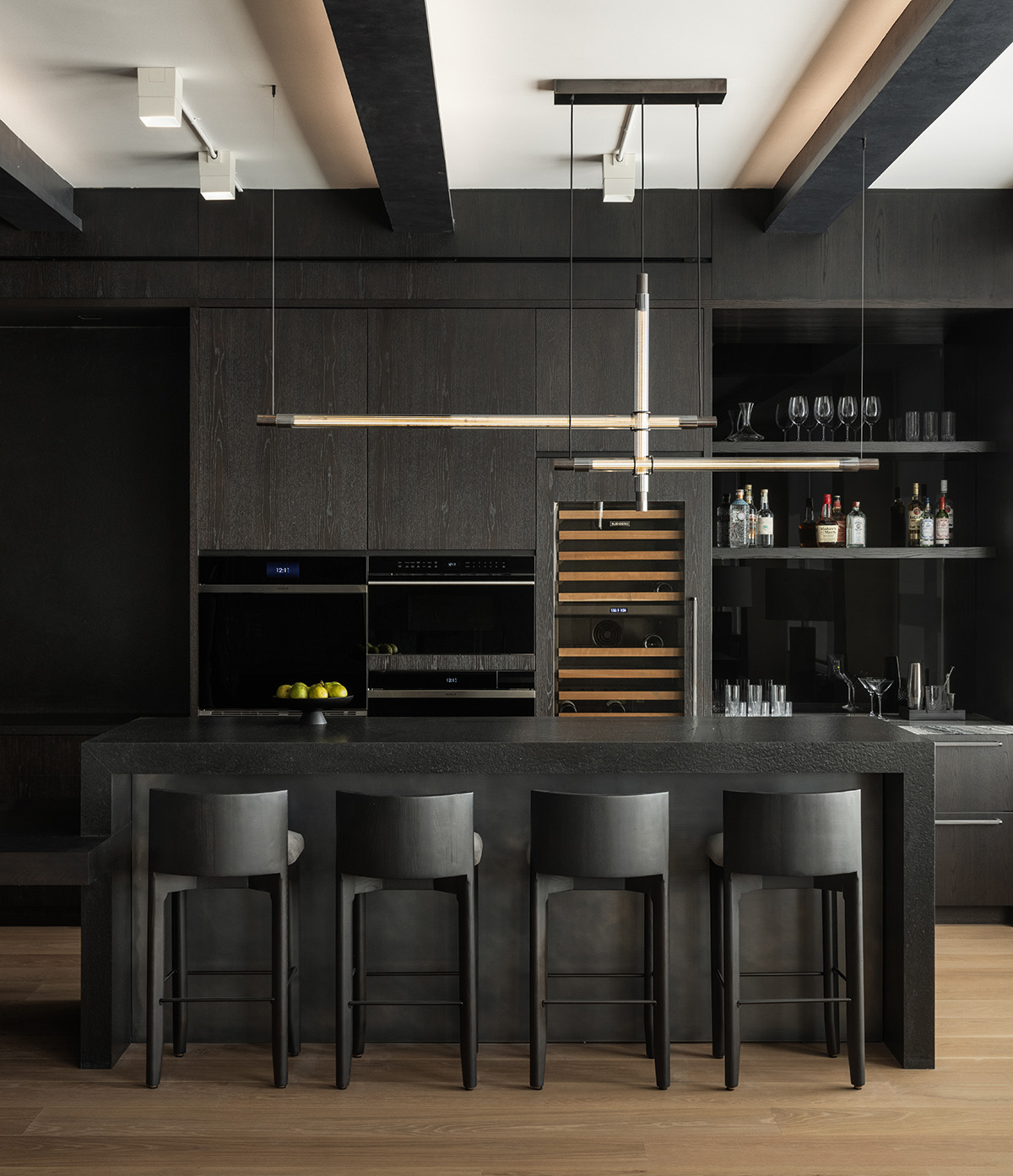
Kitchen Island with Bar Stool Seating (Flatiron District, NYC)
Kitchen Peninsula
A kitchen peninsula can provide many of the benefits of a kitchen island while requiring less floor space. Connected to the surrounding cabinetry on one side, a peninsula can define the kitchen, provide additional countertop space, incorporate seating or appliances, and help organize circulation within an open floor plan.
In this Tribeca penthouse renovation, we designed the kitchen around a large peninsula that anchors the space while maintaining an efficient layout. The peninsula provides a generous work surface and incorporates the cooktop, allowing the kitchen to function as a highly organized workspace. Connected to the surrounding cabinetry, it helps define the kitchen without interrupting the flow of the room. The result is a kitchen that feels open and spacious while maintaining a strong sense of order and functionality.
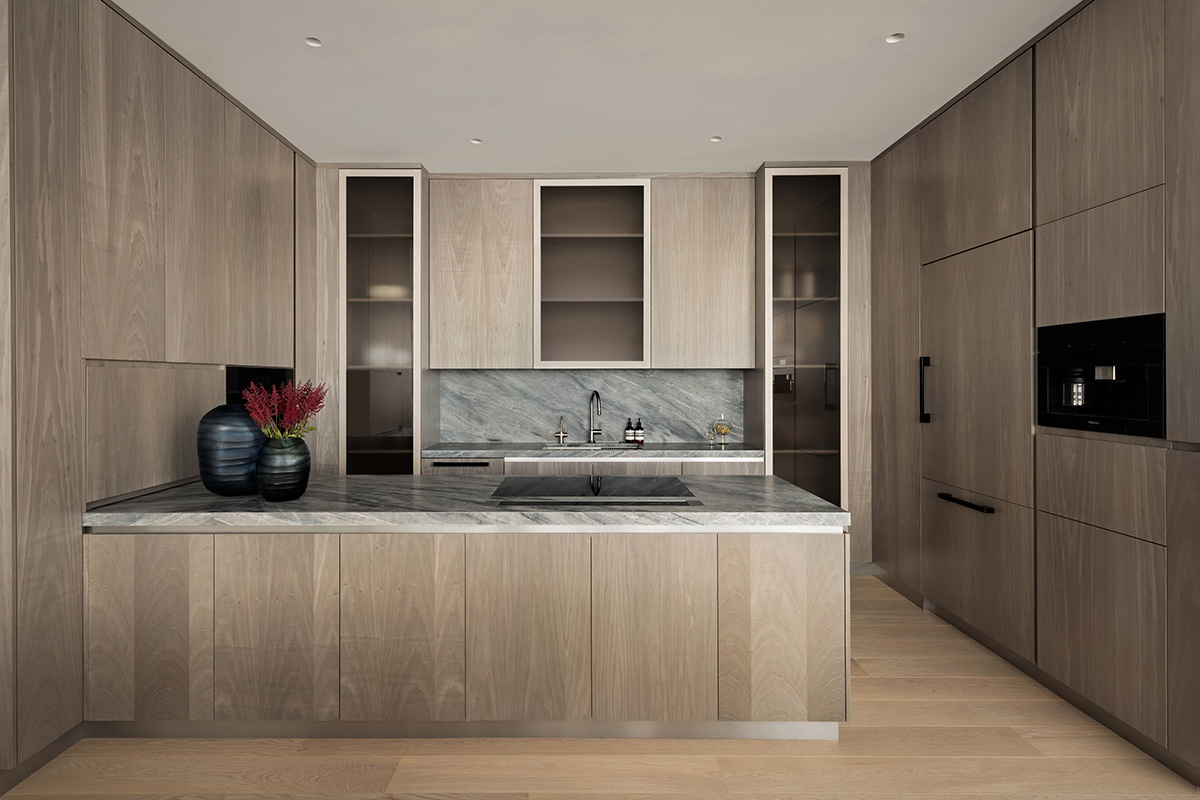
Penthouse kitchen with peninsula (Tribeca, NYC)
Wall Ovens
Wall ovens offer both functional and aesthetic advantages in modern kitchen design. Installed at a more convenient height than a traditional range oven, they improve accessibility while creating greater flexibility in the overall kitchen layout. By separating the ovens from the cooktop, the kitchen can be organized around distinct preparation and cooking zones.
In this Flatiron District loft, we incorporated wall ovens into the cabinetry as part of the forty-foot-long kitchen design. Integrating the appliances into the millwork allowed us to maintain the clean, uninterrupted lines of the cabinetry while creating a more efficient workspace. Positioned within the wall of cabinetry, the ovens become part of the overall architectural composition of the kitchen rather than standing apart as individual appliances.

Wall Ovens (Flatiron District)
Accent and Task Lighting
Lighting is one of the most overlooked aspects of home design. It is frequently treated as a finishing touch or addressed late in the design process, but lighting is what truly brings a home to life. Beyond providing illumination, lighting shapes how a space is experienced, highlighting materials, creating atmosphere, and reinforcing the overall design. A successful lighting design balances ambient, accent, and task lighting to support both the functional and emotional qualities of a home.
In this Financial District apartment renovation, the owner wanted the home to have a darker and more atmospheric character. We designed the kitchen with integrated accent and task lighting to create layers of illumination throughout the space. Concealed lighting beneath the shelves and cabinetry highlights the natural wood finishes while providing focused light where it is needed most. Combined with the darker material palette, the lighting helps establish the mood of the apartment while bringing warmth, depth, and dimension to the overall design.
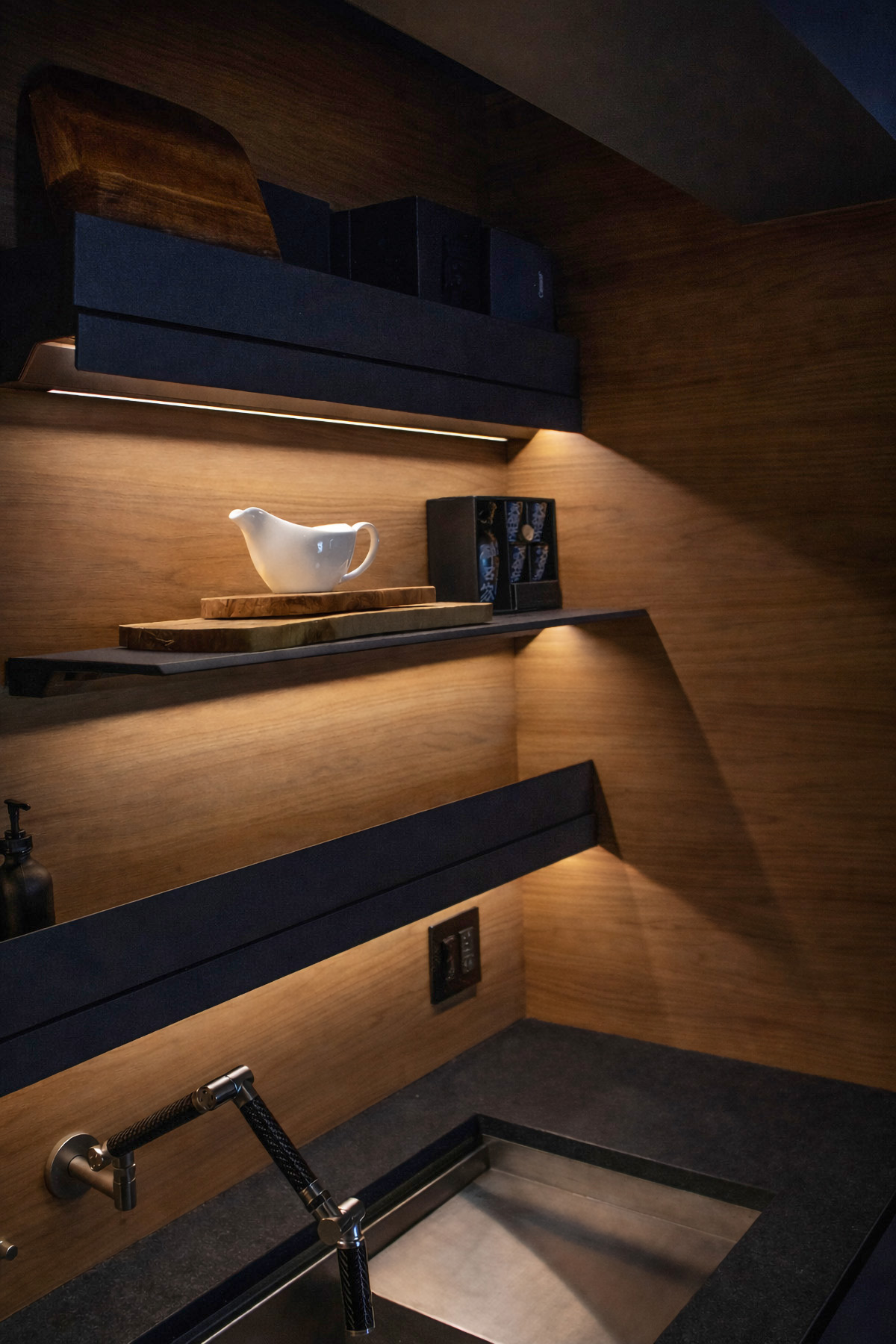
Kitchen with accent lighting (Financial District, NYC)
Stone Slab Backsplash
A stone slab backsplash can create a clean and cohesive kitchen design by eliminating the grout lines associated with tile. Using a single piece of natural stone allows the material itself to become a defining feature of the kitchen, highlighting its color, texture, and natural veining. The result is a simple and elegant backdrop that complements the surrounding cabinetry and finishes.
In this Upper East Side apartment renovation, we designed a fully custom kitchen with a natural stone slab backsplash fabricated from a single piece of stone. The uninterrupted surface creates a seamless appearance behind the cooktop while allowing the character of the material to take center stage. Combined with the matching countertop and custom cabinetry, the stone backsplash contributes to a refined and cohesive kitchen design.
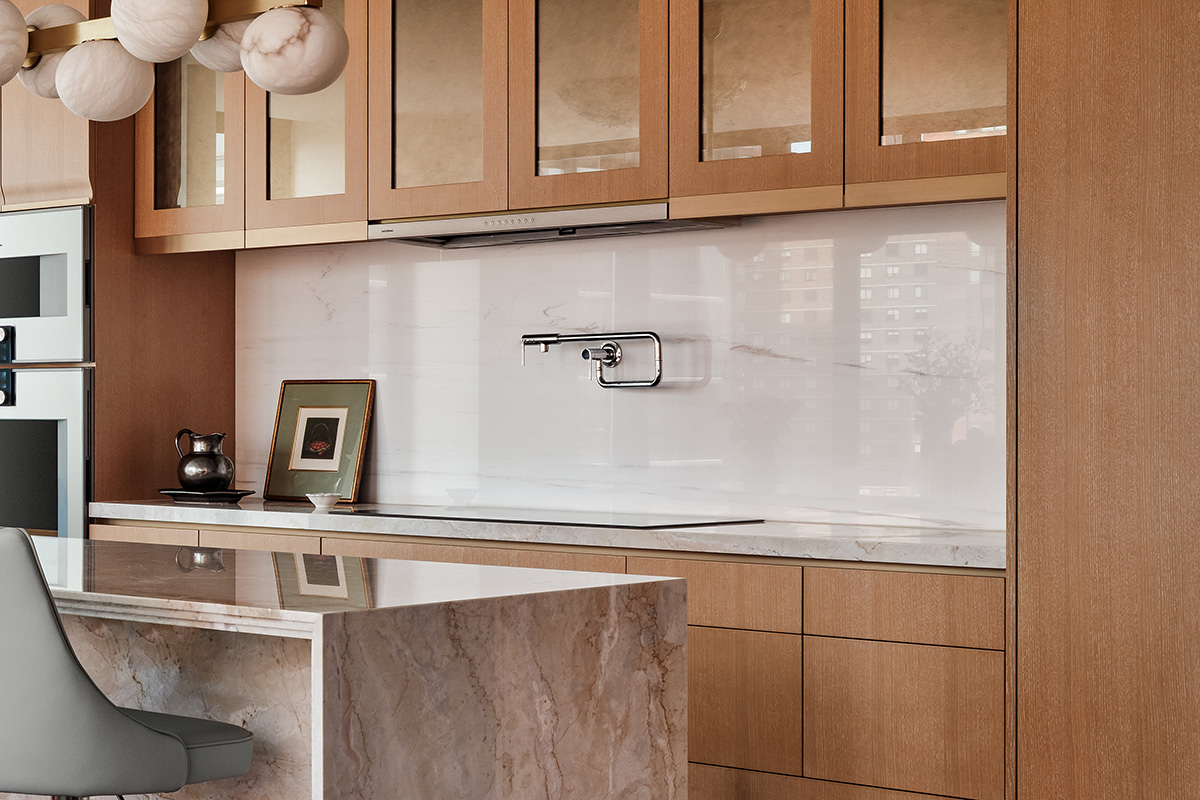
Marble Slab Backsplash (Upper East Side, NYC)
Porcelain Countertops
Porcelain countertops have become increasingly popular in modern kitchen design due to their durability, low maintenance requirements, and design versatility. Unlike many natural stones, porcelain is nonporous and highly resistant to staining, making it a practical material for kitchens. Available in a wide range of colors, patterns, and stone-inspired finishes, porcelain can complement a variety of design styles.
In this Upper East Side apartment combination, we redesigned and gut renovated the residence with porcelain countertops and matching surfaces throughout the kitchen. The material provides the appearance of natural stone while offering exceptional durability for everyday use. The large-format porcelain panels create a clean and contemporary aesthetic, helping unify the kitchen while contributing to the overall design of the apartment.
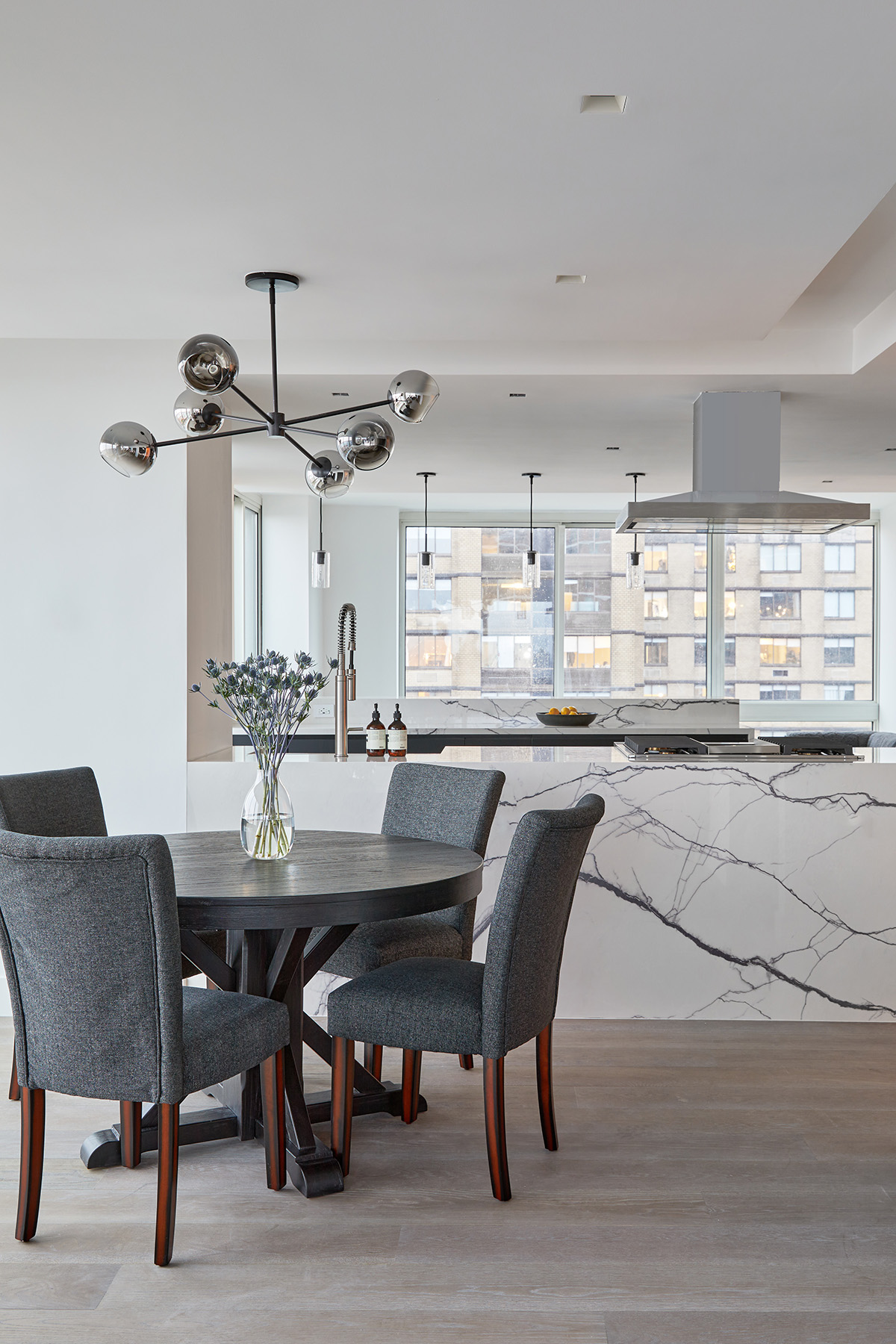
Porcelain Countertops (Upper East Side Kitchen)
Panel Ready Kitchen Appliances
Panel-ready appliances allow large appliances such as refrigerators, freezers, and dishwashers to blend seamlessly into the surrounding cabinetry. By accepting custom cabinet panels that match the adjacent millwork, these appliances become part of the overall kitchen design rather than standing out as individual elements. This approach can create a cleaner and more cohesive appearance while allowing the cabinetry to remain the dominant visual feature of the space.
In this Tribeca luxury apartment renovation, we designed the kitchen with panel-ready appliances integrated throughout the cabinetry. The refrigerator disappears into the wall of millwork, allowing the kitchen to read as a continuous architectural composition rather than a collection of individual appliances and cabinets. By concealing large appliances within the custom cabinetry, we were able to maintain the clean lines and refined aesthetic that define the overall design of the apartment.
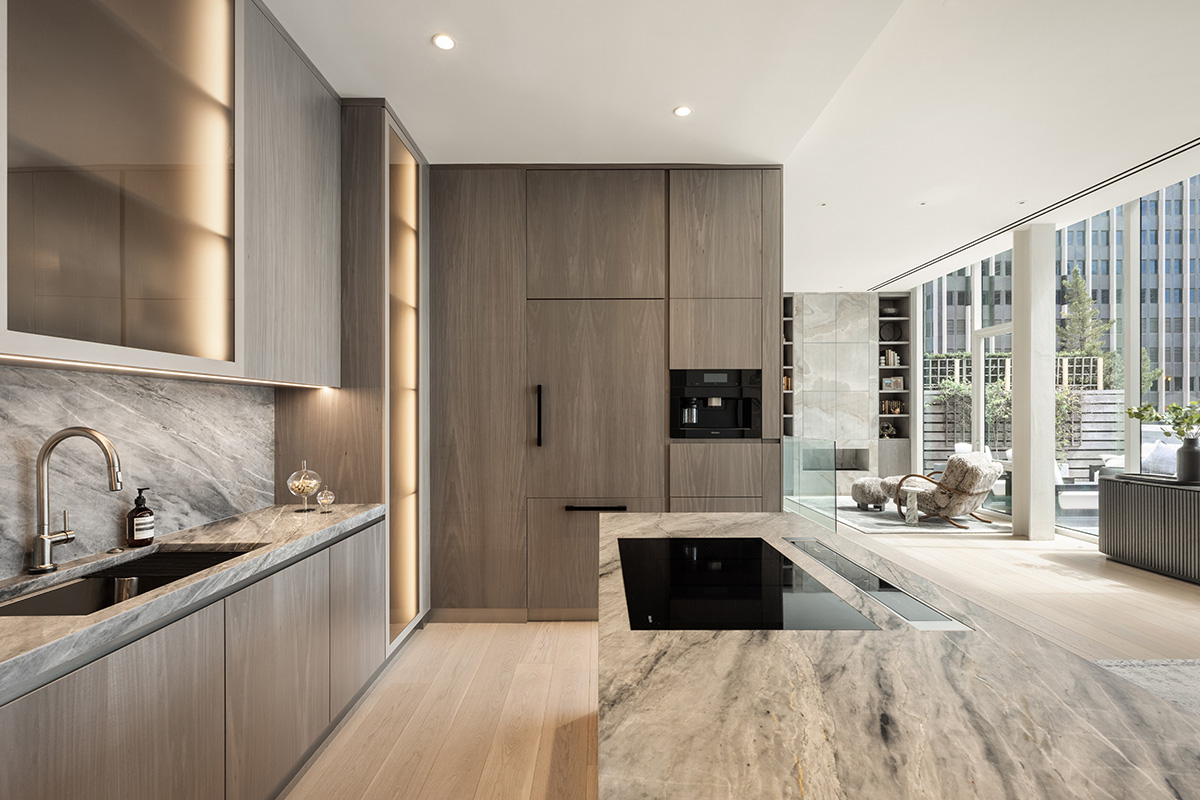
Custom kitchen design with panel ready appliances (Tribeca, NYC)
Upper Row of Wall Cabinets
I have never heard anyone in New York say they have too much storage in their apartment. Maximizing storage is always a priority, especially in the kitchen. In rooms with higher ceilings, extending cabinetry all the way to the ceiling can be an effective way to increase storage capacity while maintaining a clean and organized appearance.
In this Manhattan historic brownstone renovation, we took advantage of the tall ceilings on the parlor floor by incorporating an additional row of upper cabinets above the primary wall cabinets. The extra storage provides space for items that are used less frequently while allowing everyday kitchen essentials to remain easily accessible below. Extending the cabinetry to the ceiling also reinforces the vertical proportions of the room and creates a more integrated architectural composition.
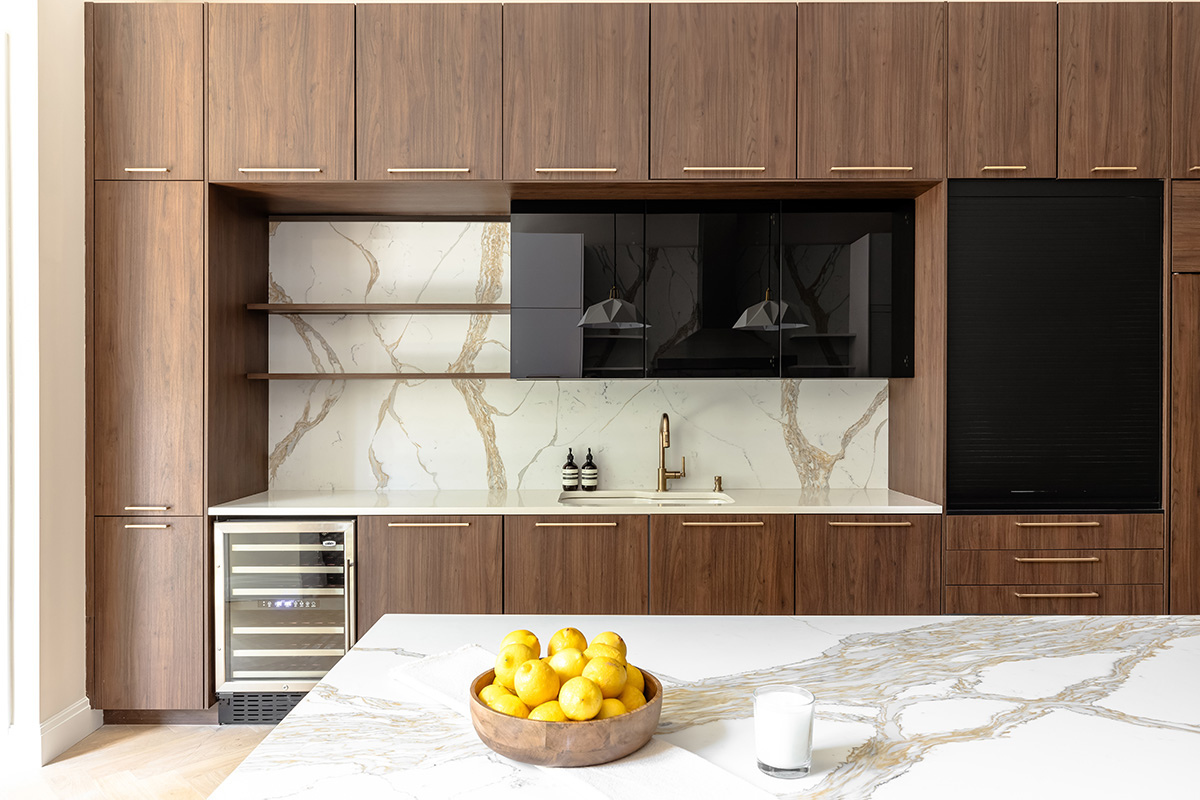
Kitchen with Upper Cabinets (Manhattan Brownstone)
Pot Filler
A pot filler is a practical addition that can improve the functionality of a kitchen by providing a dedicated water source directly above the cooktop. Installed on the backsplash behind the range, a pot filler allows large pots to be filled where they will be used, simplifying meal preparation and reducing the need to carry heavy pots across the kitchen.
In this Manhattan historic townhouse renovation, we incorporated a pot filler into the stone backsplash behind the range as part of the overall kitchen design. Positioned directly above the cooktop, the fixture provides convenient access to water while integrating seamlessly into the surrounding materials and finishes. In addition to its practical benefits, the pot filler contributes to the professional character of the kitchen and complements the custom cabinetry, stone surfaces, and high-end appliances throughout the space.
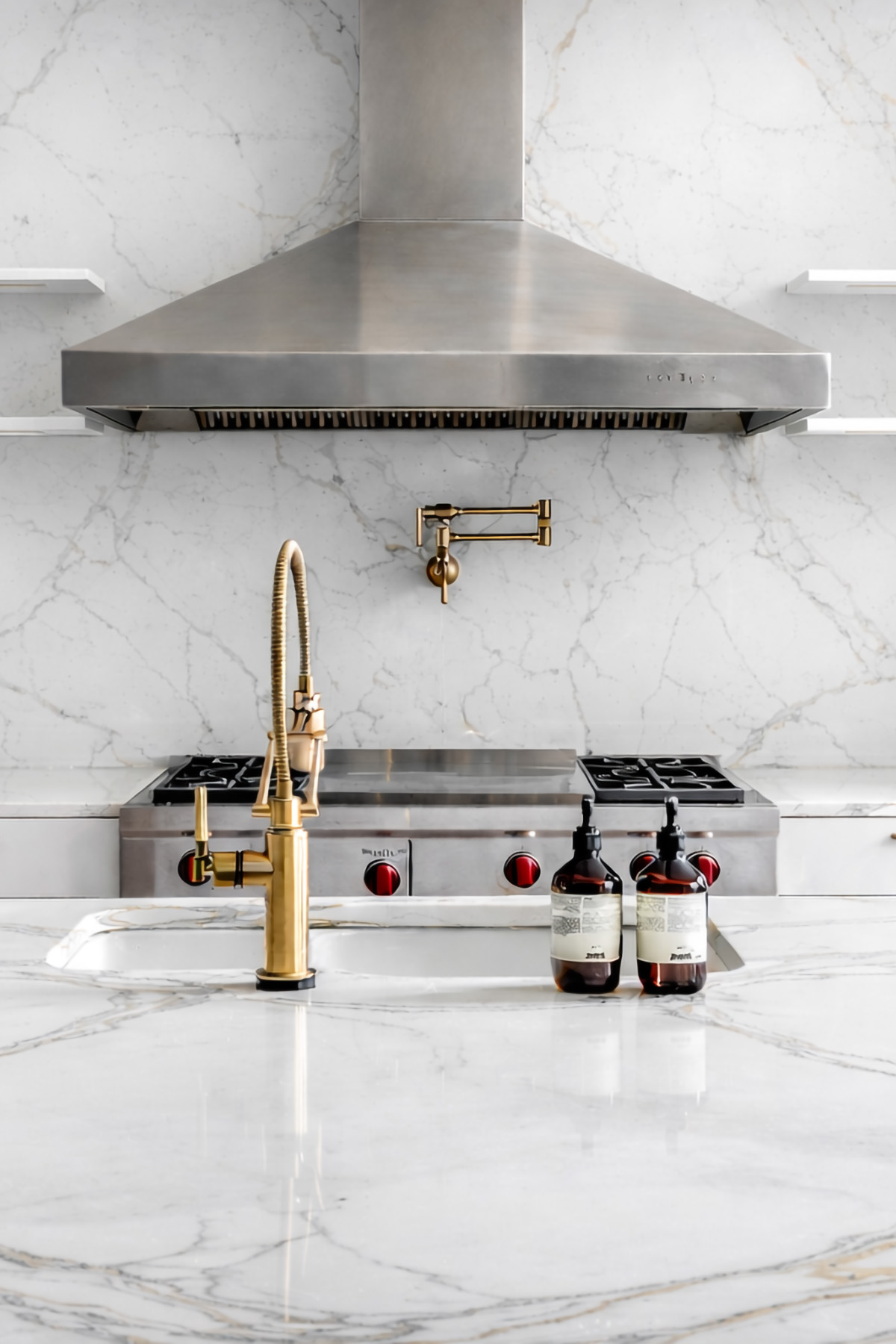
Pot Filler (Manhattan Townhouse)
All White
An all-white kitchen can create a clean, bright, and minimalist aesthetic. By reducing visual complexity and emphasizing simple forms, a white palette allows the proportions, materials, and details of the kitchen to take center stage. When paired with carefully selected finishes, an all-white kitchen can feel timeless, contemporary, and highly refined.
In this Upper West Side apartment combination, we redesigned and gut renovated the residence with a minimalist design approach centered around a restrained material palette. We designed the kitchen with white cabinetry, white countertops, and a white backsplash, complemented by black accents and natural wood flooring throughout the apartment. The consistent palette creates a sense of continuity between the kitchen and living spaces while reinforcing the modern and understated character of the home.
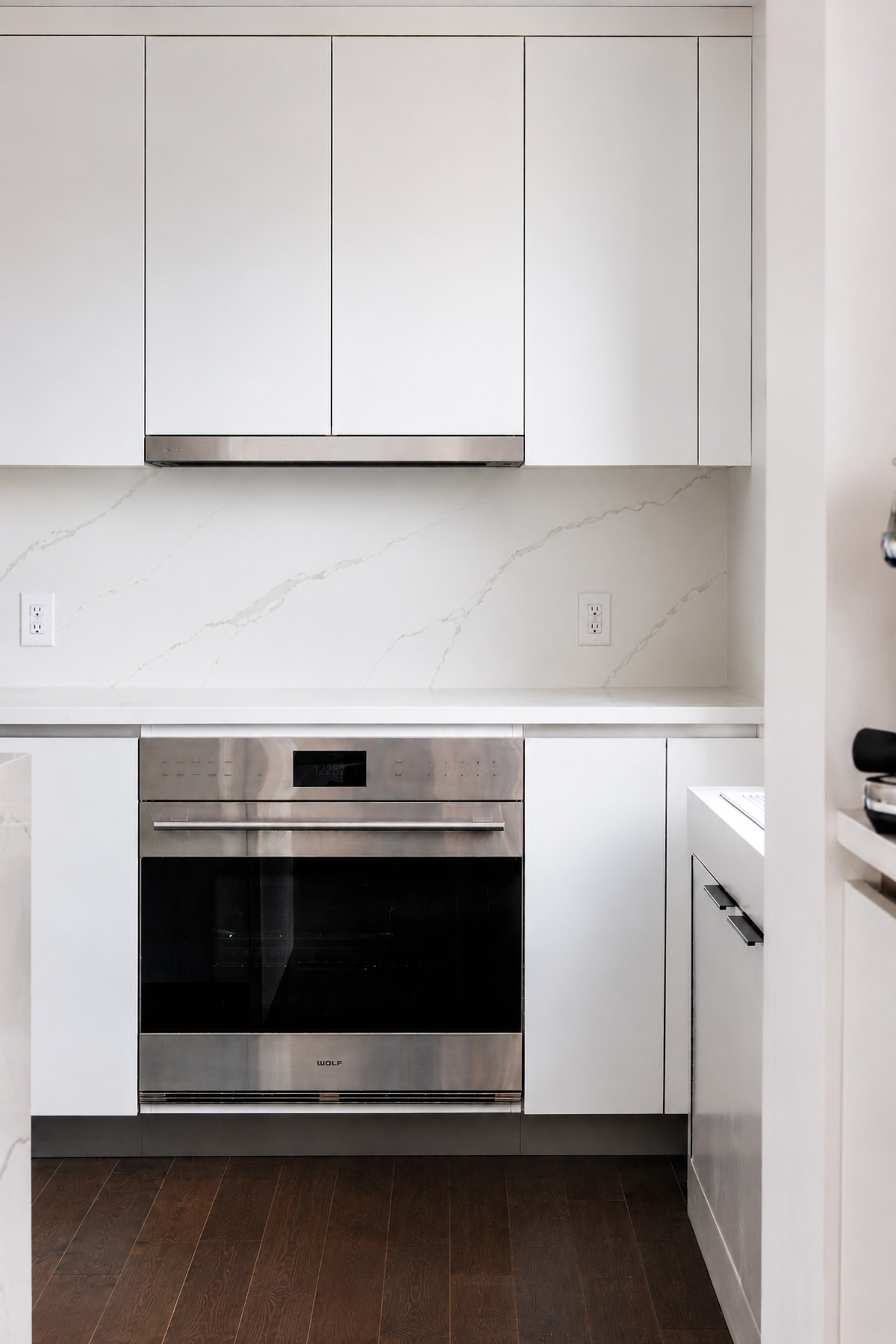
All white kitchen (Upper West side NYC)
Natural Wood
Natural wood cabinetry introduces warmth, texture, and character into a kitchen while maintaining a clean and contemporary aesthetic. The natural variation of the wood grain adds depth and visual interest that cannot be replicated with painted finishes. When paired with simple forms and carefully selected materials, natural wood can create a modern kitchen that feels inviting and comfortable rather than stark or austere.
In this Tribeca penthouse renovation, we designed the kitchen with custom eucalyptus cabinetry, natural stone countertops and a matching backsplash, and white oak flooring. The combination of materials creates a sense of warmth throughout the space while maintaining the clean lines and simplicity of a contemporary kitchen. Rather than pursuing minimalism for its own sake, we focused on restraint, allowing the materials themselves to define the character of the room. The result is a kitchen that feels modern and refined while maintaining a strong connection to natural materials.
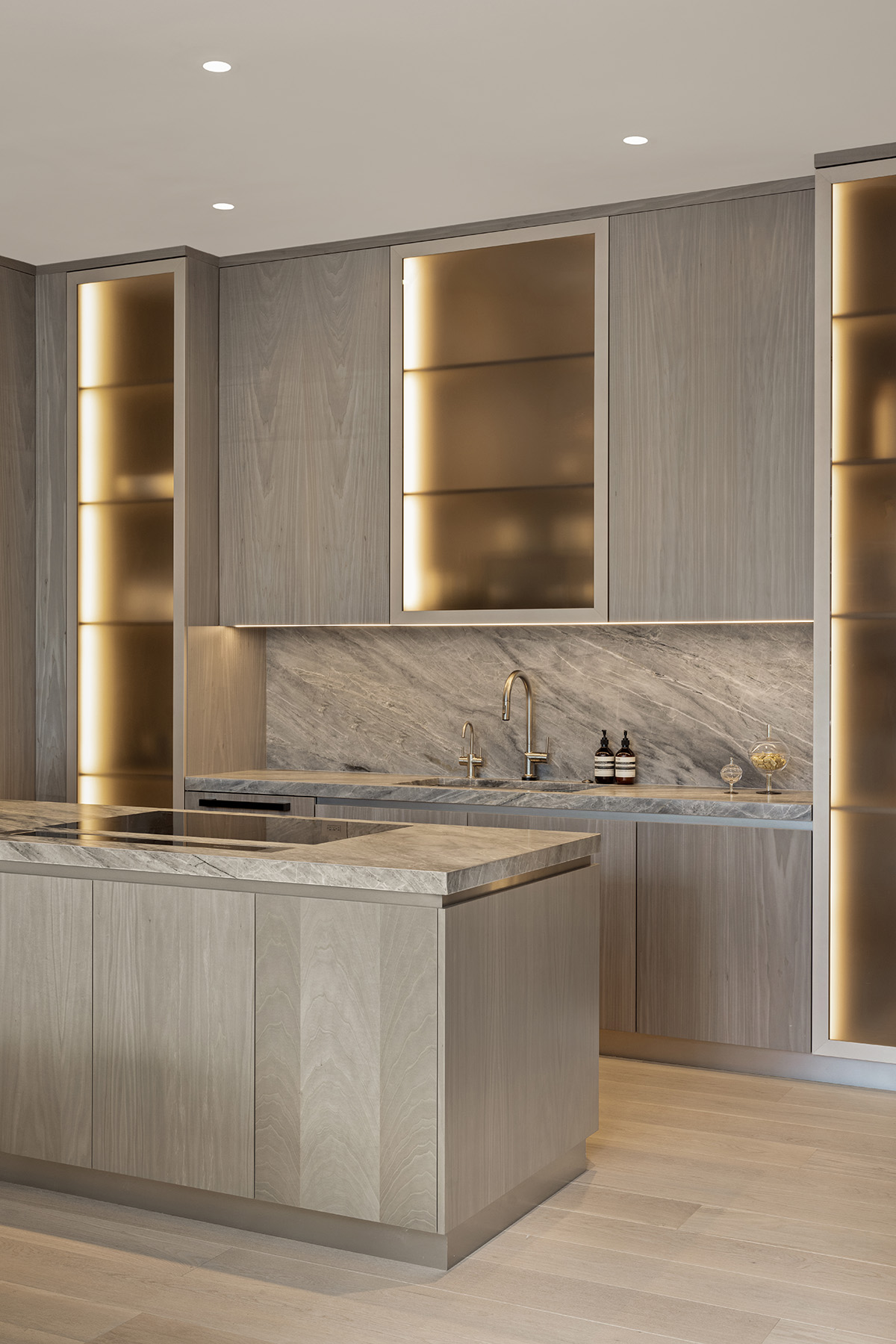
Warm Custom Kitchen with Natural Wood (Tribeca, NYC)
Details Matter
Details are often the difference between a good design and an exceptional one. While layouts, materials, and finishes establish the overall character of a home, it is the careful consideration of details that creates a greater sense of craftsmanship and refinement. Small decisions regarding proportions, alignments, transitions, and profiles can have a significant impact on how a space is experienced.
I believe details are the key factor that elevates a home, making it personal and exceptional.
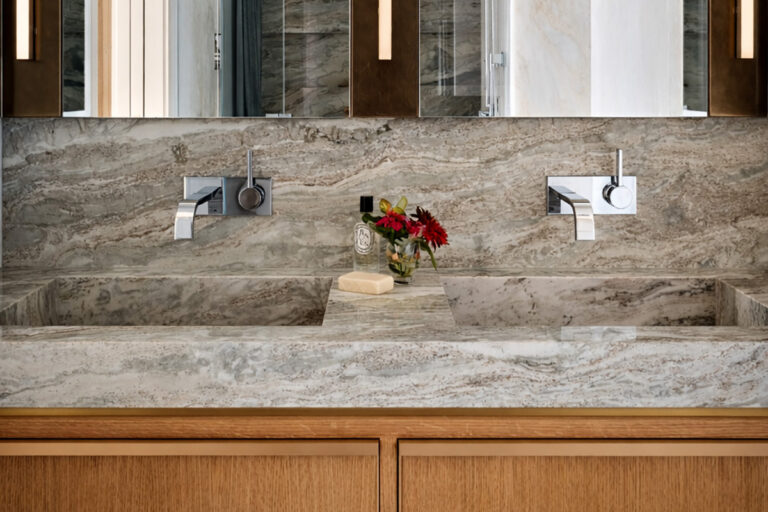
In this Upper East Side apartment renovation, we designed a fully custom kitchen with a marble island featuring a stepped edge detail. Rather than using a standard countertop profile, we developed a layered stone detail that adds depth, shadow, and visual interest to the island. The detail reinforces the craftsmanship of the kitchen while giving the stone a greater architectural presence within the room. Although subtle, thoughtful details such as this contribute to the overall character of a home and help elevate the design beyond the ordinary.

Stepped Countertop Detail (UES, NYC)
Designing Kitchens for NYC Homes
The best kitchen designs balance function, aesthetics, and the way people actually live in their homes. Whether designing a loft in the Flatiron District, a penthouse in Tribeca, an apartment combination on the Upper East Side, or a historic Manhattan townhouse, our goal is always the same: to create kitchens that are beautiful, practical, and integrated with the overall architecture of the home.
Every design decision, from the layout and storage to the materials, lighting, and appliances, contributes to how a kitchen looks, feels, and functions. The most successful kitchens are not defined by a single feature or trend. They are the result of thoughtful planning, careful detailing, and a clear design vision.
At Fontan Architecture, we design kitchens as part of complete apartment, loft, penthouse, townhouse, and brownstone renovations throughout New York City. We believe the kitchen should be more than a place to cook. It should be a central part of the home that supports daily life while contributing to the overall character and experience of the space.
Request a Consultation with Fontan Architecture - 212 321 0194
Jorge Fontan, AIA, is an architect and founder of Fontan Architecture based in New York City. The firm focuses on residential design, including new homes and extensive renovations for discerning clients. Through collaborative dialogue that draws on the individuality of each client, projects develop as distinct architectural responses guided by thoughtful planning, precise detailing, and a commitment to creating enduring value.
Jorge Fontan, AIA, is an architect and founder of Fontan Architecture based in New York City. The firm focuses on residential design, including new homes and extensive renovations for discerning clients. Through collaborative dialogue that draws on the individuality of each client, projects develop as distinct architectural responses guided by thoughtful planning, precise detailing, and a commitment to creating enduring value.