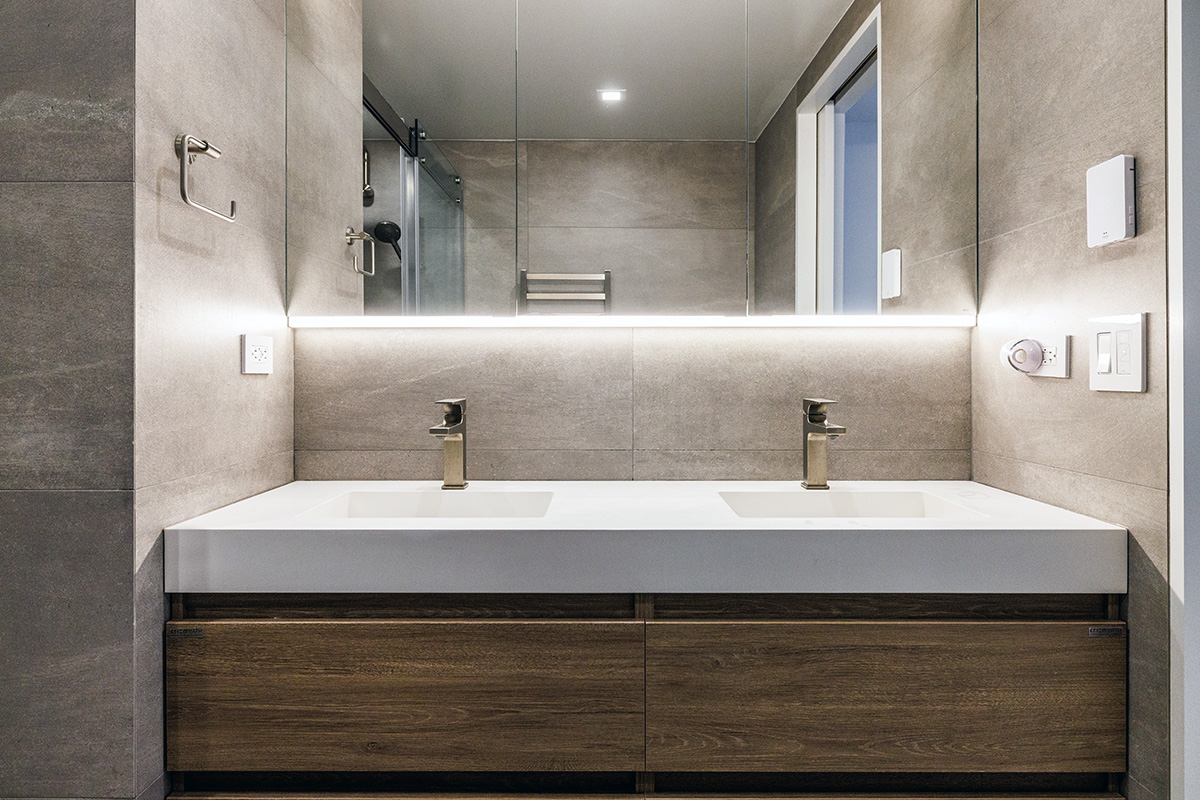
When renovating a bathroom, material selection is one of the most important decisions affecting durability, maintenance, and overall design quality. Among the many finish options available, porcelain has become one of the most reliable and versatile materials we specify for high-end residential bathrooms.
Porcelain is dense, nonporous, and highly resistant to moisture and staining, making it particularly well-suited for wet environments such as showers and bathroom floors. It offers a wide range of design possibilities — from minimalist solid tones to marble and concrete looks — while maintaining long-term performance.
I am Jorge Fontan, AIA, a New York architect and owner of Fontan Architecture, a Manhattan-based firm specializing in high-end residential projects. In this article, I will explain why we often use porcelain in bathroom renovations, along with its advantages, limitations, and design considerations.
Table of Contents
Porcelain is Nonporous and Highly Resistant to Moisture
Porcelain tile is manufactured at extremely high temperatures, creating a dense, vitrified material with a low water absorption rate typically below 0.5%. This low absorption rate is what technically qualifies a tile as porcelain and makes it particularly well-suited for bathrooms and other wet environments.
Because porcelain is so dense, it resists moisture infiltration, staining, and discoloration far more effectively than many natural materials. Unlike marble or limestone, which are porous and can absorb water and oils if not properly sealed, porcelain maintains its color and finish without requiring ongoing sealing or specialized maintenance.
This dimensional stability and resistance to moisture make porcelain a reliable long-term material for shower enclosures, bathroom floors, and wall applications.
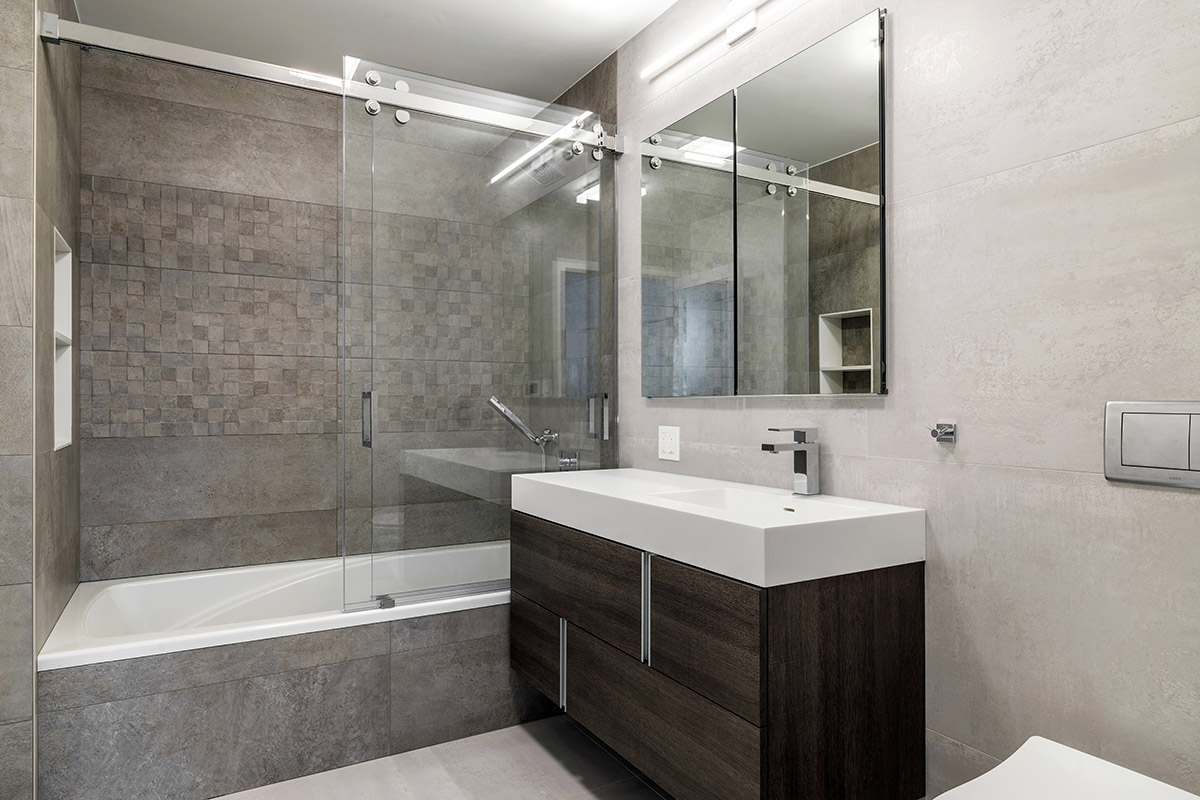
Porcelain Tile Bathroom
Easy to Maintain
One of the practical advantages of porcelain in bathroom applications is its low maintenance requirement. Because porcelain is nonporous and resistant to staining, surface contaminants generally remain on the surface rather than penetrating into the material.
In most cases, routine cleaning with water and a mild, non-abrasive cleaner is sufficient. Unlike natural stone, porcelain does not require periodic sealing, and it is less susceptible to etching from common bathroom products.
For homeowners seeking a clean, contemporary bathroom without ongoing maintenance concerns, porcelain provides a sturdy and long-lasting solution.
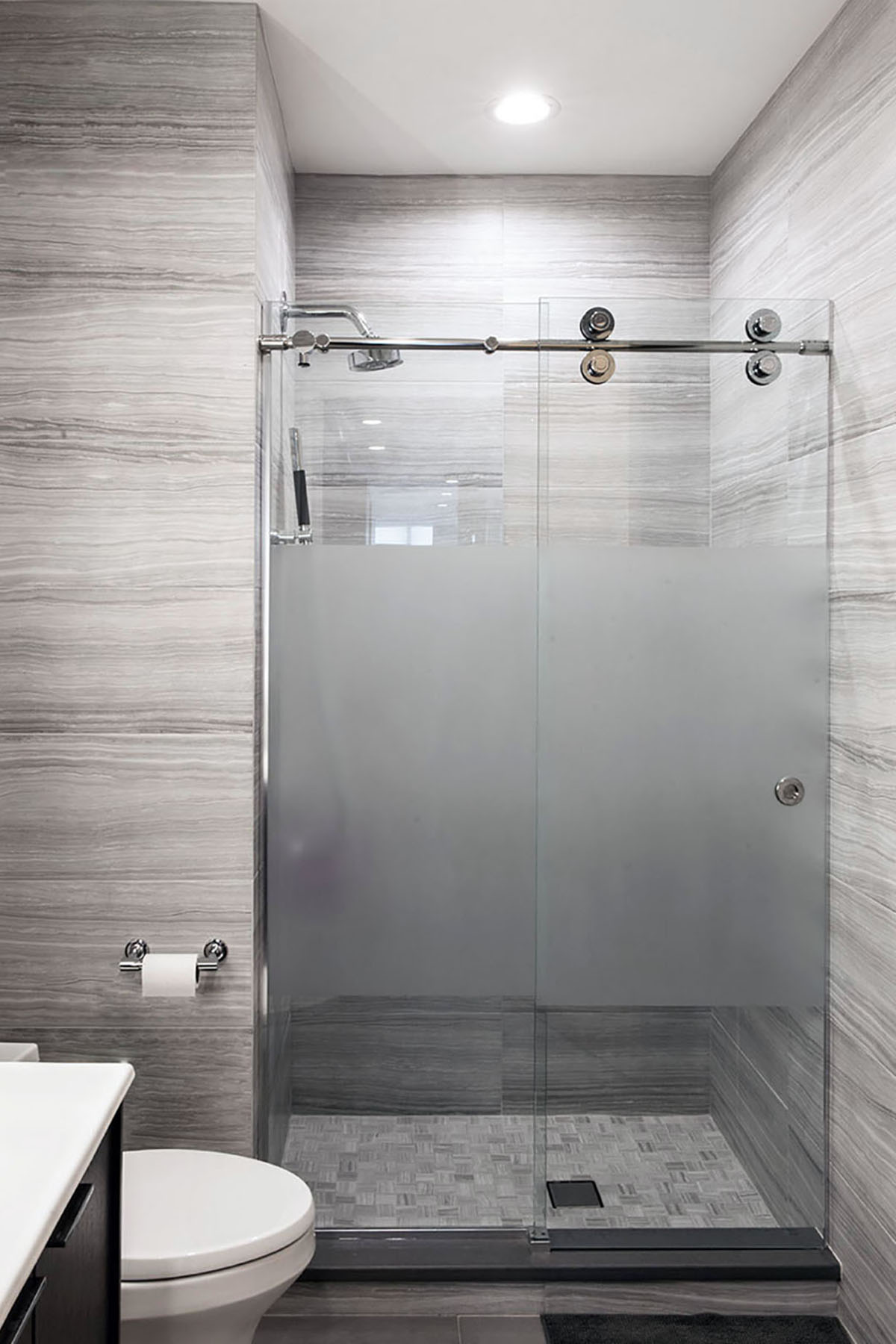
Porcelain Tile Shower
Wide Range of Colors and Design Expressions
One of porcelain’s greatest strengths is its design versatility. Contemporary porcelain collections range from refined solid tones to detailed marble, limestone, and concrete interpretations. Manufacturers now produce tiles and slabs with subtle veining, controlled movement, matte or polished finishes, and even textured surfaces that introduce depth and shadow.
In our work, material selection is never based solely on appearance. We study how a tile reads in natural and artificial light, how its scale interacts with the proportions of the room, and how the surface texture will feel in a daily-use environment. A porcelain slab with restrained veining can create a calm, architectural backdrop, while a textured tile can add dimension to an otherwise minimal space.
We strongly recommend reviewing physical samples in person. Color, sheen, and surface variation can shift significantly depending on lighting conditions. Evaluating materials firsthand ensures the finish aligns with the intended design vision.
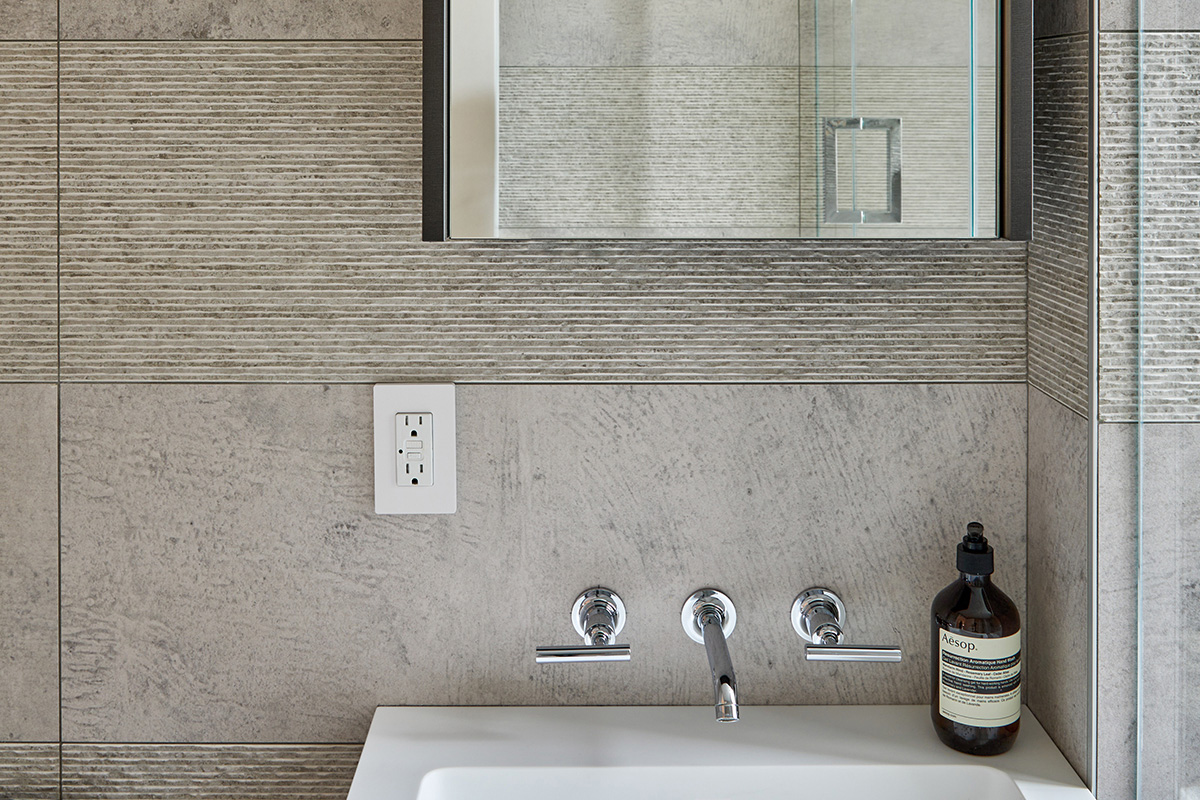
3D Tile for Bathroom Walls
Cost Considerations Compared to Natural Stone
Natural marble is a timeless and beautiful material, but it requires ongoing maintenance and careful detailing in wet environments. Porcelain offers a more controlled and predictable performance profile while often reducing both material and lifetime maintenance costs.
While pricing varies depending on format and manufacturer, porcelain can often be more cost-efficient than premium marble selections — particularly in large-format applications. This efficiency allows clients to allocate budget strategically, whether toward larger slabs, custom millwork, or higher-end fixtures.
Importantly, porcelain should not be viewed simply as a substitute for stone. It is a distinct material with its own design advantages, especially in contemporary bathroom environments where consistency, longevity, and minimal maintenance are priorities.
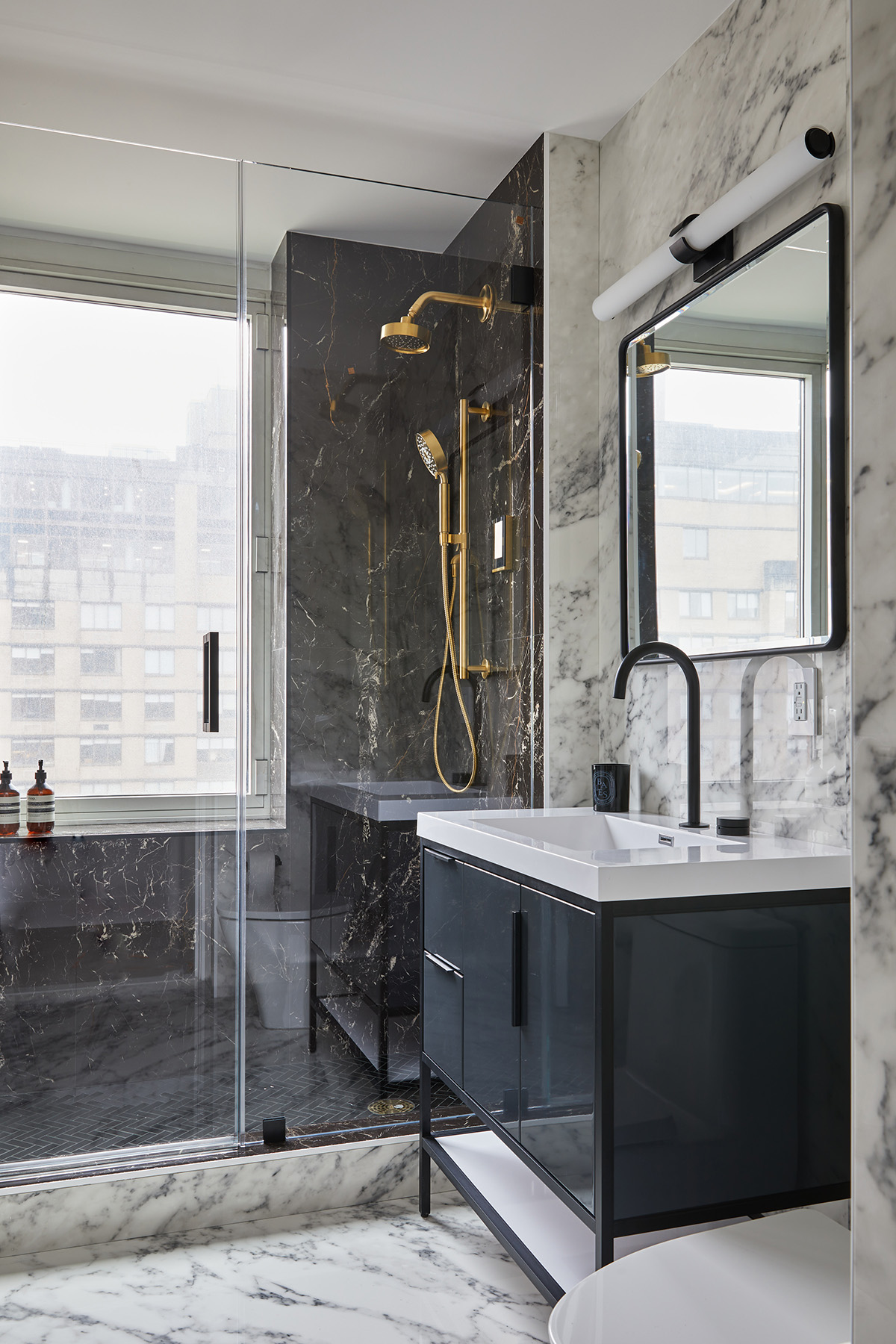
Porcelain Bathroom with a Marble Look
Wood-Look Porcelain for Wet Areas
Porcelain is also available in wood-inspired finishes that introduce warmth and texture without the performance concerns associated with natural wood in wet environments. While solid wood can be vulnerable to moisture movement, staining, and expansion or contraction, porcelain remains dimensionally stable and resistant to water exposure.
In certain bathroom designs — particularly contemporary or spa-inspired spaces — a wood-look porcelain can soften the material palette while maintaining the technical quality required for showers and floors. The result is the visual warmth of wood combined with the technical reliability of porcelain.
In the shower below, we used a linear wood-look porcelain tile to create the appearance of horizontal wood slats, adding depth and texture while ensuring proper performance in a wet assembly.
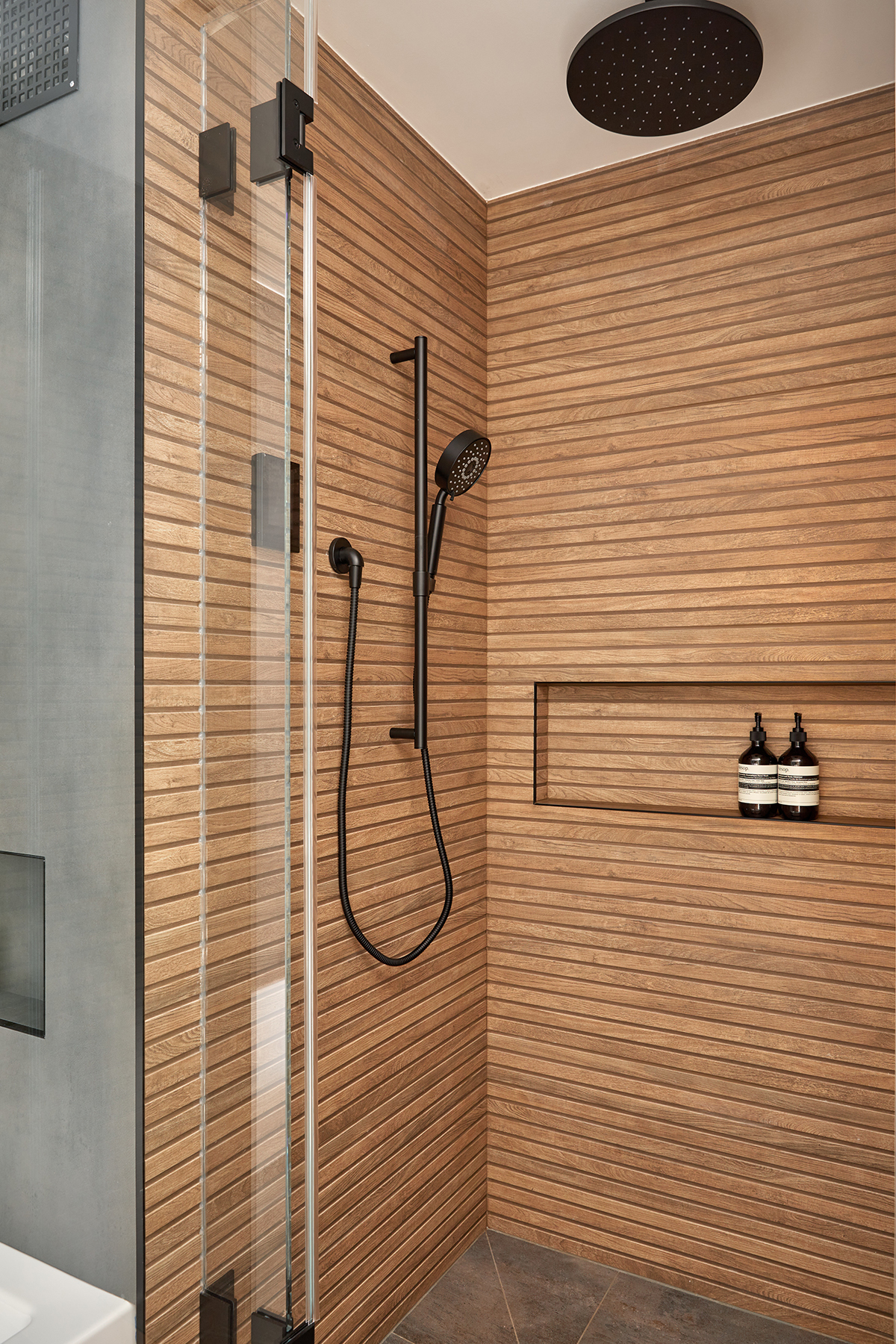
Wood Slat Look 3D Tiles
Large-Format Porcelain Slabs
Large-format porcelain slabs allow for a more seamless and architectural bathroom design. By reducing grout lines, slabs create cleaner visual planes and a more monolithic appearance — particularly effective in contemporary interiors.
Full-height slabs can extend from floor to ceiling, emphasizing verticality and minimizing visual interruption. This approach enhances the sense of scale and refinement within the space.
In the Manhattan apartment shown below, we used large-format porcelain slabs to achieve a restrained, cohesive finish with minimal joint lines. The result is a bathroom that feels both modern and materially controlled.
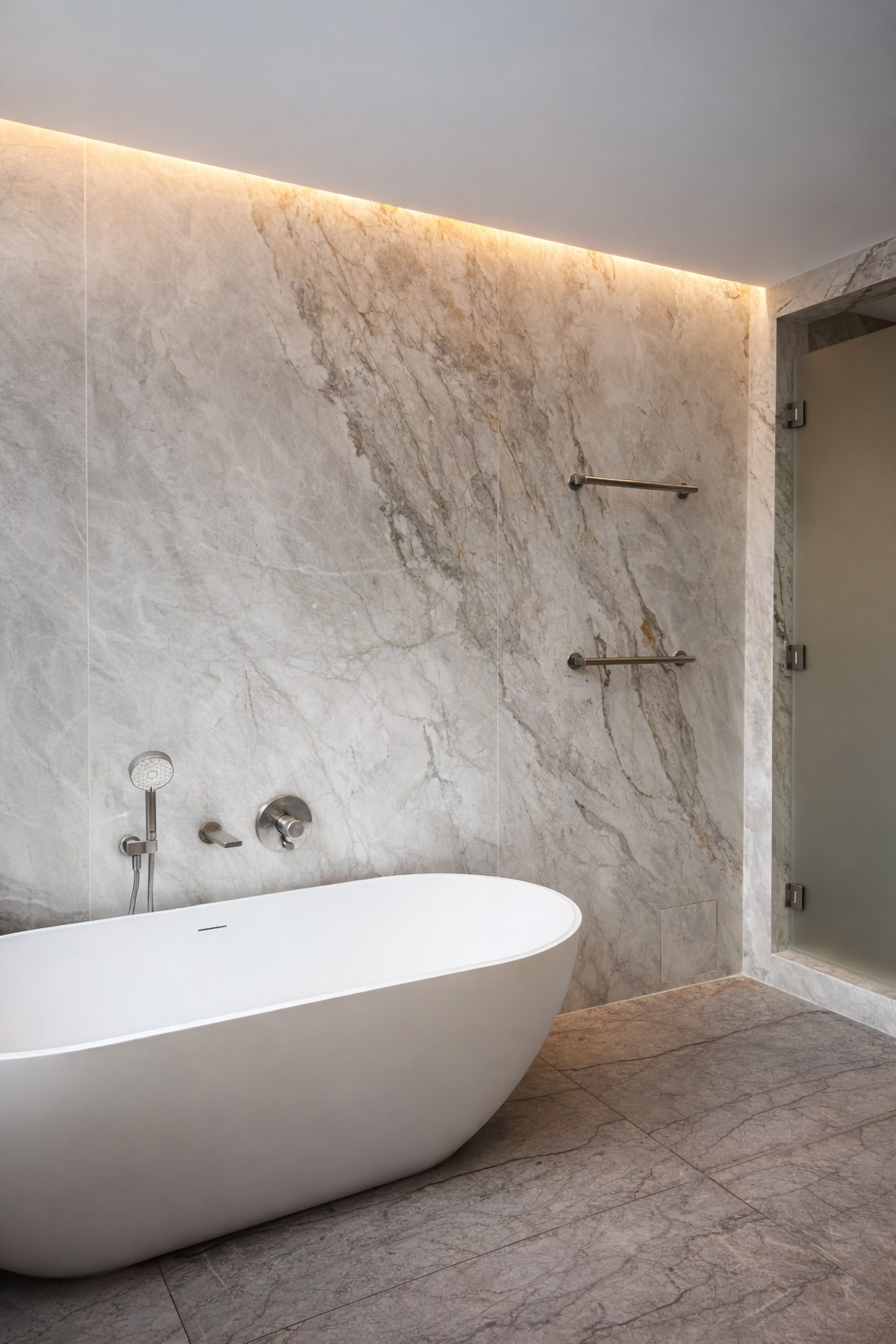
Large Format Porcelain Slabs
Porcelain in Modern Bathroom Design
Porcelain is particularly well-suited for contemporary bathroom design due to its clean lines, controlled surface finishes, and ability to create uninterrupted visual planes. Large-format tiles and slabs allow the material to read as architecture rather than decoration, reinforcing a minimalist aesthetic.
In our Manhattan loft renovation shown below, we specified a restrained gray porcelain tile with a subtle industrial character to complement the building’s existing materials. The tone and matte finish helped maintain the loft’s industrial aesthetic while providing a resilient surface appropriate for a bathroom environment.
Porcelain’s versatility allows us to achieve a range of contemporary expressions — from refined and minimalist to textured and industrial — while maintaining performance and longevity.
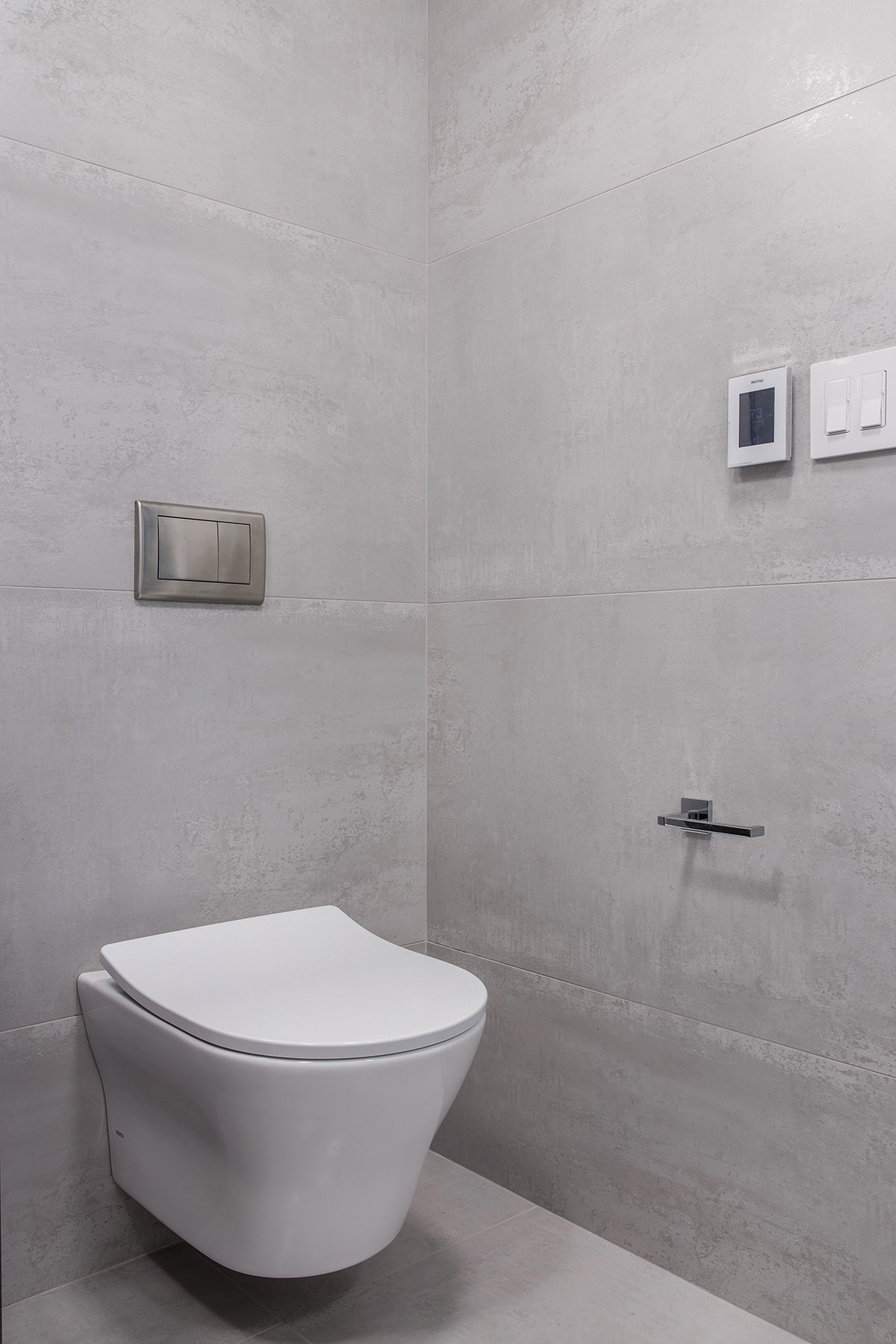
Modern Porcelain Bathroom Design in a New York Loft
Textured Porcelain Accents
Porcelain is also available in three-dimensional formats that introduce depth and shadow to an otherwise planar surface. These textured tiles can subtly articulate a wall, allowing light to interact with the surface and create variation throughout the day.
When used selectively — such as within a shower niche, feature wall, or behind a vanity — 3D porcelain can provide visual interest without disrupting the overall composition of the space. The key is restraint. In contemporary bathrooms, texture should enhance the architecture rather than compete with it.
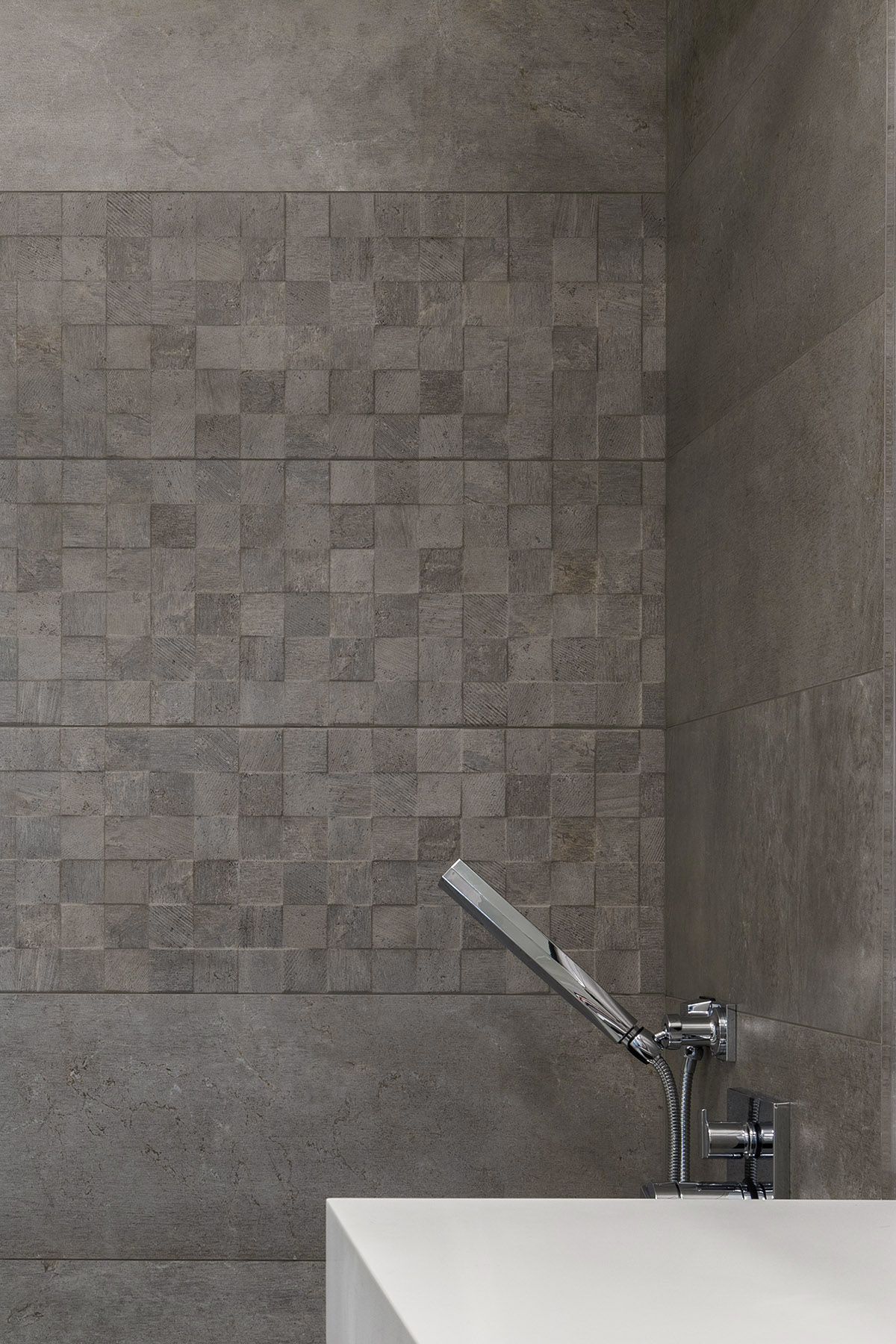
3D Accent Porcelain Tile
Porcelain Bathrooms
Porcelain is one of the most reliable and versatile materials we specify for bathroom design, but it is not the only option. Material selection should always respond to the architecture of the space, the client’s aesthetic goals, and long-term performance considerations.
For homeowners seeking a long lasting, low-maintenance finish with broad design flexibility, porcelain offers significant advantages. Its consistency, resistance to moisture, and availability in large-format applications make it particularly well-suited for contemporary bathrooms.
That said, natural stone, glass, and other materials may be appropriate depending on the intended character of the space. The right decision depends on the overall design vision, budget priorities, and maintenance expectations.

Dark Porcelain Shower
When Natural Stone May Be Preferable
While porcelain offers exceptional performance and design flexibility, it does not fully replicate the depth and natural variation found in genuine stone. Materials such as marble and limestone possess organic veining and subtle tonal shifts that are inherently unique to each slab.
For clients who prioritize authenticity and the richness of natural material, stone may be the more appropriate choice — particularly in spaces where maintenance concerns are secondary to aesthetic expression.
Porcelain provides greater consistency and lower maintenance requirements, but natural stone offers a level of material depth that some homeowners find irreplaceable.
Porcelain Bathroom Design
Material selection in a custom home should never be based on trends alone. Every decision — including whether to use porcelain, natural stone, or another finish — should reflect the architecture of the space, the performance requirements, and the homeowner’s priorities.
In our residential work, we approach each project with careful consideration of proportion, materiality, and durability. A successful bathroom design is not simply about selecting a tile; it is about aligning aesthetics, function, and construction detailing into a cohesive whole.
If you are considering a renovation or custom home project, we invite you to contact Fontan Architecture to discuss your goals. We provide comprehensive architectural services, guiding clients from initial concept and feasibility through approvals and construction, ensuring the finished home reflects both vision and technical precision.
Request a Consultation with Fontan Architecture - 212 321 0194
Jorge Fontan, AIA, is an architect and founder of Fontan Architecture based in New York City. The firm focuses on residential design, including new homes and extensive renovations for discerning clients. Through collaborative dialogue that draws on the individuality of each client, projects develop as distinct architectural responses guided by thoughtful planning, precise detailing, and a commitment to creating enduring value.

Jorge Fontan, AIA, is an architect and founder of Fontan Architecture based in New York City. The firm focuses on residential design, including new homes and extensive renovations for discerning clients. Through collaborative dialogue that draws on the individuality of each client, projects develop as distinct architectural responses guided by thoughtful planning, precise detailing, and a commitment to creating enduring value.