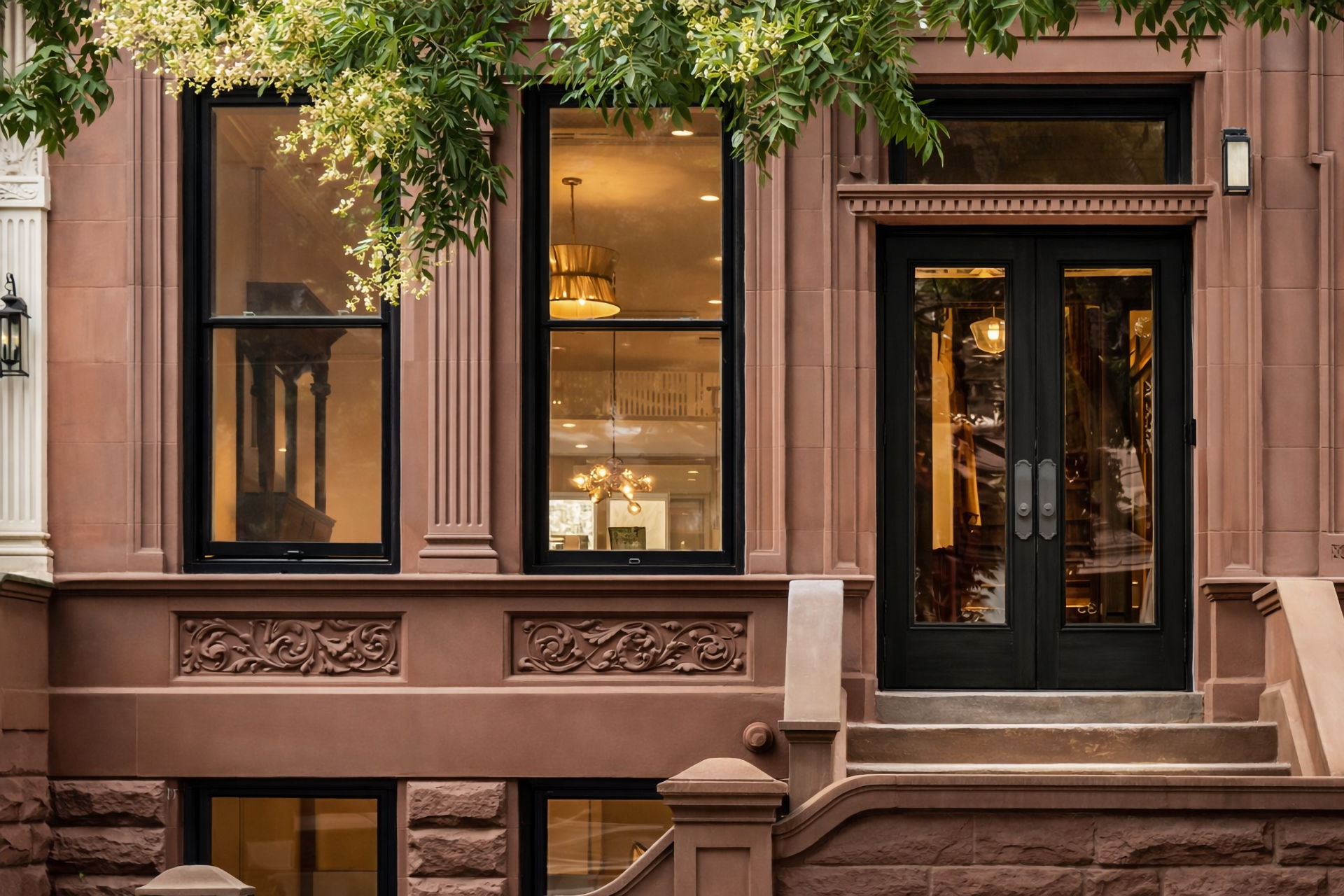
In New York City, a $2–3 million townhouse renovation represents a substantial renovation for a typical-sized home, involving upgrades across multiple aspects of the property. This level of investment is usually associated with a partial to full gut renovation, including layout modifications, building systems upgrades, and upgrades required to bring the home to contemporary standards.
A $2–3 million townhouse renovation in NYC typically supports a partial to full gut renovation of a 3,000 to 5,000 square foot home, including layout reconfiguration, upgraded mechanical systems, new kitchens and bathrooms, integrated millwork, and a coordinated lighting design executed to a high-quality standard. This budget range allows for a cohesive design approach while requiring careful prioritization of scope and material selections.
I am Jorge Fontan, owner of Fontan Architecture, a Manhattan-based architecture firm specializing in high-end residential renovations. Our work focuses on complex apartment, loft, townhouse, and brownstone renovations in New York City, with an emphasis on thoughtful design, detailed documentation, and careful coordination throughout construction. In this article, I will outline what a $2–3 million townhouse renovation typically encompasses, along with the key factors that influence cost, scope, and overall project strategy.
Table of Contents
Size of the Home and Budget Relationship
In our experience renovating townhouses and brownstones across New York City, homes between approximately 3,000 and 5,000 square feet often align with a $2–3 million budget for a partial to full gut renovation.
Projects at this scale typically include:
- Reconfigured floor plans and layout modifications
- Mechanical, electrical, and plumbing system upgrades
- New kitchens and bathrooms
- New or refinished flooring throughout
- Coordinated architectural lighting design
- Mid-level to high-end finishes installed selectively across the home
As square footage increases, overall cost rises proportionally due to expanded mechanical distribution, additional wet areas, increased millwork quantities, and larger finish surface areas throughout the space.
Townhouses within the 3,000 to 5,000 square foot range can be completed within this budget when scope, level of finish, and overall quality are carefully managed. Achieving a consistently high level of customization and detailing across larger homes will require a higher overall construction budget.
The scope of work, level of architectural refinement, material quality, craftsmanship, and total square footage are the primary factors that determine final project cost.
Scope of Work at the $2–3 Million Renovation Level
A $2–3 million budget typically supports a thorough renovation with careful management of scope to maintain alignment with the overall budget. This level of investment allows for substantial upgrades while requiring clear prioritization of design elements, materials, and limited customization.
This scope of work often includes:
- Removal of non-load-bearing walls
- Discreet structural repairs (without full interior reconstruction)
- Reconfiguration of floor plans
- Relocation of kitchens and bathrooms
- Creation of primary bedroom suites
- Addition of new bathrooms or powder rooms
- System upgrades, including electrical, plumbing, and HVAC improvements
Projects within this budget range require disciplined decisions regarding scope and level of finish. Expanding the extent of structural work, increasing the number of wet areas, or incorporating fully custom elements can shift a project into a higher budget tier or place pressure on the overall budget.
Customization and Design
At the $2–3 million renovation level, customization is limited and applied selectively. Design focuses on improving layout, functionality, and overall cohesion, with targeted upgrades that enhance key areas of the home rather than a fully bespoke architectural approach.
In townhouses and brownstones at this budget level, customization may include:
- Limited custom millwork in kitchens or select built-in elements
- Standardized or semi-custom cabinetry and storage systems
- Basic integration of lighting within ceilings and millwork
- Functional kitchen layouts with coordinated appliance placement
- Straightforward stone and tile applications without extensive custom detailing
Fully bespoke elements, specialized finishes, and highly detailed fabrication are generally constrained at this level due to cost. Applying custom design consistently across the entire home typically requires a higher budget tier, especially on larger homes.
Design decisions at this level prioritize clarity, durability, and efficient use of resources. Customization is focused where it has the greatest impact, while more standardized solutions are used to maintain overall budget alignment.
The distinction at this level is defined by selective customization combined with disciplined scope control. A well-executed renovation in this range achieves a cohesive and functional result without relying on extensive bespoke design or specialized fabrication.
Design Enhancements and Budget Impact
At the $2–3 million renovation level, certain design enhancements can be incorporated selectively. Including multiple major upgrades within the same project will typically exceed this budget range and move the project into a higher tier.
Common design enhancements with major influence on overall cost include:
- Roof deck construction or roof access improvements
- Rear yard or vertical additions to increase livable space
- Installation of a residential elevator
- Façade restoration or exterior upgrades
- Excavation for cellar expansion or underpinning (if needed)
- Extensive structural modifications beyond standard layout changes and repairs
- Radiant heat floors
- Custom or specialty windows and doors (for example solid wood with chain and counterweight windows)
- Rebuilding or relocating stairs
Each of these elements introduces additional design development, engineering coordination, permitting requirements, and construction complexity. Costs increase due to structural scope, specialized trades, longer timelines, and regulatory considerations specific to New York City.
Projects within this budget range benefit from selecting one or two of these enhancements and integrating them carefully into the overall scope. Incorporating several of these elements within a single project typically requires a higher construction budget and a broader project strategy.
Architectural Detailing
In a $2–3 million townhouse renovation, architectural detailing contributes to the overall quality of the project but is applied with restraint. The character of the renovation should be expressed through clear and consistent design and detailing.
Within this budget range, design attention focuses on maintaining clean alignments, straightforward transitions, and practical detailing that can be executed reliably within budget. Existing elements may also be refinished and preserved where appropriate.
This may include:
- Refinishing, relocating existing wood paneling
- Standard baseboard and trim conditions with consistent profiles
- Simple recessed or surface-mounted lighting conditions
- Basic stone-to-wall transitions at kitchens and bathrooms
- Limited use of integrated or built-in elements
- Millwork with standard joinery and simplified detailing
More complex detailing strategies such as concealed frames, continuous shadow reveals, or highly integrated assemblies are typically limited or used selectively, as they require additional design development, coordination, and fabrication cost.
These elements require coordination between architectural drawings and construction, with a focus on clarity and buildability. Detailing is developed to achieve consistency and durability rather than highly customized or intricate conditions.
At this level of investment, architectural detailing supports a clean and cohesive result. The overall quality of the renovation is defined by disciplined execution, balanced design decisions, and careful control of scope rather than extensive bespoke detailing.
Architectural Services
General Contractor Selection
At the $2–3 million renovation level, contractor selection is an important factor in aligning project scope, budget, and execution strategy. Different contractors operate at different project scales, with varying levels of staffing, overhead, and specialization.
Projects within this budget range are typically well suited to contractors who focus on mid- to high-quality residential renovations, with experience in New York City construction and familiarity with townhouse and brownstone conditions.
Contractors working at the highest tier of the market often focus on projects with larger budgets, higher levels of customization, and more extensive scope. These projects typically involve greater coordination, longer timelines, and a higher degree of specialization across trades and fabrication.
Contractors operating in this range typically start around $550 per square foot for more limited scope projects. More extensive renovations or higher quality levels may fall in the range of $700 to $800 per square foot. Projects with highly detailed scope and top-tier contractors can range from $900 to $1,200 per square foot or more.
Selecting a contractor whose typical project size and working style align with the scope of the renovation helps support efficient execution, cost control, and clear communication throughout construction.
A well-matched contractor contributes significantly to the success of the project, with an approach to construction that reflects the level of detail, coordination, and finish appropriate to the overall budget. At our office, we recognize the importance of matching the general contractor to the client’s needs and support our clients throughout the selection process.
Renovation Planning and Strategy
For buyers considering a townhouse or brownstone in need of renovation, the renovation budget should be evaluated alongside the acquisition cost as part of an overall investment strategy.
A $2–3 million renovation influences total project cost, design potential, and long-term property value. Early architectural consultation helps establish:
- Feasibility of layout reconfiguration
- Alignment between design objectives and construction budget
- Anticipated project timeline and permitting duration
- Existing building conditions and infrastructure constraints
Each townhouse and brownstone presents unique physical and regulatory conditions, particularly in relation to age, existing construction, and potential landmark status. Early architectural due diligence helps determine whether the desired scope of work aligns with a $2–3 million renovation budget and identifies limitations that may affect design and execution.
Renovations at this level benefit from early architectural involvement to guide scope definition, establish priorities, and support informed decision-making from the outset.
Request a Consultation with Fontan Architecture - 212 321 0194
Jorge Fontan, AIA, is an architect and founder of Fontan Architecture based in New York City. The firm focuses on residential design, including new homes and extensive renovations for discerning clients. Through collaborative dialogue that draws on the individuality of each client, projects develop as distinct architectural responses guided by thoughtful planning, precise detailing, and a commitment to creating enduring value.
Jorge Fontan, AIA, is an architect and founder of Fontan Architecture based in New York City. The firm focuses on residential design, including new homes and extensive renovations for discerning clients. Through collaborative dialogue that draws on the individuality of each client, projects develop as distinct architectural responses guided by thoughtful planning, precise detailing, and a commitment to creating enduring value.