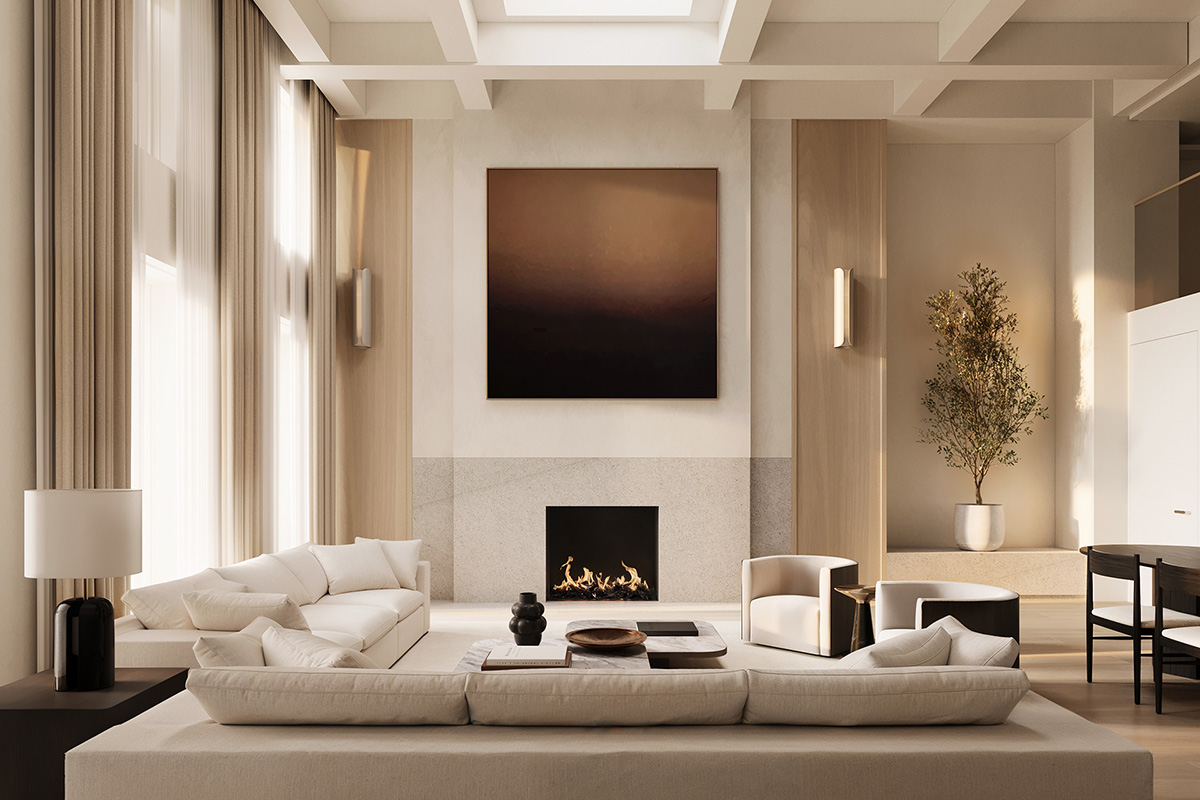
In New York City, a $5–7 million townhouse renovation represents a high-quality architectural project involving a comprehensive scope of work and an elevated level of finish throughout the home, typically for larger townhouses and brownstones.
A $5–7 million townhouse renovation in NYC typically supports a full gut renovation of a 5,000 to 8,000 square foot home, including extensive layout reconfiguration, upgraded building systems, high-quality materials, and a highly customized approach to architectural detailing and interior design. This budget range allows for a more complete realization of design intent, with a high degree of consistency and customization across all spaces.
I am Jorge Fontan, owner of Fontan Architecture, a Manhattan-based architecture firm specializing in high-quality residential renovations. Our work focuses on extensive renovations of apartments, lofts, townhouses, and brownstones in New York City, with an emphasis on full service thoughtful bespoke design, detailed documentation, and careful coordination throughout construction. In this article, I will outline what a $5–7 million townhouse renovation budget typically encompasses, along with the primary factors that influence cost, scope, and project strategy.
Table of Contents
Size of the Home and Budget Relationship
In our experience renovating townhouses and brownstones across New York City, homes between approximately 5,000 and 8,000 square feet commonly align with a $5–7 million renovation budget in the current market. Townhouses of approximately 25 feet in width often begin to align with this budget range for full renovations. Townhouse renovations can exceed this budget range with a more extensive scope of work or high level of opulence in design and material.
Projects at this scale typically include:
- Full gut renovation with reconfigured floor plans
- Comprehensive mechanical, electrical, and plumbing system upgrades
- Custom kitchens and bathrooms throughout the home
- New flooring and finishes across all levels
- Coordinated architectural lighting design
- High-quality materials and finishes applied consistently throughout the project
As square footage increases, maintaining a high and consistent level of finish, detailing, and integration across the entire home becomes a primary driver of cost. Larger homes within this range require a higher degree of coordination to ensure that design intent is carried through all floors and spaces without variation in quality or design strategy.
At this level, projects are typically executed with fewer compromises although some variation between primary and secondary spaces may remain depending on project priorities.
The scope of work, level of architectural refinement, material quality, craftsmanship, and total square footage are the primary factors that determine final project cost.
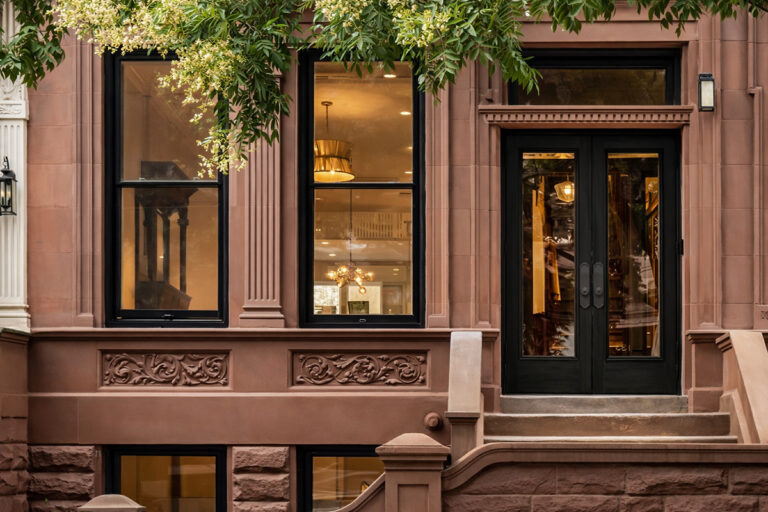
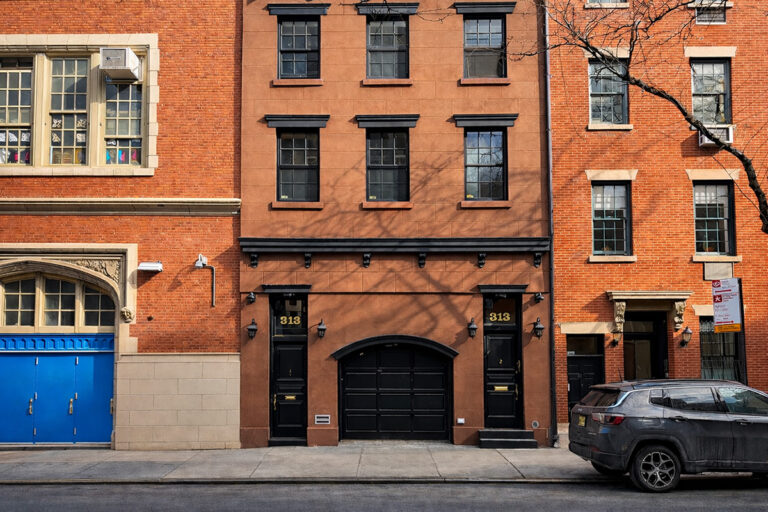
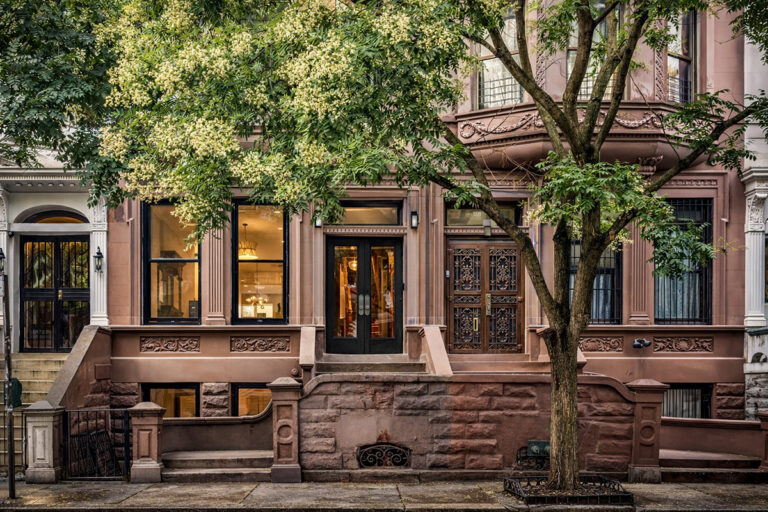
In current work at this level, we are providing full architectural services for the renovation of a 25-foot-wide townhouse of approximately 6,600 square feet, involving full gut renovation with multiple significant upgrades at the higher end of this budget range.
Scope of Work at the $5–7 Million Renovation Level
A $5–7 million budget supports a full gut renovation with a high degree of flexibility in layout, structural modifications, and overall project scope. Projects at this level are typically developed as fully integrated architectural solutions, with coordination across all aspects of design and construction.
Typical scope includes:
- Removal of non-load-bearing and supporting interior walls
- Structural modifications to support new layouts and spatial reconfiguration
- Relocation and expansion of kitchens and bathrooms
- Creation of primary bedroom suites and secondary bedrooms
- Addition of bathrooms and powder rooms
- Comprehensive system upgrades including electrical, plumbing, HVAC, and home automation systems
- Integration of architectural elements and built-in components throughout the home
At this level, projects are generally not constrained by basic scope limitations and instead focus on achieving a cohesive and fully developed architectural outcome. Layout decisions are driven by design intent, spatial relationships, and client requirements, with the ability to coordinate structural, mechanical, and architectural systems as a unified whole.
A defining characteristic of projects in this range is the level of customization and integration across the home. Design is developed with a high degree of specificity, with each element considered in relation to the overall architectural composition and the owner’s needs and preferences.
At the $5–7 million renovation level, customization becomes a central aspect of the project. Design is developed as a coordinated system, with elements tailored to the client’s requirements and preferences and integrated across the entire home.
Customization at this level typically includes:
- Fully custom or high-quality semi-custom millwork throughout the home
- Integrated storage, wardrobes, and built-in elements
- Coordinated kitchen design with integrated appliances
- Architectural lighting integrated into ceilings and millwork
- Refined detailing at key transition points
- Integration of custom-designed home offices, libraries, or media spaces
Refined detailing—such as flush baseboards, frameless doors, shadow gaps, and controlled material transitions in modern interiors, or more ornate decorative elements in traditional homes—can be incorporated more consistently at this level. These detailing strategies require extensive design development, careful documentation, and close coordination during construction to achieve a precise and cohesive result.
Projects in this range move toward a more bespoke and fully integrated architectural approach, with design decisions informed by spatial relationships, proportion, and material continuity. While not every element is entirely custom, the overall design reflects a high degree of integration, consistency, and intentionality across the home.
Design Enhancements and Budget Impact
At the $5–7 million renovation level, projects usually incorporate a broad range of design enhancements, often integrating multiple elements within a single, coordinated scope of work.
Common enhancements include:
- Roof deck construction and access improvements
- Rear yard or vertical additions
- Installation of residential elevators
- Façade restoration or exterior upgrades
- Cellar excavation or underpinning
- Radiant heating systems
- Custom windows and doors, including solid wood systems with traditional counterweight operation
- New Glass rear facade
- Stair reconstruction or relocation
These enhancements introduce additional complexity and require a high level of coordination between architects, engineers, consultants, and regulatory agencies. Projects at this level are often designed to integrate several of these elements as part of a comprehensive renovation strategy, rather than treating them as isolated upgrades.
The ability to combine multiple enhancements within a single project is a defining characteristic of this budget range. This requires careful planning, detailed documentation, and coordinated execution to ensure that each component contributes to a cohesive architectural outcome.
Projects in this range often include larger townhouses approaching 7,000 square feet, with a high degree of scope and coordination across all levels of the home. In current work at this scale, this includes a 25-foot-wide townhouse of approximately 6,600 square feet, with the addition of a residential elevator, full stair reconstruction throughout the home, and a new roof deck integrated into the overall design.
Architectural Detailing
At the $5–7 million renovation level, architectural detailing becomes a defining component of the project, contributing significantly to the overall quality and character of the home. Detailing is developed as an integral part of the design, shaping how materials, elements, and spaces relate to one another.
Design attention focuses on:
- Consistent and controlled material transitions
- Precise alignment and proportion across spaces
- Integration of millwork and architectural elements
- Coordinated lighting and ceiling conditions
At this level, detailing is approached as a coordinated system rather than a series of isolated conditions. Elements are dimensioned and developed with a high degree of precision, with careful attention to joints, reveals, alignments, and transitions throughout the home.
This level of detailing requires extensive documentation and close coordination between design and construction teams. The objective is to achieve a fully resolved architectural result, with a consistent and refined level of quality across all spaces.
Architectural Services
Renovations in the $5–7 million range require full-service architectural involvement, with a high level of coordination, documentation, and oversight throughout all phases of the project. At this level, architectural services are fully integrated into the development and execution of the renovation, with design, documentation, and construction coordination working as a unified process.
Services typically include:
- Feasibility analysis and layout development
- Integrated architectural and interior design
- Comprehensive material and product selection
- Coordination with structural and MEP engineers
- Detailed construction documents
- Permit filings and approvals
- Construction administration and project oversight
At this level, the intensity of coordination increases significantly as projects incorporate higher levels of customization and more refined detailing. This requires close collaboration between architect, consultants, fabricators, and contractor, with careful management of design development, documentation, approvals, and construction execution.
In townhouse and brownstone renovations, existing conditions, structural constraints, and potential landmark requirements further influence project scope and coordination. The role of the architect is to guide the project through these complexities while maintaining alignment between design intent, budget, and construction execution.
General Contractor Selection
At the $5–7 million renovation level, projects are typically aligned with contractors operating at a high level of coordination, staffing, and specialization. These projects require contractors with the capacity to manage complex scope, multiple trades, and a consistent level of execution across the entire home.
Contractors in this range often work within the following cost structure:
- Approximately $800 to $1,000 per square foot for high-quality renovations
- $1,000 to $1,200 per square foot for highly detailed projects with extensive scope and customization
- $1,200+ per square foot for projects with expansive scope, elevated finishes, and a consistently high level of detailing throughout all areas of the home
At this level, contractors are expected to coordinate closely with architects, consultants, and fabricators, with established systems for scheduling, procurement, and construction management. Execution requires a consistent level of quality across all areas of the project, with careful attention to sequencing, tolerances, and detailing.
Selecting a contractor whose experience and project scale align with the renovation is critical to achieving the intended level of quality, coordination, and overall execution.
For townhouse and brownstone renovations at this level, early planning plays a critical role in aligning design objectives with project scope, budget, and overall execution strategy.
A $5–7 million renovation supports a high level of design development and customization, while also introducing increased complexity in coordination, approvals, and construction. Projects in this range often involve multiple systems, structural modifications, and integrated design elements that require careful planning from the outset.
Early architectural consultation helps define project direction, identify constraints, and establish a clear strategy for design, documentation, and construction. This includes evaluating existing conditions, coordinating with consultants, and aligning scope with both budget and project priorities.
A structured planning process is essential at this level to ensure that design intent, construction sequencing, and overall execution are coordinated effectively across all phases of the project.
Request a Consultation with Fontan Architecture - 212 321 0194
Jorge Fontan, AIA, is an architect and founder of Fontan Architecture based in New York City. The firm focuses on residential design, including new homes and extensive renovations for discerning clients. Through collaborative dialogue that draws on the individuality of each client, projects develop as distinct architectural responses guided by thoughtful planning, precise detailing, and a commitment to creating enduring value.
Jorge Fontan, AIA, is an architect and founder of Fontan Architecture based in New York City. The firm focuses on residential design, including new homes and extensive renovations for discerning clients. Through collaborative dialogue that draws on the individuality of each client, projects develop as distinct architectural responses guided by thoughtful planning, precise detailing, and a commitment to creating enduring value.