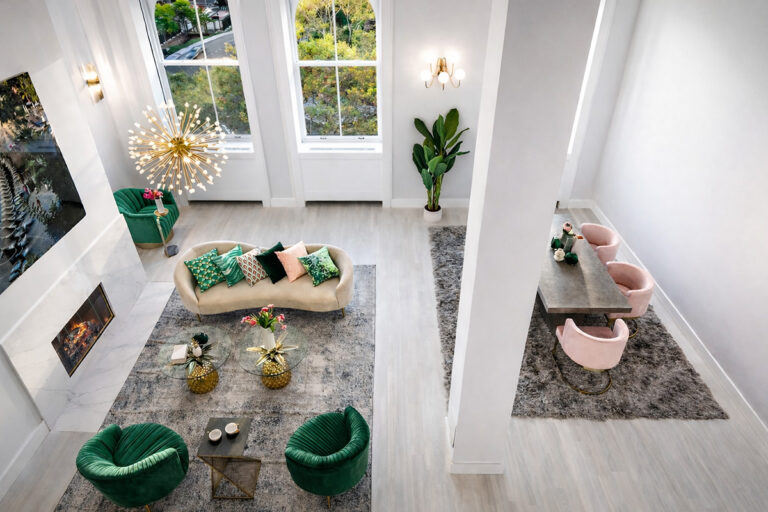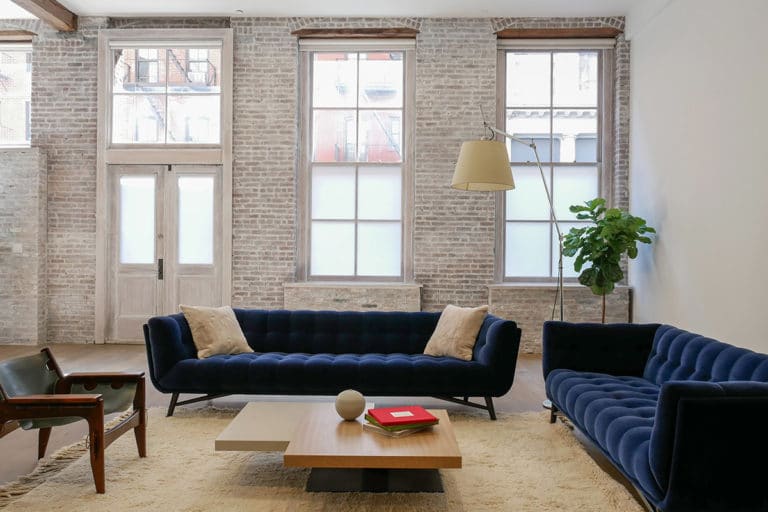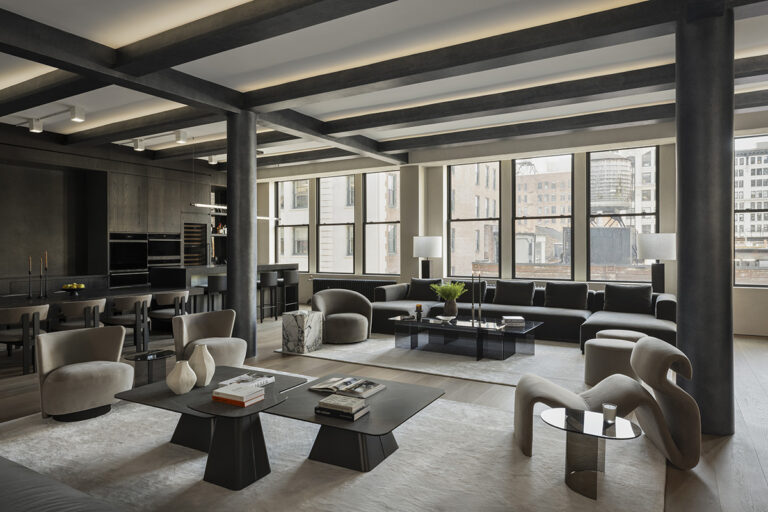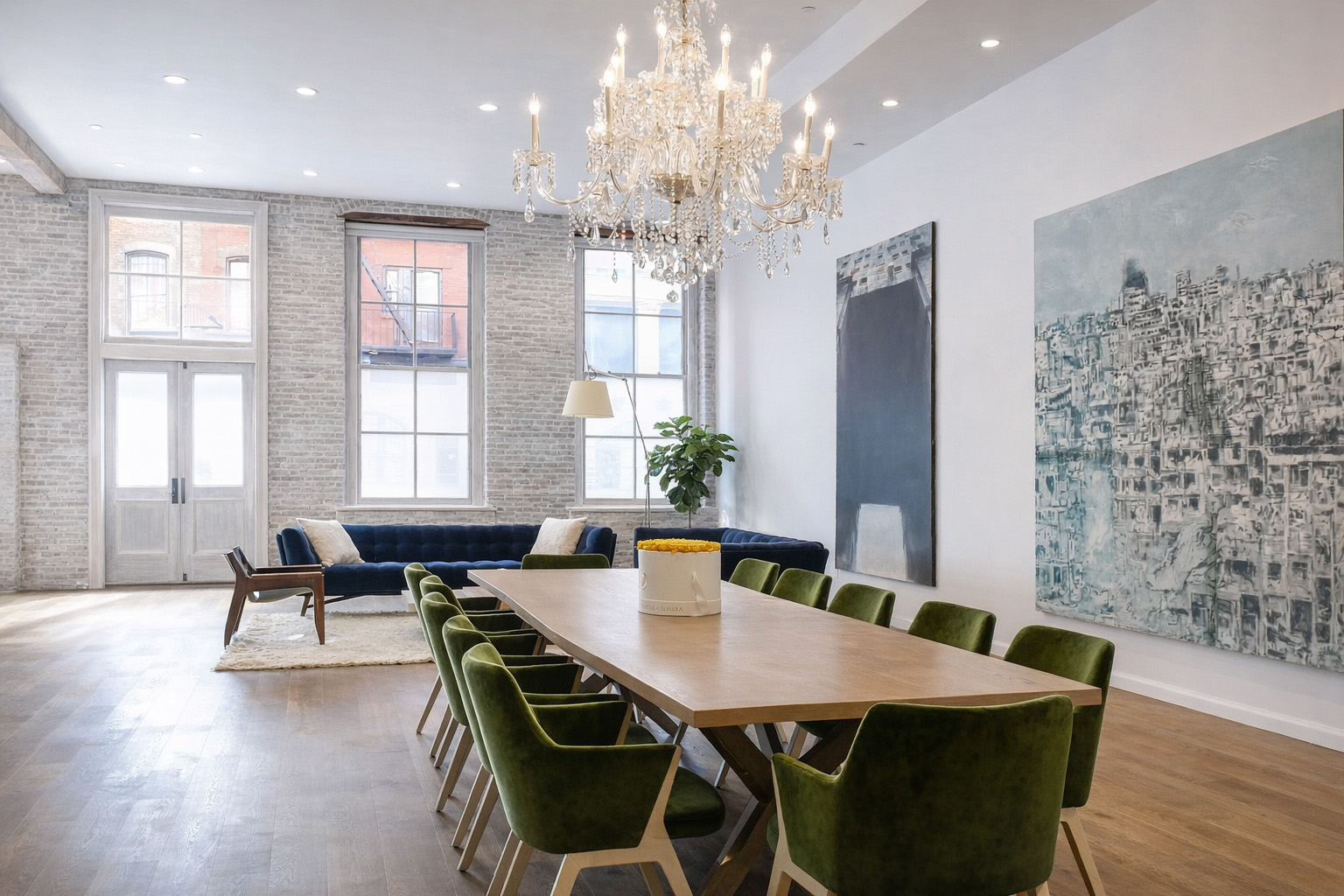
In New York City, a loft typically refers to a residence created within a former industrial or commercial building. Found in neighborhoods such as SoHo, Tribeca, Chelsea, NoMad, and the Flatiron District, these spaces are defined by expansive floor plates, tall ceilings, and exposed structural elements. Their architectural character is distinct and should inform every design decision.
Originally constructed for manufacturing and commercial use, loft buildings present conditions rarely found in conventional residential construction—deep floor plates, structural columns, high ceilings, and oversized window openings. A successful loft renovation begins with a careful assessment of these existing conditions and seeks a balance between architectural character, the owner’s needs, and a cohesive aesthetic suited to modern living.
I am Jorge Fontan, an architect and founder of Fontan Architecture, a Manhattan-based architecture and design firm. In this article, I will review several loft renovations we have completed in New York City and discuss architectural and interior design strategies specific to these unique spaces.
Table of Contents
Open Plan
One of the defining characteristics of a New York City loft is the open plan. Unlike conventional apartments divided into smaller rooms, lofts often have vast, uninterrupted floor areas with minimal interior partitions. Preserving this openness is typically central to a successful renovation.
Rather than subdividing the space excessively, the design should establish clear zones—living, dining, and kitchen—while maintaining visual continuity across the full width of the loft.
The value of the open plan is not simply its size, but its scale and proportion. When properly organized, a large, continuous space can feel both generous and composed. The goal is to enhance the loft’s inherent volume while introducing order, hierarchy, and comfort within that openness.

Loft with Great Room design
Open Kitchen
In a loft apartment, the kitchen is rarely a concealed utility space. More often, it becomes a central architectural feature within the open plan. Because the primary living areas are visually connected, the kitchen must be designed as part of the overall composition rather than as a separate room.
Key decisions begin with layout and spatial hierarchy. An island can serve as both a functional workspace and a visual anchor within the larger room. A peninsula may provide definition while maintaining continuity. In some cases, partial enclosures—such as steel and glass partitions or millwork volumes—can subtly separate the kitchen without compromising openness.
Equally important is material selection. Cabinetry, countertops, and appliances are fully visible within the space, and their detailing contributes significantly to the overall character of the loft. The kitchen should reinforce the architectural language of the apartment, whether that is industrial, minimal, contemporary, or transitional.
When carefully integrated, an open kitchen enhances both spatial flow and social interaction while maintaining a sense of order within the larger volume of the loft.
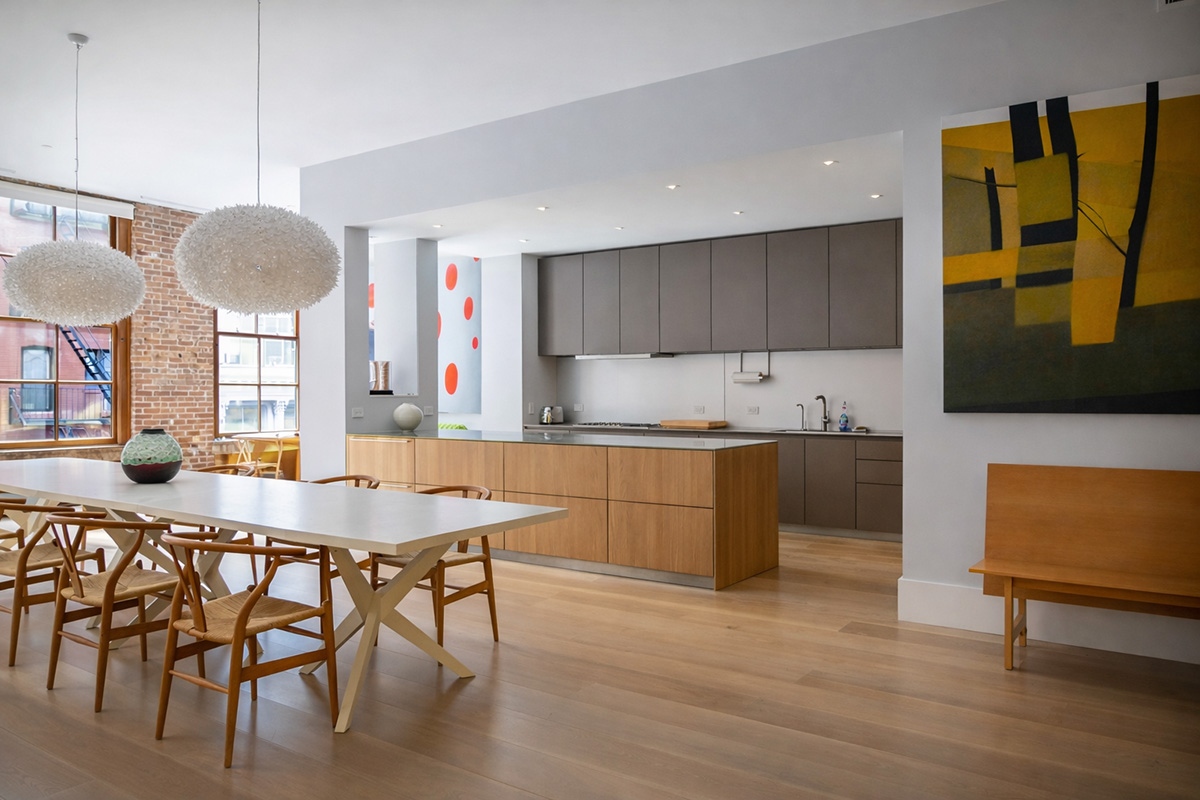
Loft with Open Kitchen
Exposed Brick
Many loft buildings were constructed with load-bearing brick masonry at the perimeter, often concealed over time with plaster or drywall as residential conversions occurred. Revealing original brick can reintroduce texture, depth, and a sense of authenticity to the space. However, the decision to expose masonry should be made carefully. The condition of the brick, the quality of the existing construction, insulation requirements, and overall design intent must all be evaluated before proceeding.
Exposed brick is not appropriate in every loft. In some cases, the masonry may be deteriorated or visually inconsistent. In others, a more restrained interior approach may better complement the proportions and light of the space. The decision must align with the overall architectural intent of the renovation. When incorporated thoughtfully, exposed brick can anchor the apartment in its industrial origins while balancing contemporary architectural interventions.
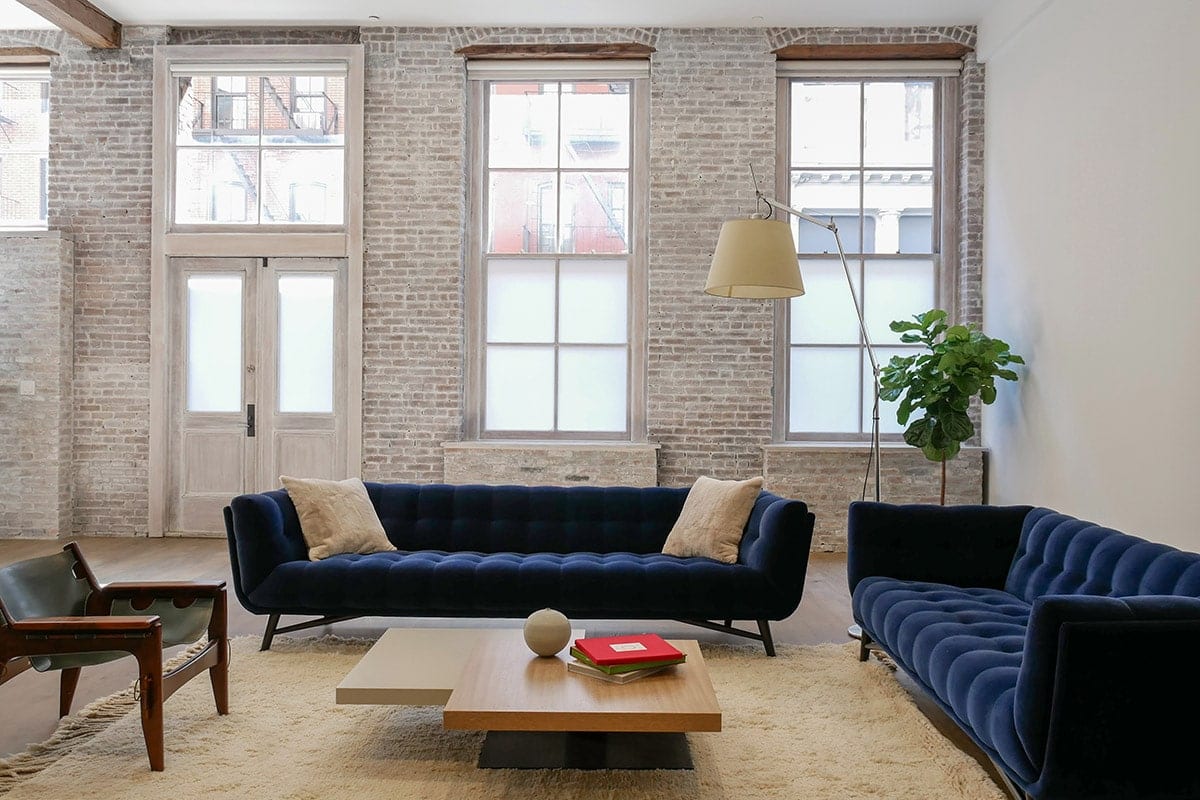
Exposed Brick Loft NYC
Black Metal and Glass
Black metal and glass partitions are an elevated intervention in loft renovations, particularly when defining secondary rooms within an open plan. Unlike solid walls, these assemblies allow for spatial separation while preserving light, transparency, visual continuity.
In many lofts, home offices, bedrooms, or media rooms require enclosure without sacrificing the openness that defines the space. Steel and glass doors can establish that boundary with minimal visual weight, reinforcing the industrial character of the building while maintaining flexibility.
The success of this approach depends on proportion, detailing, and placement. When carefully integrated, black steel framing can complement exposed masonry, concrete, and structural elements. When overused, however, it risks becoming decorative rather than architectural. As with any intervention in a loft, restraint and coherence are essential.
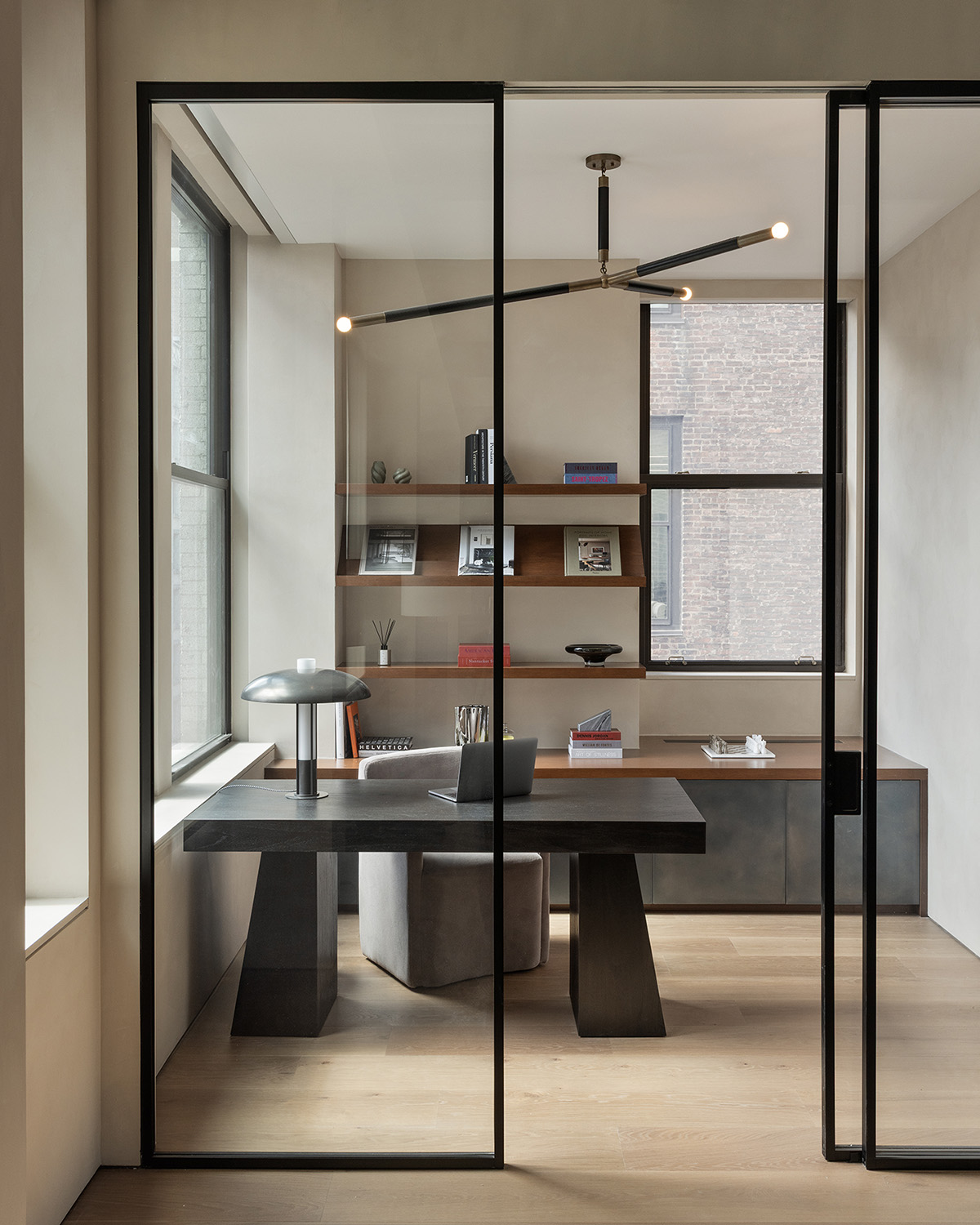
Custom Black Metal and Glass Doors in NYC Loft
Natural Light
Natural light is one of the defining qualities of a New York City loft. Large industrial windows, often spanning significant widths of the exterior wall, introduce abundant daylight and establish a strong visual connection to the city. The quality of that light influences both the atmosphere and material perception of the interior.
Because many lofts have deep floor plates, distributing natural light effectively becomes an important design consideration. Interior partitions should be positioned carefully to avoid obstructing window walls, and in some cases, glass enclosures or transoms can allow light to penetrate further into the space. Preserving openness near the perimeter while locating enclosed rooms toward the interior can help maintain brightness throughout the apartment.
Material selection is directly impacted by its relationship to light. Exposed brick, concrete, wood flooring, and painted surfaces each respond differently to changing daylight conditions. A thoughtful renovation considers how light interacts with texture, tone, and shadow over the course of the day.
When carefully integrated into the overall plan, natural light enhances spatial clarity and reinforces the sense of volume that defines a well-designed loft. It is not simply an amenity, but a fundamental architectural element.
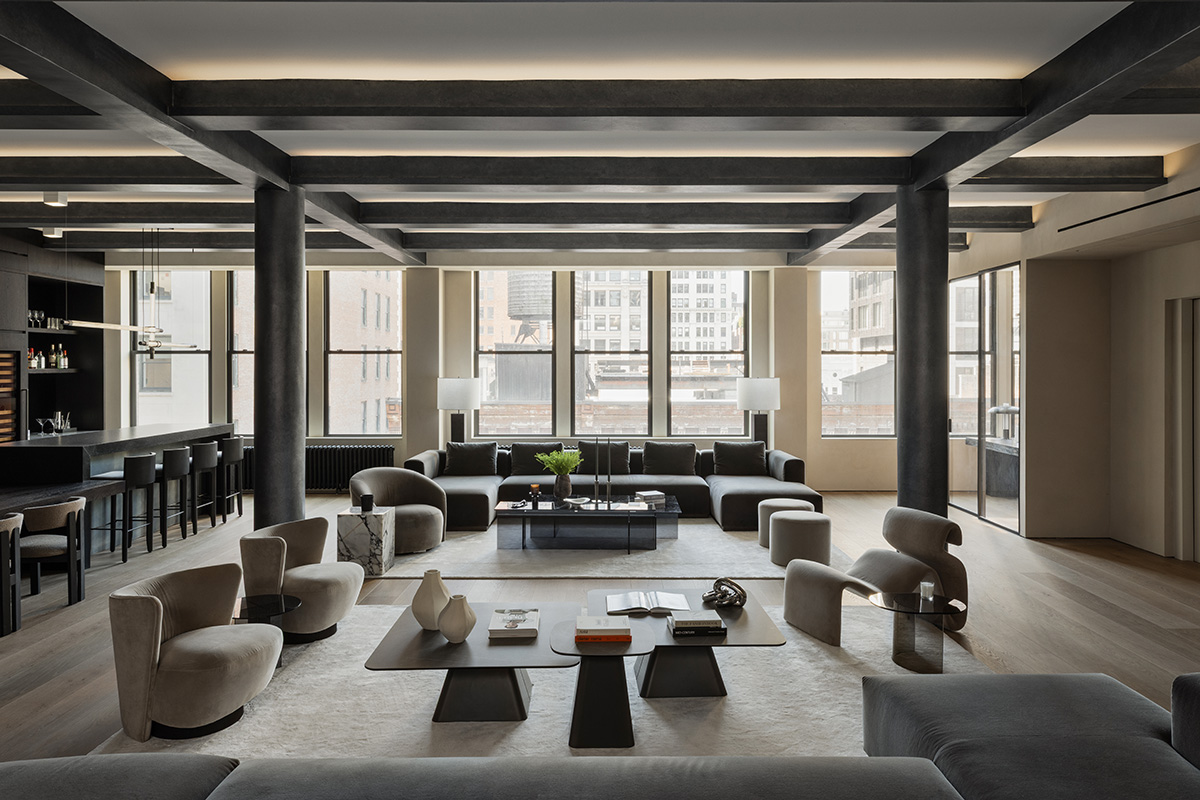
Large Windows in an Open Plan Loft
Industrial Hardware
Because loft buildings originated as industrial structures, selective references to their utilitarian past can reinforce authenticity within a renovation. Details such as exposed steel brackets, surface-mounted hardware, sliding barn-style door systems, and visible fasteners can subtly acknowledge the building’s original function.
These elements should not be applied indiscriminately. Industrial hardware is most successful when it aligns with the overall architectural language of the space and is integrated with restraint. The goal is not to create a themed interior, but to introduce material honesty and mechanical expression in a deliberate and cohesive way.
In a well-composed loft, these details act as accents—quiet reminders of the building’s history—rather than dominant stylistic gestures.
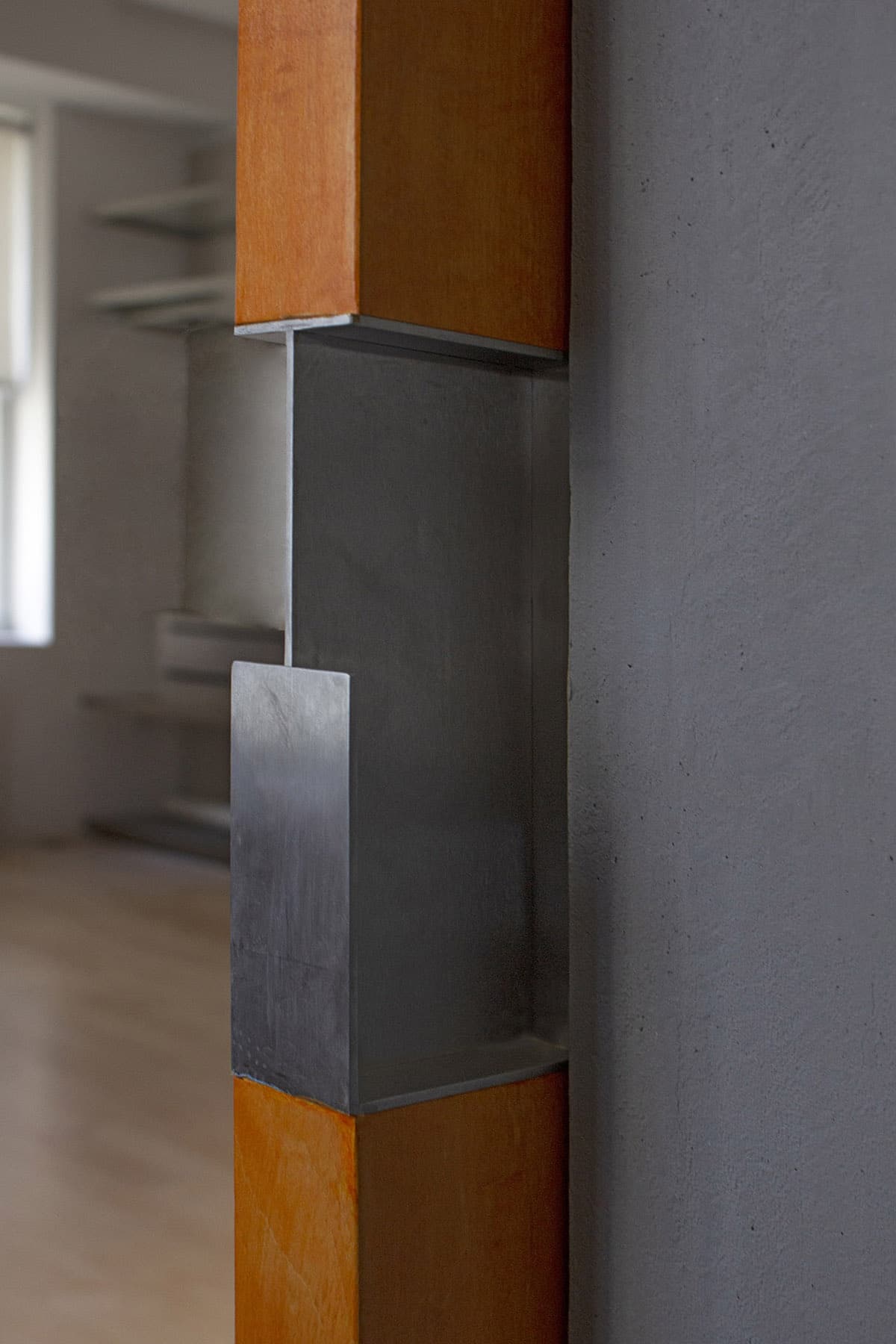
industrial door hardware
Wide Plank Floors
Flooring plays a significant role in establishing the overall scale and continuity of a loft interior. In larger, open-plan spaces, wide plank wood flooring can help balance proportion and reinforce the horizontal dimension of the room.
Narrow boards in a large loft can feel visually busy and fragmented. Wider planks, by contrast, create a calmer and more cohesive surface that allows the architecture—columns, brick walls, ceiling height—to remain the primary focus. The floor becomes a grounding plane rather than a competing element.
Material selection is equally important. Rift- or quarter-sawn white oak, for example, offers subtle grain and tonal consistency that complements both industrial and contemporary interventions. When thoughtfully detailed, wide plank flooring enhances the sense of volume and restraint that defines a well-composed loft renovation.

White Oak Wide Plank Floors
Large-Scale Art
The generous ceiling heights typical of New York City lofts create opportunities for large-scale artwork that would be difficult to accommodate in more conventional apartments. In these spaces, art is not merely decoration; it becomes an architectural element within the composition of the room.
Many historic loft buildings—particularly in neighborhoods such as SoHo and Tribeca—were designated as Joint Live–Work Quarters for Artists (JLWQA). This history remains embedded in the typology. Incorporating substantial works of art can acknowledge that legacy while reinforcing the scale and character of the space.
Proportion is critical. Smaller pieces can appear diminished against tall ceilings and long wall planes, whereas a single large work or a carefully curated grouping can establish hierarchy and visual balance. When thoughtfully integrated, artwork contributes to the spatial rhythm of the loft and enhances the personalization of the home.
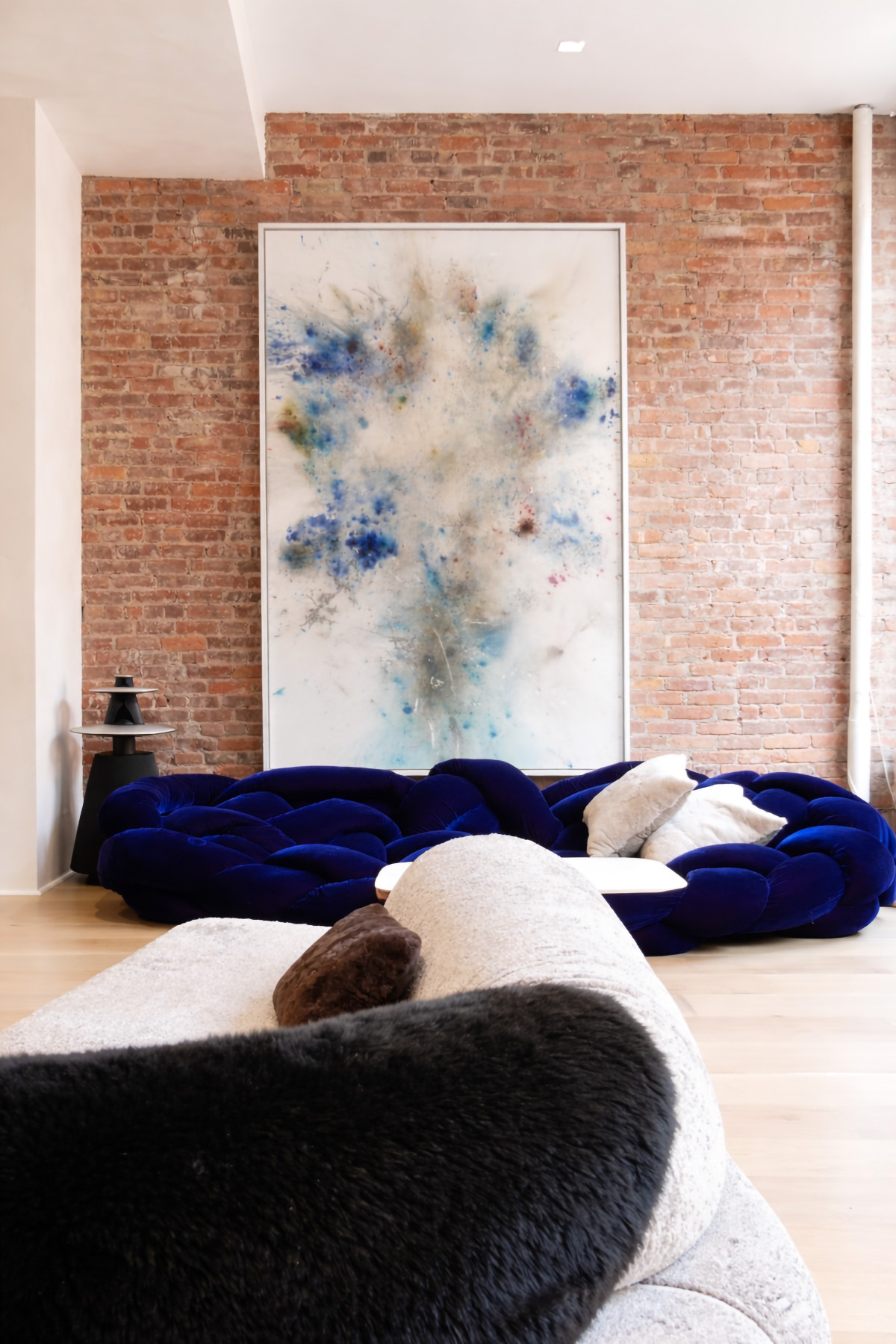
Loft Wall Art
Focal Points
When organizing a loft layout, we consider axis, alignment, and focal points early in the design process. Because lofts often provide large, uninterrupted floor areas, the way space is sequenced and aligned has a significant impact on how the home is experienced.
Thoughtful circulation planning can create deliberate moments of visual emphasis. For example, aligning the entry with an open plan living area and terminating that axis at large industrial windows can heighten the sense of arrival. The progression from compression to openness, from entry to light, transforms movement through the space into a composed architectural experience.
Focal points may also be established through structural columns, fireplaces, artwork, or millwork volumes. When these elements are addressed intentionally, they provide orientation and hierarchy within the openness of the loft.
A well-considered axis does more than organize a plan—it shapes perception and reinforces the spatial clarity that defines a successful loft renovation.
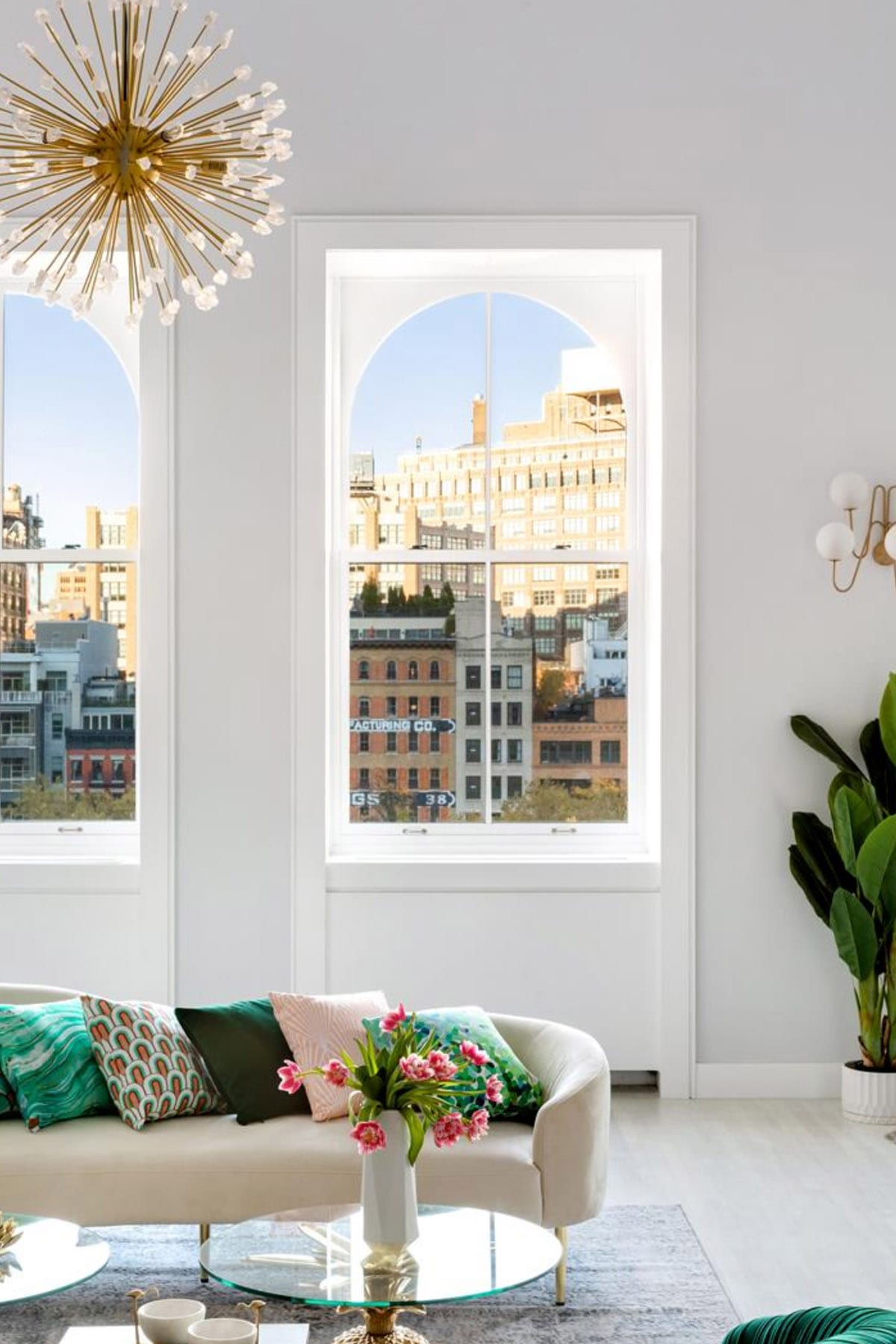
Large Loft Windows
Tall Doors
Door height has a significant impact on spatial perception, particularly in lofts with generous ceiling heights. Increasing door proportions can reinforce verticality and emphasize the scale that defines these spaces.
In many renovations, standard door heights feel compressed against tall ceilings and expansive wall planes. Extending doors closer to the ceiling line creates a more deliberate architectural rhythm and reduces visual fragmentation along the perimeter walls. The result is a cleaner and more cohesive interior elevation.
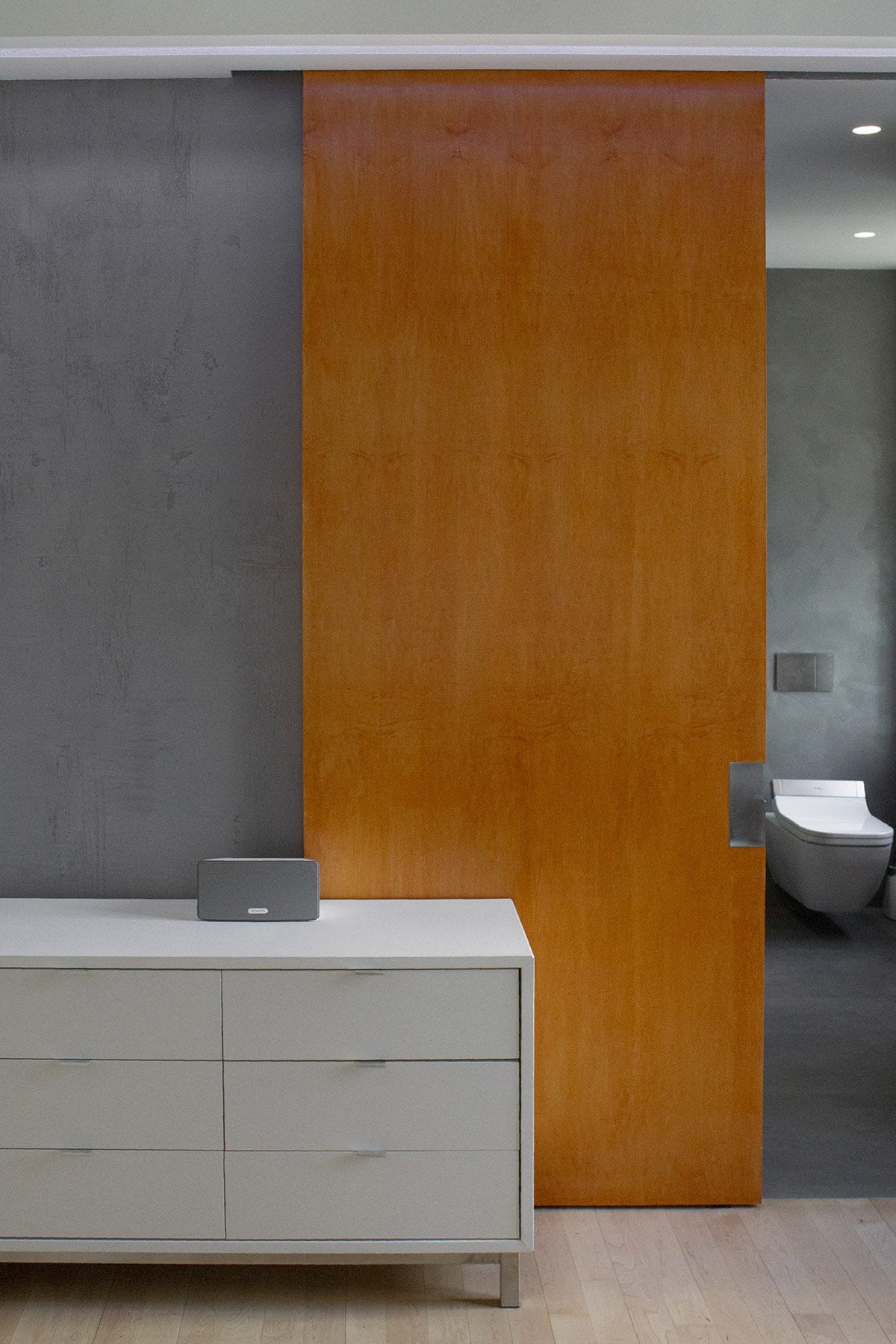
Tall Modern Loft Door Design New York Loft Apartment Design
Keep It Simple
Restraint is often one of the most effective strategies in loft design. Because these spaces are defined by scale, light, and material texture, excessive layering of finishes or furnishings can diminish their inherent clarity.
A disciplined approach allows the architecture to remain the primary focus. Clean lines, controlled material palettes, and carefully edited furnishings create an environment that feels composed rather than crowded. In a loft, simplicity does not mean minimalism for its own sake—it means making deliberate choices and allowing each element to have presence.
When the spatial volume is strong, it rarely needs embellishment. Thoughtful restraint can amplify the qualities that make a loft distinctive in the first place.
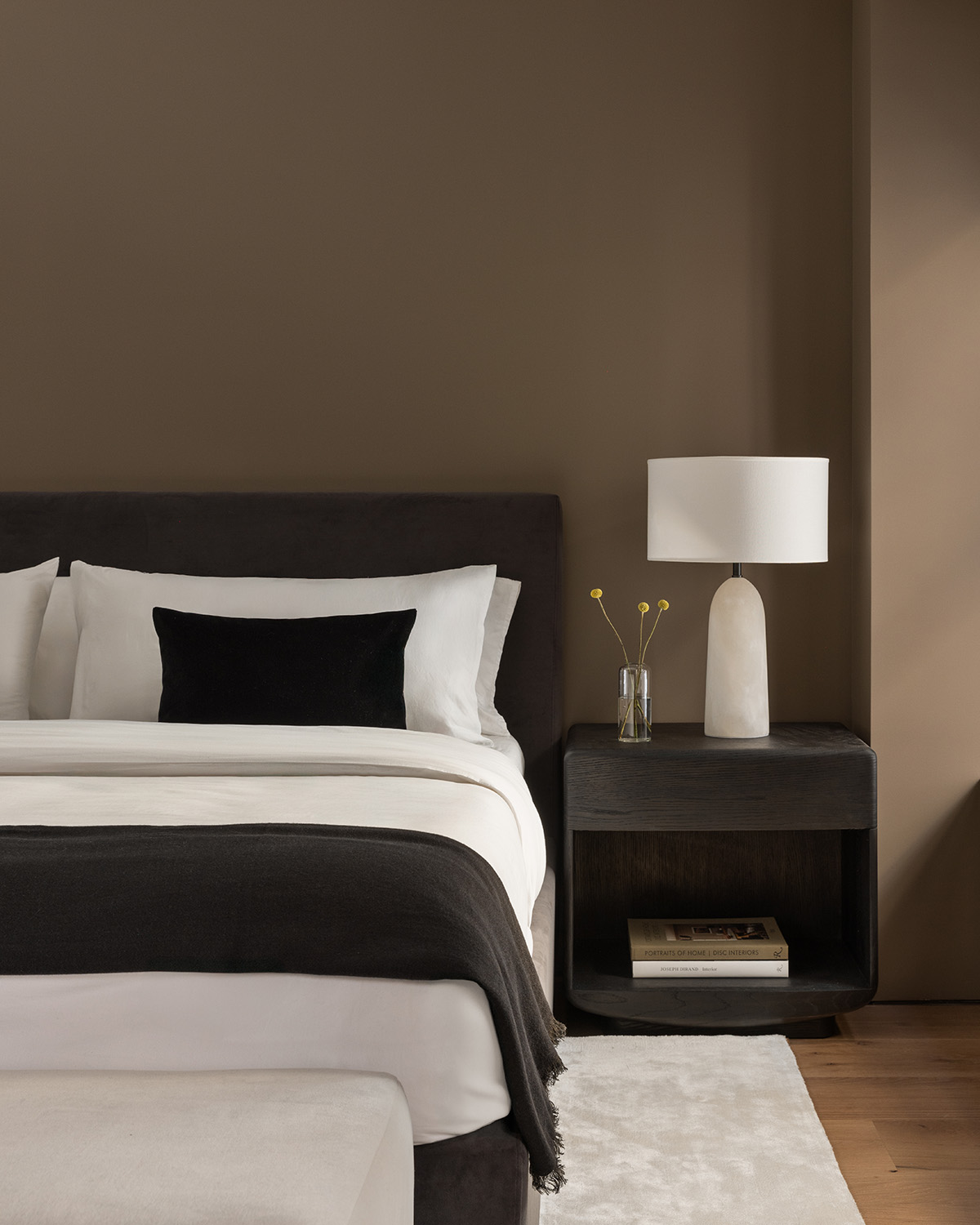
Dark Neutral Color Bedroom
Furniture and Scale
Scale and proportion are fundamental principles in both architecture and interior design. In a loft, where ceiling heights and floor plates are generous, these considerations become even more critical.
Built-in elements—such as millwork, kitchen volumes, and interior partitions—must be designed in proportion to the overall space. Furniture should be selected with equal care. Undersized pieces can feel diminished within a large open plan, while appropriately scaled furnishings elevate the room and establish spatial hierarchy.
When scale is resolved correctly, the loft feels intentional and composed rather than fragmented or sparse.
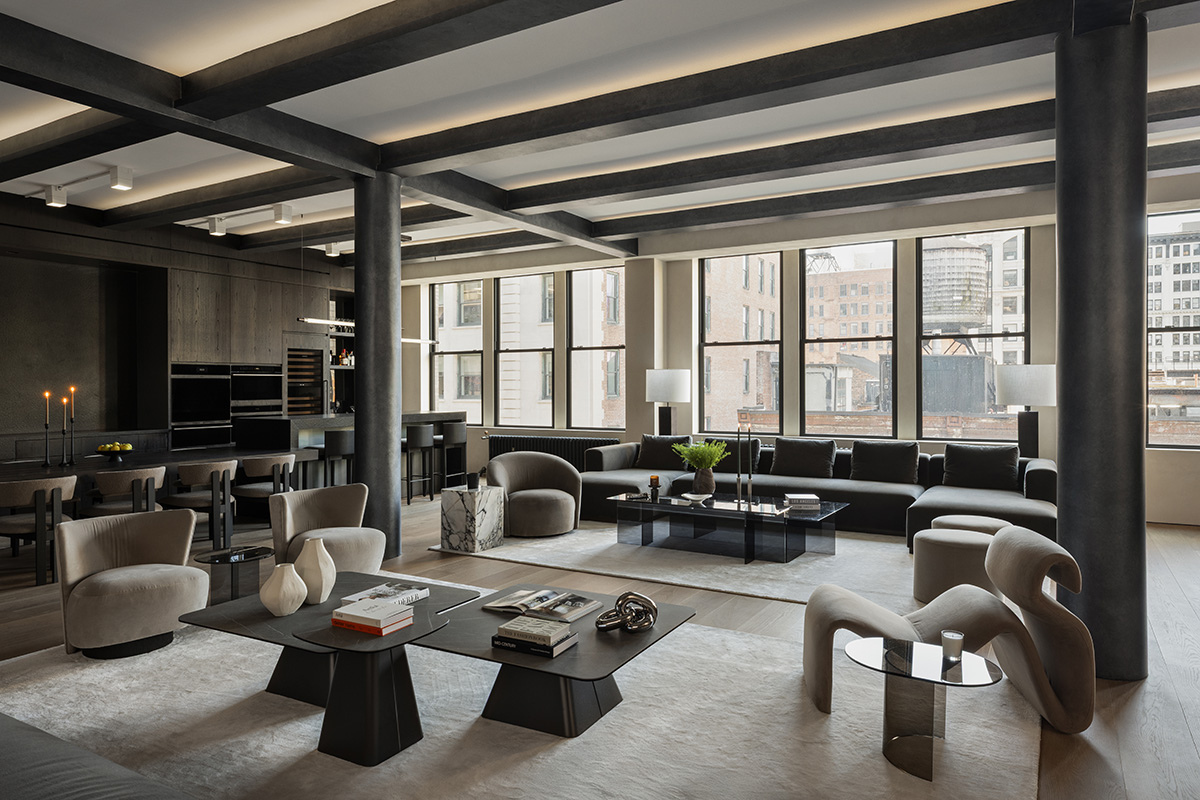
Loft With Great Room
Loft Apartment Design
Lofts possess a distinct architectural character shaped by their industrial origins, structural systems, and proportions. A successful renovation does not override these qualities; it works in dialogue with them. The most compelling loft interiors are those that reconcile the existing conditions with the owner’s lifestyle, aesthetic priorities, and long-term goals.
Every project requires careful evaluation—of structure, light, circulation, building constraints, and budget. Thoughtful design emerges from balancing these factors within the context of the individual property. No two lofts are identical, and each demands a tailored architectural response. You can read more about loft renovations in our related post on Loft Apartment Design in NYC: Architecture and Bespoke Interiors.
Fontan Architecture provides full-service architectural design for luxury loft and residential renovations in New York City, guiding clients from early feasibility and property evaluation through design development, approvals, and construction execution. If you are considering the purchase of a loft or planning a renovation, we welcome the opportunity to discuss your project.
Request a Consultation with Fontan Architecture

Jorge Fontan, AIA, is an architect and founder of Fontan Architecture based in New York City. The firm focuses on residential design, including new homes and extensive renovations for discerning clients. Through collaborative dialogue that draws on the individuality of each client, projects develop as distinct architectural responses guided by thoughtful planning, precise detailing, and a commitment to creating enduring value.