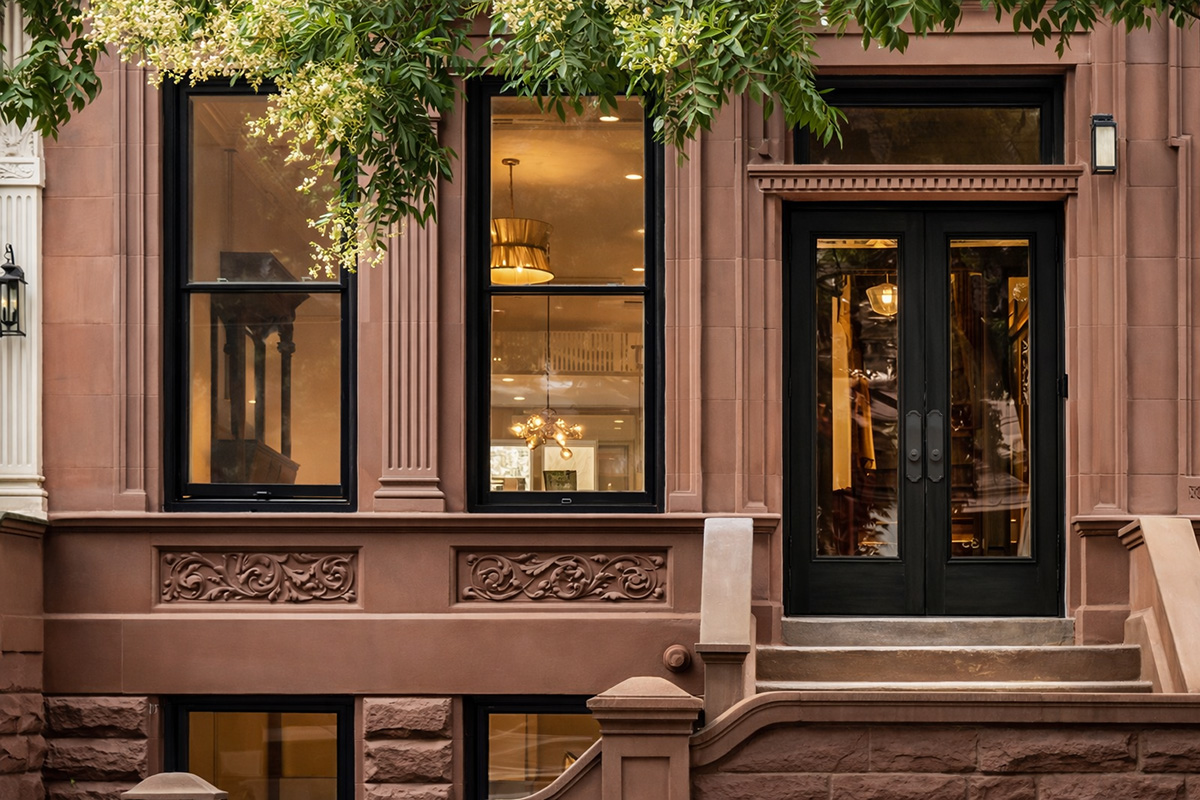
Renovating a historic brownstone in New York City requires far more than aesthetic updates. Many of these homes are over a century old, with aging structural systems, landmark considerations, and layouts that reflect a different era of living. A successful renovation demands careful planning, architectural coordination, and a clear strategy that balances design intent with modernization.
Brownstones often present a layered set of decisions — whether to open the parlor floor, restore original interior details, reconfigure layouts for contemporary living, or integrate modern mechanical systems within historic masonry construction. Each intervention must be evaluated within the context of the building’s structure, regulatory environment, and long-term value.
I am Jorge Fontan, AIA, an architect based in New York and owner of Fontan Architecture, a Manhattan firm specializing in residential projects for private clients including townhouse and brownstone renovations. In this article, I will outline key planning, preservation, and design considerations when renovating a brownstone in NYC.
Table of Contents
Open the Parlor Floor — or Preserve It?
The parlor floor is traditionally the most formal level of a New York City brownstone. Elevated above the street and accessed from the stoop, it was historically arranged as a sequence of enclosed rooms separated by structural and masonry partitions.
In many contemporary renovations, owners choose to reconfigure this level into a more open, interconnected layout that supports modern living. Opening the parlor floor can create a more expansive spatial experience, improve natural light flow from front to rear, and establish stronger visual continuity between living, dining, and kitchen areas — aligning the home with contemporary expectations.
However, modifying a 19th-century townhouse requires careful structural evaluation. Load-bearing partitions, aging timber framing, and existing settlement conditions must be assessed before alterations are made. In most cases, new structural elements are introduced to redistribute loads and maintain long-term stability. These interventions require architectural coordination, engineering design, and Department of Buildings approval.
Whether to open the parlor floor or preserve its original configuration ultimately becomes part of the broader architectural strategy for the home. The decision should reflect how the house is intended to function, the character one wishes to retain, and the overall design direction of the renovation. It is often one of the foundational considerations when planning a NYC brownstone renovation.
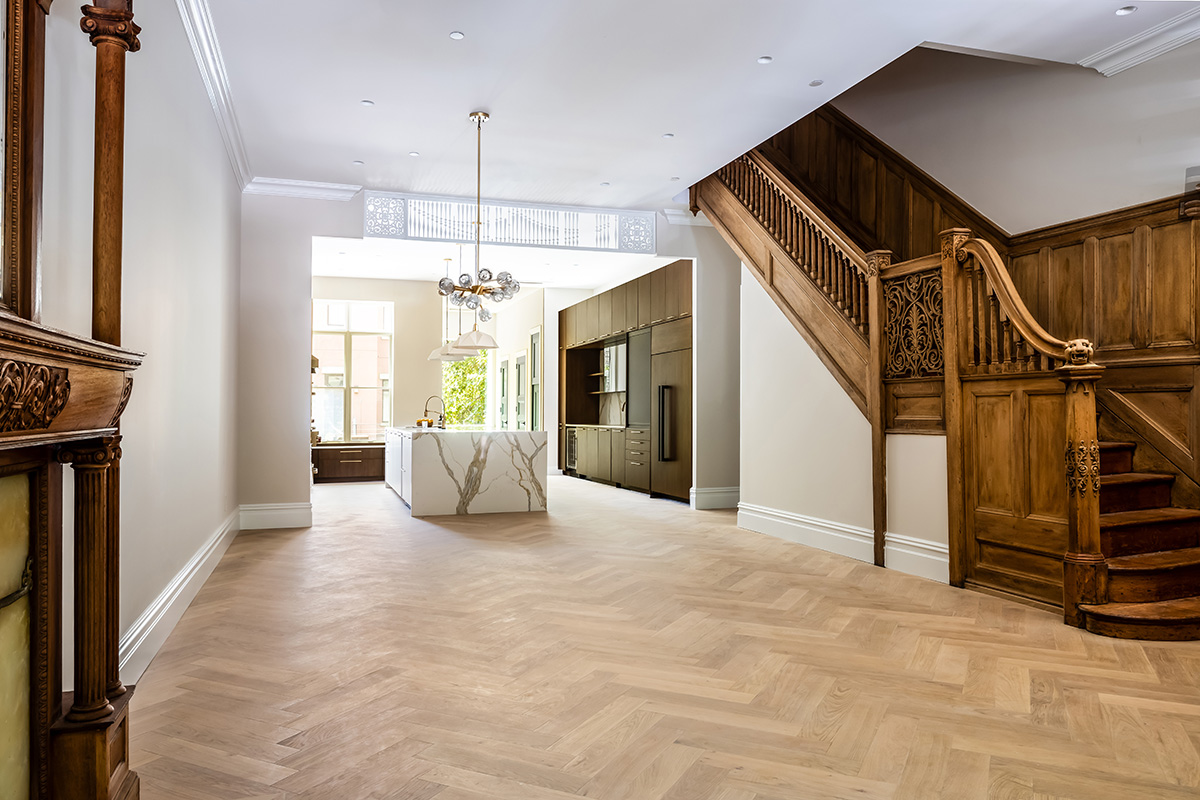
brownstone renovation with open parlor floor
Reconsider the Kitchen Layout, Scale, and Location
In many historic brownstones, the kitchen was originally located at the garden level, separated from the more formal entertaining spaces above. Contemporary renovations often reposition or enlarge the kitchen to reflect modern patterns of living, where cooking, gathering, and entertaining are more integrated. Whether the kitchen remains at the garden level or is relocated to the parlor floor should be determined by the overall architectural concept and the intended use of the home.
When planning a brownstone renovation, the scale and placement of the kitchen must be evaluated in proportion to the house as a whole. In larger townhouses, undersized kitchens can feel visually and functionally disconnected from the surrounding rooms. Expanding the kitchen footprint — through internal reconfiguration or, where feasible, a rear extension — can significantly improve spatial balance and daily usability.
Kitchen islands are frequently introduced to provide additional preparation space, storage, and informal seating. Careful attention must be given to circulation clearances, structural constraints, and plumbing coordination. Proportion and flow are critical to ensuring the island enhances the space rather than overwhelms it.
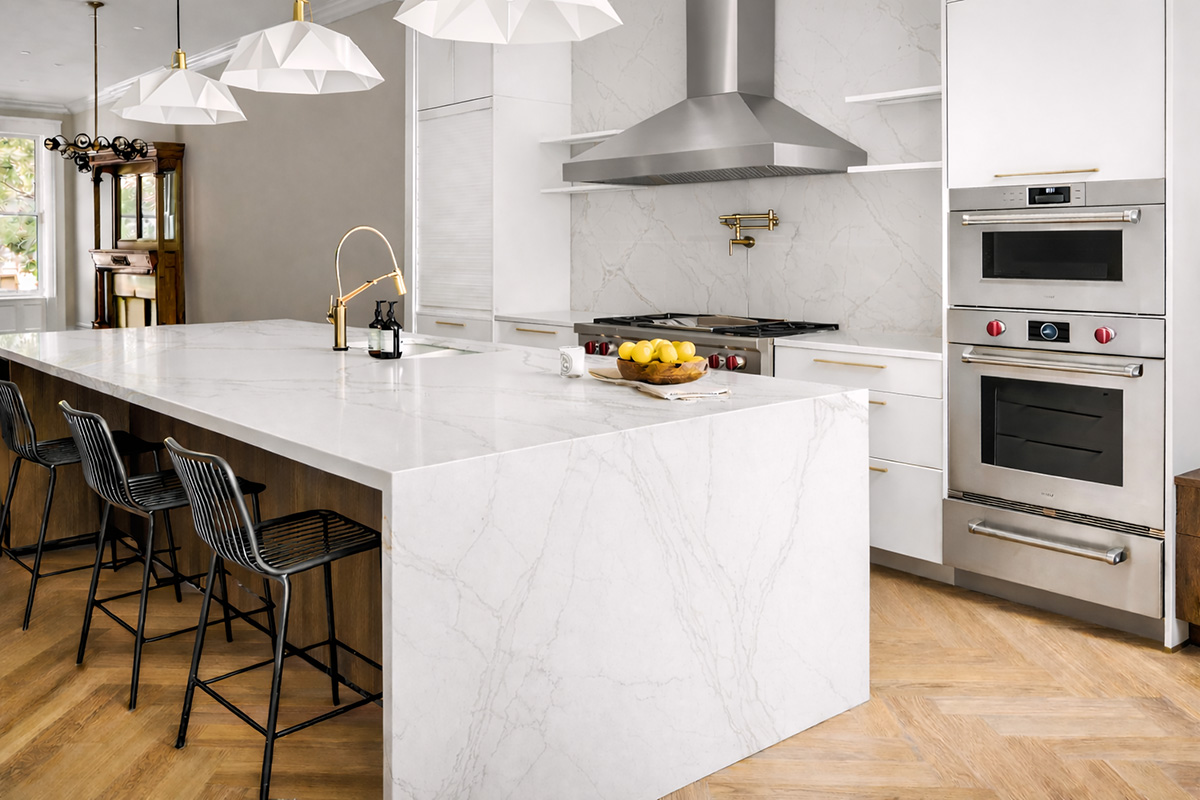
Brownstone Renovated Kitchen with Island
Reconfigure the Primary Bathroom for Contemporary Living
In many historic brownstones, bathrooms were originally modest in size and often retrofitted over time without comprehensive planning. Contemporary renovations provide an opportunity to reconsider the primary bathroom as part of a larger suite — integrated with the bedroom, closets, and circulation for a more cohesive experience.
When renovating a brownstone, the scale and layout of the primary bathroom should be evaluated in relation to the overall home. Expanding the footprint may allow for a freestanding tub, a separate walk-in shower, and appropriately spaced vanities, while maintaining balanced proportions. In some cases, reconfiguring adjacent rooms or adjusting plumbing stacks is necessary to achieve a well-composed layout.
Privacy and functionality are also important considerations. Enclosing the toilet within a separate compartment can allow multiple users to occupy the space comfortably, while thoughtful placement of fixtures helps preserve openness and flow.
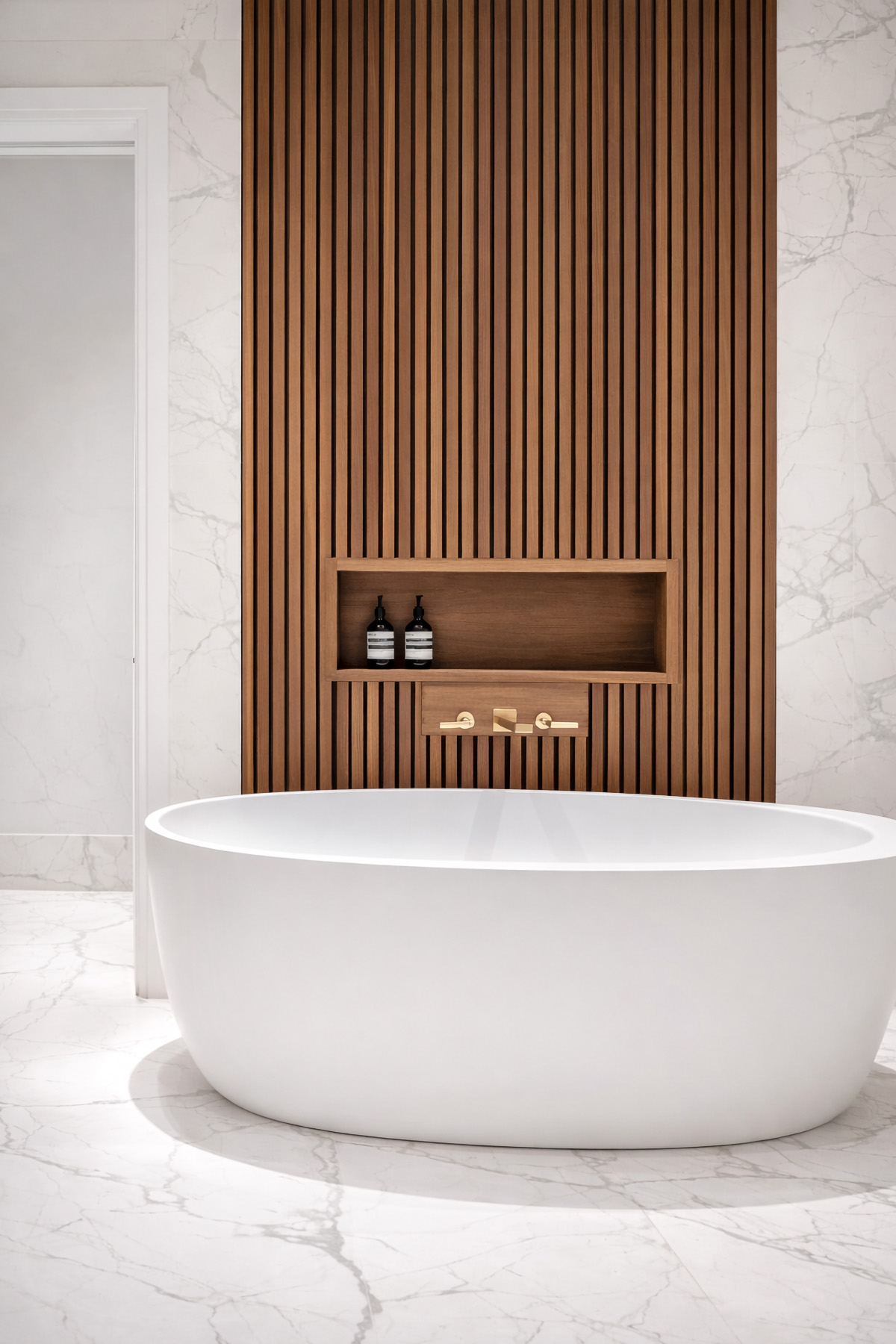
Modern Brownstone Bathroom with Free Standing Tub
Herringbone, Chevron, or Wide Plank Flooring
Flooring patterns can significantly influence the character of a brownstone interior. Herringbone and chevron layouts have historic precedent and introduce a sense of rhythm and craftsmanship that complements the architectural detailing often found in 19th-century townhouses.
These patterned installations can add visual texture and subtle movement to formal rooms, particularly on the parlor floor. Careful attention should be given to board width, wood species, and finish to ensure the flooring remains proportional to the scale of the space.
Alternatively, wide plank flooring installed in a straight run — typically oriented from front to rear — can create a calmer, more contemporary expression. This approach often emphasizes the length of the townhouse footprint and can enhance spatial continuity between rooms.
The selection ultimately depends on the overall design direction of the renovation and the balance between preservation and modernization.
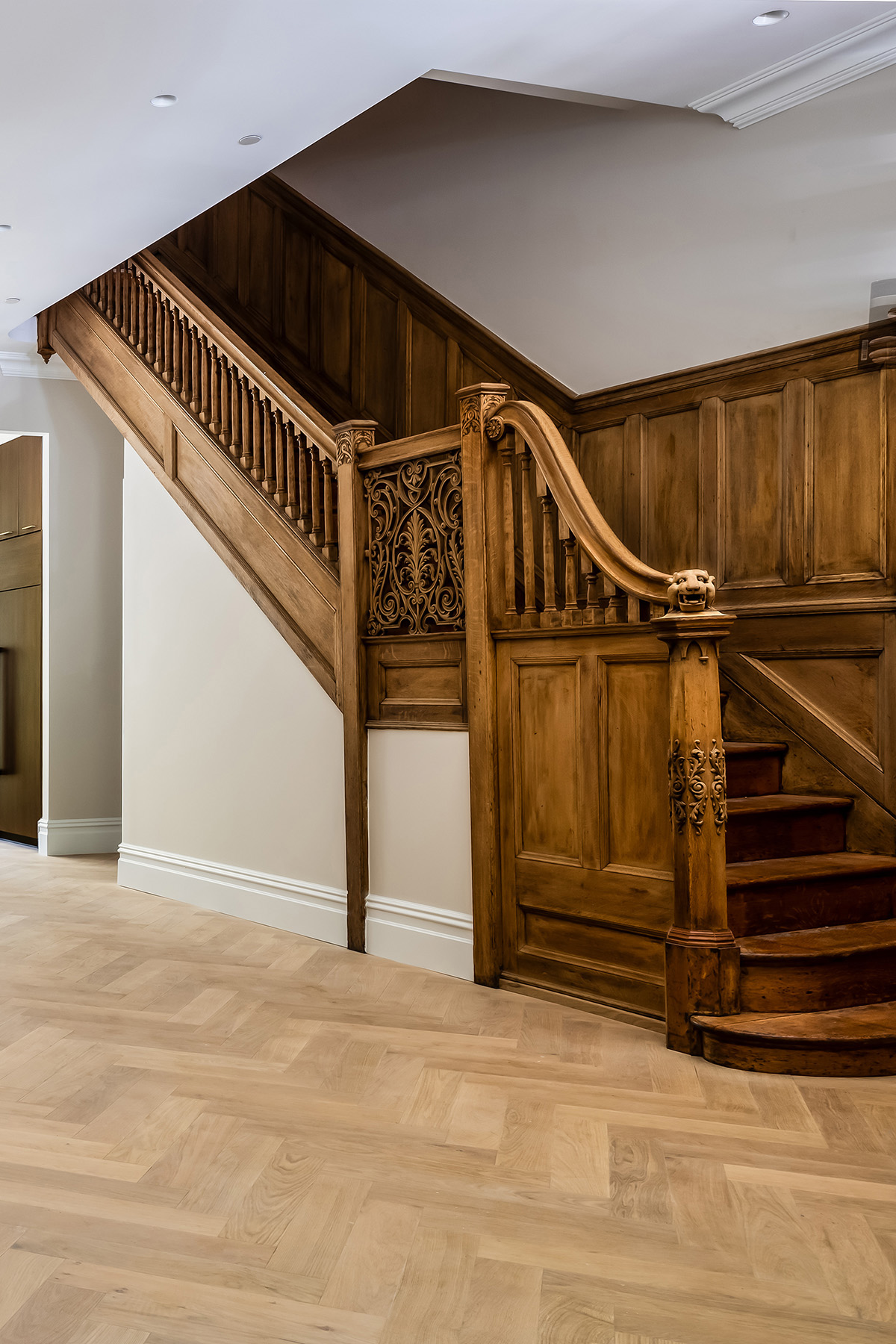
Herringbone Floor
Provide Proper Kitchen Ventilation
In many townhouse renovations, kitchen ventilation is an important but often overlooked consideration. Recirculating hoods filter air and return it to the room, while ducted systems exhaust cooking byproducts directly to the exterior. From both a performance and long-term maintenance standpoint, direct exterior exhaust is a significantly more effective solution.
In brownstones, however, implementing a vented hood requires careful coordination. Ductwork must be routed through existing framing and masonry construction without compromising structure or architectural detailing. In landmarked properties, exterior terminations may also require review and approval.
When feasible, integrating a properly ducted hood during a full renovation improves indoor air quality, reduces lingering odors, and supports the overall functionality of the kitchen. As with many systems in historic townhouses, successful integration depends on early planning and coordination between architectural and mechanical design.
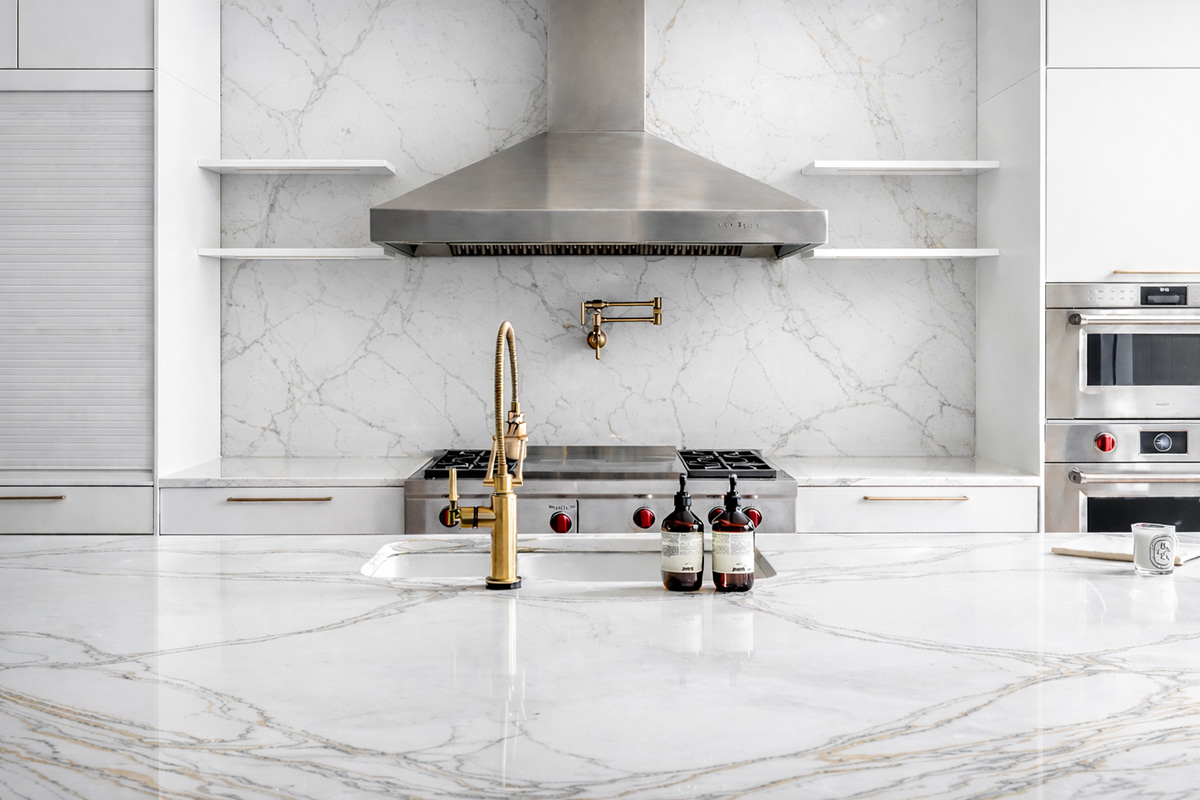
Modern luxury Brownstone kitchen with brass accents
Restore and Integrate Original Interior Details
Many New York City brownstones retain significant architectural detailing dating back more than a century. Original millwork, plaster ornamentation, staircases, mantels, and doors contribute to the character and historical integrity of the home. When present and salvageable, these elements often provide a richness that is difficult to replicate with new construction.
During a renovation, existing details should be carefully evaluated for both condition and architectural significance. Features such as stair banisters, fireplaces, crown moldings, wainscoting, and original door casings can often be restored or selectively integrated into a more contemporary interior. In some cases, refinishing or minor modification is sufficient; in others, more extensive restoration may be required.
The decision to preserve or replace is a matter of preference, and the broader design strategy.
Restoration can be labor-intensive, especially when aiming for a refined finish. However, when executed well, preserved details often anchor the renovation and elevate the overall design.
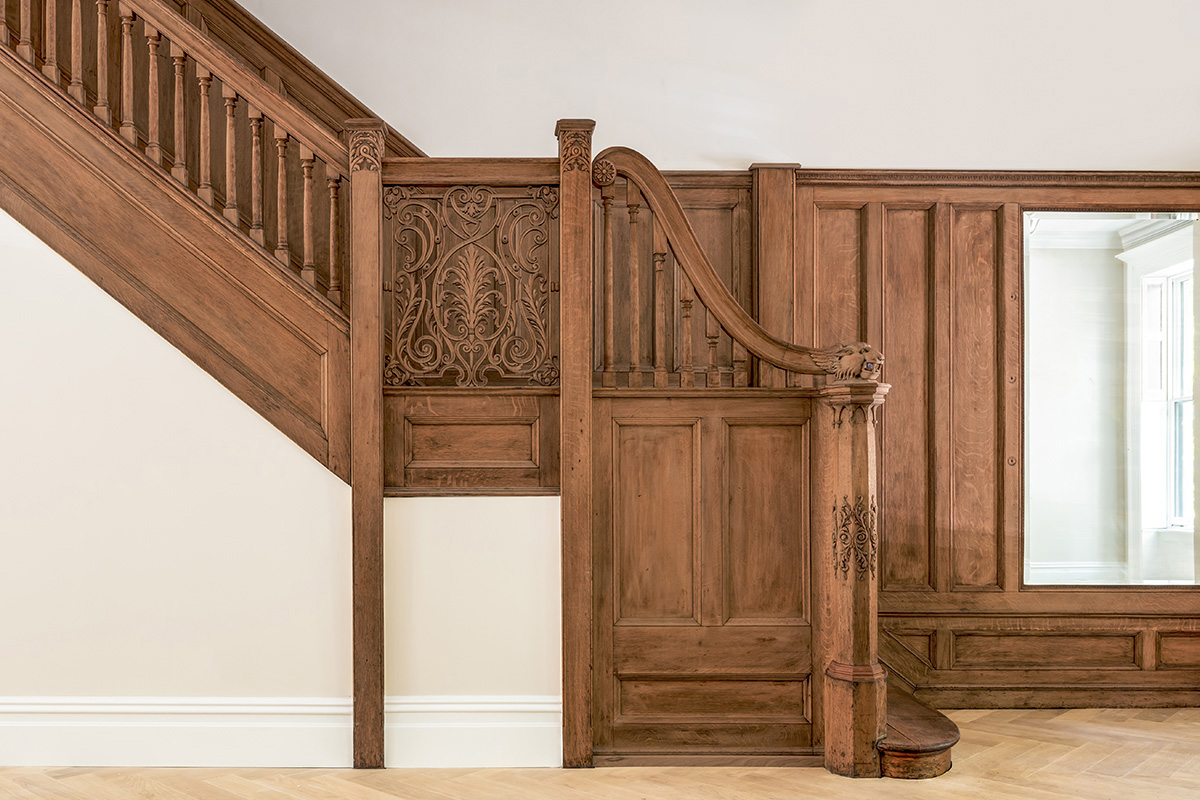
Restored Stair and Banister in a Brownstone
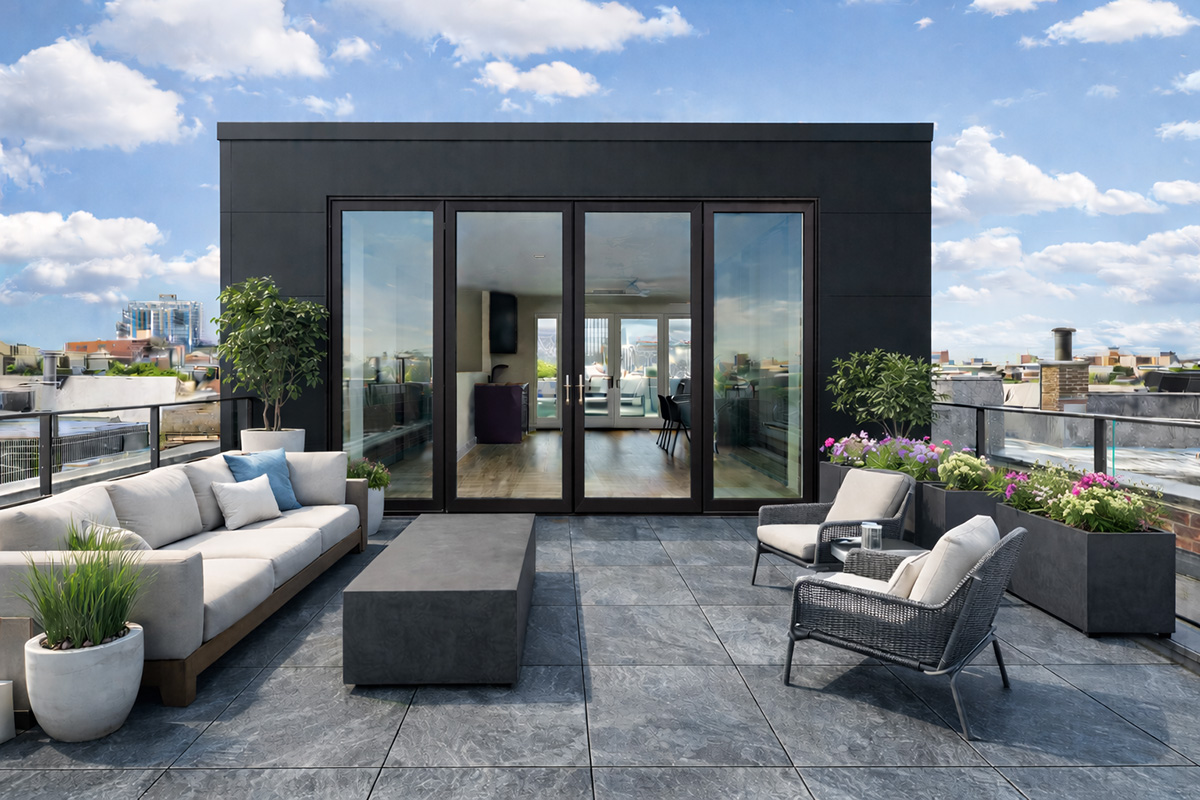
Adding a Roof Deck
Outdoor space is limited in New York City, and a roof deck can significantly enhance the usability of a brownstone. When thoughtfully designed, it provides an additional exterior living area while maintaining privacy and views over the surrounding neighborhood.
However, adding a roof deck is not simply an accessory feature. Structural capacity must be evaluated to determine whether the existing framing can support additional loads. Reinforcement is often required. Guardrails must meet current building code requirements, and bulkhead modifications may be necessary to provide compliant roof access.
In landmarked properties, roof decks are subject to review, particularly with respect to visibility from the public way. Even in non-landmarked buildings, zoning and height restrictions may limit what can be constructed above the roofline.
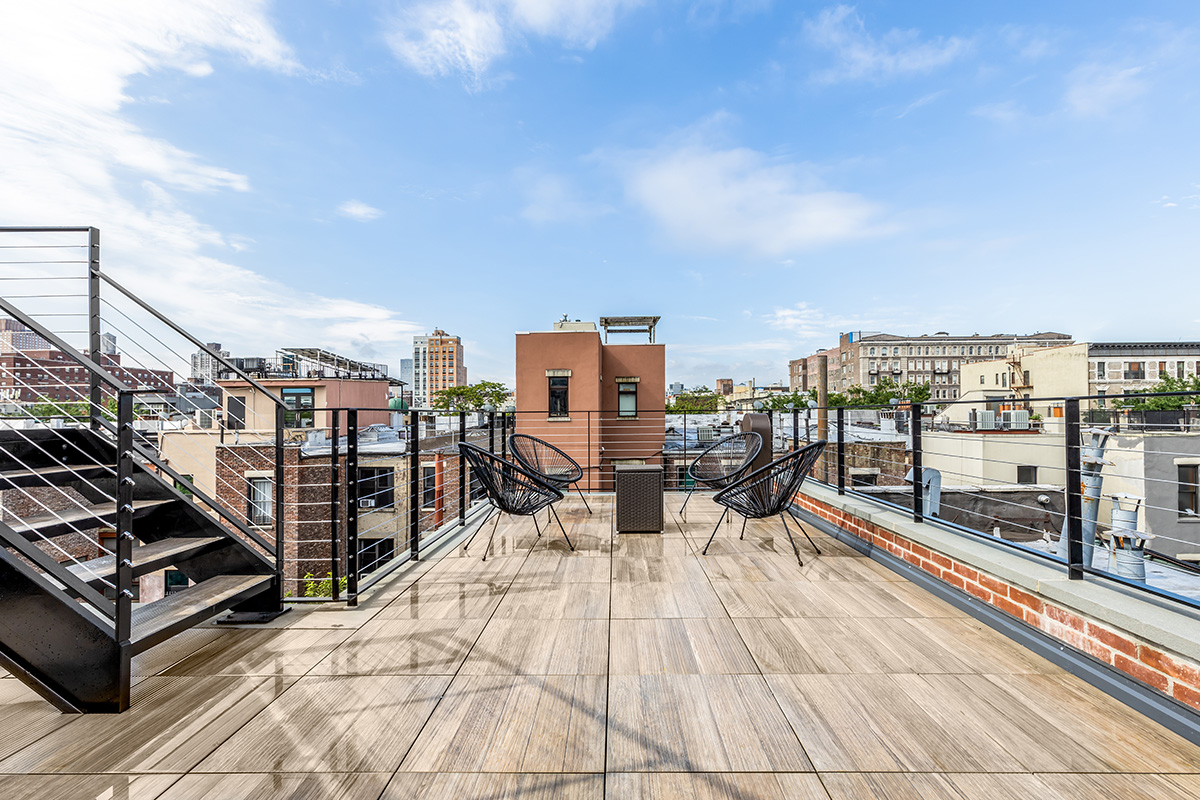
New Roof Deck on a Manhattan Brownstone
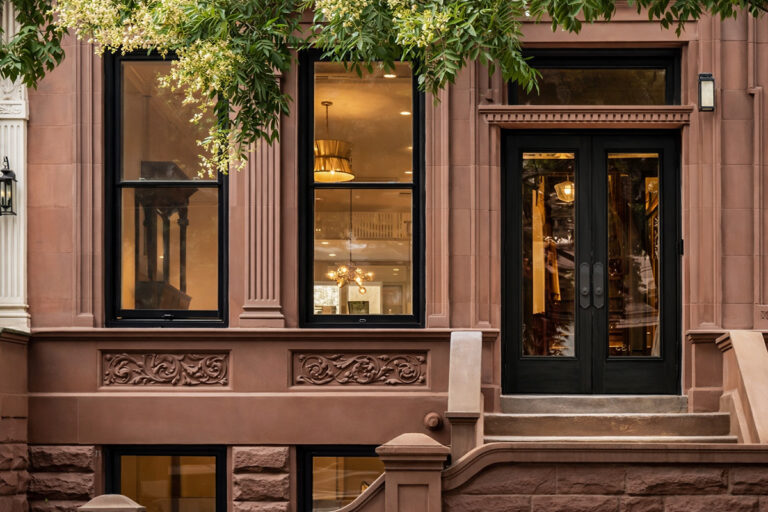
Evaluate and Restore the Brownstone Façade
The exterior condition of a brownstone can vary significantly depending on age, prior maintenance, and exposure. The front façade — often composed of soft sandstone — is particularly vulnerable to weathering, moisture infiltration, and cyclical freeze-thaw damage. Over time, surface erosion, spalling, and joint deterioration are common.
Restoration may involve selective stone patching, repointing mortar joints, repairing or replacing deteriorated lintels, and refinishing the façade to restore its architectural character. Because brownstone is a relatively soft material, repairs must be carefully executed to ensure compatibility with the original masonry.
In landmarked properties, any visible façade alterations — including window replacement — are subject to review and approval. While window upgrades are often feasible, they must align with the historic character of the building and comply with Landmark Preservation Commission guidelines.
A thoughtful exterior restoration not only improves curb appeal, but also protects the structural integrity and long-term value of the home.
Modify the Rear Façade to Increase Natural Light
In landmarked brownstones, the front façade is typically subject to strict review to preserve the historic streetscape. The rear façade, however, often allows greater flexibility, particularly when alterations are not visible from the public way.
Enlarging existing window openings or introducing new glazing at the rear can significantly improve natural light and visual connection to the yard. In narrow townhouse footprints, strategic rear façade modifications can transform interior spaces that would otherwise feel constrained.
That said, enlarging window openings requires structural evaluation. Masonry walls must be properly supported, and new lintels or framing may be required to redistribute loads.
When carefully designed and properly coordinated, rear façade alterations can be one of the most impactful ways to modernize a brownstone while preserving its historic street presence.
Rear and Rooftop Additions
In some brownstone renovations, reconfiguring the existing layout is not sufficient to achieve the desired program. Expanding the building footprint — either at the rear yard or vertically — may be necessary to accommodate larger kitchens, additional bedrooms, expanded primary suites, a sun room, or improved circulation.
Rear yard additions are governed by zoning regulations that limit lot coverage and required rear yard depth. In landmark districts, massing, materials, and visibility are also subject to review. Structural integration with the existing masonry townhouse often requires new foundations, underpinning, and reinforced framing to ensure long-term stability.
Rooftop additions introduce additional considerations, including height limits, bulk regulations, and structural load capacity. In many cases, reinforcing the existing structure is required before additional square footage can be added. Landmark review may also evaluate visibility from the public way, influencing setback and design decisions.
When feasible, well-designed additions can significantly enhance both functionality and long-term property value. However, feasibility must be determined early through zoning analysis and architectural study before design proceeds.
Renovating Your Brownstone
Renovating a New York City brownstone requires meticulous design, structure, and regulatory approvals. From zoning analysis and landmark review to construction documentation and consultant management, these projects demand a comprehensive architectural approach. When approached strategically, these renovations can transform a historic townhouse into a highly functional contemporary residence while preserving its architectural integrity.
Fontan Architecture provides full architectural and interior design services for townhouse and brownstone renovations throughout New York City. Engaging an architect early in the process can clarify regulatory constraints, define a cohesive design strategy, and establish a clear path forward before construction begins.
Request a Consultation with Fontan Architecture - 212 321 0194
Jorge Fontan, AIA, is an architect and founder of Fontan Architecture based in New York City. The firm focuses on residential design, including new homes and extensive renovations for discerning clients. Through collaborative dialogue that draws on the individuality of each client, projects develop as distinct architectural responses guided by thoughtful planning, precise detailing, and a commitment to creating enduring value.
Jorge Fontan, AIA, is an architect and founder of Fontan Architecture based in New York City. The firm focuses on residential design, including new homes and extensive renovations for discerning clients. Through collaborative dialogue that draws on the individuality of each client, projects develop as distinct architectural responses guided by thoughtful planning, precise detailing, and a commitment to creating enduring value.