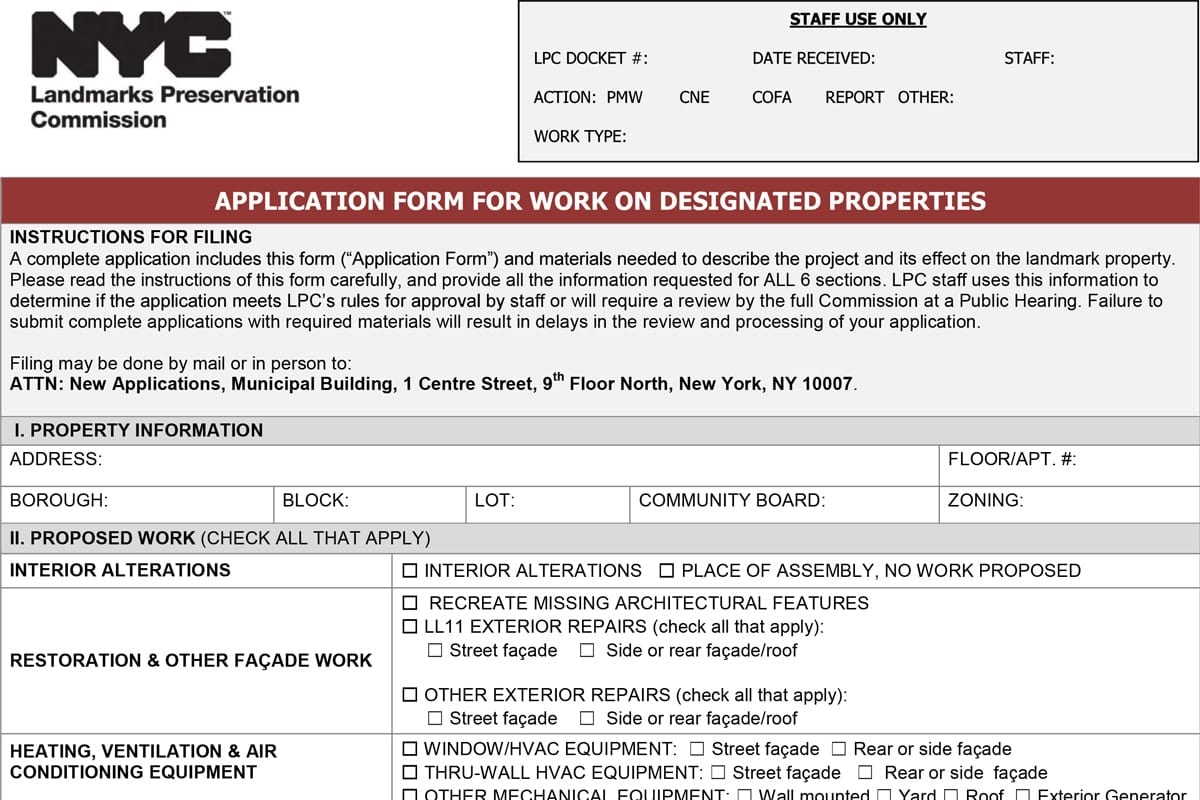
Interior renovations in New York City landmark buildings follow a specific approval process governed by the Landmarks Preservation Commission (LPC) and coordinated with the Department of Buildings (DOB). These projects require a clear understanding of regulatory requirements alongside a comprehensive architectural approach that integrates design, documentation, and construction.
Interior renovations in landmark buildings require LPC approval prior to obtaining a DOB permit, regardless of whether the work is limited to the interior. The level of review depends on the scope of work, with many apartment renovations qualifying for expedited or Fast Track applications when the project remains within defined parameters.
I am Jorge Fontan, owner of Fontan Architecture, a Manhattan-based architecture firm specializing in high-end residential renovations. In landmark apartment projects, we develop the approval strategy in parallel with the architectural design, ensuring that LPC and DOB requirements are clearly coordinated from the outset. Establishing the correct filing approach early in the process supports an efficient timeline and allows the project to move forward with clarity. Design decisions related to layout, light, and material selection are integrated within this framework, resulting in a cohesive and well-executed renovation tailored to each client. For a detailed overview of the full renovation process in New York City, see our related article on the NYC Apartment Renovation Process: Step-by-Step Guide.
Table of Contents
Applicability of LPC Review
All work in a landmark building or within a designated historic district requires review by the Landmarks Preservation Commission (LPC) prior to Department of Buildings (DOB) permit issuance. This requirement applies to all buildings within landmark districts, including non-contributing buildings, as the LPC must confirm that the proposed work does not impact protected exterior features or the architectural character of the building.
This requirement includes interior renovations, regardless of scope. The LPC reviews interior work to verify that no exterior conditions are affected, including windows, façade elements, or any features visible from the public way.
For interior apartment renovations, the approval process is typically straightforward when the scope is clearly defined and aligned with established LPC guidelines. Establishing the appropriate application strategy at the outset supports an efficient and well-coordinated project timeline.
Types of LPC Applications
The LPC provides multiple application pathways depending on the scope and visibility of the proposed work. The three primary categories for residential renovations are:
- Expedited Review (Certificate of No Effect)
- Fast Track Application
- Full LPC Application (Application for Work on Designated Properties)
Each application type corresponds to a specific level of review and documentation.
Expedited Review (Certificate of No Effect)
The Expedited Certificate of No Effect is the most efficient approval pathway for qualifying interior renovations. This application is appropriate for work that has no impact on protected exterior features or significant interior spaces.
Projects that qualify for expedited review typically receive approval within a short timeframe when properly filed and documented.
Typical Requirements for Expedited Review:
- Interior renovations only
- Work located on the third floor or higher
- No work within designated interior landmark spaces
- No exterior scope, including windows, façade elements, or visible conditions
- No ceiling modifications within close proximity to windows
This application requires a concise submission including architectural drawings prepared and filed by a registered architect. When the project scope aligns with these criteria, the approval process proceeds efficiently and supports a streamlined project schedule.
Fast Track Application
The Fast Track application provides a secondary approval pathway for projects that include limited exterior work or conditions beyond the scope of expedited review.
This application type accommodates a broader range of project elements while maintaining an efficient review timeline.
Typical Scope for Fast Track Applications:
- Interior renovations
- Window and door replacement on non-visible façades
- Minor façade repairs
- Rooftop and rear yard work
- HVAC and mechanical equipment installations
- Limited exterior alterations not visible from the public way
Fast Track applications require additional documentation, particularly where exterior work is involved. Proper coordination of drawings and supporting materials ensures a clear and efficient review process.
Window Replacement in Landmark Buildings
Window replacement is a critical component of many apartment renovations in landmark buildings and requires careful evaluation. Windows are considered a defining architectural feature, and their replacement is reviewed based on visibility, material, and configuration.
For windows located on primary façades or visible from the public way, LPC review is more detailed and typically requires a full application. The proposed windows must align with the historic character of the building in terms of profile, operation, material, and finish.
From a design perspective, window selection plays a significant role in the overall quality of the interior environment. Proportion, sightlines, and frame detailing directly impact how light enters the space and how the interior relates to the exterior context. In high-end renovations, window replacement is approached as an integrated design decision, balancing performance, aesthetics, and regulatory requirements.
Coordinating LPC and DOB Approvals
The LPC approval process precedes DOB filing and establishes the framework for construction permitting. Once LPC approval is secured, the project proceeds through DOB review for code compliance and permitting.
Accurate and coordinated filings support a predictable timeline and reduce the potential for delays. Establishing the correct application strategy at the beginning of the project allows the design and approval process to move forward with clarity and control.
Renovating in a Landmark Building
Apartment renovations in NYC landmark buildings require a coordinated approach that aligns LPC approval, DOB permitting, and architectural design. Understanding the distinctions between expedited review, Fast Track applications, and full LPC filings allows for an efficient and controlled process. Window replacement and other exterior considerations require additional attention, with design decisions evaluated in the context of the building’s historic character and visibility.
A well-executed landmark renovation reflects both regulatory precision and a high level of design. Proportion, material selection, and spatial organization are developed alongside the approval process, resulting in a cohesive and carefully considered project.
At Fontan Architecture, we guide clients through landmark apartment renovations with a focus on design, process, and execution. Our work integrates LPC and DOB approvals into a comprehensive architectural approach, ensuring that each project is developed with clarity, precision, and a commitment to quality.
Request a Consultation with Fontan Architecture - 212 321 0194
Jorge Fontan, AIA, is an architect and founder of Fontan Architecture based in New York City. The firm focuses on residential design, including new homes and extensive renovations for discerning clients. Through collaborative dialogue that draws on the individuality of each client, projects develop as distinct architectural responses guided by thoughtful planning, precise detailing, and a commitment to creating enduring value.

Jorge Fontan, AIA, is an architect and founder of Fontan Architecture based in New York City. The firm focuses on residential design, including new homes and extensive renovations for discerning clients. Through collaborative dialogue that draws on the individuality of each client, projects develop as distinct architectural responses guided by thoughtful planning, precise detailing, and a commitment to creating enduring value.