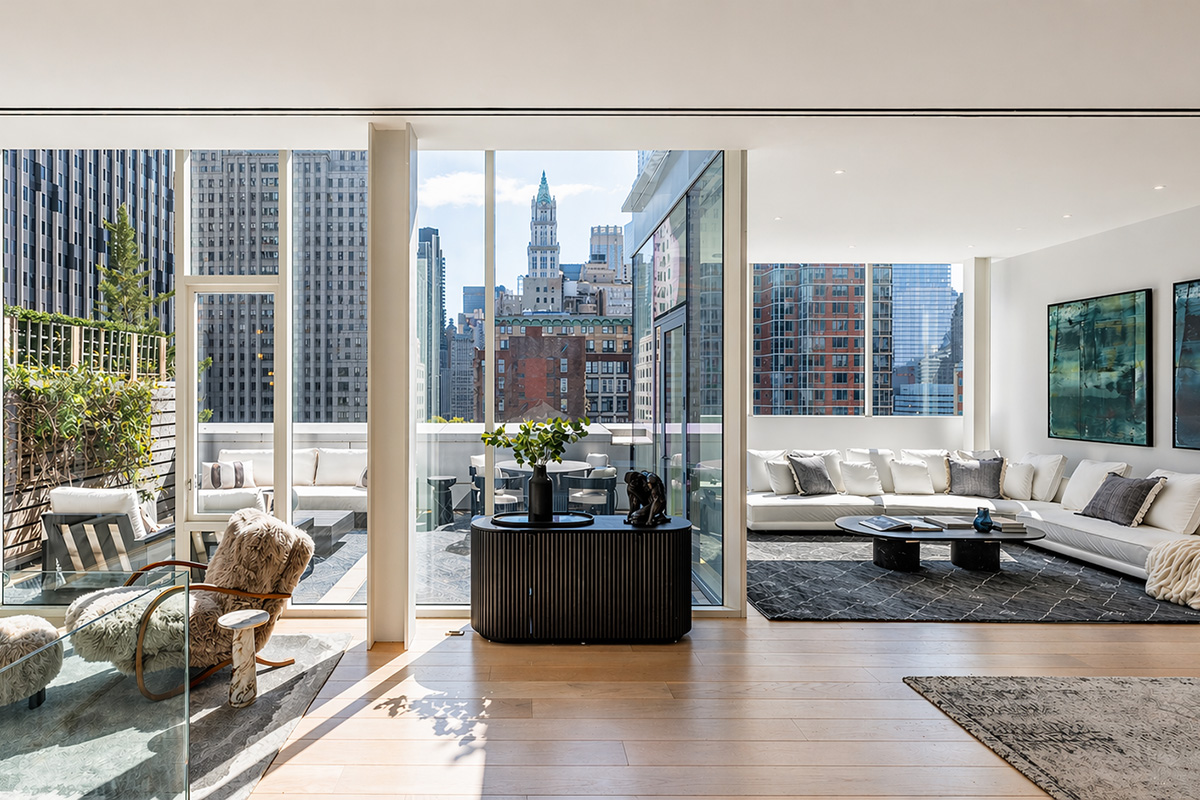
When purchasing a penthouse in New York City, an early architectural review can significantly influence decision making. Penthouses often appear highly flexible, but their renovation potential is ultimately defined by structural systems, building infrastructure, existing conditions, and building governance. These constraints are not always evident during a typical real estate evaluation.
You should consult an architect before purchasing a penthouse in NYC if you are planning a renovation. A pre-purchase architectural evaluation provides clarity on feasibility, identifies structural and regulatory limitations, and aligns the acquisition with realistic expectations for design, construction, and budget.
I am Jorge Fontan, owner of Fontan Architecture, a Manhattan-based architecture firm specializing in high-end residential renovations. Our work includes renovating penthouses, lofts, and townhouses throughout New York City, often involving extensive modifications and full interior reconfiguration. We regularly advise clients during the pre-purchase phase, evaluating layout potential, building constraints, and regulatory considerations to support informed acquisition decisions and successful project outcomes.
Table of Contents
Why You Should Consult with an Architect Before Closing on Your Penthouse
Purchasing a New York City penthouse involves more than aesthetics and square footage. Each penthouse is shaped by structural systems, building infrastructure, regulatory considerations, and existing layout conditions that directly affect renovation feasibility.
While your attorney handles contractual due diligence, an architect evaluates the physical realities of the penthouse and the building. This includes structural limitations, mechanical systems, layout and design potential, and building-specific rules that determine what can be built, along with anticipated budget and timeline considerations.
Reviewing these factors prior to closing provides clarity on layout potential, identifies design limitations, and establishes a realistic framework for renovation. This allows the acquisition decision to align with the intended scope, level of design, and overall investment.
Physical Constraints in Penthouse Units
New York City penthouses vary significantly in their existing conditions. Even within similar building types, such as prewar or contemporary structures, there can be meaningful differences in structure, infrastructure, and layout that directly impact renovation potential.
Plumbing and Utility Risers
Utility distribution in penthouses is defined by the location and capacity of vertical risers serving the unit. In some cases, multiple riser locations allow for flexibility in kitchen and bathroom placement. In others, a single riser may serve the entire residence, limiting reconfiguration options.
Understanding riser locations and capacity early enables a realistic assessment of renovation scope and helps establish feasible layout strategies before design begins.
Layout Constraints
Penthouse layout potential is determined by a combination of structural and spatial factors. Structural elements such as columns and beams establish fixed conditions within the space. Building systems, including plumbing risers, ventilation ducts, and mechanical distribution, further define what can be relocated.
Window locations, light exposure, and overall floor area also play a critical role in shaping the design. These factors collectively determine how a penthouse can be organized, proportioned, and ultimately experienced.
HVAC Upgrades
Many existing penthouses rely on legacy heating systems such as cast-iron radiators and cooling through window units. Upgrading to a modern HVAC system—whether through ducted distribution or variable refrigerant flow (VRF)—requires careful coordination with existing building infrastructure.
In some cases, existing systems can be modified or supplemented, which may offer a more efficient and practical approach depending on building conditions. In other situations, full system replacement may be required to achieve the desired level of performance, comfort, and control.
Mechanical system integration directly affects layout flexibility, ceiling heights, and overall construction cost. Evaluating HVAC strategy early in the planning or pre-purchase phase establishes clear expectations for system feasibility and helps align the design with the intended level of finish and investment.
Window Replacement in Penthouse Units
Window replacement is a common component of penthouse renovations in Manhattan, particularly in older buildings where existing windows no longer meet current expectations for performance, comfort, and sound control.
In buildings located within designated historic districts, window replacement is subject to review by the New York City Landmarks Preservation Commission. Approved replacements must meet specific criteria for proportions, materials, and visual character. These requirements directly influence both design decisions and product selection.
Window systems also play a critical role in overall building performance. The size and configuration of openings, along with glazing type and frame construction, affect thermal efficiency, acoustic performance, and mechanical system demands. These factors must be considered in coordination with the broader architectural and HVAC strategy.
Certain penthouses include lot-line windows positioned along property boundaries. Under New York City Building Code requirements, these openings require fire-rated assemblies. Fire-rated glazing introduces additional cost and may affect detailing, installation, and available product options.
Understanding window conditions, regulatory requirements, and performance implications early in the evaluation process allows buyers to make informed decisions regarding scope, cost, and design direction prior to purchase.
Code Requirements in Penthouse Units
Penthouse units in New York City are governed by the New York City Building Code and the New York State Multiple Dwelling Law, which establish standards for residential occupancy. These regulations address requirements for light and air, egress, fire protection, and interior environmental conditions.
These code requirements directly influence how a penthouse can be reconfigured. Layout changes, room sizes, window conditions, and means of egress must align with established code standards. Code compliance is integral to design feasibility and must be considered alongside physical building constraints.
Evaluating applicable code requirements during the pre-purchase phase allows for a clear understanding of design limitations and regulatory implications. This ensures that the proposed scope of work aligns with both building conditions and governing regulations before acquisition is finalized.
Budget and Schedule
In early consultations for Manhattan penthouse renovations, defining project scope, establishing a realistic budget range, and understanding timeline expectations are central considerations. Penthouse renovations involve coordination with building management, regulatory review, and integration of existing building systems, all of which influence both cost and schedule.
Early feasibility analysis provides a structured framework for evaluating potential investment and project duration before detailed construction pricing is available. This allows buyers to assess whether the penthouse aligns with their financial objectives and overall timeline prior to closing. For a complete breakdown of the renovation process, refer to: NYC Apartment Renovation Process: Step-by-Step Guide from an Architect.
Key factors such as HVAC strategy, plumbing reconfiguration, acoustic requirements, structural modifications, and building approval processes can significantly affect both budget and duration. Evaluating these conditions during due diligence establishes clear expectations and supports a more predictable and controlled renovation process.
Engaging an Architect Before You Purchase a Penthouse in NYC
In Manhattan’s competitive real estate market, architectural consultation is most effective when it begins during the acquisition phase. Engaging an architect prior to closing allows physical constraints, building systems, and renovation feasibility to be evaluated before a purchase decision is finalized. This early analysis provides a clear understanding of what can realistically be achieved within the penthouse and how the design intent aligns with existing conditions.
Pre-purchase architectural review establishes realistic expectations for budget, timeline, and scope. Evaluating building constraints, layout potential, and approval processes at this stage reduces uncertainty and supports more informed decision making. This approach allows the acquisition to be aligned with both design objectives and overall investment strategy.
Renovating a Manhattan penthouse requires coordination across design, engineering, and construction, often within the framework of building-specific requirements and approvals. Early feasibility analysis provides clarity on project direction, identifies potential limitations, and supports a more controlled and predictable process from the outset.
If you are considering purchasing and renovating a penthouse in New York City, at Fontan Architecture we provide full-service architectural guidance from early due diligence through full design and construction oversight. We work with clients to evaluate feasibility, define scope, and develop projects with a focus on design quality, precision, and execution.
Request a Consultation with Fontan Architecture - 212 321 0194
Jorge Fontan, AIA, is an architect and founder of Fontan Architecture based in New York City. The firm focuses on residential design, including new homes and extensive renovations for discerning clients. Through collaborative dialogue that draws on the individuality of each client, projects develop as distinct architectural responses guided by thoughtful planning, precise detailing, and a commitment to creating enduring value.


Jorge Fontan, AIA, is an architect and founder of Fontan Architecture based in New York City. The firm focuses on residential design, including new homes and extensive renovations for discerning clients. Through collaborative dialogue that draws on the individuality of each client, projects develop as distinct architectural responses guided by thoughtful planning, precise detailing, and a commitment to creating enduring value.