Combining Townhouses in NYC

by | Last updated May 20, 2026 | Brownstones & Townhouses, General Architecture, Renovating

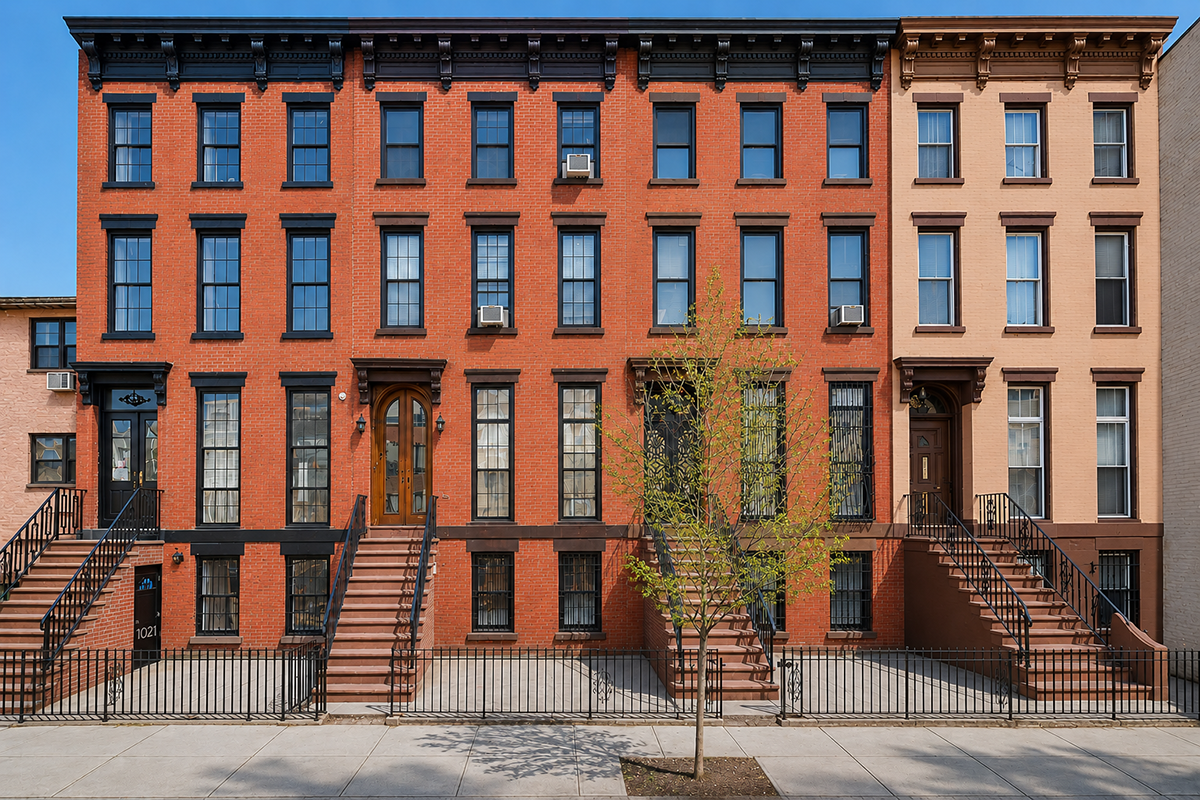
Combining two adjacent townhouses in New York City creates the opportunity for expansive residential layouts, larger entertaining spaces, improved circulation, and highly customized luxury homes. Townhouse combinations are among the most complex forms of residential renovation in NYC because they involve extensive architectural coordination, structural integration, existing conditions assessment, and approvals from multiple city and state agencies. These projects often transform two narrow buildings into a single cohesive residence with a scale rarely achievable in Manhattan and Brooklyn townhouses.

Two adjacent townhouses or brownstones in NYC can often be legally combined into a single residence or larger multifamily property through a coordinated approval and construction process. Combining townhouses requires a new Certificate of Occupancy and NYC Department of Buildings Alt CO  filing (formerly Alteration Type 1), a Department of Finance lot merger, updated street number approvals, and additional filings depending on landmark status, occupancy classification, and ownership structure. The process requires careful coordination between architecture, zoning, code compliance, legal documentation, and construction execution.

I am Jorge Fontan, owner of Fontan Architecture, a Manhattan-based architecture firm specializing in high-end residential renovations. Our firm works on complex townhouse and brownstone projects throughout New York City, including townhouse combinations, landmark properties, structural modifications, and luxury residential redevelopment. We approach townhouse combinations through a comprehensive architectural process that integrates zoning analysis, DOB filings, design development, structural coordination, and construction documentation from the earliest phases of the project.


Combining Two Townhouses in NYC

Combining townhouses requires extensive planning, legal coordination, architectural analysis, and regulatory approvals.

Key considerations for combining townhouses include:

  • DOB Alteration CO, formerly Alteration Type 1 Filing
  • Department of Finance Lot Merger
  • Borough President Street Number Approval
  • Landmark Preservation Commission Approvals (Where Applicable)
  • HPD Certificate of No Harassment (Where Applicable)
  • Structural Integration
  • Zoning and Building Code Compliance

Each townhouse combination presents unique conditions related to zoning lot configuration, occupancy classification, structural systems, egress, landmark status, and ownership structure.

DOB Alteration CO or Alt 1 Filing

The primary filing for combining townhouses is typically an Alteration Co commonly referred to as an Alteration Type 1 or Alt 1, with the New York City Department of Buildings.

An Alt 1 filing is required when the work results in:

  • A new Certificate of Occupancy
  • A change in use or occupancy
  • A change in means of egress

Townhouse combinations require a new Certificate of Occupancy because the project transforms two separate buildings into a single legal building configuration.

If the project involves demolishing the existing buildings and constructing an entirely new structure, the filing would instead proceed as a New Building application.

The architectural filing must coordinate:

  • Existing and proposed conditions
  • Zoning analysis
  • Code compliance
  • Structural modifications
  • Egress requirements
  • Fire protection systems
  • Occupancy classification


Department of Finance Lot Merger

When combining two townhouses, the tax lots or zoning lots are often merged through the New York City Department of Finance.

The lot merger process typically includes:

  • RP-602 application filings
  • Updated deeds
  • Land surveys
  • Tax lot coordination
  • Supporting legal documentation

The merger creates a unified tax and zoning lot condition that aligns with the new combined building configuration.

Lot mergers are a critical component of townhouse combinations because zoning calculations, ownership documentation, and future property records rely on the unified lot structure.


Borough President Street Number Approval

Townhouse combinations require coordination with the Topographical Bureau within the applicable Borough President’s Office.

The project team must file an Application for Street Numbers even if the intent is to retain one of the original addresses.

This process establishes the official address designation for the combined property and coordinates city records associated with:

  • Utilities
  • Emergency services
  • Property records
  • Building permits
  • Certificates of Occupancy

Street numbering becomes especially important when combining multiple tax lots into a single residence.


Landmark Preservation Commission Approvals

Many townhouses and brownstones in Manhattan and Brooklyn are either individually landmarked or located within historic districts.

If either property falls under landmark jurisdiction, approvals from the New York City Landmarks Preservation Commission will be required.

Landmark review may apply to:

  • Facade modifications
  • Window changes
  • Rooftop additions
  • Rear yard extensions
  • Mechanical equipment visibility
  • Masonry restoration
  • Entrance modifications
  • Interior Renovations


HPD Certificate of No Harassment

Some townhouse properties have Single Room Occupancy (SRO) restrictions.

If the building is SRO restricted, the project may require a Certificate of No Harassment from the New York City Department of Housing Preservation and Development.

This process evaluates the occupancy history and regulatory status of the building prior to redevelopment approvals.

The SRO status of a property can significantly affect:

  • Project timeline
  • Feasibility
  • Legal requirements
  • Development strategy

Determining SRO status is an important part of the due diligence process before purchasing or combining townhouses in NYC.


Structural Design of Combined Townhouses

Combining townhouses requires extensive structural design and coordination.

These projects often involve:

  • Removing portions of masonry walls
  • Reinforcing floor framing
  • Installing structural steel
  • Aligning floor elevations
  • Integrating stair and elevator systems
  • Coordinating new mechanical infrastructure

Many historic townhouses were constructed independently with differing floor heights, framing systems, and structural conditions. The architectural and structural design process must reconcile these differences to create a unified home with cohesive circulation and proportion.

In high-end townhouse combinations, the design often introduces:

  • Large entertaining spaces
  • Expanded kitchen layouts
  • Double-width primary suites
  • Internal courtyards
  • Integrated wellness spaces
  • Elevator circulation
  • Custom stair systems

The architectural challenge is creating a home that feels intentional and unified rather than two adjacent buildings connected together.


Zoning and Building Code Analysis

Townhouse combinations require extensive zoning and building code analysis.

The project team must evaluate:

  • Floor area calculations
  • Occupancy classifications
  • Egress requirements
  • Fire separation conditions
  • Light and air requirements
  • Accessibility considerations
  • Landmark restrictions
  • Energy code compliance

Each project presents unique conditions that influence the architectural and regulatory strategy.

Careful code coordination early in the process helps establish feasibility, project scope, and overall development potential.


Creating Unified Luxury Townhouse Residences

Combining two townhouses creates the opportunity for exceptional residential architecture at a scale rarely available in New York City. These projects allow for expansive floor plans, carefully choreographed circulation, and highly customized living environments tailored to the client’s lifestyle and priorities.

Successful townhouse combinations require a coordinated process that integrates architecture, zoning analysis, landmark coordination, structural engineering, and construction execution. The most refined projects create a seamless architectural composition where proportion, materiality, and spatial organization feel fully integrated throughout the home.

At Fontan Architecture, we work on complex townhouse and brownstone renovations throughout New York City, including townhouse combinations, landmark properties, and high-end residential redevelopment projects. Our firm coordinates design, DOB filings, zoning analysis, technical development, and construction documentation as part of a comprehensive architectural process tailored to each property and client.

Request a Consultation with Fontan Architecture - 212 321 0194

Jorge Fontan
Jorge Fontan

Jorge Fontan, AIA, is an architect and founder of Fontan Architecture based in New York City. The firm focuses on residential design, including new homes and extensive renovations for discerning clients. Through collaborative dialogue that draws on the individuality of each client, projects develop as distinct architectural responses guided by thoughtful planning, precise detailing, and a commitment to creating enduring value.