Adding a rear deck is one of the most effective ways to expand the usable space of a townhouse in New York City. A well-designed deck creates a direct connection between the interior and the rear yard, improving both functionality and the overall experience of the home.
You can add a rear deck to a townhouse in New York City provided the design complies with applicable zoning regulations, building codes, and filing requirements. A properly designed deck extends the usable space of the home and creates a direct connection between the interior and the rear yard. You will need an architect to file with the Department of Buildings (DOB) and obtain approvals. If the townhouse is landmarked, your architect will also file with the Landmarks Preservation Commission (LPC).
I am Jorge Fontan, owner of Fontan Architecture, a Manhattan-based architecture firm specializing in high-end residential renovations. Our office works on townhouse and brownstone projects throughout Manhattan and Brooklyn, with a focus on integrating outdoor space into the overall architectural design. In this post, we review key considerations for adding a backyard deck in New York City, including requirements and process, using a previous project as an example.
Table of Contents
Adding a Deck to a Townhouse in NYC
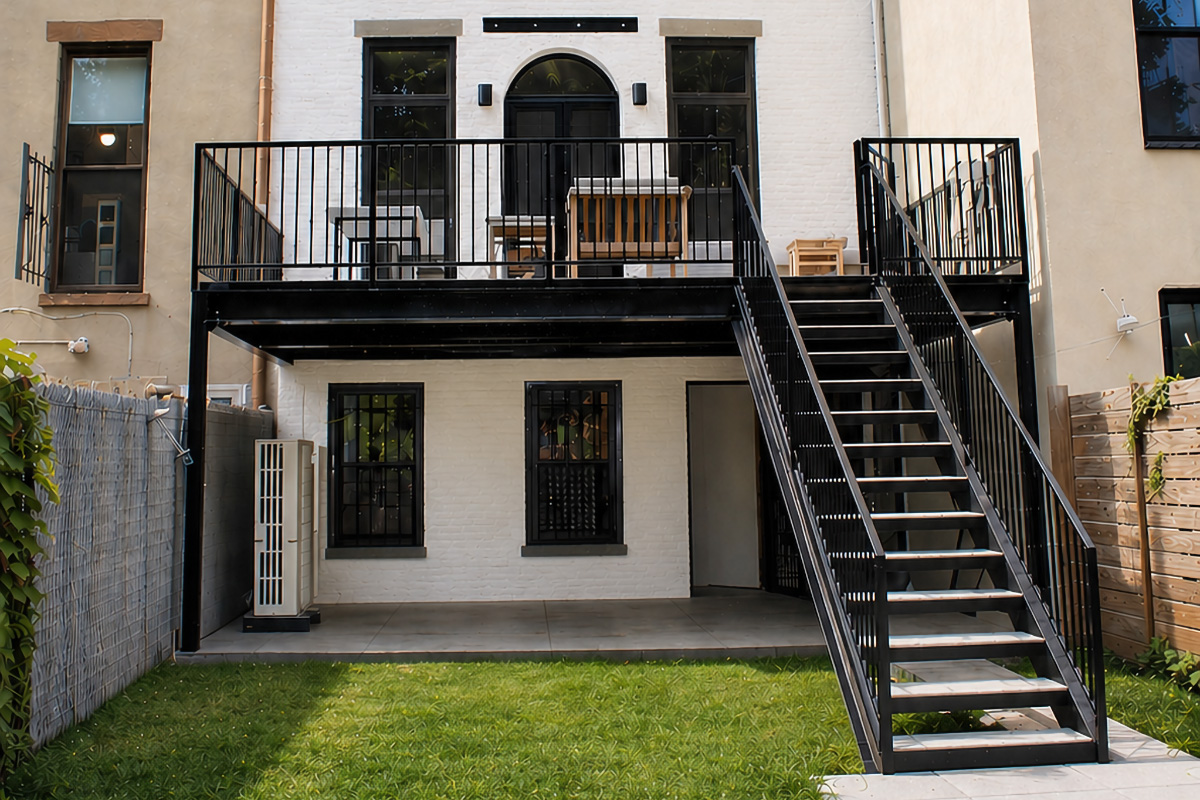
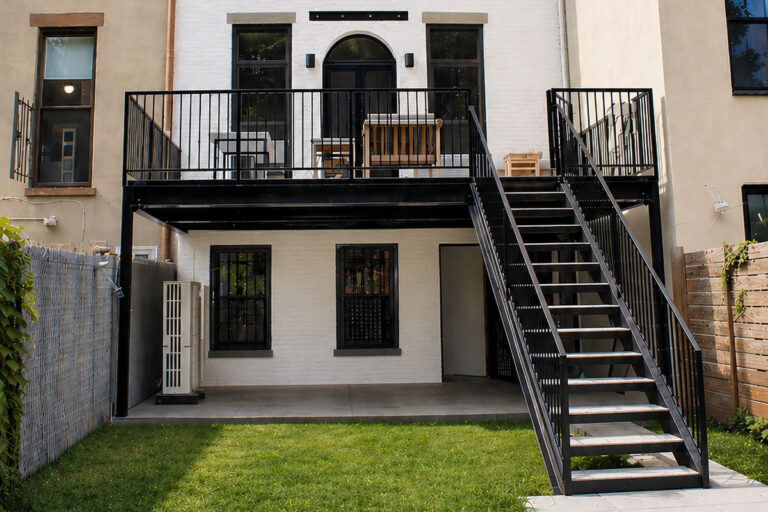
Below is a photo of a steel deck with concrete pavers we added while renovating a townhouse in Brooklyn. The exterior masonry wall was opened to accommodate the new door, with an exposed steel lintel above the opening. The proportions of the opening and the detailing of the steel were carefully coordinated with the existing structure to maintain a cohesive rear facade.
Hiring an Architect for Your New Deck
If you plan to add a deck in New York City, you will need to hire an architect. The process typically begins with an initial consultation to define the scope of work, review site conditions, and establish project goals.
At our office, we begin with a detailed discussion to understand the property, the existing conditions, and how the deck will relate to the interior spaces. This early phase is critical to aligning design intent with technical requirements and overall project feasibility.
Permits for Building a Deck in NYC
You must obtain permits to build a deck in New York City. An architect will file with the NYC Department of Buildings (DOB) before a permit can be issued. There is a high likelihood that a land survey will be required.
During construction, the project will include required special inspections in accordance with NYC DOB regulations. At completion, the design team will perform final sign-offs to close out the project. This process ensures that the work is properly documented, constructed, and compliant with applicable codes.
Landmarks Approval for a Rear Deck in NYC
If your building is located within a landmark district, you will also need approval from the Landmarks Preservation Commission (LPC). If the deck is not visible from the street, the approval process is typically more straightforward. Where visibility is a factor, the design must be carefully developed to meet LPC guidelines while maintaining the architectural integrity of the building.
NYC Yard Requirements for Decks
One important reference for deck regulations is NYC DOB TPPN 4/03, which applies to decks at the first or parlor floor of a townhouse above a cellar or basement.
New York City zoning regulations establish required rear yards. A deck may be built within the required yard provided it does not exceed 8 feet from the building face. Stairs do not count toward the 8-foot limitation. If the deck is located outside the required rear yard, it may exceed this depth.
Additional requirements include setback conditions for combustible materials and limitations on use below the deck, which must be considered as part of the overall design.
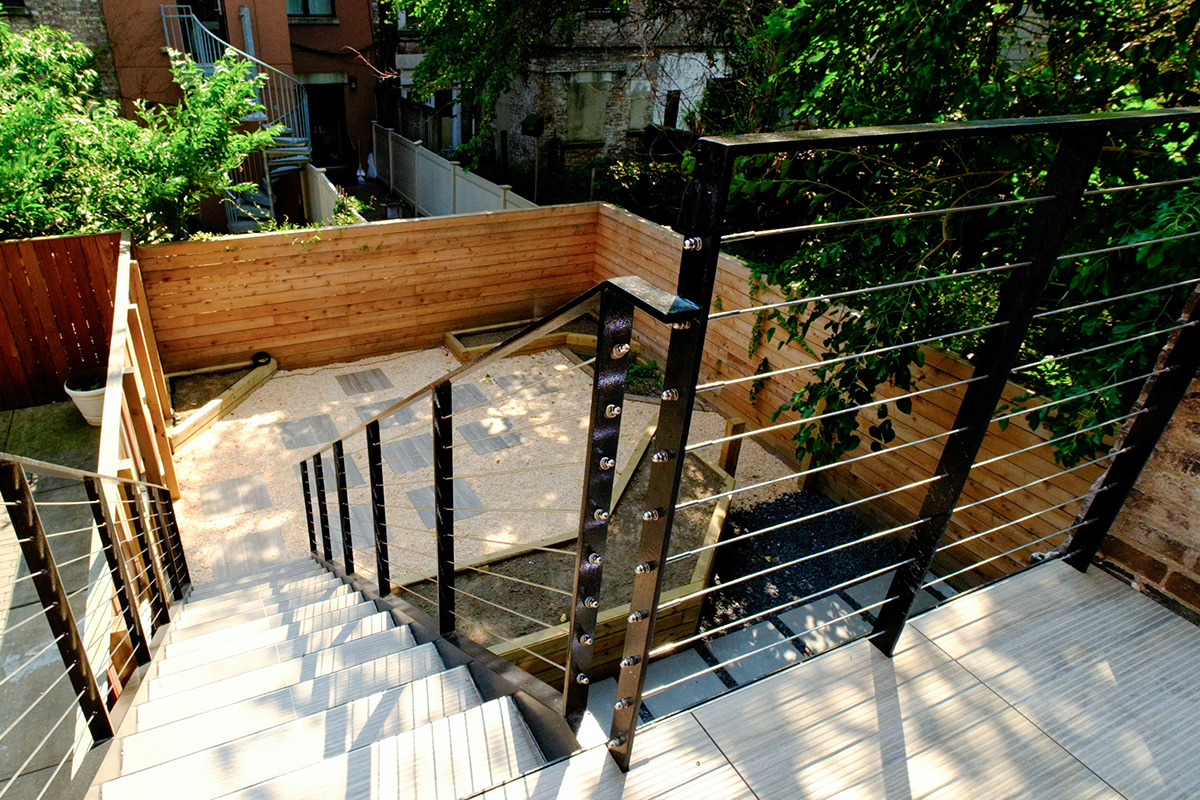
New Rear Deck on a Townhouse
Townhouse Steel Decks
At our office, rear decks for townhouses in Manhattan and Brooklyn are typically designed in steel, which is a durable, noncombustible material well suited to urban residential construction. Steel allows for refined detailing, slender structural profiles, and long-term durability when properly fabricated and installed.
Building a Backyard Deck in NYC
If you are planning to add a deck in your rear yard, you will need to work with both an architect and a contractor. We recommend starting with an architect to evaluate the property, define the design approach, and guide the project through the approval process.
In many townhouse renovations in Brooklyn and Manhattan, the addition of a rear deck is part of a larger design strategy to improve the relationship between interior living spaces and the exterior environment. We also have additional articles on related topics, including roof decks and full townhouse renovations.
Adding a Rear Deck to a Townhouse
Adding a rear deck is a valuable improvement for a townhouse in New York City. It expands usable space, enhances the connection to the rear yard, and improves the overall functionality of the home. When designed with careful attention to proportion, material, and integration with the existing structure, a deck becomes an integral part of the architecture rather than an addition.
Fontan Architecture works on high-end townhouse and brownstone renovations throughout Manhattan and Brooklyn. Our approach integrates design, structure, and construction detailing to deliver cohesive indoor-outdoor spaces with a high level of execution. If you are considering adding a rear deck or planning a townhouse renovation, we can assist in developing the design and guiding the project through approvals and construction.
Request a Consultation with Fontan Architecture - 212 321 0194
Jorge Fontan, AIA, is an architect and founder of Fontan Architecture based in New York City. The firm focuses on residential design, including new homes and extensive renovations for discerning clients. Through collaborative dialogue that draws on the individuality of each client, projects develop as distinct architectural responses guided by thoughtful planning, precise detailing, and a commitment to creating enduring value.
Jorge Fontan, AIA, is an architect and founder of Fontan Architecture based in New York City. The firm focuses on residential design, including new homes and extensive renovations for discerning clients. Through collaborative dialogue that draws on the individuality of each client, projects develop as distinct architectural responses guided by thoughtful planning, precise detailing, and a commitment to creating enduring value.