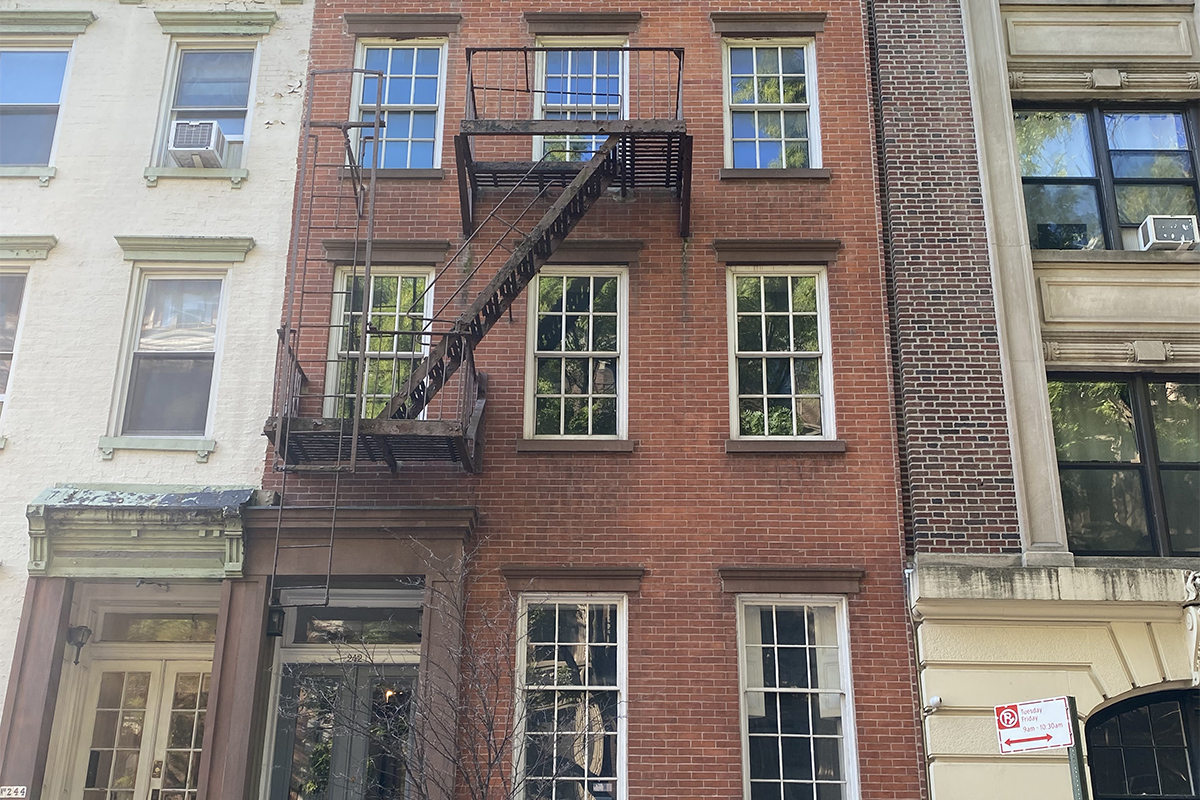
Removing a fire escape from the front of a New York City landmark townhouse is a common consideration in high-end residential renovations. While fire escapes were often added for life-safety requirements when townhouses were converted to multifamily use, they can significantly impact the architectural character and visual composition of a historic façade.
In many cases, removal is possible with approval from the New York City Landmarks Preservation Commission, but feasibility depends on several factors, including egress requirements, historical significance, and the specific context of the building and its landmark designation. Fire escapes that are original to the structure or contribute to its architectural identity may be more difficult to remove and, in some cases, may not be approved.
I am Jorge Fontan, an architect and owner of Fontan Architecture, a New York City–based architecture firm focused on the design and renovation of townhouses, apartments, and lofts. In this article, we will review the key considerations, regulatory framework, and design implications involved in removing a fire escape from a landmark townhouse in NYC. For a more comprehensive overview of the townhouse renovation process, see our article on Renovating a Townhouse in NYC: Planning, Design, and Approvals.
Table of Contents
When a Fire Escape Is Required for Egress
The first step in evaluating whether a fire escape can be removed is determining if it is required as a means of egress. If the fire escape is necessary for life safety, removal becomes significantly more complex and, in many cases, impractical.
Many New York City townhouses were originally constructed as single-family homes and later converted to multifamily use or Single Room Occupancy (SRO) buildings. In these cases, fire escapes were often added to satisfy egress requirements in effect at the time. When a property is being converted back to a single-family residence, it may be possible to remove the fire escape, subject to code compliance and regulatory approval.
For single-family townhouses, a secondary means of egress is typically not required under New York City Building Code. As a result, removal of an existing fire escape may be permissible from a code standpoint. This does not eliminate the need for proper filings and permits with the New York City Department of Buildings, but it generally avoids major code compliance issues related to egress.
Fire escape removal is often part of a broader townhouse renovation, particularly in projects that convert multifamily buildings back to single-family homes; see our related article on converting multifamily townhouses to single-family homes in NYC.
Original Condition and Architectural Significance
In landmark districts, the historical and architectural significance of the fire escape is a critical factor in determining whether removal will be approved.
Two primary considerations should be evaluated:
- Whether the fire escape is original to the building
Fire escapes that were part of the original construction are more likely to be protected. - Whether the fire escape contributes to the architectural character of the façade
In some historic districts, fire escapes are integral to the visual identity of the streetscape. Decorative or well-integrated fire escapes may be considered architecturally significant, even if they were added after initial construction.
Understanding these factors is essential in assessing the likelihood of approval and shaping the overall strategy for the application.
Landmarks Preservation Commission Review Process
Removing a fire escape from a landmark building or a property within a designated historic district requires approval from the New York City Landmarks Preservation Commission, along with permits from the New York City Department of Buildings.
There are two potential levels of review:
- Staff-Level Approval
This is the more streamlined and predictable review path. If the fire escape is not original and does not contribute to the building’s architectural significance, LPC staff may approve the removal without a public hearing. - Full Commission Review and Public Hearing
If the fire escape is deemed significant, the application may require a full Commission review. This process is more time-intensive and involves a public hearing. There is also the possibility of denial, even after a full review, which introduces additional risk in terms of time and cost.
The distinction between these two paths is critical and should be evaluated early, as it directly impacts project feasibility and timeline.
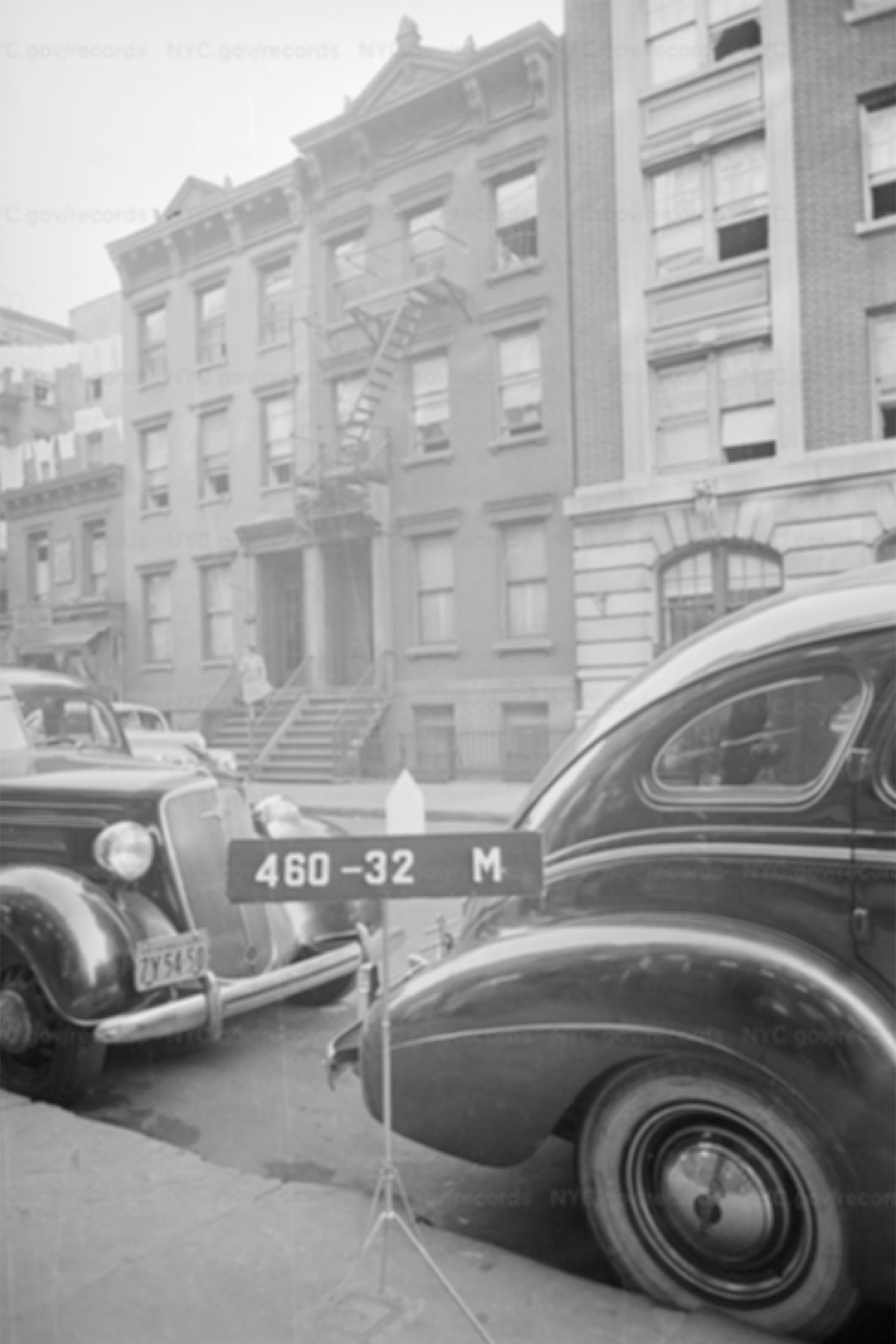
Historic Photo of Landmark Townhouse with fire escape
Design Implications After Fire Escape Removal
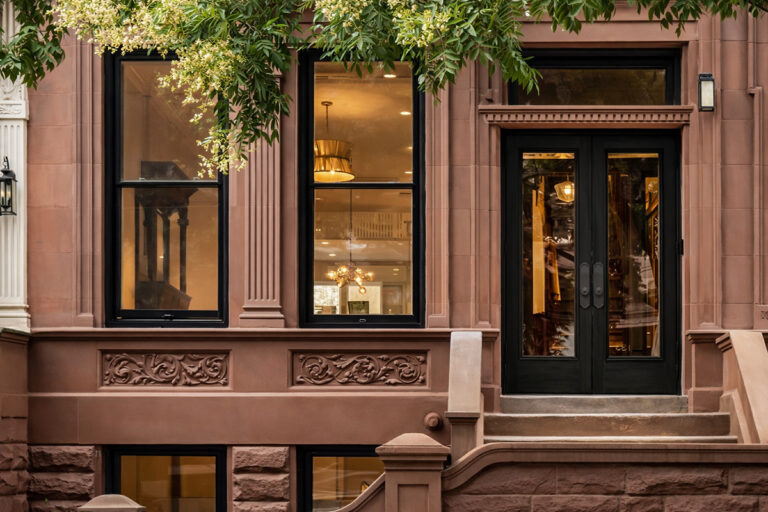
Removing a fire escape from a landmark townhouse façade requires careful consideration of how the building will be restored and visually composed afterward. Fire escapes often leave behind attachment points, patched masonry, and disruptions to the original façade. Addressing these conditions requires thoughtful detailing, including masonry repair, window restoration, and alignment of façade elements to maintain architectural continuity.
Considerations for Removing a Fire Escape on a Landmark Townhouse
Removing a fire escape from a landmark townhouse façade involves a coordinated approach that addresses building code, historic preservation, and architectural design. Each project must be evaluated based on its specific conditions, including building typology, landmark designation, and façade composition. Early assessment of these factors allows for a clear strategy and helps reduce the risk of delays or denial during the approval process.
Not all fire escapes can be removed. Establishing feasibility at the outset is essential to aligning expectations with the realities of the project. For a broader discussion of planning, preservation, and modernization in similar properties, refer to our article on Renovating a Brownstone in New York City: Planning, Preservation, and Modernization.
Removing a fire escape should be understood as part of a larger architectural process, not an isolated intervention. The decision affects not only regulatory approvals but also the final composition and character of the building façade. When approached strategically, it can contribute to a more cohesive and refined design outcome.
At Fontan Architecture, we work on townhouse and brownstone renovations throughout New York City, including properties within landmark districts. Our approach focuses on early feasibility analysis and the integration of regulatory strategy with the overall architectural design.
Request a Consultation with Fontan Architecture - 212 321 0194
Jorge Fontan, AIA, is an architect and founder of Fontan Architecture based in New York City. The firm focuses on residential design, including new homes and extensive renovations for discerning clients. Through collaborative dialogue that draws on the individuality of each client, projects develop as distinct architectural responses guided by thoughtful planning, precise detailing, and a commitment to creating enduring value.
Jorge Fontan, AIA, is an architect and founder of Fontan Architecture based in New York City. The firm focuses on residential design, including new homes and extensive renovations for discerning clients. Through collaborative dialogue that draws on the individuality of each client, projects develop as distinct architectural responses guided by thoughtful planning, precise detailing, and a commitment to creating enduring value.