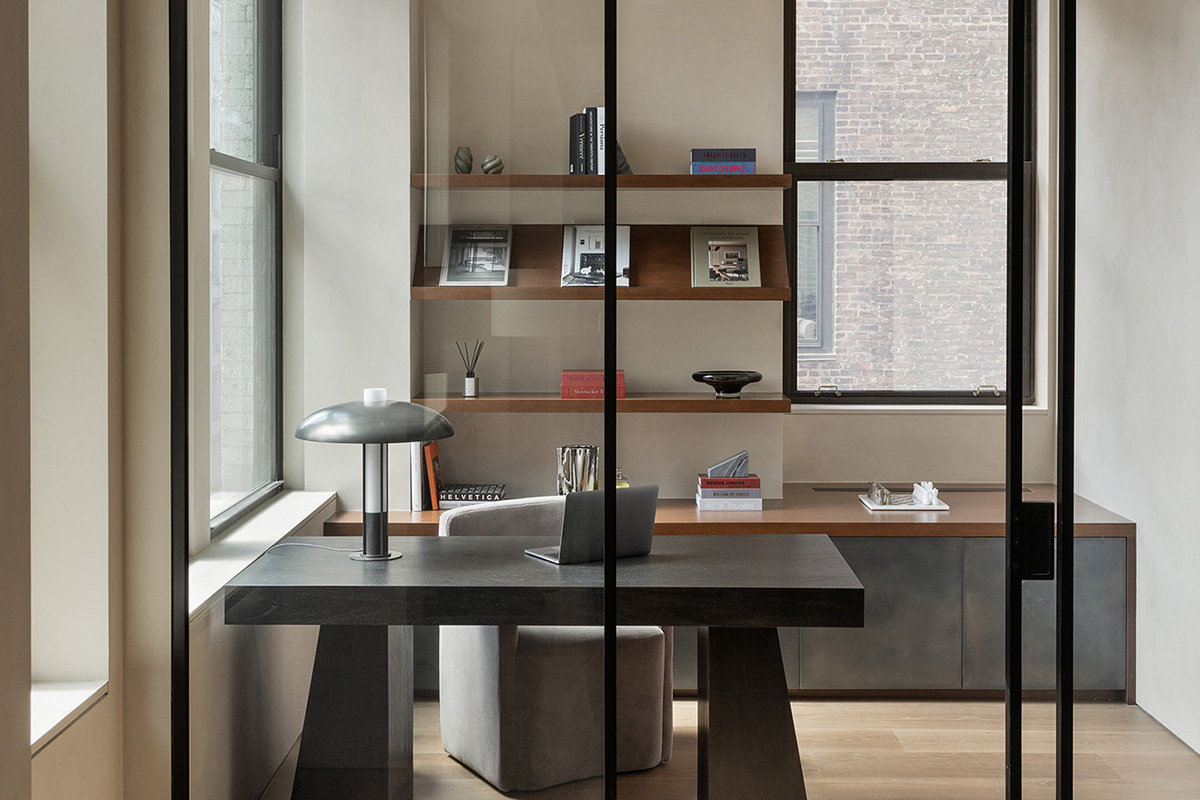
Built-in shelving can become a defining architectural feature within a home. When designed thoughtfully, shelving moves beyond simple storage and begins to function more like a gallery wall. Books, objects, and artwork are framed within the architecture of the room, creating a composition of structure, material, and space rather than simply filling shelves with belongings.
The key to achieving this effect is treating shelving as a curated architectural composition rather than a storage system. Each section can function like a small frame, where the careful placement of books, objects, and negative space creates balance and visual clarity.
This article was inspired by a recent feature in Homes & Gardens where I was asked to comment on gallery shelving design.
At Fontan Architecture we approach architecture and interior design as a single discipline. The separation between the two has always felt artificial to us. Designing the architecture and interior environment together allows elements such as shelving, millwork, materials, and spatial composition to work as part of one cohesive design. This integrated approach is why we tend to think about shelving as an architectural composition rather than simply a storage element or decorating feature.
Treat Each Shelf as a Composition
Gallery shelving works best when each compartment is treated as its own small composition.
We can think of each section as its own miniature frame. Instead of filling every compartment, it is often more effective to treat each opening as a curated moment. A single sculptural object, a stack of books, or a small artwork can be more impactful than several competing objects.
Negative space is what gives shelving a refined and elevated quality. Allowing space around objects gives them presence and helps the shelving read clearly from across the room. When every shelf is filled, the eye has no place to rest and the composition quickly begins to feel cluttered.
Restraint and editing are essential. Well-curated shelving is often defined as much by what is left empty as by what is displayed. The more negative space around an object the more its significance stands out.
Using Books as Design Elements
Books naturally play a central role in shelving, but they can also become part of the design composition.
One technique we sometimes incorporate is an inclined shelf that allows the cover of a meaningful or visually compelling book to be displayed. In this case, the book reads almost like a piece of artwork within the shelving.
Horizontal stacks introduce variation in scale and rhythm. When combined with vertical rows and inclined displays, the shelving develops greater visual depth.
The layering of vertical books, horizontal stacks, and inclined displays creates visual depth. This variation in orientation helps the shelving feel dynamic and intentional rather than repetitive.
The Role of Material Simplicity
Material restraint is important in achieving a gallery-like quality.
Shelving with too many finishes or colors can quickly become visually overwhelming. Instead, we often prefer natural wood shelving set within a neutral architectural environment. Oak, walnut, or other natural woods introduce warmth and texture while remaining visually calm.
Keeping the material palette simple allows the focus to shift toward form, light, and the objects being displayed. Sculptural pieces stand out more clearly when the surrounding material does not compete for attention.
This approach aligns with a broader architectural principle: simplifying the background allows the important elements of a space to emerge more clearly.
Incorporating Sculptural Objects
Sculptural elements are essential to achieving a gallery effect.
Objects with strong silhouettes introduce visual contrast against the linear rhythm of books. Ceramics, stone pieces, carved wood objects, or metal sculptures can all contribute sculptural presence to a shelf.
The interplay between curved forms and structured rows of books creates visual interest. These subtle contrasts help prevent the shelving from feeling overly rigid or repetitive.
When selecting objects, it is helpful to choose pieces that have meaning to the homeowner. Shelving that reflects personal interests, travels, or collections tends to feel more authentic and thought out.
Over time, the shelving can become a record of the homeowner’s life.
Designing the Shelving as Architecture
The design of the shelving itself plays an important role in the final result.
Thin adjustable shelving systems often feel temporary or utilitarian. In contrast, built-in shelving with slightly thicker shelves and concealed supports tends to feel more architectural and refined.
Proportion is critical. The height, width, and depth of each opening should be carefully considered. Larger compartments can accommodate sculptures or artwork, while smaller ones are better suited for books or smaller objects.
Alignment also matters. Shelves that align with architectural elements such as windows, millwork, or ceiling lines integrate more naturally into the space. When architecture and built-ins communicate, the home develops a strong sense of deliberate intent.
When shelving is designed as part of the architecture rather than added later, the entire room tends to feel more cohesive.
Light and Shadow in Shelving Design
Lighting can significantly influence how shelving is perceived within a space.
Natural light often creates subtle shadows that highlight the depth of objects and the texture of materials. This interplay between light and shadow adds richness to the composition.
In some cases, integrated lighting can be incorporated into shelving. Subtle LED strips recessed into the underside of shelves can softly illuminate objects without becoming visually distracting.
The goal is not to spotlight every object but to enhance the overall depth and presence of the shelving.
When carefully integrated, lighting can reinforce the architectural quality of the built-in elements.
The Importance of Restraint
The most important principle behind gallery shelving is restraint.
Keeping the composition simple allows individual objects to stand out. A few carefully selected pieces can often create a stronger visual impact than many smaller items competing for attention.
Editing is a crucial part of the process. Shelves may be rearranged several times before arriving at a balanced composition.
When the right balance is achieved, shelving can feel calm, composed, and intentional.
Designing Custom Shelving
When shelving is conceived as part of the architecture of a room, it becomes more than storage. It becomes part of the spatial composition of the home, shaping how objects, light, and material interact within the interior.
At Fontan Architecture, we typically design custom millwork and shelving as part of the architectural framework of a home. Aligning shelving with the architecture allows it to function both as storage and as a curated display integrated within the spatial design of the interior.
Request a Consultation with Fontan Architecture

Jorge Fontan, AIA, is an architect and founder of Fontan Architecture based in New York City. The firm focuses on residential design, including new homes and extensive renovations for discerning clients. Through collaborative dialogue that draws on the individuality of each client, projects develop as distinct architectural responses guided by thoughtful planning, precise detailing, and a commitment to creating enduring value.