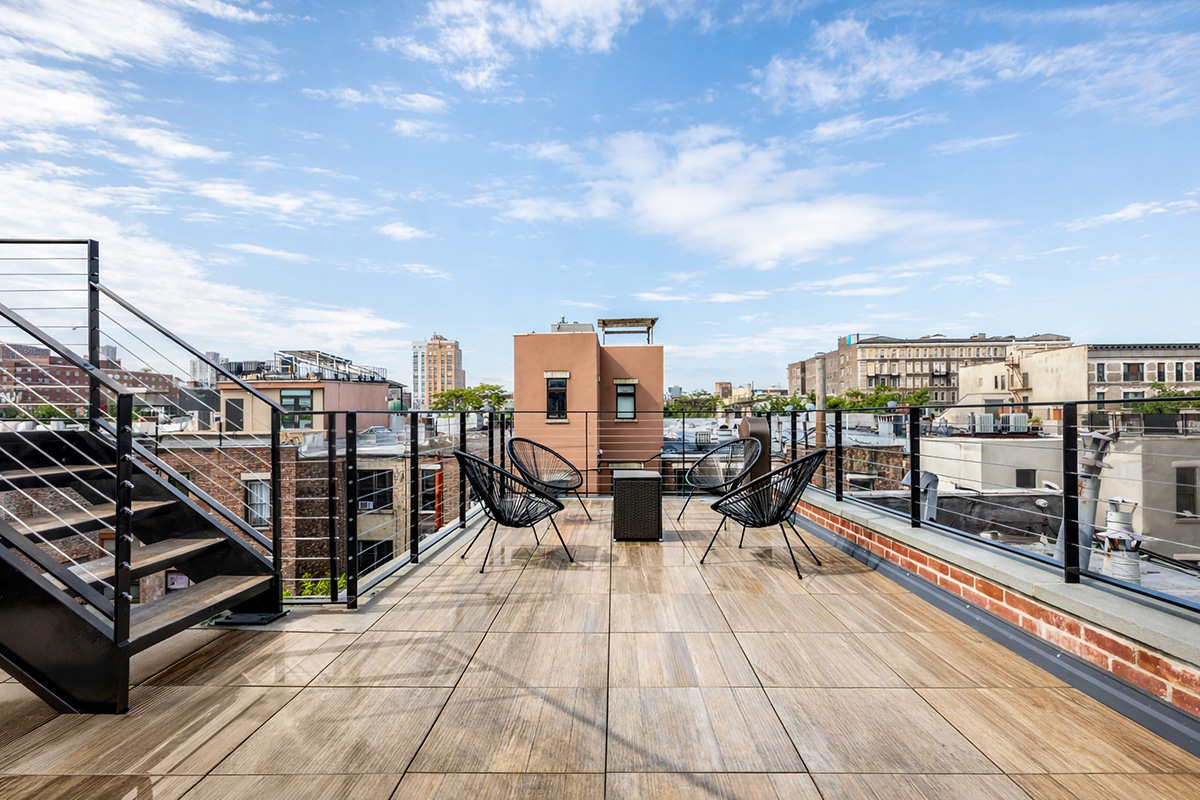
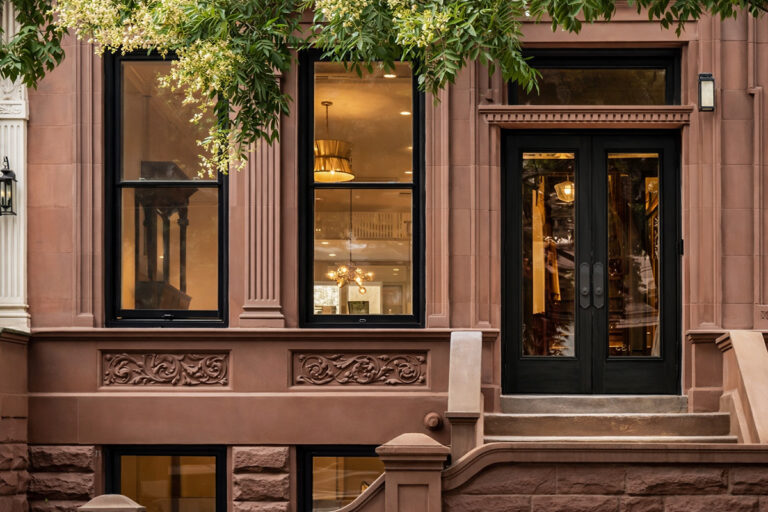
Renovating a townhouse or brownstone in New York City provides an opportunity to significantly improve spatial quality, natural light and overall building performance while incorporating contemporary amenities. These homes often present constraints such as deep floor plates, limited light at the center, and vertical circulation across multiple levels. Strategic architectural upgrades address these conditions while enhancing the daily experience of the home.
The most impactful upgrades in a New York City townhouse renovation include roof decks, rear and rooftop additions, enlarged rear facade windows, skylights, elevators, modern HVAC systems, and integrated smart home systems. These interventions expand usable space, improve natural light, enhance circulation, and upgrade environmental performance. When designed and executed at a high level, they transform both the function and long-term value of the property.
I am Jorge Fontan, owner of Fontan Architecture, a Manhattan-based architecture firm specializing in high-end residential renovations. Our work focuses on the integration of architectural design, building systems, and construction coordination to deliver cohesive, well-executed projects. We approach each townhouse renovation as a bespoke process, aligning design decisions with the client’s lifestyle while navigating the regulatory and technical complexities of New York City buildings. For a detailed overview of the full renovation process, including planning, design, and approvals, see our guide to Renovating a Townhouse in NYC: Planning, Design, and Approvals.
Table of Contents
Roof Decks
Roof decks introduce valuable outdoor living space in dense urban conditions where private exterior space is limited. They extend the usable area of the home and provide access to light, air, and views above the surrounding context.
Designing a roof deck requires coordination of structure, access, and waterproofing. Stair bulkheads, guardrails, and mechanical equipment must be integrated into a clear architectural composition, ensuring that each intervention contributes to a cohesive and intentional result. In landmark districts, visibility and material selection are subject to review, requiring careful design. A well-executed roof deck functions as a natural extension of the home and contributes to both lifestyle and property value.
A roof deck converts underutilized roof space into a highly functional outdoor environment. This transformation increases usable square footage, enhances the overall experience of the home, and adds meaningful value to the property.
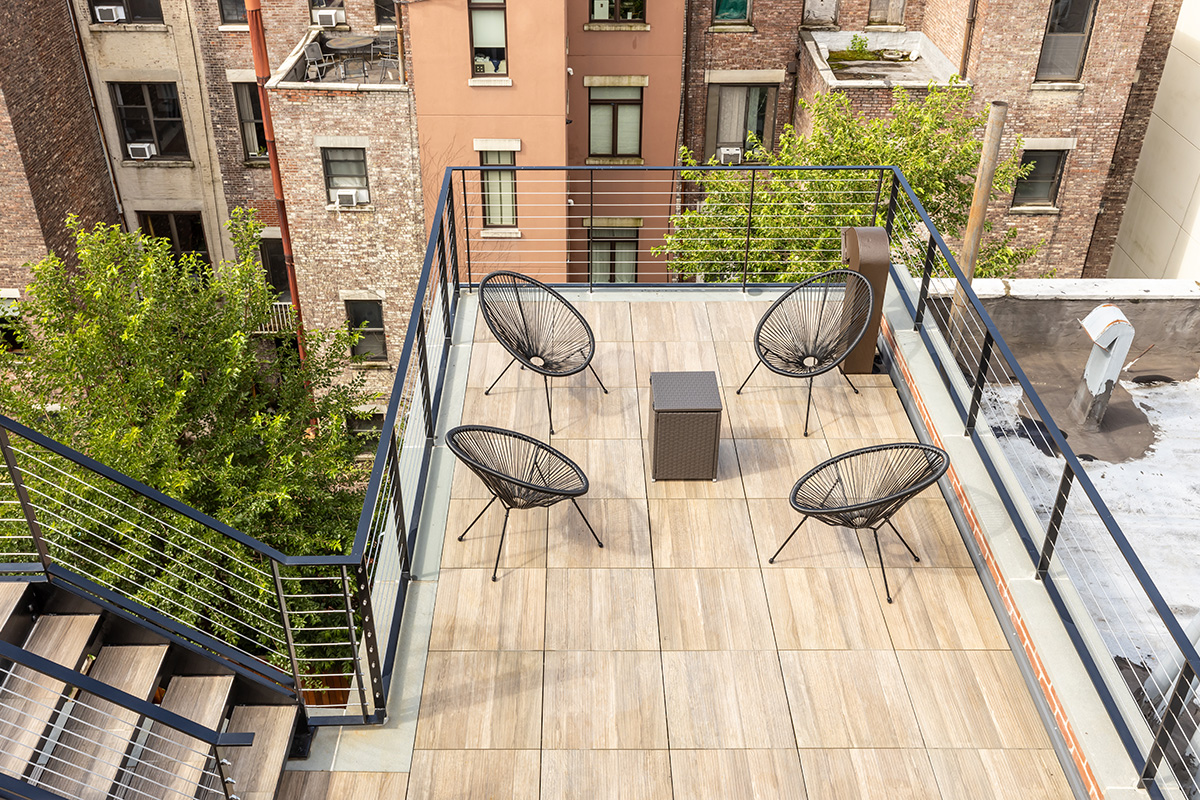
New Manhattan Roof Deck
Elevators
Elevators are a highly effective upgrade in multi-story townhouses, improving convenience, accessibility, and overall functionality. They support efficient movement between floors and allow the home to operate comfortably over time, including for aging in place and daily use such as transporting luggage or household items.
Introducing an elevator into an existing townhouse requires careful planning. Shaft placement, structural modifications, and coordination with stairs and adjacent spaces must be resolved early in the design process. Elevator integration often influences broader layout decisions, making it a central architectural consideration. When properly designed, it enhances accessibility while maintaining spatial clarity and cohesion.
Adding Rear Facade Windows
Adding windows to the rear facade can play a critical role in improving natural light within the depth of a townhouse. Enlarging existing openings or introducing new glazing increases daylight penetration and strengthens the connection to exterior space.
These modifications require structural coordination and careful attention to proportion. Window size, alignment, and detailing influence both interior light quality and the overall composition of the facade. Rear elevations often allow greater flexibility than street-facing facades, though landmark conditions may still apply. Thoughtful design ensures that new openings are fully integrated with the architecture.
Skylights
Skylights introduce natural light into interior zones that cannot receive light from the facade. They are particularly effective in central areas, stairwells, and top-floor spaces where additional daylight significantly improves spatial quality.
Placement and proportion must align with the organization of the interior. Proper detailing and waterproofing are essential for long-term performance. When integrated into the architecture, skylights enhance the openness, illumination, and the overall experience of space.
Rear and Rooftop Additions
Rear and rooftop additions expand the usable square footage of a townhouse and create opportunities to reconfigure interior layouts. These interventions often produce the most significant impact on both functionality and value.
Designing an addition requires zoning analysis, structural coordination, and integration with the existing building. Proportion, material selection, and alignment with the original architecture are critical to achieving a cohesive result. Rooftop additions must also address visibility, setbacks, and contextual relationships. When executed at a high level, additions read as a natural extension of the building.
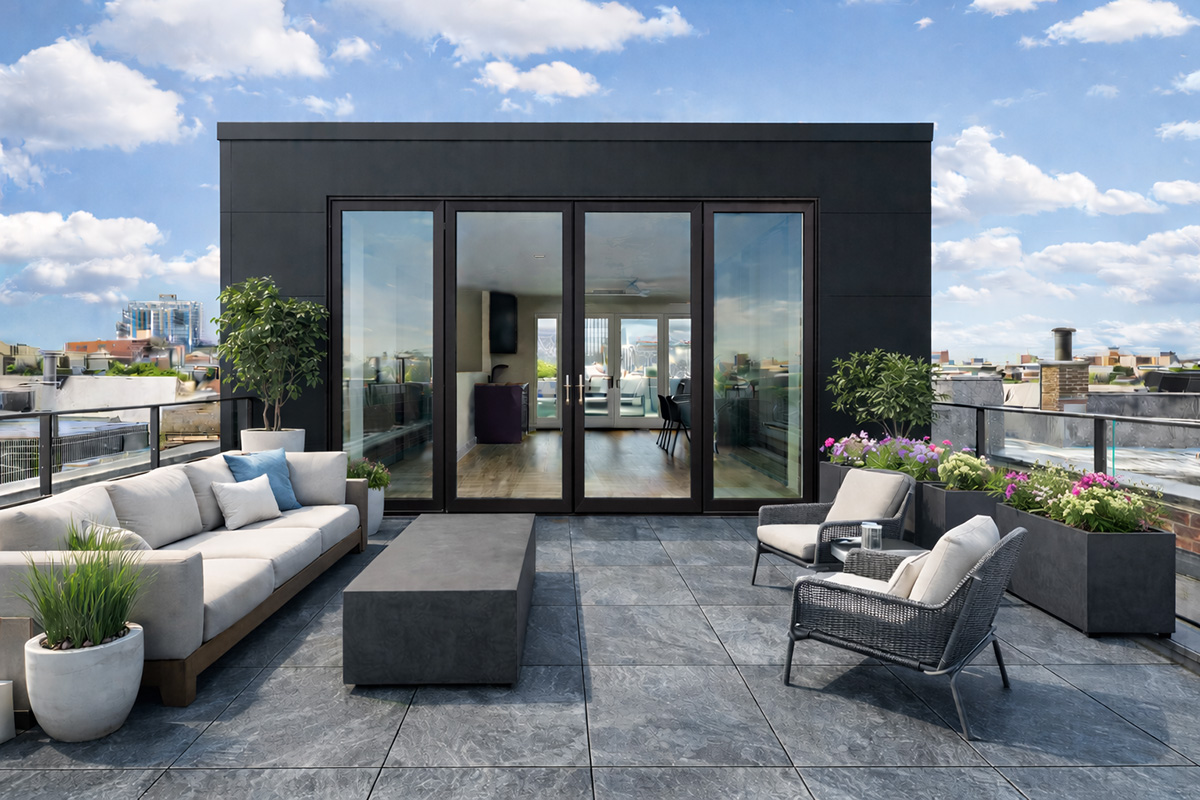
NYC Townhouse Addition
Smart Home Systems
Smart home systems provide integrated control of lighting, shading, climate, and security. These systems improve comfort, support energy efficiency, and simplify how the home is used on a daily basis.
Automated shades allow precise control of natural light and privacy throughout the day. Lighting systems can be programmed into scenes that respond to different uses and times, including centralized controls such as whole-house “all off” functions. Centralized control interfaces unify these systems into a cohesive experience. Successful implementation requires early coordination of wiring, equipment locations, and user interface design to ensure seamless operation.
HVAC System Upgrades
Modern HVAC systems are essential to achieving consistent comfort and air quality in a townhouse renovation. Upgrading these systems allows precise temperature control across multiple floors and improves overall building performance.
System design must coordinate with the architectural layout, including equipment placement, duct routing, and zoning strategies. High-end projects often incorporate multi-zone systems with concealed and coordinated distribution. Radiant floor heating provides an additional layer of comfort, particularly in bathrooms and primary spaces, where heat mats can deliver localized warmth. Early integration ensures that performance goals are met without compromising spatial design.
Designing High-Impact Townhouse Renovations in NYC
High-impact upgrades focus on improving light, space, circulation, and environmental performance. Roof decks, additions, facade modifications, and system upgrades each address fundamental aspects of how a townhouse functions. When considered together, these interventions create a cohesive and elevated living environment. The goal is to create a unified architectural experience where space, light, and materials work together.
Successful townhouse renovations require a coordinated approach that integrates architecture, engineering, and construction. Each decision influences multiple aspects of the building, from structural systems to spatial experience. Architectural design shapes function, material quality, and the overall composition of the home. Careful planning and execution ensure that upgrades deliver meaningful and lasting improvements.
At Fontan Architecture, we work closely with clients to develop customized townhouse and brownstone renovations tailored to their goals and lifestyle. Our process emphasizes clear communication, design precision, and detailed coordination from concept through construction. We guide projects through the complexities of New York City regulations while delivering high-quality architectural results aligned with each client’s vision. For clients considering a purchase, we also outline key considerations in Consult With an Architect Before Buying a Townhouse in NYC.
Request a Consultation with Fontan Architecture - 212 321 0194
Jorge Fontan, AIA, is an architect and founder of Fontan Architecture based in New York City. The firm focuses on residential design, including new homes and extensive renovations for discerning clients. Through collaborative dialogue that draws on the individuality of each client, projects develop as distinct architectural responses guided by thoughtful planning, precise detailing, and a commitment to creating enduring value.
Jorge Fontan, AIA, is an architect and founder of Fontan Architecture based in New York City. The firm focuses on residential design, including new homes and extensive renovations for discerning clients. Through collaborative dialogue that draws on the individuality of each client, projects develop as distinct architectural responses guided by thoughtful planning, precise detailing, and a commitment to creating enduring value.