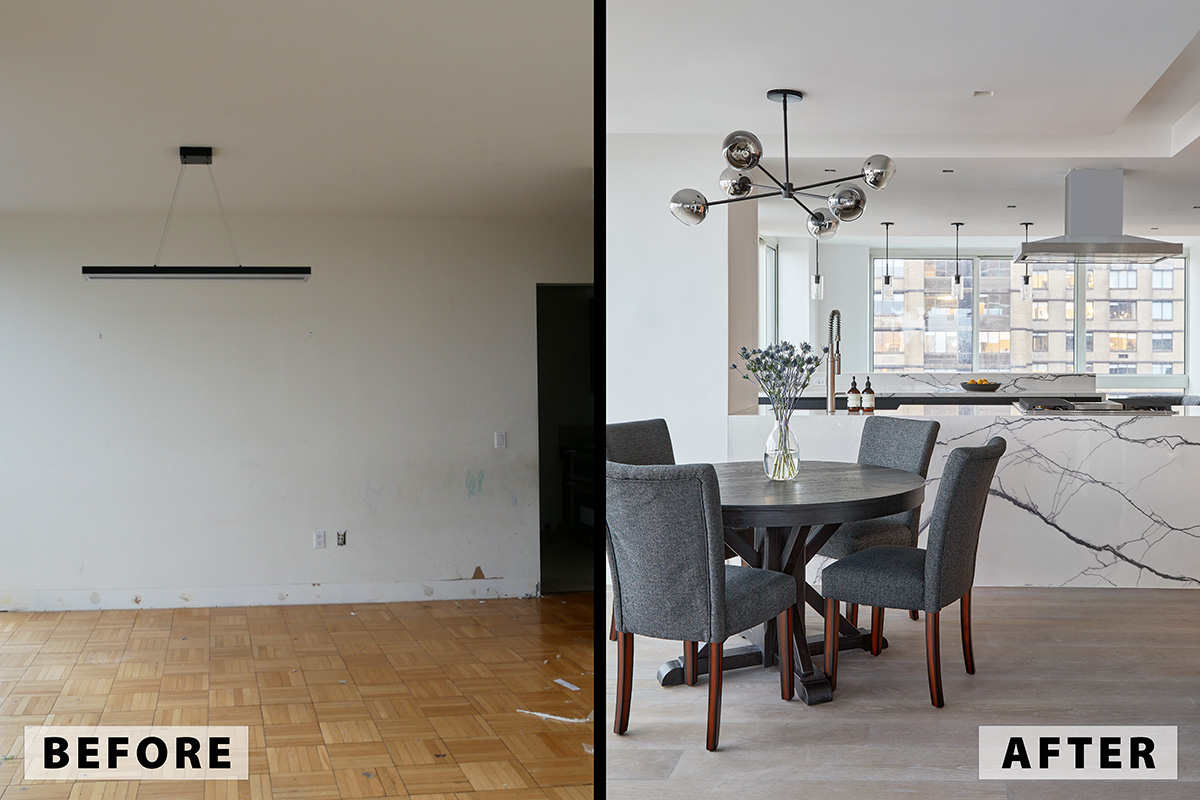
Opening a kitchen in a New York City apartment is a strategic design move that can significantly improve spatial continuity, light, and overall livability. By integrating the kitchen with adjacent living areas, the layout becomes more cohesive and better aligned with contemporary residential living.
Opening a kitchen in NYC requires aligning design intent with structural systems, building constraints, waterproofing considerations, and building-specific requirements, including condo or co-op board review and approvals from the New York City Department of Buildings. While construction is performed by a general contractor, the process begins with architectural design, planning, and coordination.
At Fontan Architecture, we approach residential renovations as part of a comprehensive architectural strategy. We evaluate existing conditions, develop thoughtful layout solutions, and coordinate the structural and regulatory framework necessary to execute the work with precision, resulting in a cohesive and elevated home.
Table of Contents
Design Strategy for Opening a Kitchen
Opening a kitchen requires a reorganization of space that defines circulation and the overall composition of the apartment. The kitchen, living, and dining areas must be resolved together to achieve a cohesive and well-proportioned design.
A successful design requires careful study of function, circulation, light, and the relationships between elements within the space. Material selection, cabinetry, and integration with the surrounding architecture contribute to a unified and intentional result.
At Fontan Architecture, we develop multiple layout options and work closely with our clients to align the design with their goals and aesthetic. Each project is approached as a comprehensive architectural composition, ensuring the open kitchen integrates seamlessly into the overall home.
Assessing Existing Conditions
At Fontan Architecture, the starting point for any renovation is a thorough assessment of the existing conditions. When opening a kitchen, this includes identifying structural elements, utility risers, and ventilation systems, all of which influence what can be modified and how the space can be reconfigured.
A clear understanding of these constraints allows for informed design decisions early in the process. Existing conditions, along with building-specific rules and applicable codes, play a defining role in shaping the layout and feasibility of an open kitchen.
Structural Considerations When Removing Walls
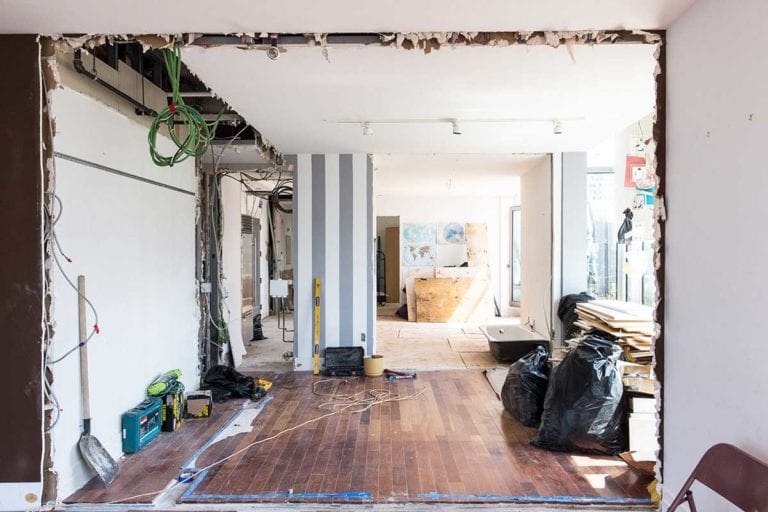
Removing walls to open a kitchen requires a clear understanding of the building’s structural system and the elements that must remain in place. Walls may be load-bearing, and kitchens may contain structural columns. Where these elements are present, the design must accommodate them.
In addition to primary structure, apartments contain vertical building infrastructure that cannot be relocated. Plumbing and electrical risers, as well as HVAC duct shafts, are fixed elements that must be integrated into the design. These components influence layout, kitchen positioning, and how space is defined within an open plan.
By understanding the structural system and incorporating these constraints into the overall composition, it is possible to create an open kitchen that is both cohesive and technically sound.
Kitchen Expansion and “Wet Over Dry” Rules
Expanding a kitchen in a New York City apartment is often constrained by building-specific regulations. One of the most common limitations is the “wet over dry” rule, which restricts the placement of wet areas above dry spaces in the apartment below. Because kitchens are considered wet spaces, extending a kitchen over a living room or bedroom below may not be allowed by certain condo or co-op boards.
The wet over dry rule is not part of the New York City building code, but rather a policy enforced by the co-op and condominium boards. These restrictions vary by building and must be carefully reviewed when evaluating the feasibility of expanding or relocating a kitchen.

Open Kitchen in an NYC Apartment
Building Requirements and Approvals in NYC
Opening a kitchen in a New York City apartment requires coordination with both the building and the Department of Buildings. Most co-op and condominium boards require a formal review of the proposed design prior to filing, including architectural drawings and supporting documentation.
For more detail on this process, see our related article on NYC Condo and Co-Op Renovation Board Approvals and Planning.
Following building approval, the project is filed with the NYC Department of Buildings, typically as an Alteration Type-2 application. Depending on the scope of work, additional permits may be required, including plumbing and electrical permits for system modifications. Once approvals are in place, the contractor can obtain permits and proceed with construction.
Planning an Open Kitchen Renovation
Opening a kitchen in a New York City apartment benefits from early and careful planning. Decisions related to layout, structure, and building requirements are interconnected, and addressing them from the outset allows for a more cohesive and efficient design process.
For a broader overview of the renovation process, see our guide to NYC Apartment Renovations.
Engaging an architect early provides clarity on feasibility, scope, and overall design direction. A well-coordinated approach ensures that structural considerations, building approvals, and construction planning are aligned, resulting in a more refined and seamless renovation.
Can You Open a Kitchen in Any NYC Apartment?
Opening a kitchen in a New York City apartment is often possible, but feasibility varies from one apartment to another. Structural systems, the location of plumbing and ventilation, and building-specific rules all influence whether walls can be removed or the kitchen can be reconfigured.
In many cases, kitchens can be opened or partially opened, but the extent of the work depends on existing conditions and building constraints. Elements such as load-bearing walls, columns, plumbing risers, and wet over dry restrictions may limit how far the design can be taken.
A thorough evaluation is required to determine what is achievable within a given apartment. At Fontan Architecture, we assess feasibility early in the process and develop design strategies that align with both the physical constraints of the building and the goals of the project.
Request a Consultation with Fontan Architecture - 212 321 0194
Jorge Fontan, AIA, is an architect and founder of Fontan Architecture based in New York City. The firm focuses on residential design, including new homes and extensive renovations for discerning clients. Through collaborative dialogue that draws on the individuality of each client, projects develop as distinct architectural responses guided by thoughtful planning, precise detailing, and a commitment to creating enduring value.


Jorge Fontan, AIA, is an architect and founder of Fontan Architecture based in New York City. The firm focuses on residential design, including new homes and extensive renovations for discerning clients. Through collaborative dialogue that draws on the individuality of each client, projects develop as distinct architectural responses guided by thoughtful planning, precise detailing, and a commitment to creating enduring value.