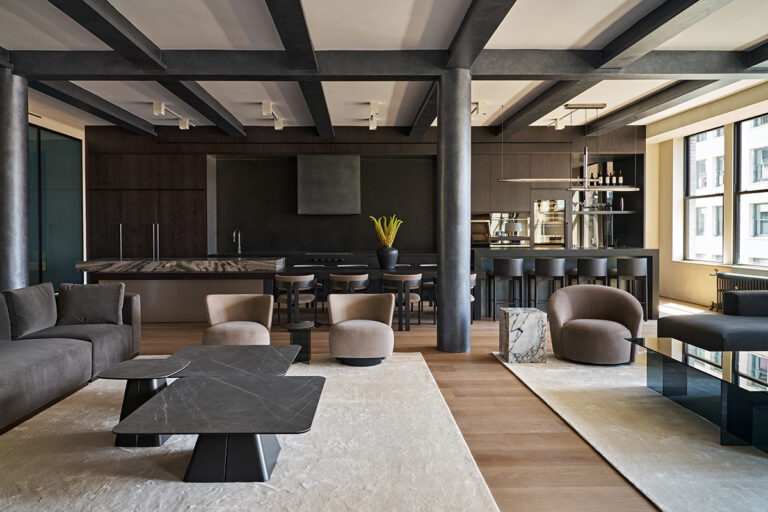
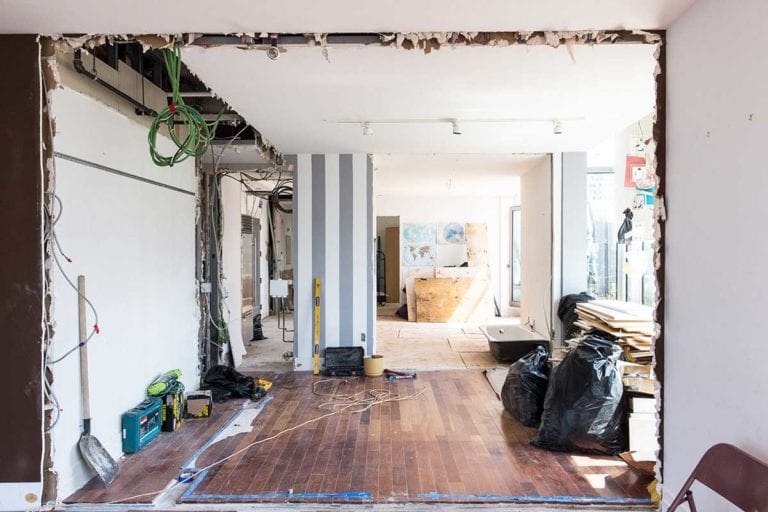
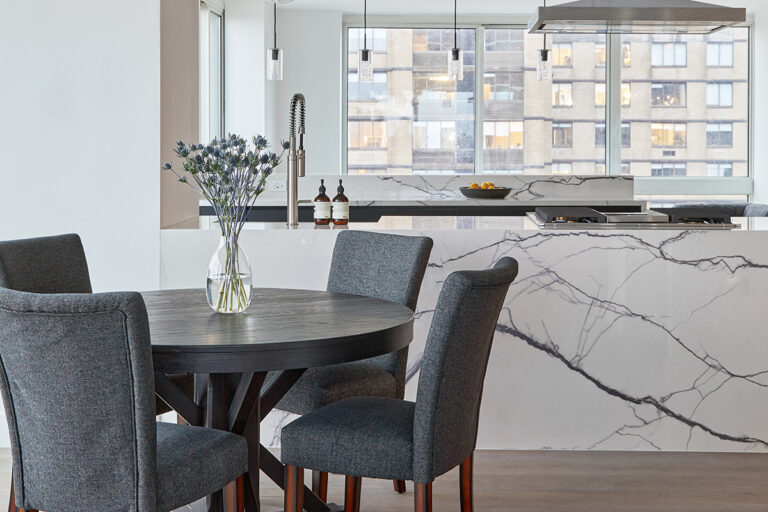
Designing a home office as part of a New York City apartment renovation requires careful integration into the layout and aesthetics to maintain a cohesive design.
Adding a home office in NYC involves design, planning, regulatory approval, and construction. Work such as building partitions, modifying electrical systems, or changing the layout requires compliance with building codes, filing with the Department of Buildings, and approval from the building’s condo or co-op board.
I am Jorge Fontan AIA, an architect and owner of Fontan Architecture, a New York City-based architecture firm. Our office focuses on comprehensive residential renovations, often incorporating private home offices into the overall design.
Table of Contents
Planning and Layout
Incorporating a home office into a New York City apartment renovation requires careful planning of the overall layout and home aesthetic. Creating a dedicated workspace typically involves reallocating space from existing rooms, adjusting circulation, and determining how the office relates to adjacent living areas.
The design must consider privacy, access to natural light, and how the office integrates with the overall organization of the apartment. Decisions at this stage affect the functionality of the home as a whole and should be evaluated within the context of the full renovation.
Private vs Open Office Design
The design of a home office in a New York City apartment typically falls into two categories: enclosed private offices and open workspaces integrated into the main living areas. The appropriate approach depends on the layout of the apartment, the level of privacy required, and how the space is used on a daily basis.
A private office provides acoustic separation and visual privacy, making it suitable for focused work, meetings, or situations where noise control is important. Creating an enclosed office requires allocating sufficient space within the apartment and often involves constructing new partitions or reconfiguring existing rooms. In many cases, this introduces trade-offs with adjacent spaces and may result in interior rooms without direct access to natural light.
Open office configurations are typically incorporated into living rooms, bedrooms, or transitional spaces within the apartment. This approach maintains a more open layout and preserves natural light and spatial continuity, but offers limited separation from household activity. The design of open workspaces must be carefully integrated into the overall layout to avoid disrupting the function and character of the primary living areas.
In some renovations, a hybrid approach is used, such as glass partitions or sliding panels, which provide a degree of separation while maintaining visual openness. In certain cases, switchable glass can be incorporated to allow the enclosure to transition between transparent and opaque, offering flexibility between openness and privacy. The selection between private and open office design should be evaluated as part of the overall layout strategy, balancing privacy, light, and the spatial organization of the apartment.
Light and Interior Room Considerations
Access to natural light is a primary factor when incorporating a private office into a New York City apartment. Windows are typically limited and fixed in location, so creating an enclosed office often means reallocating a room with direct light or introducing an interior room without windows.
Interior offices present specific design and regulatory challenges. In many cases, habitable rooms are required to have legal light and ventilation, which may restrict how spaces can be enclosed or designated. As a result, interior offices are often treated as secondary spaces and must be carefully integrated into the layout without compromising code compliance or the overall functionality of the apartment.
Design strategies such as glass partitions can help borrow light from adjacent rooms while maintaining a degree of privacy. These approaches allow the office to remain visually connected to the rest of the apartment while improving daylight access and preserving a sense of openness.
The placement and configuration of a home office should be evaluated in relation to the apartment’s light sources and overall layout, ensuring that both the workspace and the surrounding rooms maintain appropriate access to light and function cohesively.
Acoustics and Privacy
Acoustic separation is an important consideration when designing a private office within an apartment. The level of sound control required will vary depending on how the space is used, but in all cases it must be evaluated in relation to the surrounding rooms and the existing construction of the building.
Improving acoustic performance typically involves a combination of wall assemblies, floor and ceiling construction, and door selection. Insulation within partitions, solid core doors, and continuous air sealing all contribute to reducing sound transmission. The effectiveness of these measures depends on the specific conditions of the apartment and should be coordinated with the overall design and construction approach.
Zoning and Home Occupation Regulations
The New York City Zoning Resolution limits a home occupation to a maximum of 49% of the floor area of the residence, not to exceed 1,000 square feet. These regulations apply to situations where a business is operated within the home and may affect how a home office is used.
Zoning considerations should be evaluated in coordination with the overall design to confirm that the intended use of the space aligns with applicable regulations.
Permits and Approvals in NYC
Constructing a home office in a New York City apartment typically require filings with the Department of Buildings and approval from the building’s condo or Co-op board.
In addition to DOB filings, most co-op and condo buildings require review and approval of the proposed work. These approvals are coordinated as part of the overall renovation process and must be addressed prior to construction. For more information on this process, see our related article on NYC condo and co-op renovation board approvals and planning.
Incorporating a Home Office into a Full Renovation
A home office is most effectively designed as part of a comprehensive apartment renovation rather than as an isolated addition. Integrating the workspace into the overall design allows the layout, circulation, and spatial hierarchy of the apartment to be considered as a whole. For a broader overview of the renovation process, see our guide to NYC apartment renovations.
Within a full renovation, the office can be positioned in relation to living areas, bedrooms, and light sources to achieve an appropriate balance of privacy and openness. Decisions regarding enclosure, access, and adjacency are evaluated alongside other program requirements, allowing the workspace to function cohesively within the apartment rather than as an afterthought.
Incorporating a home office at the outset of the design process also allows for coordination of construction, building systems, and approvals. Partitions, electrical layouts, and other architectural elements can be designed together, resulting in a more integrated and efficient solution that aligns with the overall renovation strategy.
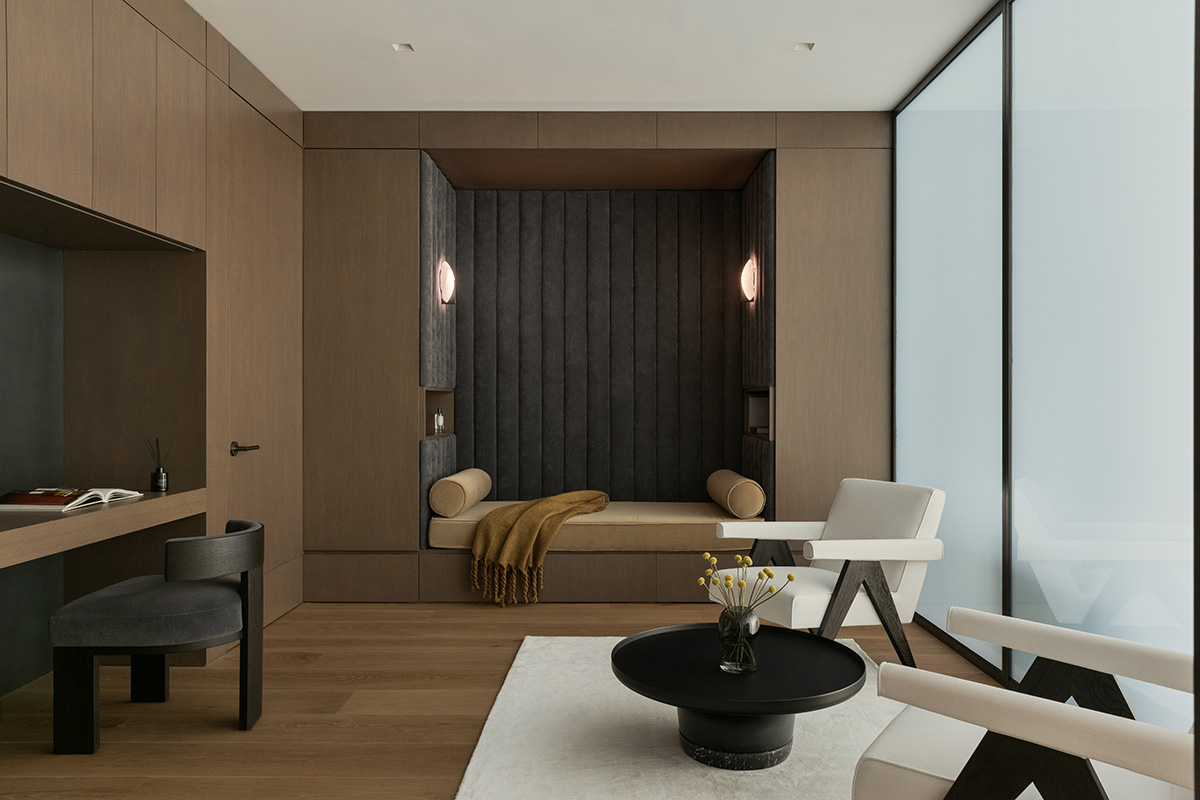
Private Office in a NYC Luxury Apartment
Private Office in a NYC Apartment
This project is a loft renovation in Manhattan where we incorporated a private office into the overall apartment design during a gut renovation. The office is defined by a black metal and glass partition, allowing for visual openness while providing separation from the main living space.
The use of glass maintains continuity of light throughout the loft while establishing a distinct workspace within the larger volume. This approach allows the office to function as a separate room without fully isolating it from the surrounding space.
The design of the office was developed in coordination with the overall renovation, ensuring that the workspace integrates with the architectural language of the apartment and supports both functional and spatial continuity.
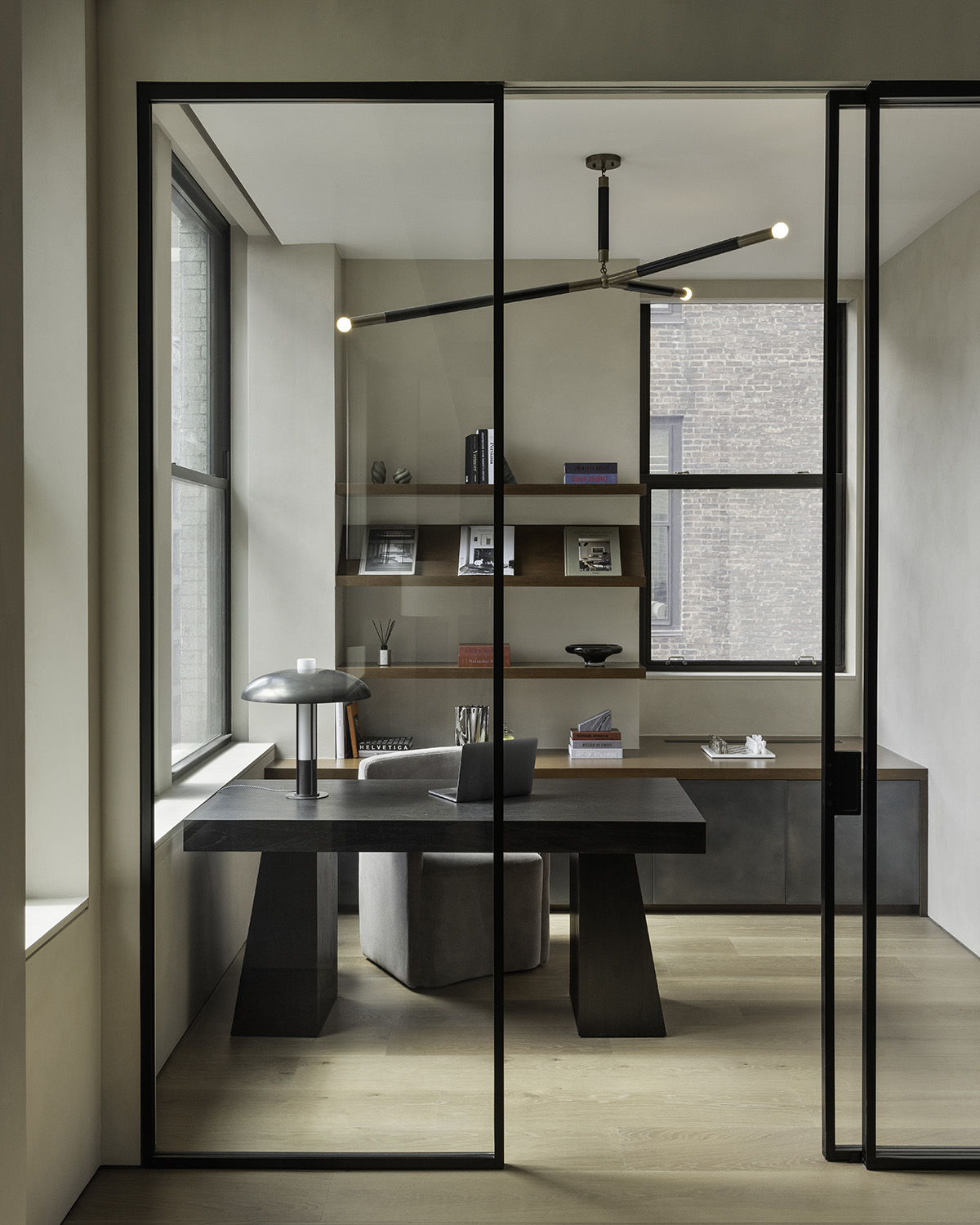
Loft with Custom Made Home Office
Conclusion
Designing a private office within a New York City apartment requires careful consideration of layout, light, privacy, and regulatory constraints. These factors are interconnected and must be evaluated as part of the overall design of the home.
A well-designed home office is the result of a comprehensive approach to renovation, where the workspace is integrated into the overall layout and architectural intent of the project. At Fontan Architecture, we incorporate private offices into apartment and loft renovations as part of a cohesive design strategy tailored to each home.
Request a Consultation with Fontan Architecture

Jorge Fontan, AIA, is an architect and founder of Fontan Architecture based in New York City. The firm focuses on residential design, including new homes and extensive renovations for discerning clients. Through collaborative dialogue that draws on the individuality of each client, projects develop as distinct architectural responses guided by thoughtful planning, precise detailing, and a commitment to creating enduring value.