Rooftop additions to landmark townhouses and brownstones in New York City present a highly specific architectural challenge. These projects require balancing strict landmark preservation requirements with the desire to expand living space, improve natural light, and enhance overall functionality. The existing structure, zoning constraints, and visibility from the public way all influence what can be built, requiring a deliberate and highly strategic design approach.
Maximizing a rooftop addition on a landmark brownstone or townhouse in New York City requires a coordinated design strategy that integrates zoning compliance, landmark approvals, structural feasibility, and spatial planning to create usable, light-filled space while maintaining the architectural integrity of the building. Successful projects are defined by efficient layouts, careful massing, and the integration of indoor and outdoor spaces to extend the usable footprint beyond the interior.
I am Jorge Fontan, owner of Fontan Architecture, a Manhattan-based architecture firm specializing in high-end residential renovations. We approach rooftop additions as fully integrated architectural projects, where design intent, structural coordination, and regulatory compliance are developed together from the outset, with a strong focus on fulfilling each client’s specific needs and preferences. Our work emphasizes highly customized, bespoke solutions that respond directly to the client’s lifestyle while navigating the complexities of landmark properties. At Fontan Architecture, we combine design excellence with strong technical execution, ensuring that each project is both architecturally refined and rigorously detailed for construction.
Table of Contents
Maximizing Space and Outdoor Living
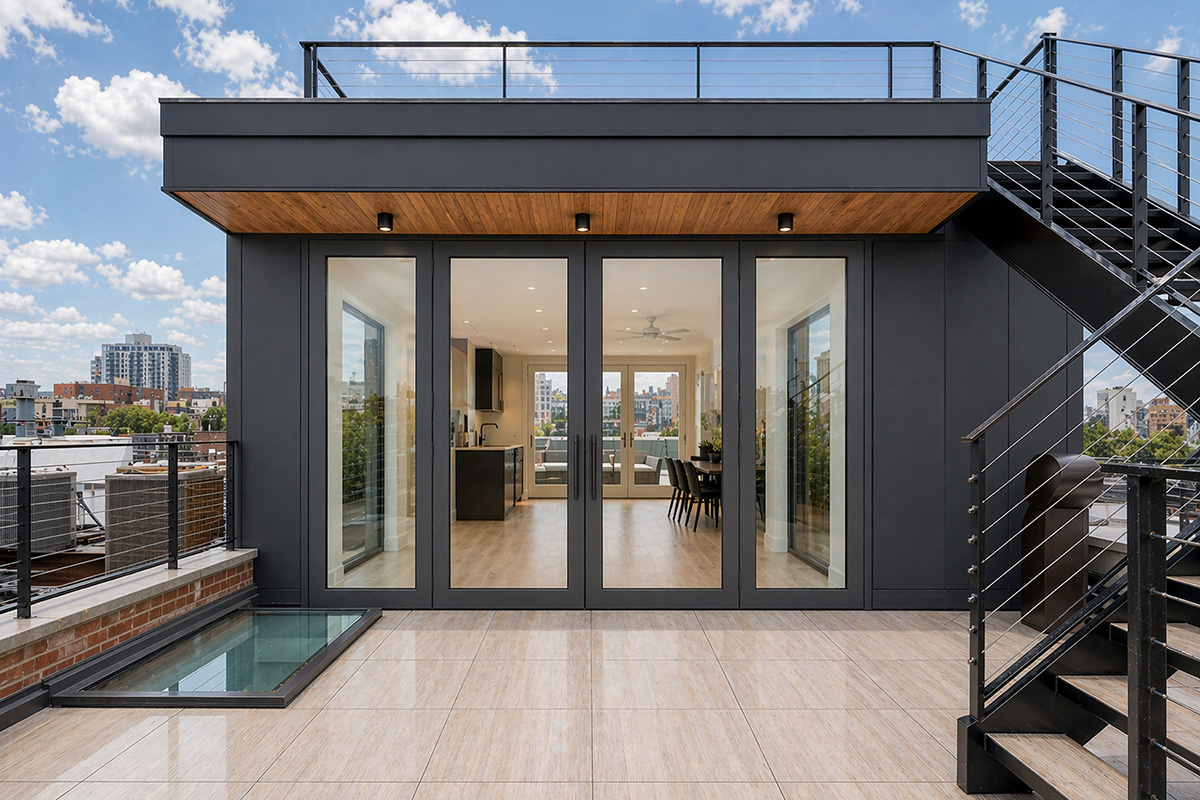
In one landmark brownstone addition, we developed a unique architectural strategy to maximize both interior space and outdoor living by organizing the rooftop into three distinct zones. We located the addition within the center third of the townhouse, leaving the front and rear portions open. This approach allowed us to create two primary roof terraces directly adjacent to the interior space, each accessed through large glass doors that extend the living area outward front and back.
At the rear of the rooftop, we designed a stair that leads to a third roof deck above the addition. This upper level provides an additional outdoor space with greater privacy and more expansive views. By concentrating the built volume in the center and preserving open areas at both the front and rear, the design maximizes usable square footage while maintaining multiple outdoor zones with distinct spatial qualities. This type of massing strategy is often driven by zoning considerations. For a more detailed discussion, see our article on Townhouse Additions in NYC: Zoning and Architectural Planning for Expansion.
This three-part organization enhances light penetration, maximizes the usable area, and creates a layered sequence of interior and exterior spaces. The result is a rooftop addition that functions not only as an expansion of the home, but as a series of connected environments that offer flexibility, openness, and a strong relationship to the outdoors.

Upper roof deck overlooking the rear terrace of a Manhattan brownstone rooftop addition.
Balancing Zoning and Landmarks Through Strategic Setbacks
Rooftop additions on landmark brownstones in Manhattan require careful coordination between zoning regulations and Landmark Preservation Commission (LPC) requirements. Zoning governs allowable floor area, height, and setbacks, while the LPC focuses on visibility and the preservation of the building’s historic character. For a more detailed overview of how these regulations impact townhouse projects, see our guide on Townhouse Additions in NYC: Zoning, Landmarks, and Approvals.
In this project, we concentrated the rooftop addition within the center third of the building. By setting the addition back from the front, the design reduces its visibility from the public way, which is a key consideration for LPC approval. Locating the addition at the center of the roof allows the project to maximize both interior space and outdoor living without increasing overall visual impact. This approach allows the addition to remain visually subordinate to the historic brownstone while still creating meaningful interior space with convenient roof access.
Creating Multiple Outdoor Experiences
Rather than treating the rooftop as a single continuous terrace, the design organizes the exterior space into three distinct outdoor areas, each with its own character and use. This approach allows the rooftop addition to function as a sequence of spaces rather than a single uniform condition, increasing both flexibility and overall usability.
The front and rear roof decks are directly adjacent to the interior addition and accessed through large glass doors, creating a seamless extension of the living space. These terraces function as primary outdoor areas for daily use, providing immediate access to fresh air, light, and outdoor seating. By separating these spaces at the front and rear of the building, the design introduces variation in exposure, privacy, and orientation, allowing each area to serve a different purpose.
Above, a third roof deck is accessed by a stair located in the rear portion of the roof. This upper level offers a more private outdoor environment with elevated views, distinct from the primary terraces below. The separation of this space from the main living level creates a quieter, more removed setting while still maintaining a clear connection to the overall rooftop composition.
Organizing the rooftop addition in this way maximizes the functionality of the available space by providing multiple outdoor environments rather than a single larger terrace. This layered approach enhances the experience of the addition, offering a range of spatial conditions that support different uses throughout the day.
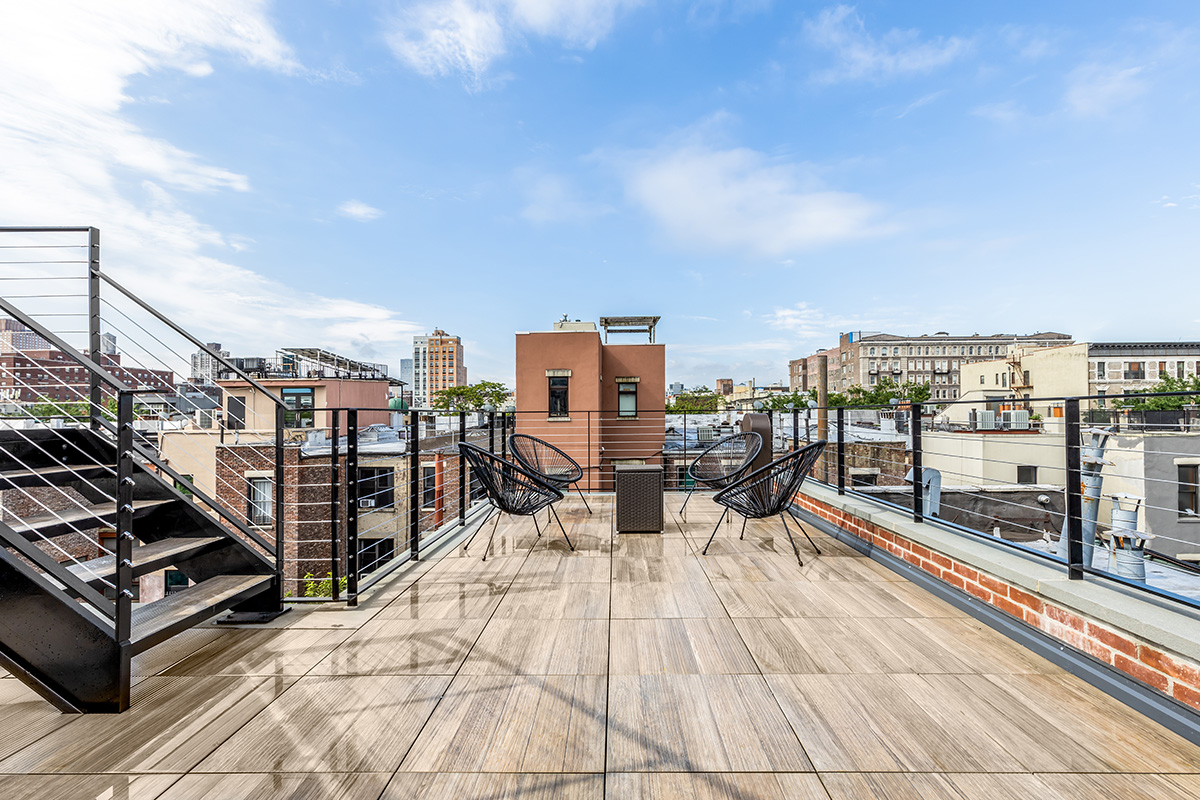
Brownstone Roof Deck with stairs to upper deck
Maximizing Light and Openness
Maximizing light and openness was a primary objective in the design of this rooftop addition. Rather than enclosing the entire roof, the decision to concentrate the built volume in the center third allows natural light to enter from both the front and rear. This approach prevents the addition from feeling confined and ensures that the interior space benefits from multiple exposures.
To reinforce this strategy, we designed the front and rear facades of the addition with large glass openings, including double doors with sidelights. These glazed assemblies bring daylight deep into the interior while visually extending the space outward to the adjacent roof terraces. By opening both ends of the addition, the design creates a sense of transparency and continuity, allowing the interior to read as part of a larger, connected environment.
The use of glass on both facades establishes a strong indoor–outdoor relationship and enhances the overall perception of openness. Positioned between two exterior spaces, the addition benefits from light, views, and air movement from both directions. This configuration transforms the rooftop level into a bright, open living space that feels significantly larger than its physical footprint.
A Strategic Approach to Rooftop Additions on Landmark Brownstones in NYC
Maximizing a rooftop addition on a landmark brownstone requires a focused and strategic approach. As this project demonstrates, concentrating the built volume in the center of the roof allows for an efficient use of space while preserving open areas at the front and rear. This organization supports multiple outdoor environments, improves light penetration, and creates a more open and flexible living space. At the same time, careful setbacks and controlled massing allow the addition to remain subordinate to the historic building and meet Landmark Preservation Commission requirements.
The success of this rooftop addition is rooted in clear design decisions that respond directly to both regulatory constraints and spatial opportunities. By integrating interior and exterior spaces, utilizing glass to enhance openness, and organizing the rooftop into distinct zones, the design achieves a balance between functionality, experience, and architectural intent. These types of projects require precision in both design and execution, with each decision contributing to the overall performance of the space.
At Fontan Architecture, we work on townhouse and brownstone renovations throughout New York City, including rooftop additions on landmark properties. Our process integrates design, technical development, and regulatory coordination to deliver projects that are both thoughtfully designed and carefully executed. We develop each project as a unique response to the client, creating customized solutions that align with their goals while navigating the complexities of New York City construction.
Request a Consultation with Fontan Architecture - 212 321 0194
Jorge Fontan, AIA, is an architect and founder of Fontan Architecture based in New York City. The firm focuses on residential design, including new homes and extensive renovations for discerning clients. Through collaborative dialogue that draws on the individuality of each client, projects develop as distinct architectural responses guided by thoughtful planning, precise detailing, and a commitment to creating enduring value.
Jorge Fontan, AIA, is an architect and founder of Fontan Architecture based in New York City. The firm focuses on residential design, including new homes and extensive renovations for discerning clients. Through collaborative dialogue that draws on the individuality of each client, projects develop as distinct architectural responses guided by thoughtful planning, precise detailing, and a commitment to creating enduring value.