I was recently asked by Homes & Gardens to comment on tonal living room design. The discussion centered on how restrained variation within a palette can create a room that feels composed and intentional rather than visually fragmented.
Tonal interior design uses a limited color palette to create depth, cohesion, and spatial clarity. Rather than relying on contrast between different colors, tonal interiors use subtle gradations within a single palette to produce a calm and unified atmosphere.
Tonal design is often associated with minimalism, but the approach is not about simplicity alone. When executed well, tonal interiors have considerable richness. Depth emerges through careful relationships between surfaces, materials, and architectural elements.
At Fontan Architecture, we develop architecture and interior design together, carefully orchestrating these relationships. Materials, millwork, lighting, and spatial composition can be aligned to create a consistent design language, allowing the interior to read as an integrated architectural environment rather than a collection of separate elements.
Table of Contents
What Is a Tonal Color Palette
A tonal color palette is built around variations of a single base color or closely related color family. Instead of introducing multiple contrasting hues, tonal interiors rely on shifts in value, saturation, and texture to create depth.
Within a tonal palette, colors move gradually from light to dark. Off-white may transition to light gray, mid-gray, charcoal, and near-black. These transitions create visual hierarchy while maintaining a consistent atmosphere.
Because the palette is restrained, small differences in tone become more perceptible. Texture, material finish, and lighting play a larger role in defining the character of the space. The result is an interior where surfaces relate closely to one another, creating a cohesive visual field.
Establishing a Tonal Palette
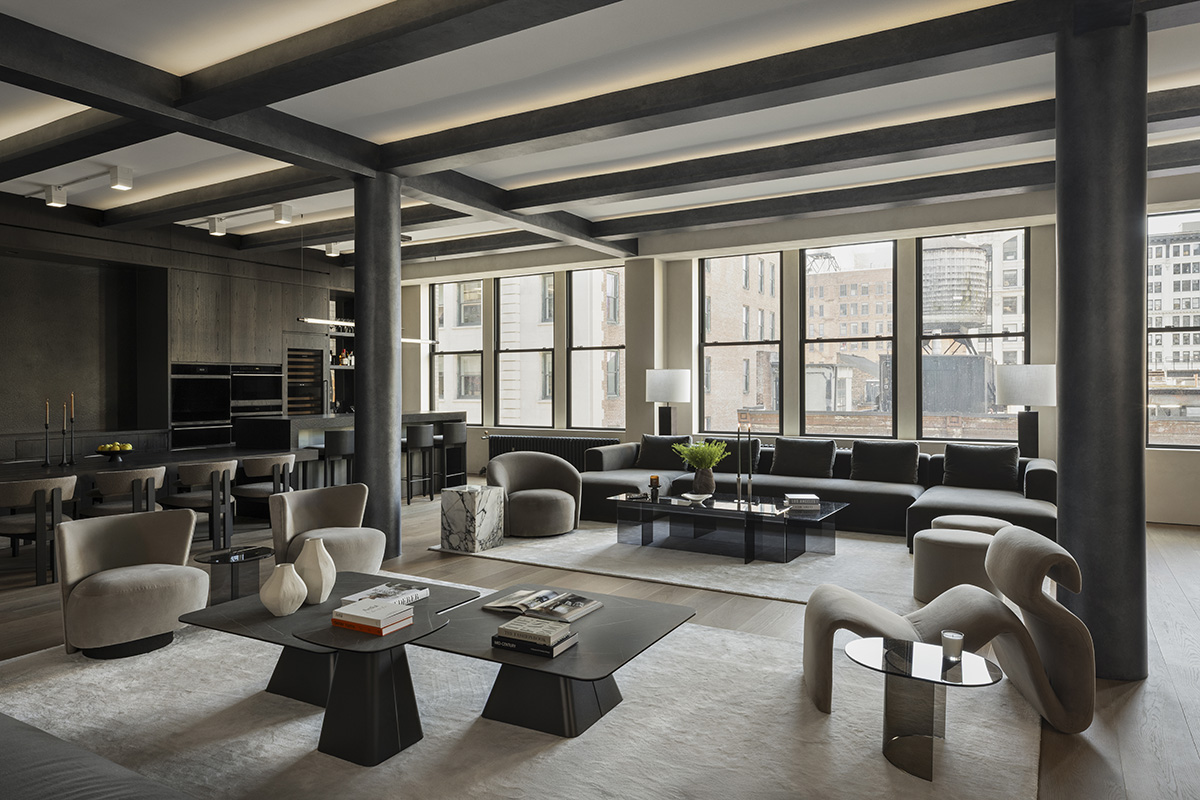
In one of our recent loft projects in New York, we developed a tonal interior using a palette of charcoal, mid-gray, and off-white. Dark millwork, gray upholstery, and light limewash walls were carefully balanced to create subtle shifts in tone throughout the space. The restrained palette allowed the architecture, geometry, materials, and light to define the character of the room rather than relying on contrasting colors.
Creating a tonal palette in a living room involves establishing tone and hierarchy with restraint and material continuity. The palette acts as an organizing structure for the space, guiding decisions about finishes, furniture, and architectural elements.
When the palette is controlled in this way, the eye begins to notice subtle shifts in tone and texture. A charcoal upholstered sofa, a slightly darker coffee table, and near-black millwork become part of a continuous composition rather than separate visual statements.
In tonal interiors, color relationships form a framework that shapes how the space is experienced.
Architecture and Furniture as a Single Composition
Tonal interiors are most successful when the architecture and furnishings are conceived together. When color relationships extend across both architectural elements and furniture, the space reads as a unified composition.
In this loft project, the charcoal sofa and coffee table relate directly to dark gray and near-black millwork. Because these elements share closely aligned tones, the furniture feels embedded within the architecture rather than placed inside it.
This level of coordination gives the room a sense of intention. Instead of appearing as a collection of individual pieces, the interior reads as a cohesive environment where each element supports the overall composition. This approach relates to my philosophy of sprezzatura in design—a carefully planned nonchalance in which the design is deeply considered yet appears natural and effortless. The space is meticulously designed to feel as though it could not have been conceived any other way.
Approaching interiors in this way reflects a more architectural way of thinking about design. Color becomes an integral part of the spatial structure rather than a decorative overlay.
Layering Tone Through Material
Material selection plays a critical role in tonal design. When the palette is restrained, texture and surface finish become primary tools for creating depth.
Matte charcoal upholstery, soft light rugs, and off-white plaster or painted walls create subtle shifts that feel layered and deliberate. Even when colors remain closely related, the tactile qualities of different materials introduce visual complexity. Texture replaces strong color contrast, allowing the palette to remain calm while still producing depth.
Natural materials and those with texture can be particularly effective within tonal interiors. Stone, wood, plaster, and textiles all reflect light differently, producing variation that enriches the palette without disrupting the overall harmony.
These subtle distinctions allow the space to feel rich and nuanced while maintaining a calm visual atmosphere.
The Role of Flooring in Tonal Interiors
Flooring often serves as the stabilizing element in a tonal room. Because it spans the entire space, its tone has a significant influence on how the rest of the palette is perceived.
A neutral mid-tone floor can ground darker palettes and prevent the room from feeling visually dense. It provides a quiet field that allows the layered tones above to read clearly.
In the loft example, we used a mid-tone wood floor to introduce a subtle warmth while balancing darker architectural elements such as the millwork, columns, and beams.
When carefully selected, flooring anchors the tonal composition and supports the hierarchy established throughout the room.
Cohesion Through Gradation
A successful tonal interior feels cohesive and intentional. The eye moves through gradual shifts in tone rather than jumping between strong contrasts.
This approach creates a calm visual rhythm. Each surface relates to the next through incremental variation, allowing the space to feel continuous and composed. This type of cohesion is the result of deliberate design decisions.
From an architectural perspective, tonal design supports spatial clarity. Color reinforces the relationships between walls, furnishings, and architectural elements. Instead of competing for attention, the components of the room work together to define a coherent environment.
The result is an interior that feels balanced and atmospheric while maintaining a strong sense of structure.
Color Drenching
Color drenching is a related approach that pushes tonal design toward an even greater level of visual unity. In a color-drenched room, walls, trim, and ceilings are finished in the same color or closely matched tones.
In a recent bathroom project, we used limewash walls in a tone closely aligned with the green marble floor and custom sink to create this effect. The consistent coloration creates a striking monochromatic environment where the natural veining of the marble introduces subtle variation and depth.
Color drenched rooms have a long history in architecture, particularly in Gilded Age interiors where rooms within grand estates were often painted in a single color throughout to create this very uniform effect.
Tonal Color Palettes in Interior Architecture
Tonal interiors demonstrate how restraint can produce richness. By working within a limited palette, the design shifts attention toward proportion, texture, light, and material relationships.
When architecture, furnishings, and materials are aligned through tone, the result is an interior that feels thoughtfully composed. The palette becomes a framework that clarifies spatial relationships while establishing a consistent atmosphere.
This approach reflects an architectural perspective on interior design—one where color supports the structure of the space rather than competing with it.
Thoughtful Home Design
Tonal interiors demonstrate how subtle variation can produce depth and sophistication. Through careful control of color, material, and light, a limited palette can create interiors that feel calm and richly layered.
When thoughtfully executed, tonal design allows architecture, materials, and furnishings to work together as a unified composition.
Thoughtful interior environments benefit from early architectural planning. Material relationships, spatial organization, and lighting all contribute to the success of a home design.
If you are planning a home renovation or designing a new residence, working with an architect can help ensure that these elements are considered together from the beginning. At Fontan Architecture, we design custom homes and renovations with careful attention to spatial clarity, material quality, and the overall architectural character of the interior environment.
Request a Consultation with Fontan Architecture - 212 321 0194

Jorge Fontan, AIA, is an architect and founder of Fontan Architecture based in New York City. The firm focuses on residential design, including new homes and extensive renovations for discerning clients. Through collaborative dialogue that draws on the individuality of each client, projects develop as distinct architectural responses guided by thoughtful planning, precise detailing, and a commitment to creating enduring value.