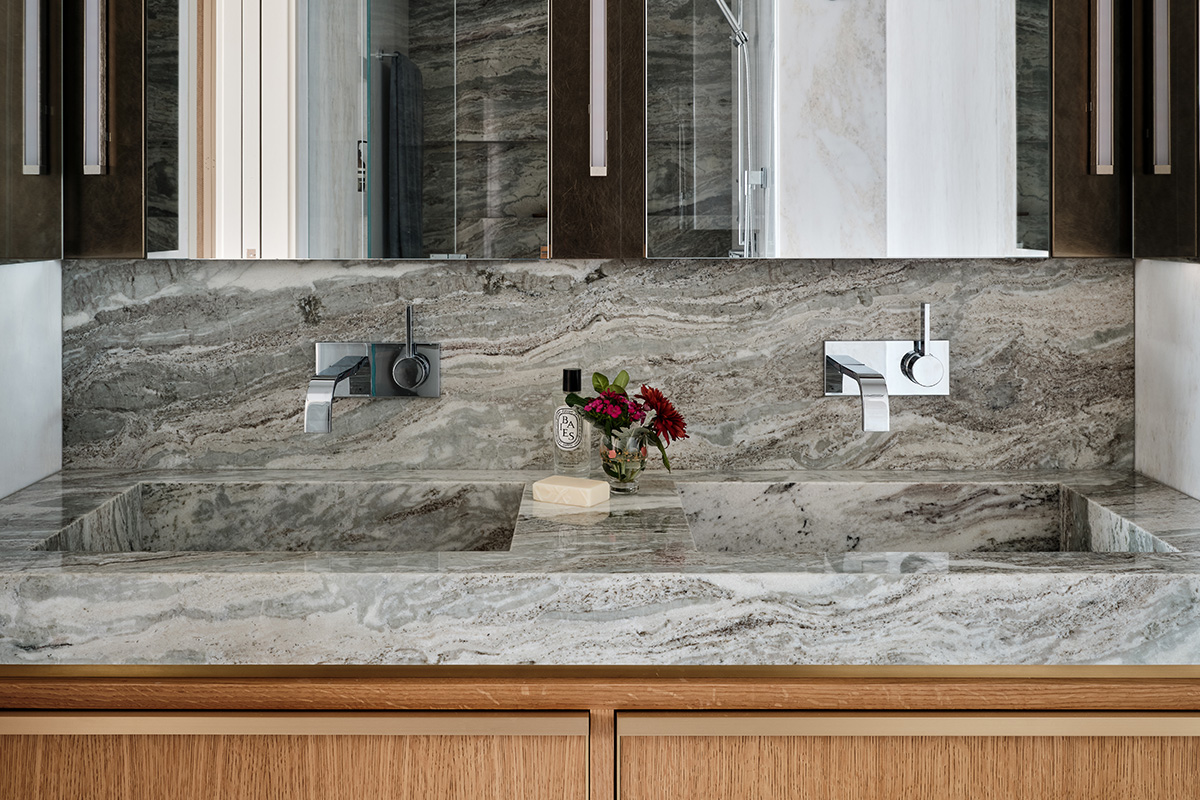
Bathrooms occupy a unique place in residential design. Though often among the smallest rooms in a home, they carry an outsized influence on how a space feels and functions. Layout, materials, light, proportion, and detailing all converge within a compact footprint, making the bathroom an opportunity to create an environment that is both highly personal and carefully composed.
Bathrooms offer an opportunity for design to make a clear statement. Through the careful composition of materials, light, and proportion, even a compact space can express a strong architectural identity.
I am Jorge Fontan, an architect in New York and the owner of Fontan Architecture, an NYC-based architecture and design firm. In this article I share bathroom design ideas drawn from our renovation projects throughout New York City, with a focus on materials, fixtures, and architectural details that shape the experience of a space.
Table of Contents
Natural Stone
Nothing compares to the richness and beauty of natural stone. Materials such as marble, travertine, and limestone bring depth, texture, and subtle variation that manufactured materials cannot fully replicate. The natural veining and tonal shifts in stone create surfaces that feel both timeless and distinctive.
In bathroom design, natural stone can transform the space into something far more refined. When used thoughtfully across floors, walls, or even countertops, stone establishes a sense of permanence and craftsmanship that elevates the overall experience of the room.
In the bathroom below, we used travertine throughout the space to create a calm and cohesive atmosphere. The continuous use of the material gives the bathroom a monolithic quality, allowing the natural character of the stone to become the defining feature of the design.
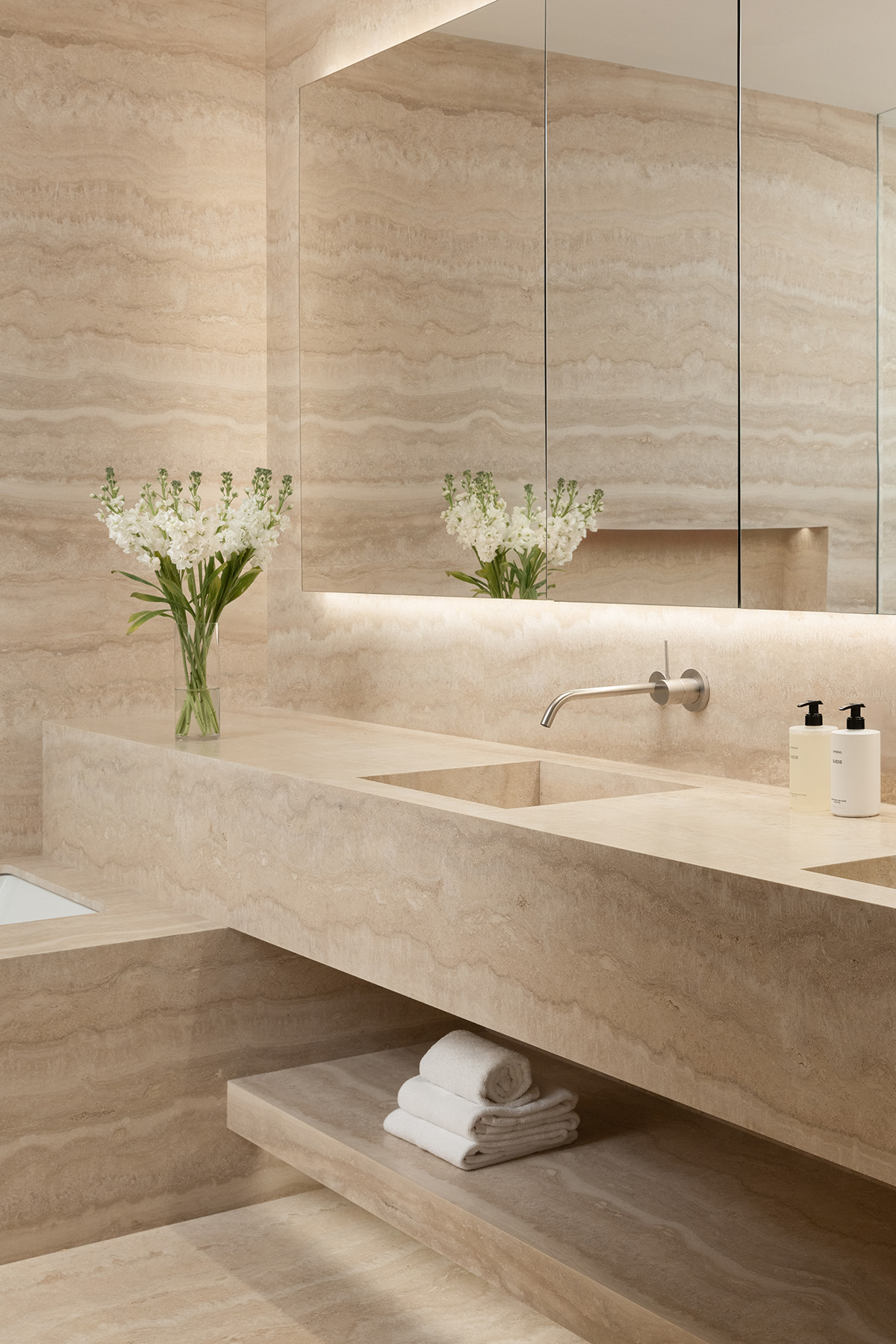
Travertine Bathroom Design
Marble Slabs
Marble slabs are one of the most refined materials used in luxury bathroom design. Unlike smaller tiles, slabs are large pieces of stone that can span several feet in both directions, allowing entire walls to be clad in a single continuous surface.
Using slabs significantly reduces grout joints, creating a clean and uninterrupted appearance that highlights the natural veining of the stone. The scale of the material gives the bathroom an elevated quality while emphasizing the character and natural movement within the marble.
In the bathroom below, we used full marble slabs on the wall behind the tub in an apartment we gut-renovated in Manhattan. Each plane of the wall is composed of a single piece of stone, eliminating grout lines entirely. This approach creates a refined, seamless look that feels both modern and timeless.
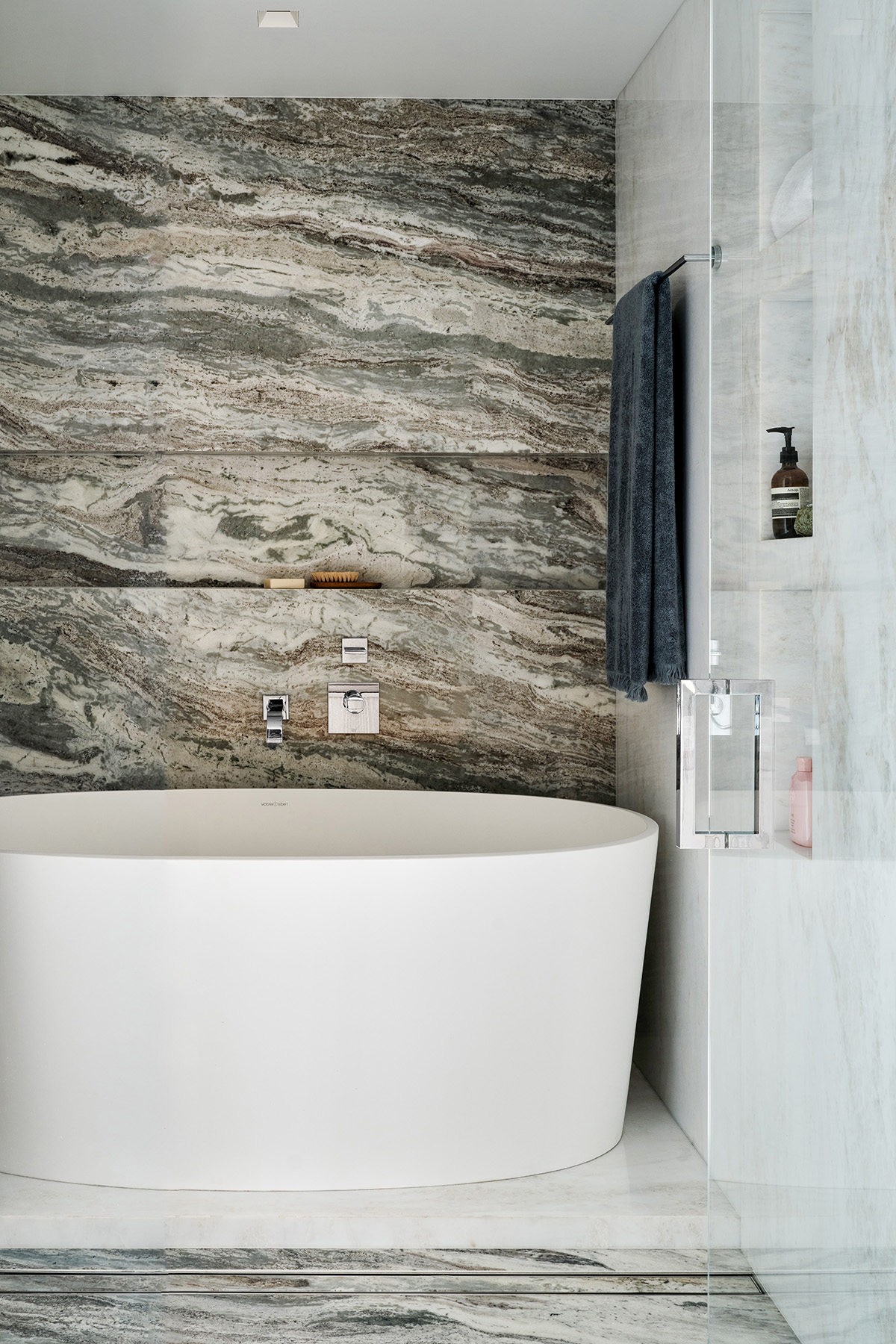
Marble Slab Bathroom, Primary Bath Renovation, Upper East Side Manhattan
Large Format Porcelain
Large format porcelain slabs are an alternative to natural stone, providing a similar large-format appearance with great durability. These oversized porcelain tiles can cover large areas of wall surface while minimizing grout joints, creating a clean and continuous look.
Porcelain is particularly well suited for bathroom environments because it is highly resistant to moisture, staining, and wear.
The bathroom below is from a penthouse renovation we completed in Tribeca. In this space, we used large-format porcelain slabs to create a sleek and contemporary aesthetic while maintaining the durability needed for everyday use.
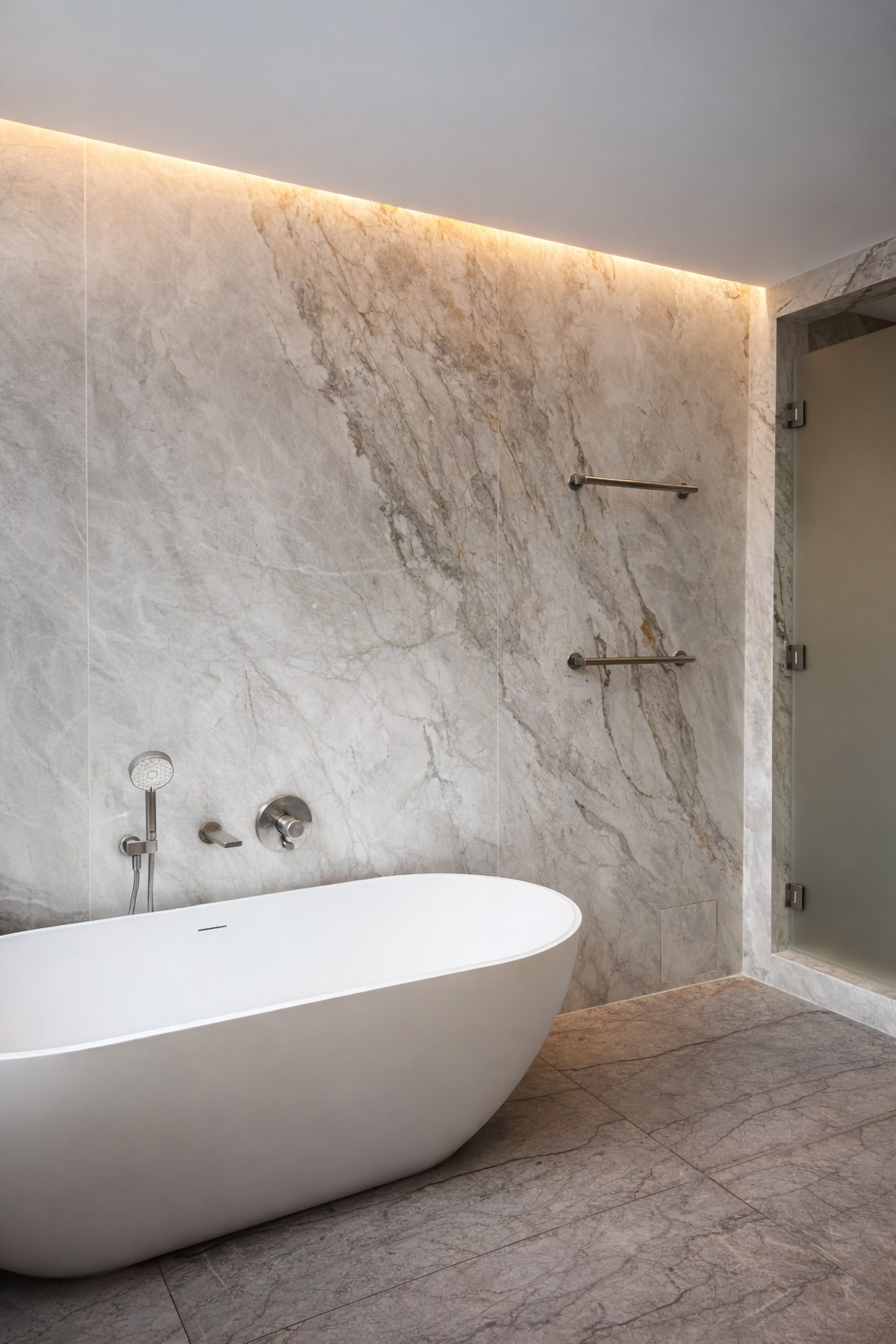
Large Format Porcelain Slabs
Porcelain Tile
Standard porcelain tile remains one of the most versatile materials for bathroom design. Available in a wide range of sizes, colors, and finishes, porcelain allows for flexibility while maintaining durability and moisture resistance.
While large slabs create a seamless appearance, smaller porcelain tiles can offer greater control over layout and proportion. Thoughtful selection of tile size, color, and joint spacing can produce a clean and sophisticated bathroom without relying on overly complex materials.
In the bathroom below, we used dark porcelain tiles to create a simple and refined aesthetic. The restrained palette gives the space a calm and modern character while allowing the material and lighting to define the atmosphere of the room.

Dark Porcelain Shower
Specialty Finishes
Bathrooms do not have to rely entirely on tile or stone. A variety of specialty finishes can be used to create distinctive surfaces and textures that feel more artisanal and unique.
One material we particularly appreciate is Tadelakt, a traditional Moroccan plaster that is naturally waterproof. When properly applied and sealed, it can be used on bathroom walls and even within shower enclosures. The material is hand-applied and polished, producing a soft, continuous surface with subtle variation.
In the bathroom below, we used Tadelakt walls to create a seamless finish that gives the space a calm and sculptural quality. The absence of grout lines allows the material itself to become the defining element of the design.

Tadelakt Shower Without Any Tiles or Grout Lines
Concrete
Concrete-inspired finishes are a popular option for contemporary bathroom design. These materials create a clean, monolithic surface that avoids grout lines and gives the space a minimalist, modern, architectural character.
Rather than traditional poured concrete, many bathroom applications use hand-applied concrete or microcement finishes. These materials are installed on-site and carefully finished by hand, allowing the walls to appear as continuous surfaces.
The bathroom below is from a loft we gut-renovated in the Financial District. The concrete-look finish was applied seamlessly across the walls, creating a cohesive and modern environment. Because these finishes are installed by hand, the final result depends heavily on craftsmanship, giving the space a subtle artisanal quality while maintaining a distinctly modern aesthetic.
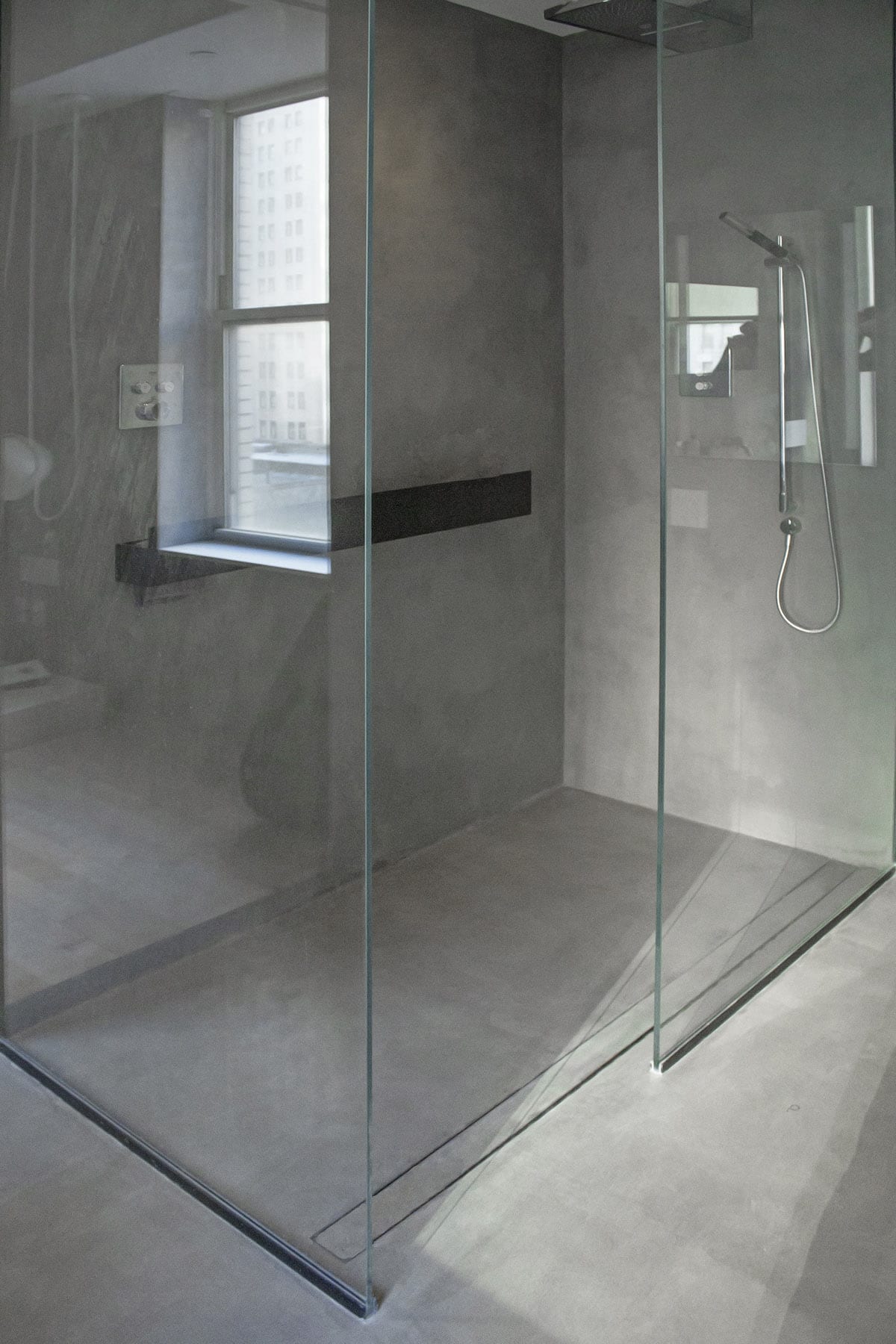
Concrete Bathroom in a Manhattan Apartment NYC
Wood and Wood-Look Porcelain
Wood or wood-look porcelain tile can bring warmth and natural texture to a bathroom design. While bathrooms are often finished with stone, porcelain, or other hard materials, introducing wood tones can soften the space and create a more relaxed, spa-like atmosphere.
Because real wood is not always suitable for wet environments, wood-look porcelain tiles are often used to achieve the appearance of wood while maintaining durability and moisture resistance.
In the shower below, we used a slatted wood-look porcelain tile to introduce warmth into the bathroom. The material adds contrast and texture while helping balance the cooler tones of the surrounding surfaces.
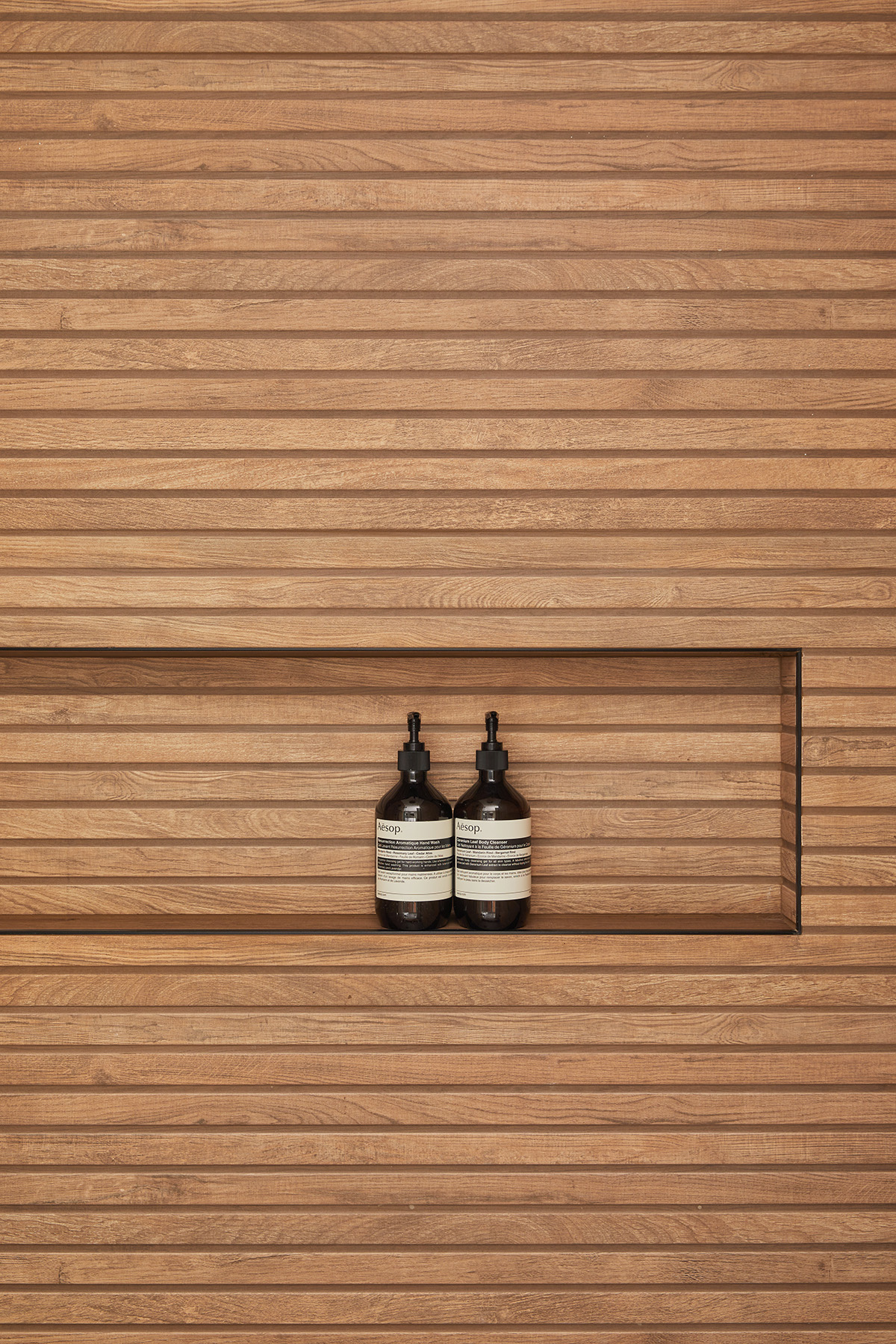
Wood Look Porcelain Niche
Textured Tile
Textured or three-dimensional tiles are a useful way to introduce depth and variation into a bathroom design. Unlike flat tiles, these materials have surface relief that creates shadows and highlights, adding visual interest as light moves across the wall.
3D tiles can be used to break up large expanses of tile or to create an accent wall within the bathroom. The added texture gives the surface more dimension while maintaining a clean and contemporary aesthetic.
In the bathroom below, we used a tile with a horizontal striated pattern that creates a subtle three-dimensional effect. The texture adds movement to the wall and provides contrast against the smoother surrounding surfaces.
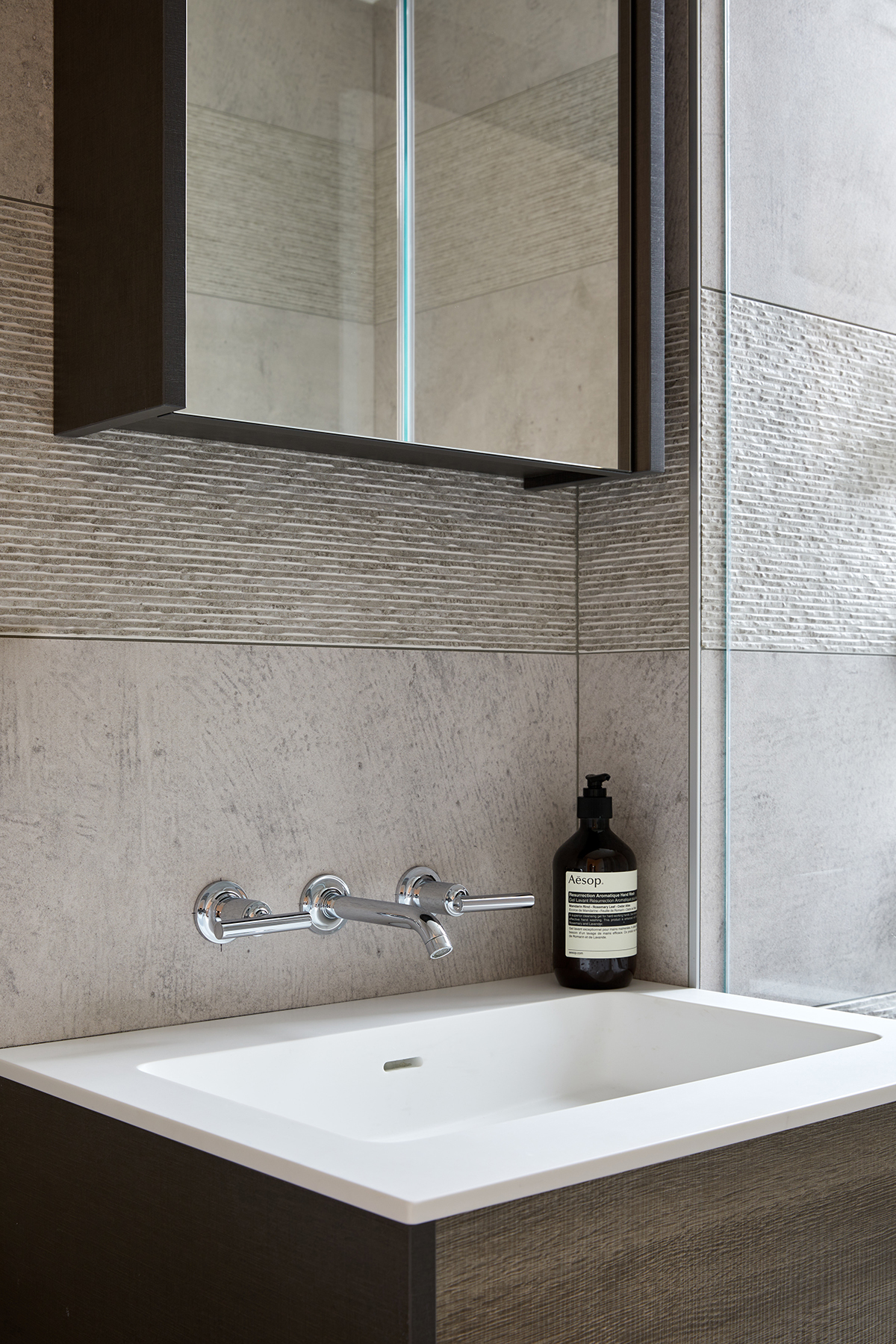
3D Tile Pattern, Bathroom Renovation, UES, NYC
Color Drenching
Color drenching is a design approach where a single color is used consistently across multiple surfaces in a room. Walls, ceilings, finishes, and sometimes even fixtures are coordinated within the same color family to create a cohesive and immersive environment.
In smaller spaces such as powder rooms, this technique can be particularly effective. Rather than breaking the room into contrasting elements, the consistent color palette creates a unified composition that feels intentional and dramatic.
In the powder room below, we used a deep green palette throughout the space. The floor and custom sink are made from green marble, while the walls and ceiling are finished with a green limewash. The combination of natural stone and plaster creates subtle variation within the same color family, giving the room depth while maintaining a strong, cohesive identity.

Luxury Powder Room Design
Custom Marble Sink
A custom marble sink can be a striking focal point in a bathroom. Carved or fabricated from solid stone, these sinks highlight the natural character of the material while adding a level of craftsmanship that is difficult to achieve with standard fixtures.
Custom stone sinks also allow the material palette of the bathroom to remain consistent. When the sink is made from the same stone used on surrounding surfaces, the design feels more cohesive and intentional.
In the bathroom below, the sink was fabricated from the same marble used on the wall behind it. This continuity of material creates a unified composition while allowing the natural veining of the stone to become the defining feature of the space.
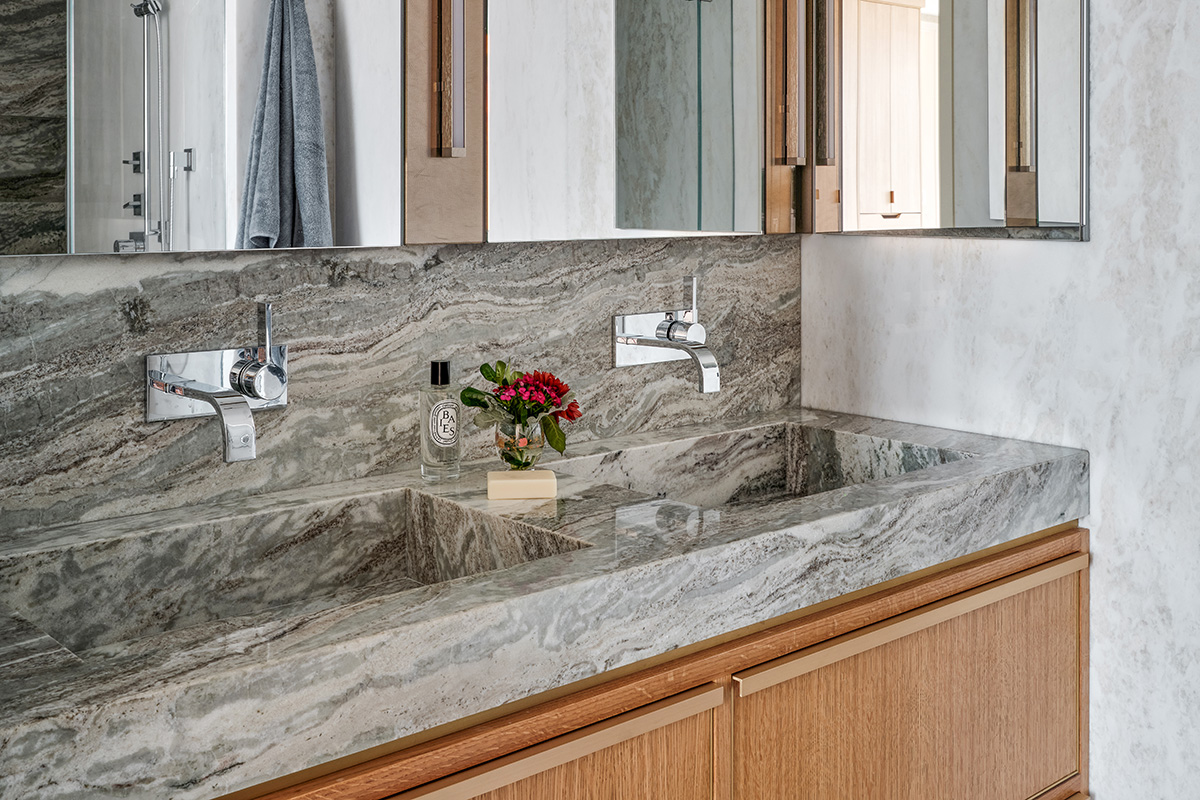
Custom Marble Sink in an UES Bathroom Remodel
Natural Wood Vanities
Natural wood vanities can introduce warmth and texture into a bathroom interior. Because many bathrooms rely heavily on stone, porcelain, and other hard materials, incorporating wood can help balance the overall material palette.
Wood vanities are particularly effective when paired with cooler materials such as marble, porcelain tile, or concrete finishes. The contrast between natural wood grain and smooth mineral surfaces creates a more layered and inviting environment.
In the bathroom below, we used a natural wood vanity to offset the gray porcelain slab walls and floor. The wood introduces warmth and visual contrast, helping to soften the otherwise minimal palette.
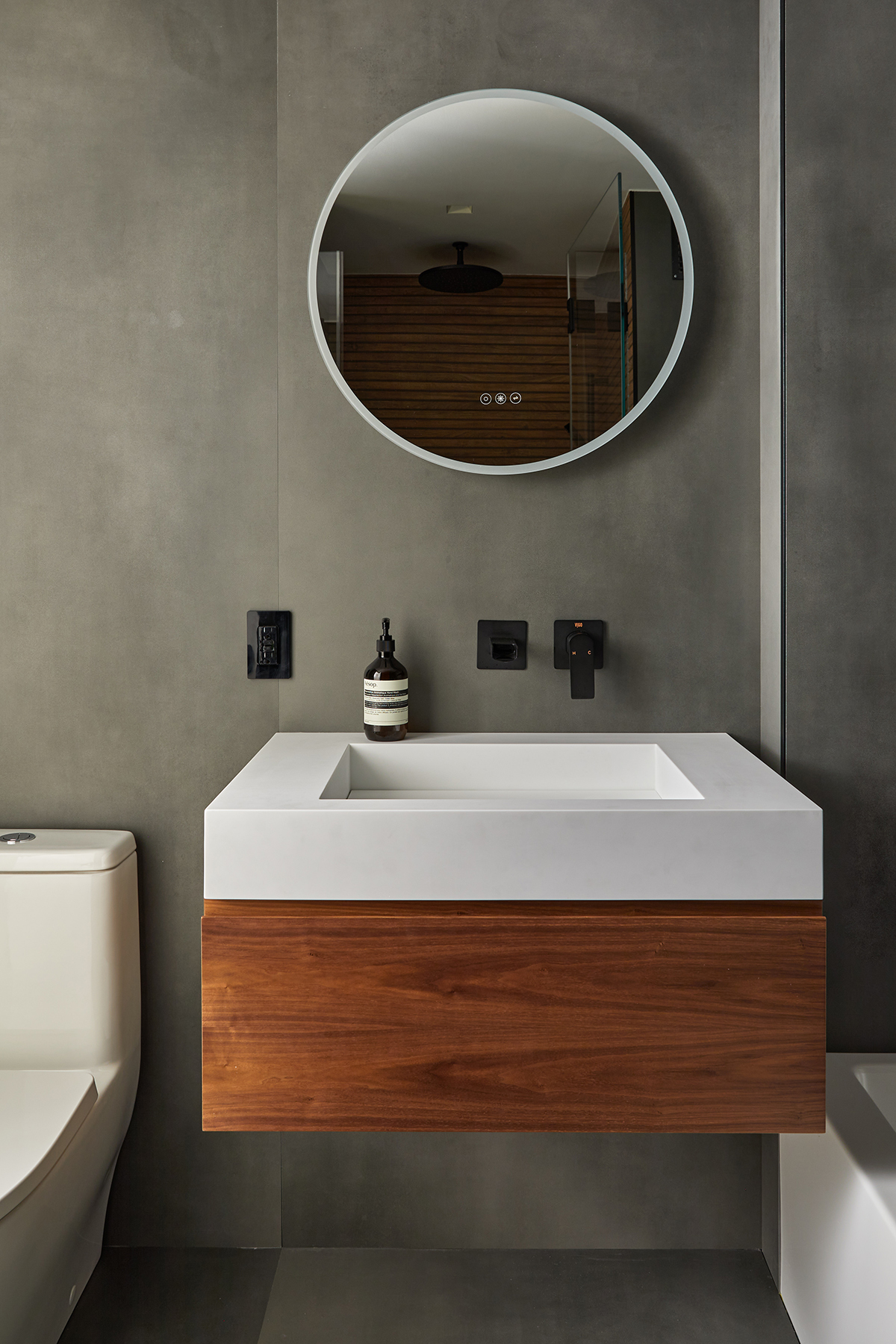
Gray Bathroom with Wood Vanity
Shower Niche
A recessed shower niche is a practical and elegant solution for storing shower products. By integrating the storage directly into the wall, the shower remains visually clean and uncluttered compared to surface-mounted shelves or accessories.
When carefully detailed, a shower niche can also become a refined architectural feature. Aligning the niche with the surrounding material layout and minimizing visible joints helps maintain a cohesive and intentional design.
In the bathroom below, the niche is carved directly into a marble slab wall. Because the wall is composed of a single slab, the niche can be formed without visible joints. The interior surfaces are fabricated with mitered marble edges, allowing the stone veining to wrap seamlessly into the recess.
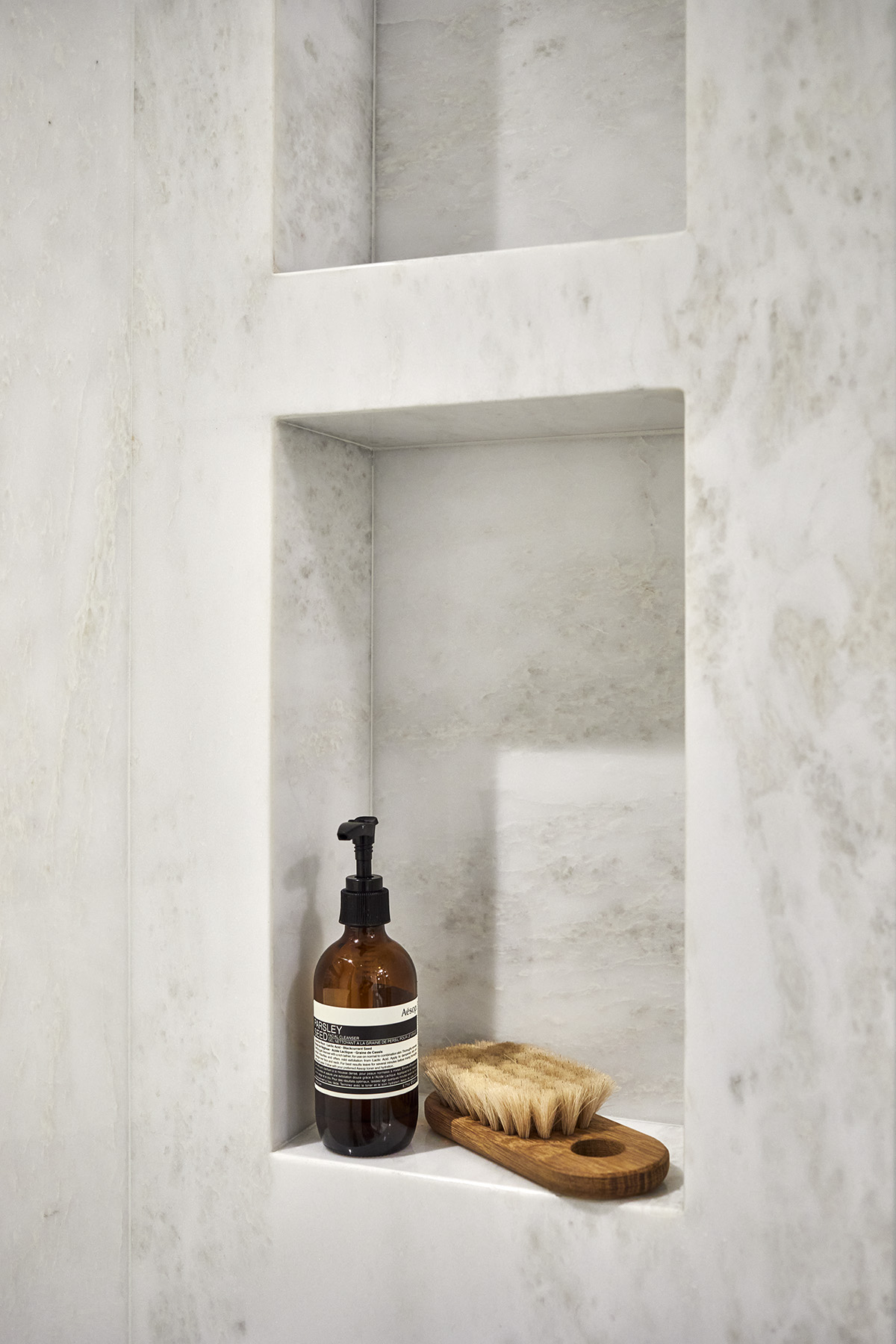
Seamless Marble Shower Niche Upper East Side, NYC
Metal Paneling
Metal paneling can introduce a distinctive material character to a bathroom. Metals such as brass, bronze, copper, and stainless steel can be used as wall panels, accents, or integrated details to add depth and contrast to the space.
One of the most compelling qualities of many metals is their ability to develop a patina over time. Materials like brass and bronze gradually change color as they age, creating a surface that evolves and gains character through use. This natural aging process can add richness and individuality to the bathroom.
In the bathroom below, we incorporated bronze metal panels to create a shower niche that contrasts with the surrounding surfaces. The metal adds warmth and a subtle reflective quality, while the bronze will continue to develop a deeper patina over time.
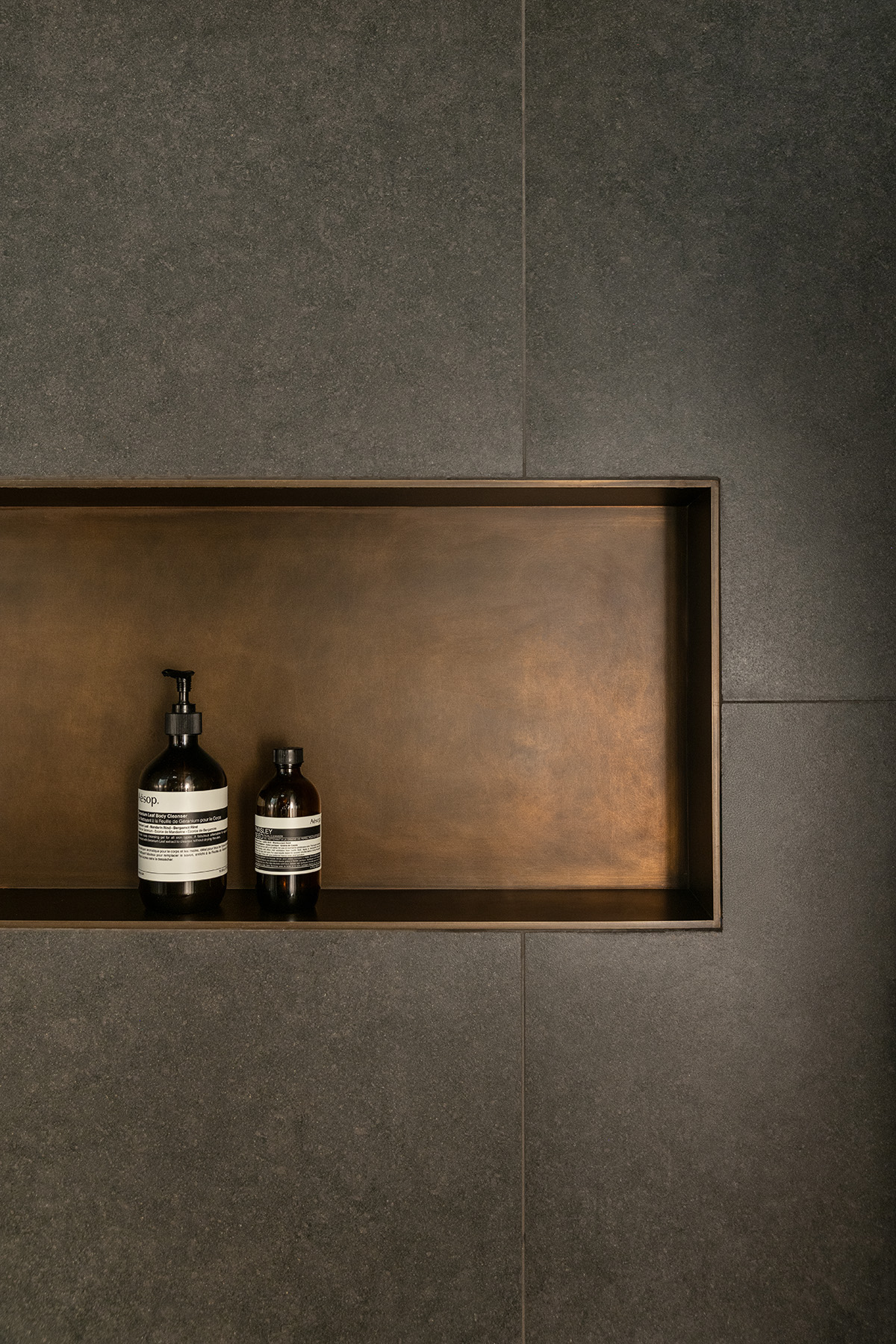
Bronze Metal Shower Niche
Accent Lighting
Accent lighting can enhance a bathroom by adding depth and atmosphere to the space. Because accent lighting is softer and more indirect, we usually combine it with functional lighting such as recessed ceiling fixtures.
In the bathroom below, from a luxury loft apartment we renovated, we integrated a linear light within a cove around the entire perimeter of the mirror. The concealed lighting creates a soft glow that surrounds the mirror, giving it the appearance of floating within the wall while adding subtle ambient light to the space.

Floating Mirror with Edge Lighting
Freestanding Tub
A freestanding tub can serve as a focal point within a bathroom, particularly in larger spaces where there is room to place the tub away from the walls. Unlike built-in tubs, freestanding models allow the surrounding space to remain visually open, giving the bathroom a more sculptural and spacious quality.
In the bathroom below, from a Manhattan brownstone we gut-renovated, we placed the freestanding tub in the center of the room to make it a defining feature of the design. This type of tub requires more space than a built-in alternative, but when the layout allows for it, it can bring a sense of elegance and balance to the overall composition.

Freestanding Tub in a Manhattan Brownstone Bathroom
Linear Shower Drain
Linear shower drains are often used in contemporary bathroom design for their clean and minimal appearance. Unlike traditional center drains, these elongated drains allow the shower floor to slope in a single direction, creating a more refined floor composition.
Because of their linear form, these drains integrate well with large-format tiles, stone slabs, or continuous finishes. The drain can even be designed to receive the surrounding material so that only a narrow reveal remains visible.
The photo below shows a linear drain in a shower from an apartment we renovated in New York City. The shower floor is finished with a concrete surface that continues across the drain cover, leaving only a slim rectangular opening visible. This approach maintains a seamless floor surface while preserving the functionality of the drainage system.
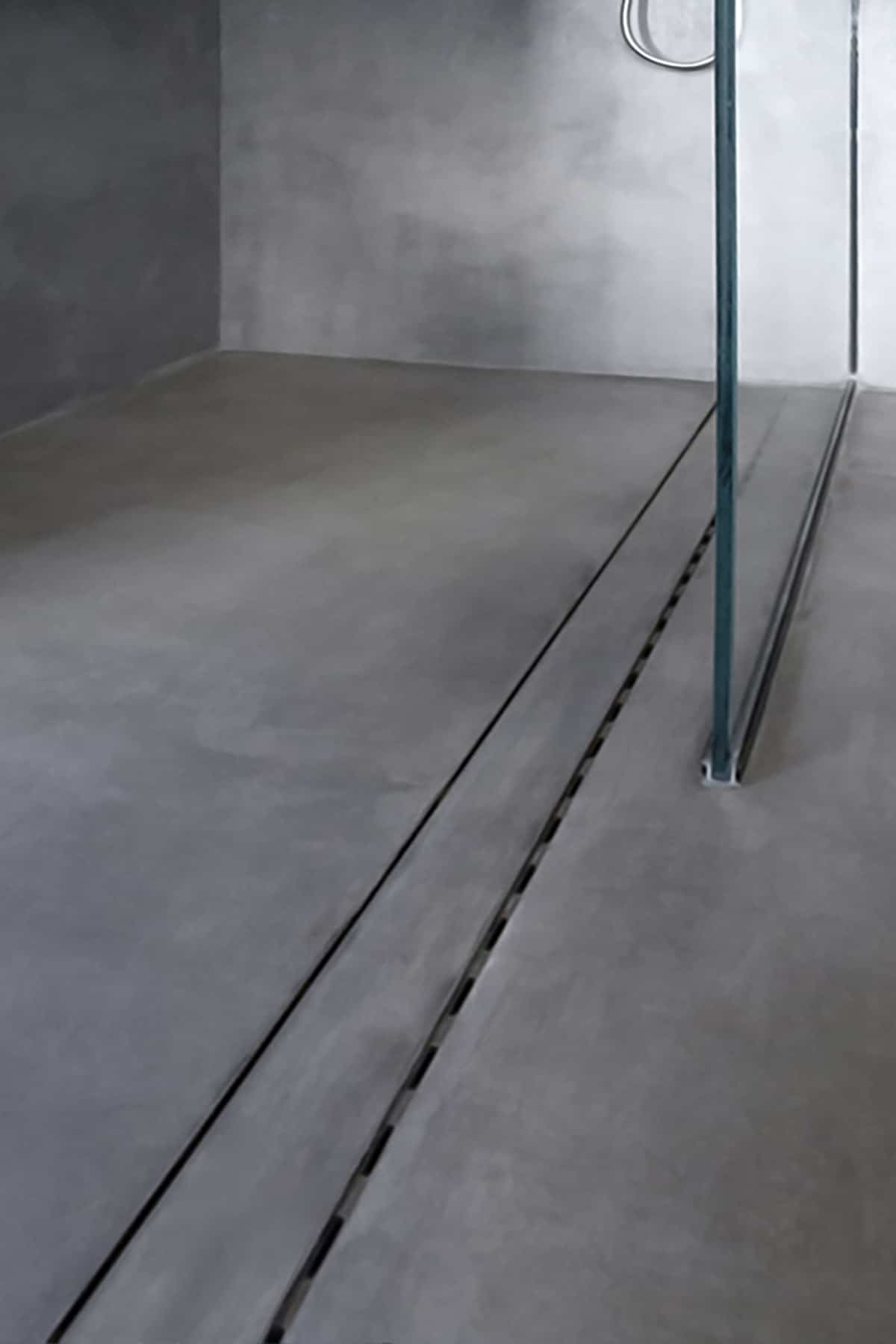
Concrete Bathroom Floor & Linear Shower Drain in a Manhattan apartment (FiDi)
Handheld Shower with Slide Bar
A handheld shower is a practical addition to many bathroom designs. When paired with a primary shower head, it adds flexibility and convenience for everyday use. Handheld showers can be particularly useful for rinsing the shower, bathing children or pets, and directing water more precisely during use.
Mounting the handheld shower on an adjustable slide bar allows the height to be easily changed, making the fixture adaptable for different users.
The bathroom below is from a primary suite we designed while combining two apartments on the Upper East Side. The shower includes an adjustable handheld fixture integrated into a smart shower system with a digital control panel that manages water temperature, steam, lighting, and music.
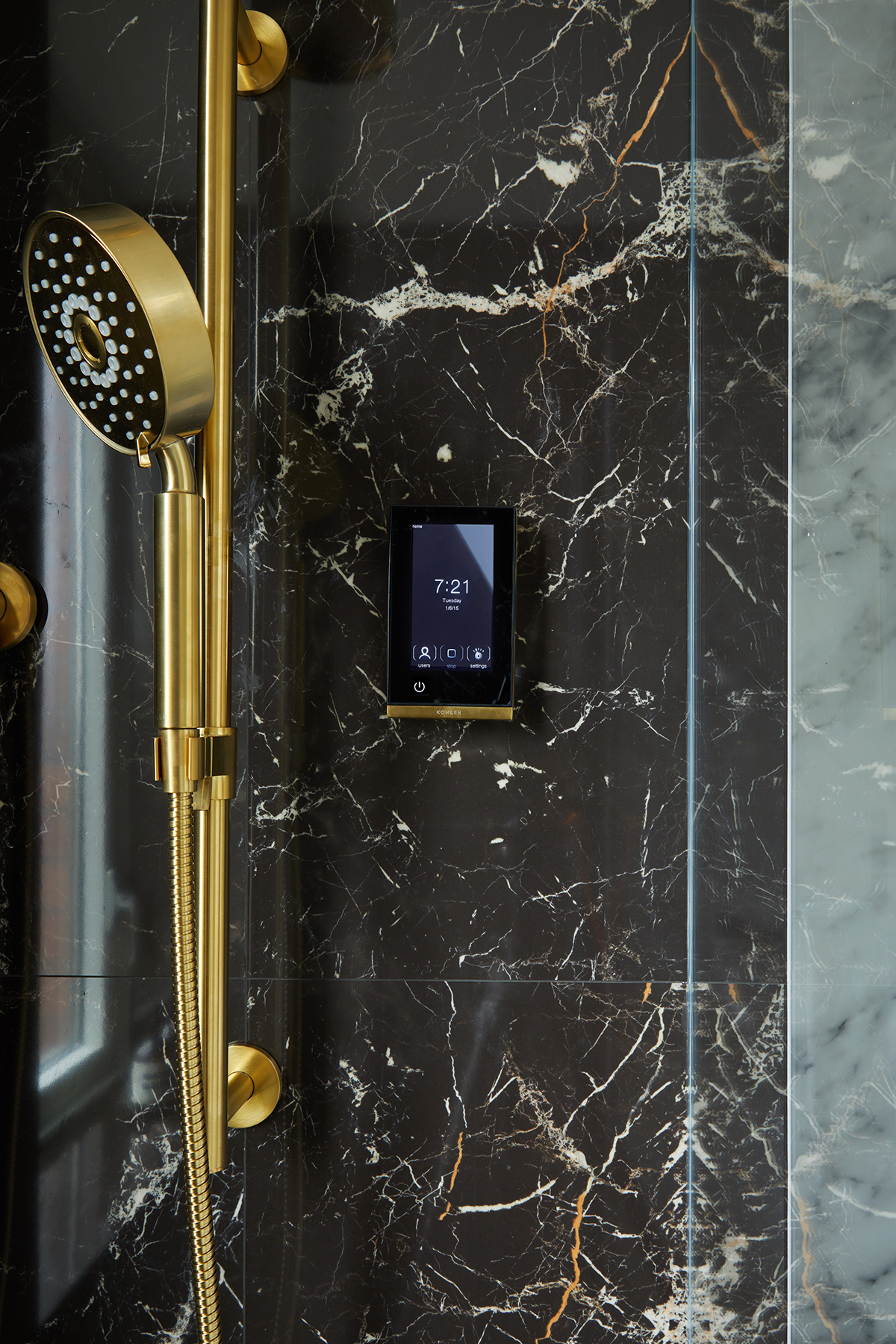
Adjustable Hand Held Shower Slide Bar
Coordinated Fixtures and Accessories
Consistency among fixtures and accessories plays an important role in creating a cohesive bathroom design. Elements such as faucets, shower fittings, towel bars, and cabinet hardware should be selected to work together both visually and functionally.
Coordinating finishes and design language helps ensure the space feels intentional rather than thrown together. When fixtures share a consistent material finish and similar aesthetic vocabulary, the overall composition becomes more refined and balanced.
The bathroom below is from a Chelsea loft renovation. In this space, the fixtures are all finished in polished chrome and share a similar design language, creating a unified and cohesive look throughout the room.
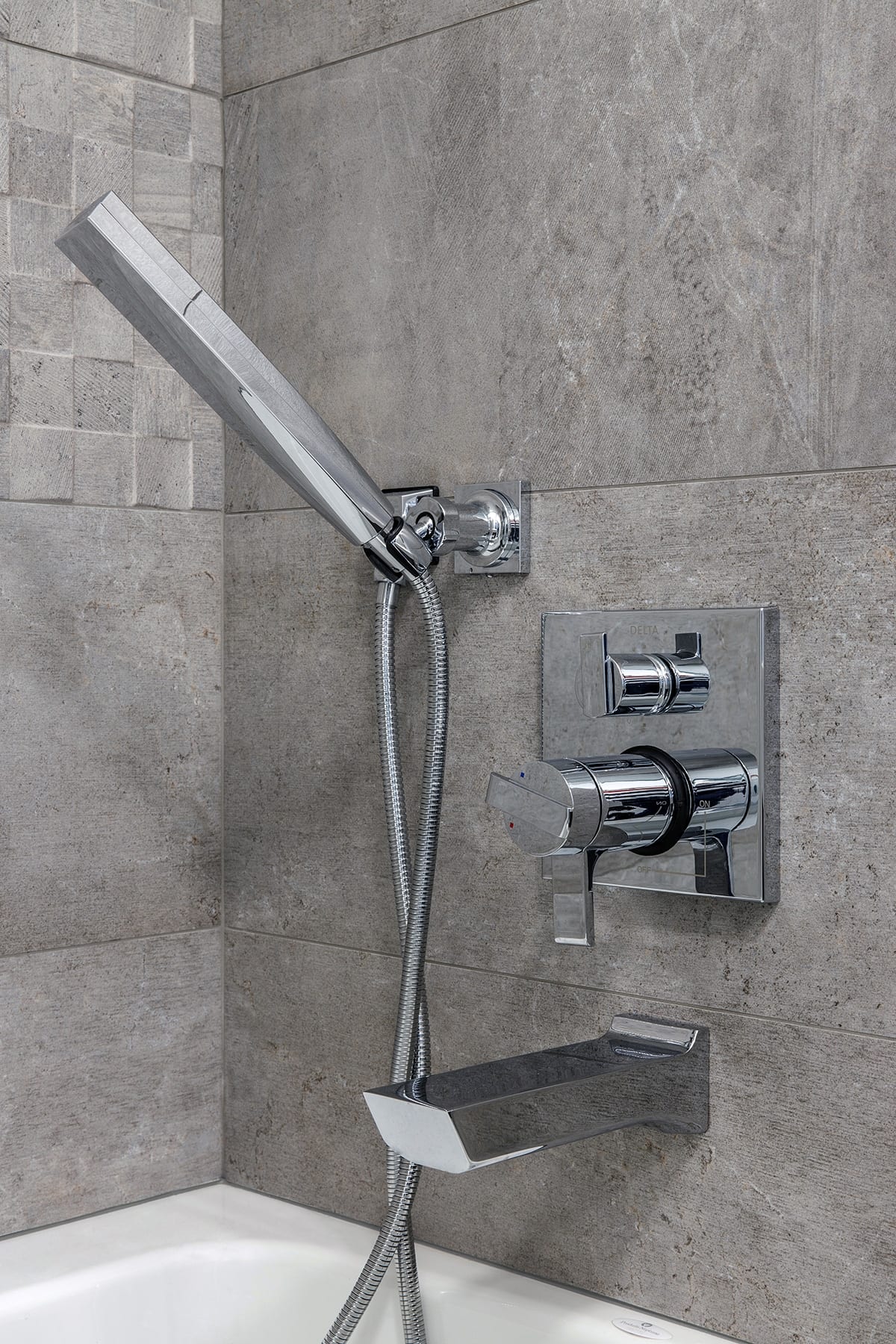
Coordinate Matching Bathroom Fixtures Loft Bathroom Renovation in Chelsea, NYC.
Wall-Mounted Toilets
Wall-mounted toilets have become a hallmark of contemporary bathroom design. Because the tank is concealed within the wall, the fixture itself appears to float above the floor, creating a cleaner and more minimal appearance.
In addition to their aesthetic qualities, wall-hung toilets offer practical advantages. The exposed floor beneath the fixture makes cleaning easier, and the concealed carrier system can provide greater flexibility when adjusting plumbing locations during renovations.
In apartment renovations, particularly in multifamily buildings, this flexibility can be helpful when modifying bathroom layouts. The bathroom below is from a loft renovation where we incorporated a wall-mounted toilet as part of a subtle industrial design palette.
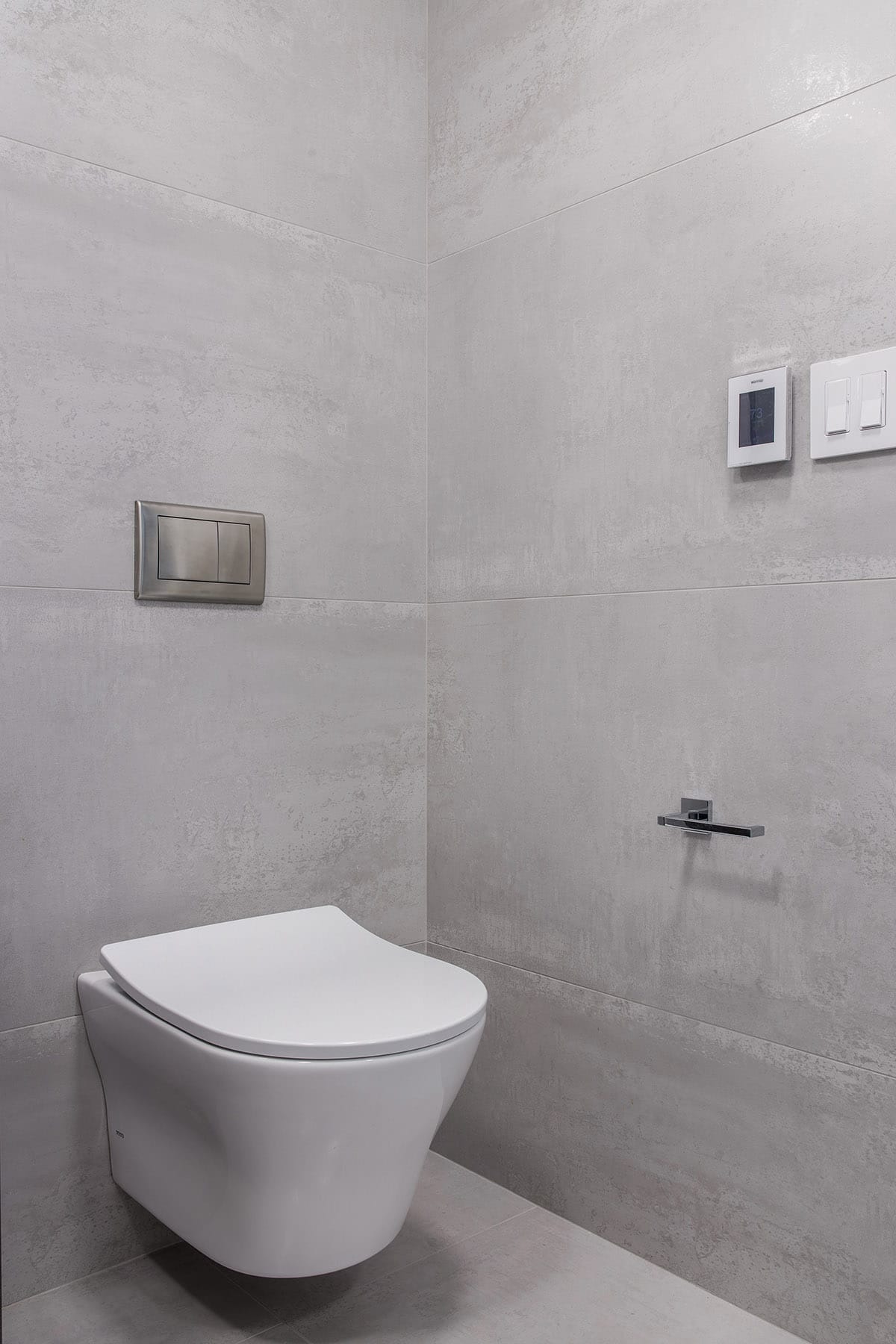
Wall Mounted Toilet in a Chelsea Apartment NYC
Floating Sinks, Vanities, and Shelves
Floating fixtures are a defining feature of many contemporary bathroom interiors. By mounting sinks, vanities, or shelving directly to the wall and leaving the floor open beneath them, the space feels lighter and more visually expansive.
This approach can be particularly effective in New York City apartments, where bathrooms are often compact and every design decision affects the perception of space. Exposing more of the floor area helps the room feel larger while also simplifying cleaning and maintenance.
In the bathroom below, we designed a custom floating sink carved from travertine with a matching floating shelf below. The stone elements appear to project from the wall, creating a clean and sculptural composition while allowing the natural character of the travertine to remain the focus of the design.
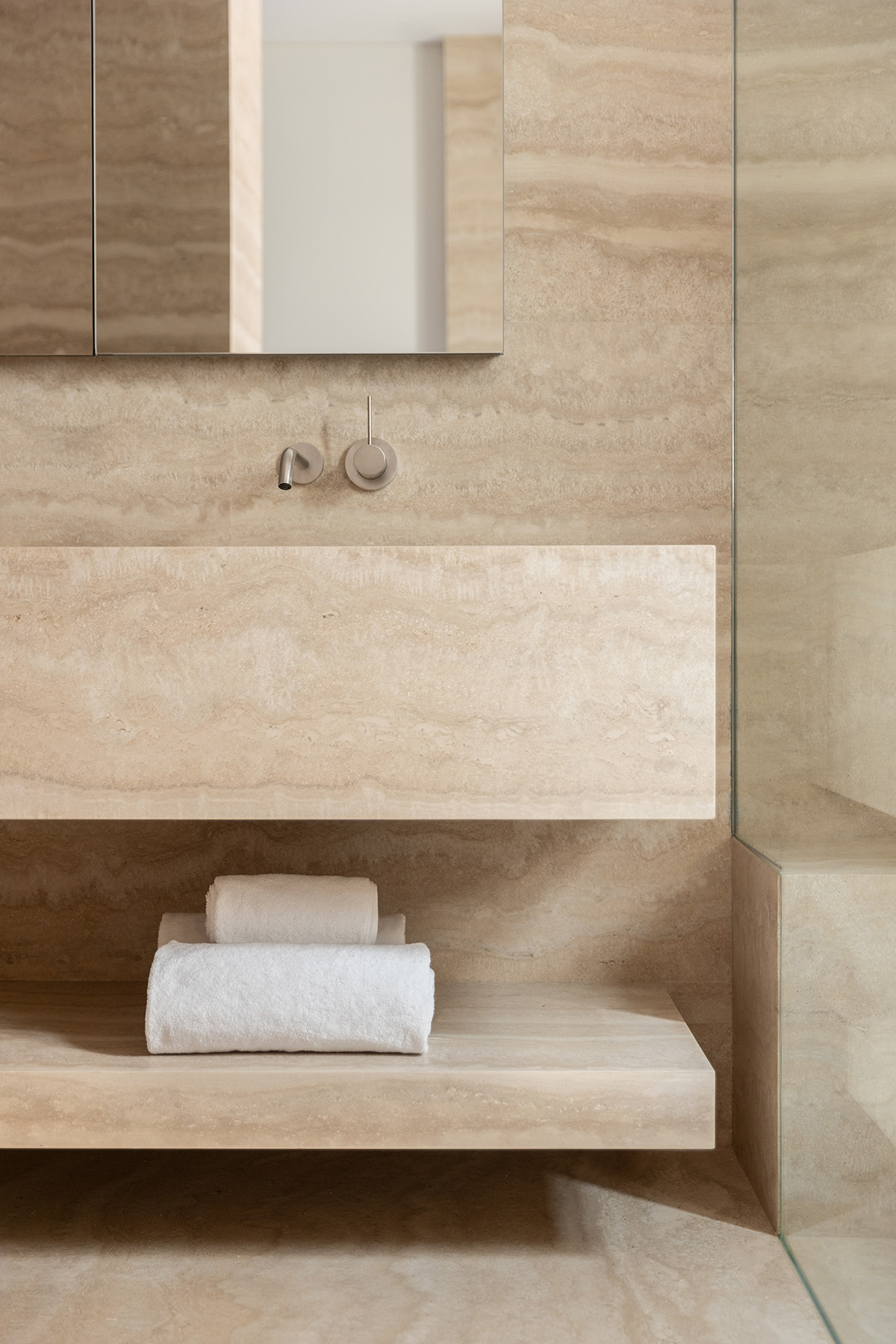
Custom Floating Stone Sink and Shelf
Clear Design Direction
Establishing a clear design direction can help guide many of the decisions involved in a bathroom renovation. A strong concept or point of inspiration provides a framework for selecting materials, finishes, and lighting so that the space feels cohesive rather than assembled from unrelated elements.
This direction can be expressed through the overall mood of the room, such as light and airy or dark and dramatic. When materials, colors, and lighting are coordinated around a consistent idea, the design becomes more intentional and unified.
In the bathroom below, we pursued a darker and more atmospheric palette. Dark porcelain tiles, bronze metal panels, and subdued lighting work together to create a moody and dramatic interior.
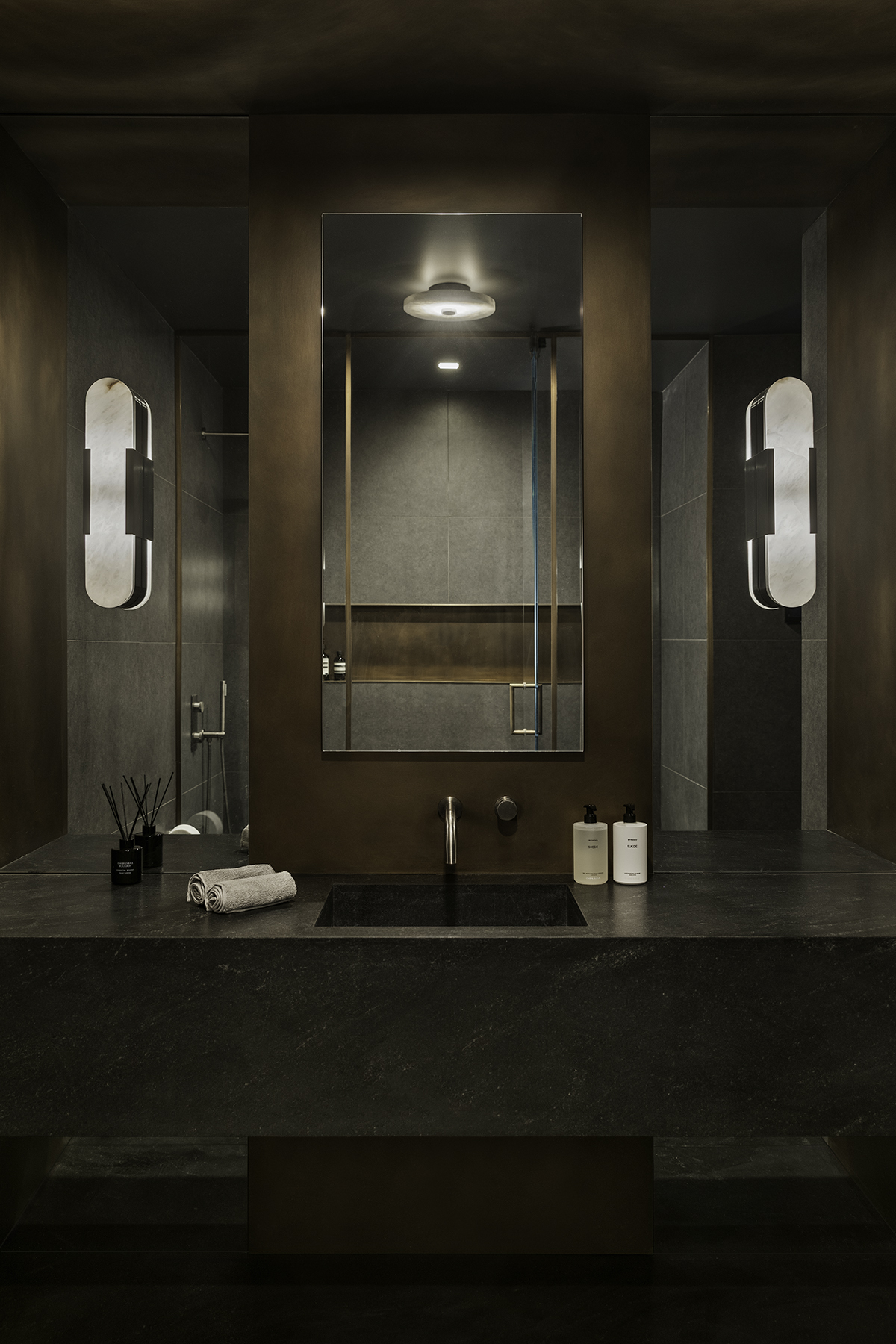
Modern Dark Bathroom
Bathroom Design
Bathroom design offers an opportunity to create spaces that feel both personal and carefully composed. Through the thoughtful use of materials, light, and proportion, even a compact room can become one of the most refined interiors in a home.
The ideas in this article reflect design approaches we often explore in our New York City renovation projects, where each bathroom becomes an opportunity to shape atmosphere, texture, and spatial experience.
At Fontan Architecture we design luxury homes and renovations throughout New York City, focusing on material quality, careful detailing, and spaces that feel both timeless and deeply considered. Each project is developed as a bespoke design tailored to the individual owner.
Request a Consultation with Fontan Architecture - 212 321 0194
Jorge Fontan, AIA, is an architect and founder of Fontan Architecture based in New York City. The firm focuses on residential design, including new homes and extensive renovations for discerning clients. Through collaborative dialogue that draws on the individuality of each client, projects develop as distinct architectural responses guided by thoughtful planning, precise detailing, and a commitment to creating enduring value.
Jorge Fontan, AIA, is an architect and founder of Fontan Architecture based in New York City. The firm focuses on residential design, including new homes and extensive renovations for discerning clients. Through collaborative dialogue that draws on the individuality of each client, projects develop as distinct architectural responses guided by thoughtful planning, precise detailing, and a commitment to creating enduring value.