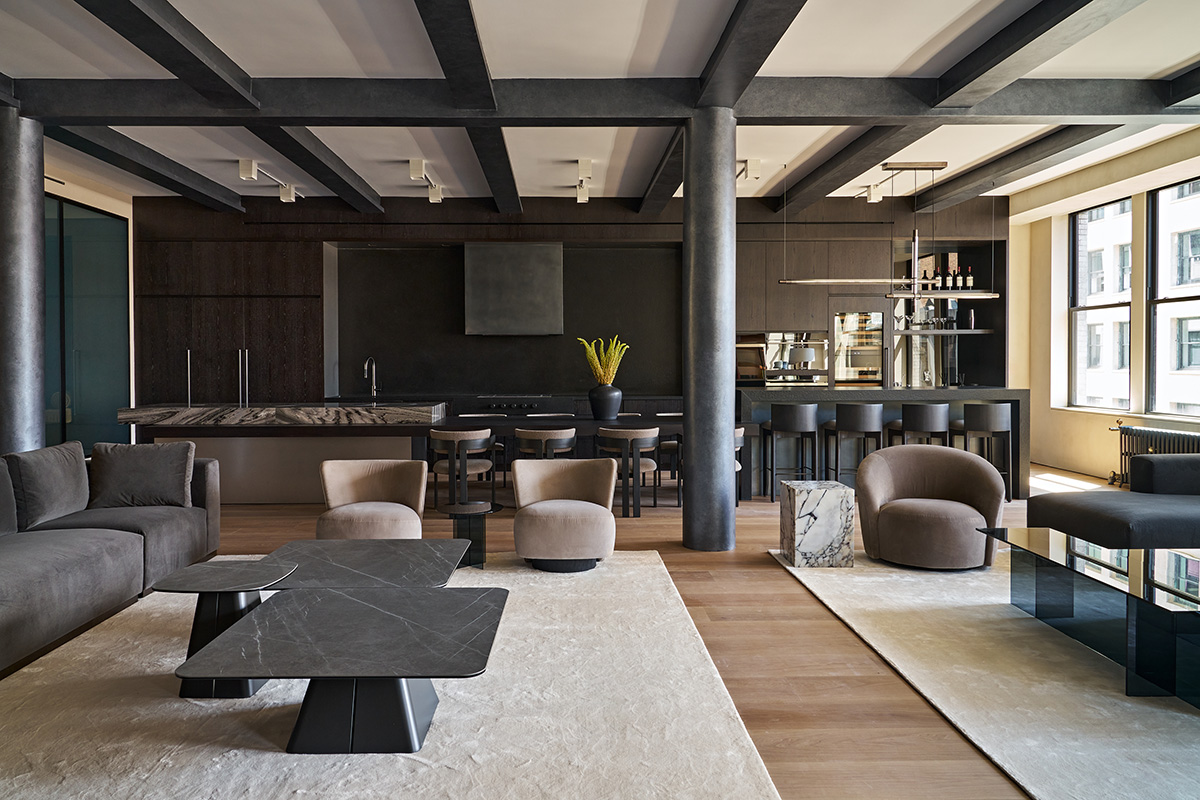
Loft apartments in New York City represent a distinct architectural typology within the residential landscape. Originally constructed for industrial and commercial use, these buildings are defined by expansive floor plates, exposed structural grids, cast iron columns, masonry perimeter walls, and exceptional ceiling heights. Their scale and structural clarity offer a rare spatial framework — one where volume, light, and rhythm are already embedded in the architecture. When carefully reinterpreted for contemporary living, a loft can achieve a level of openness and presence that is difficult to replicate in conventional residential construction.
Luxury loft renovations demand a deliberate approach to proportion, circulation, and material composition, beginning with an understanding of the nuance and unique character of these homes. Structural rhythm, volume, and daylight must be carefully organized to achieve both visual clarity and functional performance. Every successful project begins with a clear understanding of the owner’s lifestyle and long-term vision, aligning architectural design with technical mastery from planning through completion to create a truly personalized residence.
I am Jorge Fontan, Architect and owner of Fontan Architecture, a Manhattan-based firm specializing in high-quality residential renovations. Our practice focuses on residential projects including the architectural transformation of classic lofts throughout SoHo, Tribeca, Chelsea, and the rest of New York City. In this article, I share design strategies drawn from our work and outline the principles that guided each decision for refined, personalized, and enduring loft interiors.
Table of Contents
Open Plan — The Great Room
One of the earliest and most consequential decisions in a loft renovation is whether to establish a great room—an open-plan arrangement in which the living, dining, and kitchen areas are unified within a single continuous volume without partitions. In loft apartments, this approach amplifies the inherent grandeur of the space. By maintaining openness, obstructions are minimized, allowing daylight from large industrial windows to extend more fully across the interior—an optimal solution given the depth common to many loft residences.
Open-plan layouts integrate the primary living functions into one expansive space. Because lofts are typically generous in scale and volume, preserving openness allows the architecture to express its full potential, particularly where ceiling heights are significant. When carefully proportioned, an open plan enhances spatial continuity and refinement, defining the experience of luxury loft living. Upon entry, these spaces create a powerful impression through their scale and presence.
The space shown below is a forty-by-forty-foot great room in a loft we transformed. Encompassing 1,600 square feet within a single continuous volume, it creates an immediate sense of scale, openness, and architectural presence upon arrival.
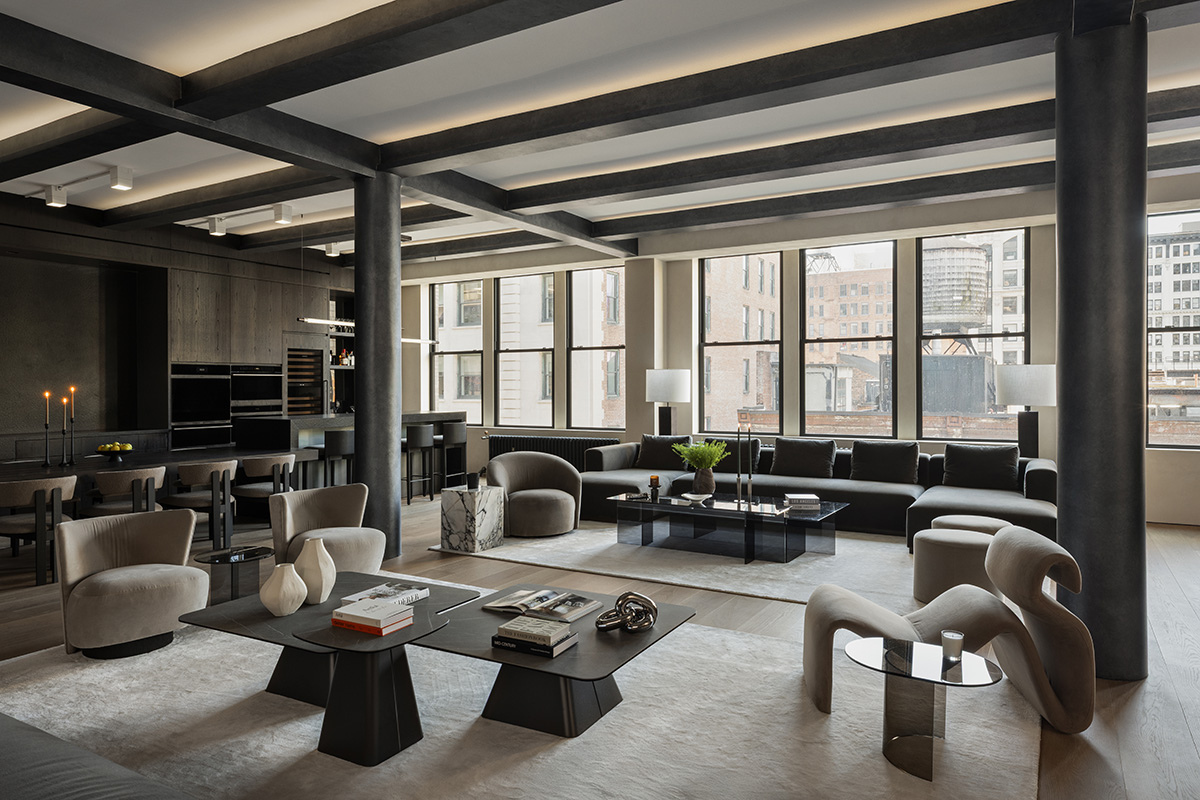
Loft With Great Room
Primary Bath — Scale and Material Richness
Lofts are often more expansive than the typical New York City apartment, offering a scale that allows for more generous spatial planning. When space permits, the primary bathroom should reflect the overall proportion and presence of the residence rather than feeling secondary or compressed. In a loft environment, continuity of scale is essential to maintaining architectural balance throughout the home.
The project shown below features the primary bathroom in a luxury loft we designed. The room was proportioned to remain consistent with the scale of the surrounding spaces, ensuring balance within the overall composition of the apartment. The bathroom is clad entirely in travertine, a natural stone with depth and warmth that reinforces its sense of material richness. The objective is to balance grandeur with refinement.
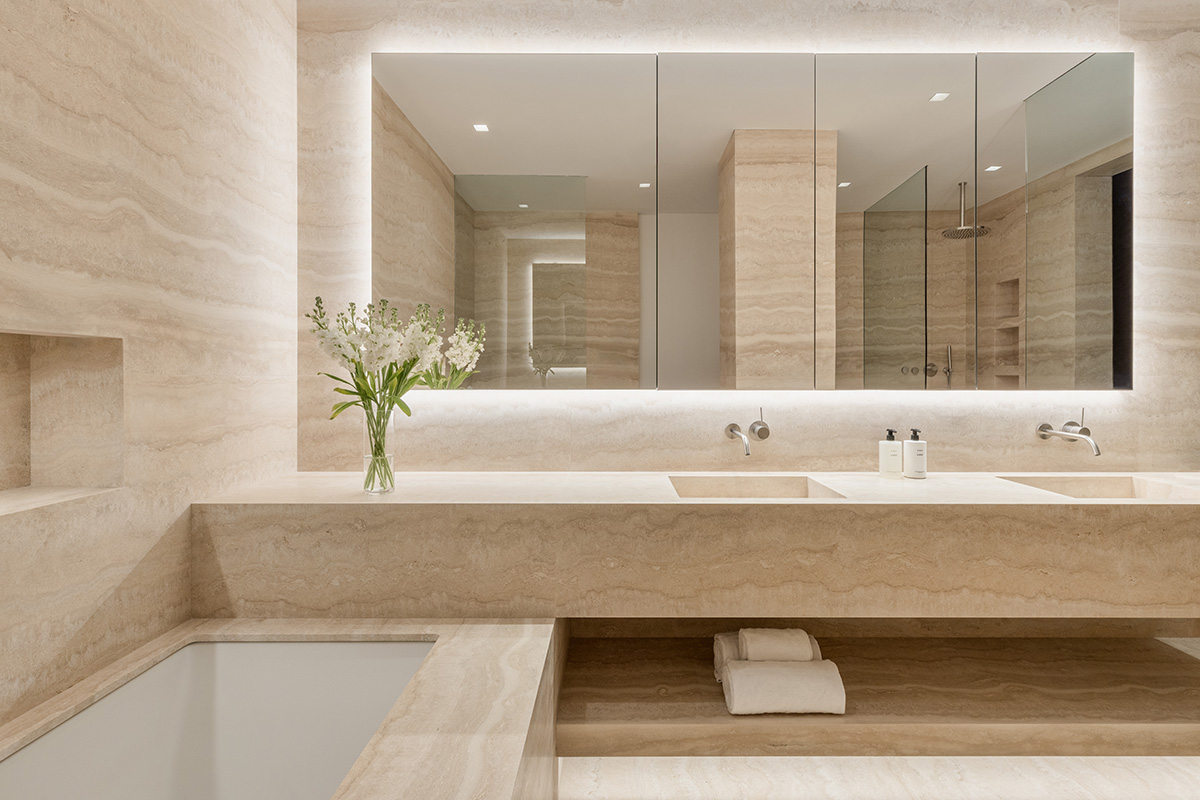
Luxury Travertine Slab Bathroom in a Modern Loft
Metal and Glass Doors – Enhancing Openness and Light
Metal and glass doors are incorporated to preserve lightness while maintaining the loft’s open character. Glass extends sightlines and allows light to travel between spaces—an essential strategy in deep loft apartments where perimeter windows are the primary source of daylight. Metal introduces contrast through precision and sheen rather than additional color, reinforcing clarity without adding visual weight.
Beyond the doors, the adjacent home office features a custom shelving composition that continues this dialogue between structure and openness. Horizontal shelves are paired with a single inclined display plane, creating a subtle shift in geometry. The interplay between horizontal and angled lines adds depth and intention, ensuring the installation reads as architectural rather than merely functional.
The detailing of the shelving is equally critical. Slightly thicker profiles with concealed supports allow the shelves to register as architectural elements rather than applied furnishings. In restrained tonal interiors, proportion, shadow lines, and material thickness carry as much weight as decoration, contributing to a sense of refinement and permanence.
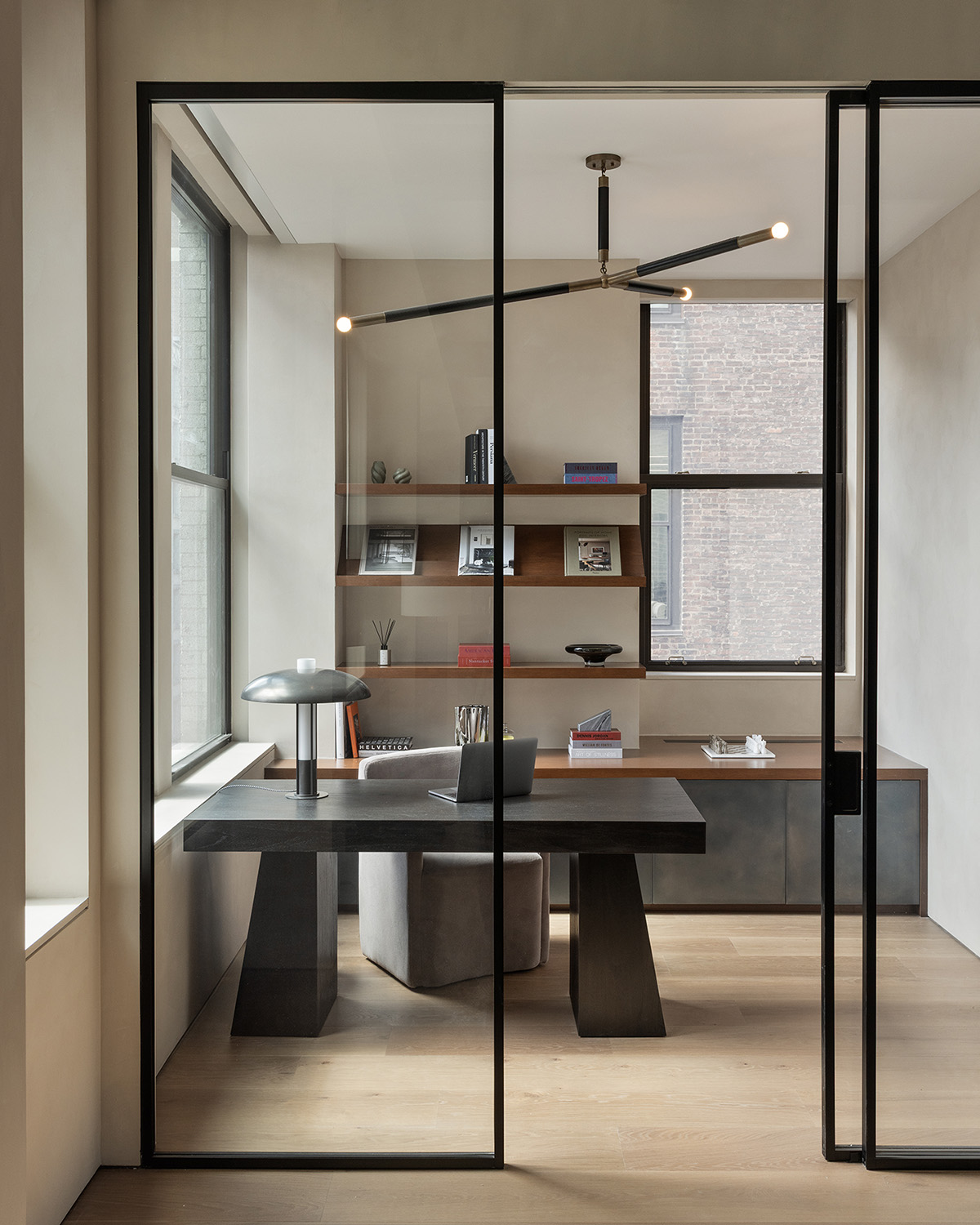
Custom Black Metal and Glass Doors in NYC Loft
Powder Room – Refined and Expressive
The powder room is often the one space in a home where clients feel comfortable taking greater creative liberties with the interior design. Because it is primarily used by guests, it presents an opportunity to introduce a more distinctive atmosphere while maintaining cohesion with the overall residence.
Shown below is a powder room within a loft where the client desired a darker, more atmospheric setting while retaining a sense of refinement. We introduced a deep green tone to create softly textured walls, establishing a rich and immersive backdrop. The custom sink is fabricated from the same green marble as the floor, reinforcing material continuity and depth. The result is a dimly lit, evocative space with a strong and memorable presence.
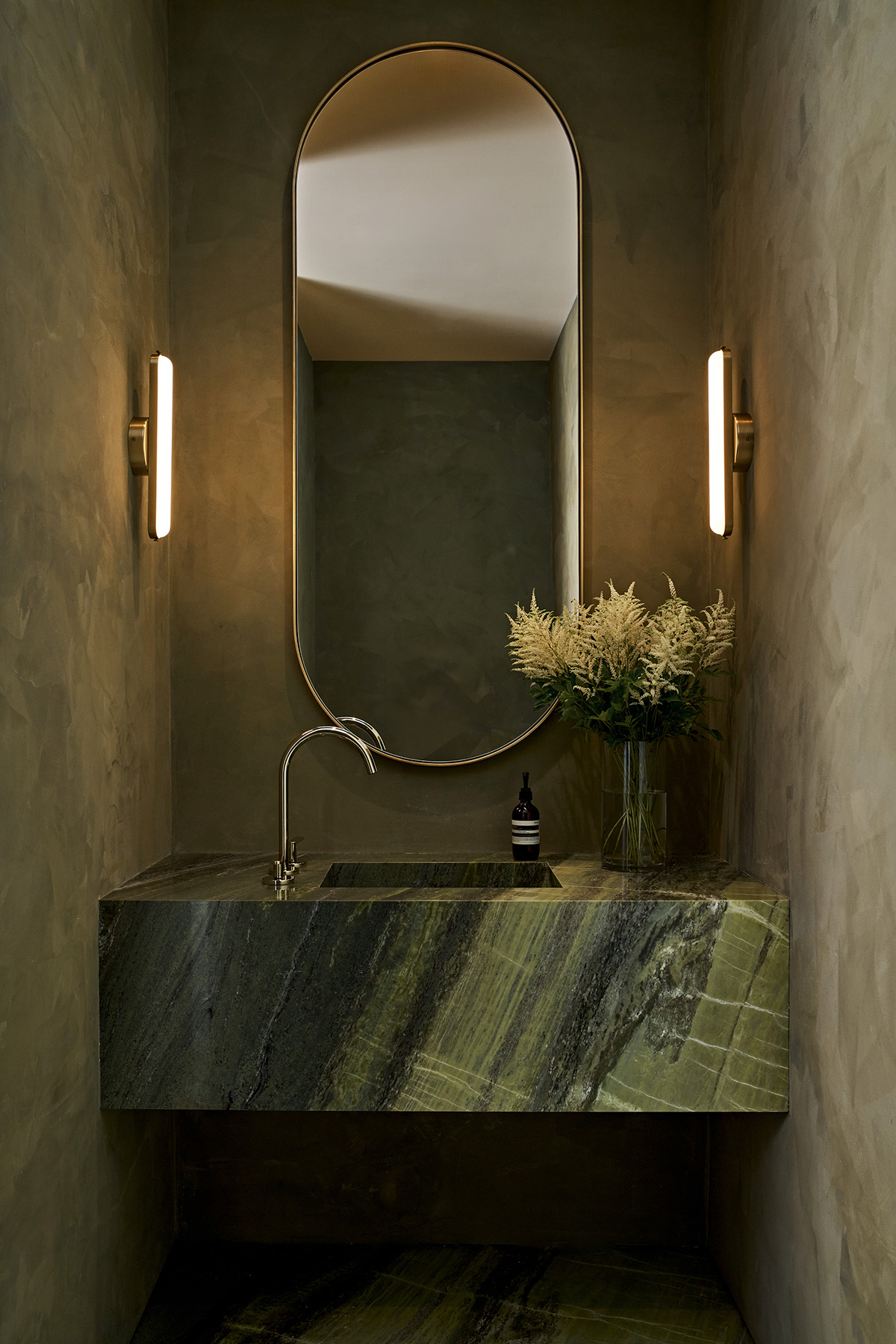
Bespoke Powder Room Design in a Luxury NYC Loft Apartment
Wide Plank Floors – Proportion and Warmth
Wide plank flooring is well suited to a loft environment because it helps balance the overall scale of the space. In wide, open interiors, broader planks maintain appropriate proportion between the floor plane and the surrounding volume.
In the photo below, we used wide plank white oak flooring to reinforce proportion while introducing subtle warmth to the space.

White Oak Wide Plank Floors
Metal Details – Elegance and Customization
Given their history rooted in industrial use, it is philosophically fitting to incorporate metal into a loft design. Beyond this contextual relevance, metal can introduce elegance through customization and distinctive detailing.
In the bathroom shown below, we used dark bronze metal panels to create ambiance within a dimly lit space. The installation was custom crafted for the owner, who requested an “industrial loft with dark materials,” resulting in a design tailored specifically to that vision.
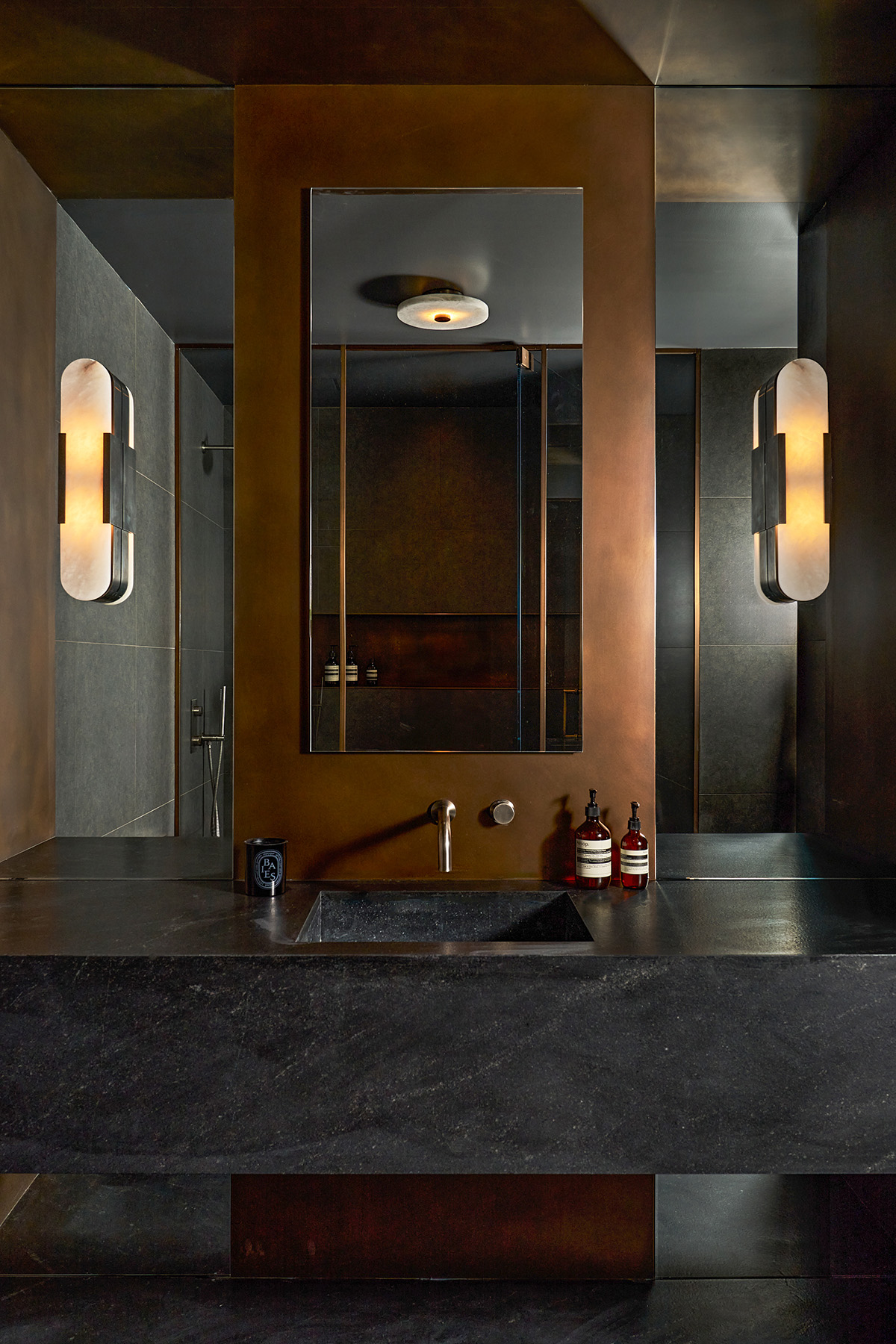
Dark Modern Bathroom Design with Bronze Metal
Large Doors – Scale and Presence
Lofts typically have substantial ceiling heights, making taller doors both appropriate and visually consistent with the architecture. Oversized doors reinforce the vertical dimension of the space and respond to its overall volume and scale.
In the loft shown below, a full-height modern interpretation of the barn door further emphasizes this verticality. A notable feature is the strong contrast between the orange-stained door and the concrete-textured walls, creating a deliberate interplay between warmth and raw materiality.
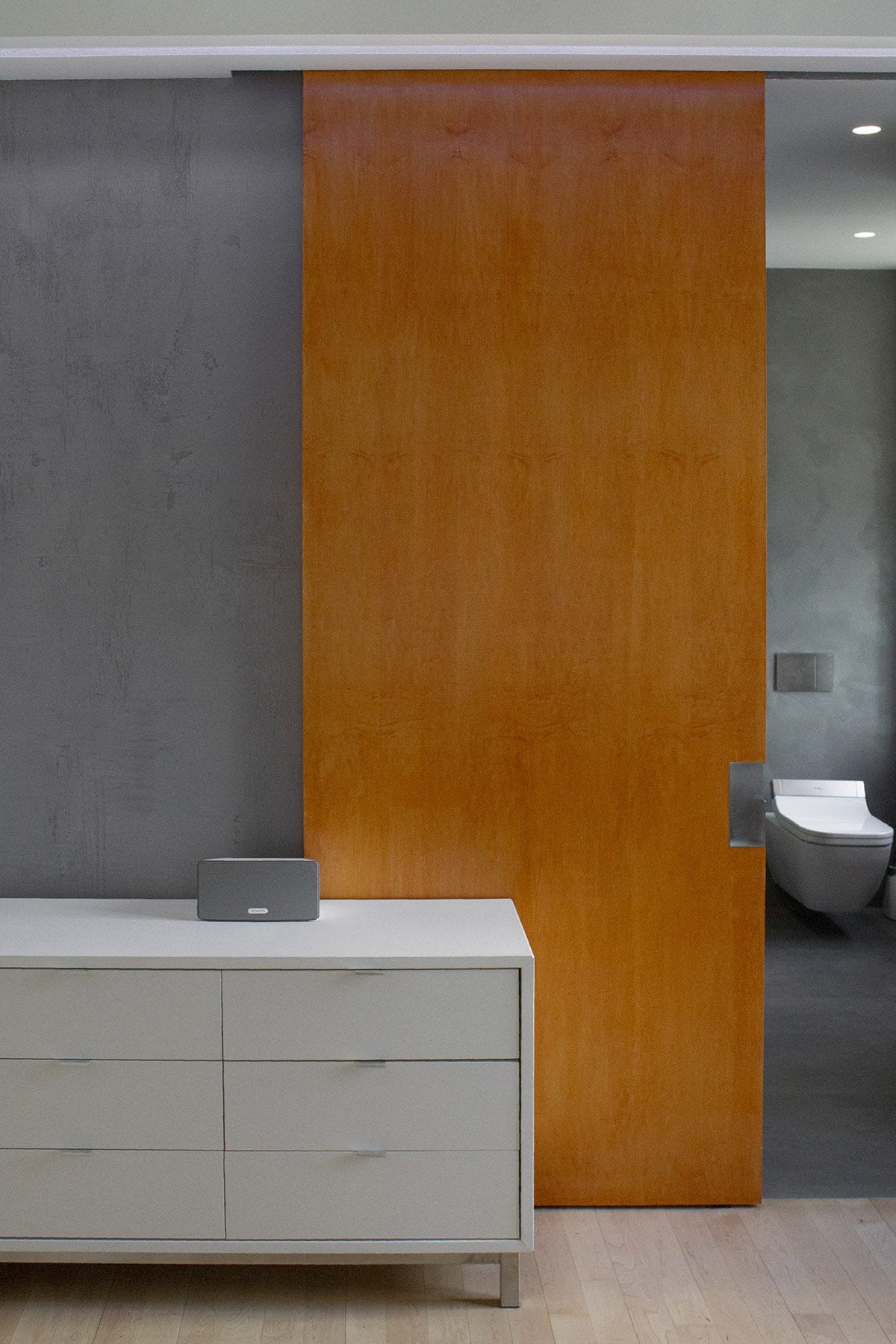
Tall Modern Loft Door Design
Exposed Brick – A Textural Narrative
Loft buildings were originally constructed with thick exterior brick bearing walls, a characteristic that has become synonymous with New York loft living. Some homeowners embrace exposed brick, while others prefer a more refined finish. Ultimately, the decision comes down to personal preference, but it significantly shapes the overall character and atmosphere of the loft. Exposed brick serves as a direct link to the architectural history of these buildings and reinforces the space’s identity as a true loft.
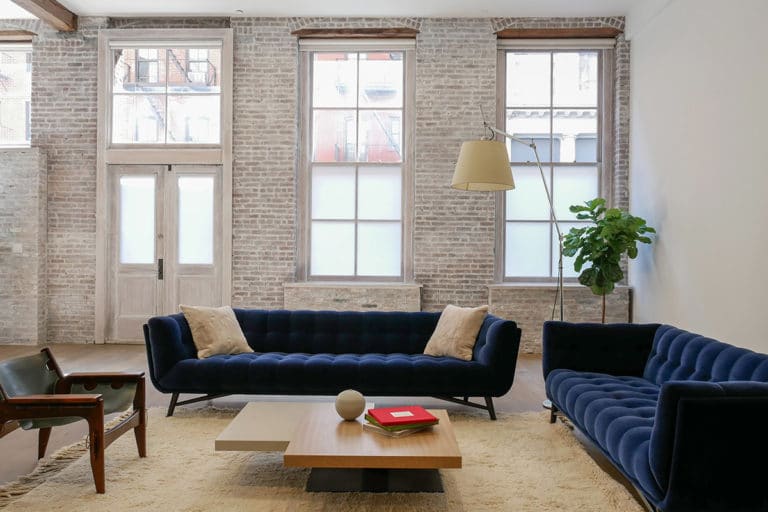
The image below shows an exposed brick wall in a SoHo loft. The brick introduces contextual depth and a classic rustic quality, further reinforcing the loft’s historic origins.
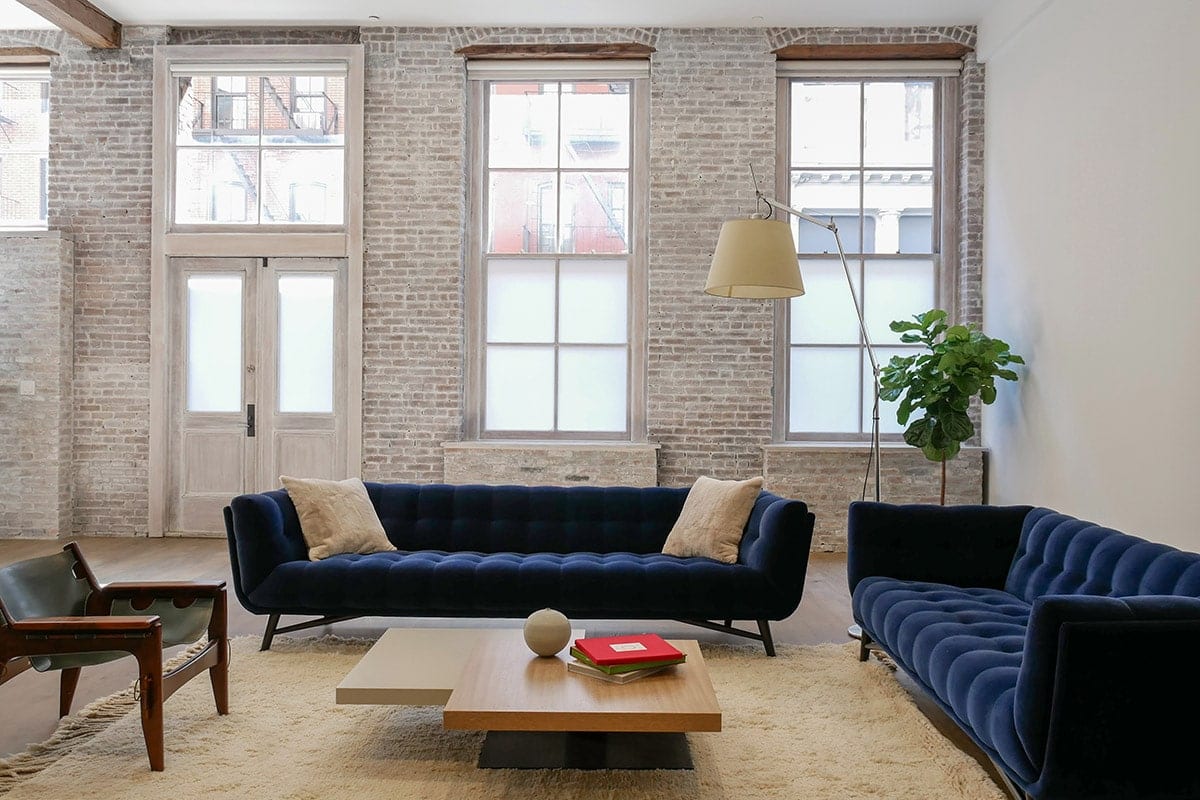
Exposed Brick Loft NYC
Maintain Scale – Openness, Proportion, and Height
Lofts are defined by their scale, often exceeding 4,000 square feet with ceiling heights ranging from 11 to 16 feet. This generosity of volume distinguishes the loft typology and establishes its architectural presence.
Preserving these proportions is essential. Interventions that compress ceiling height or fragment the open plan can diminish the spatial clarity that makes loft environments exceptional. When volume and height are respected, the loft retains its expansive character and visual continuity, allowing the architecture to remain intentional and spatially continuous.
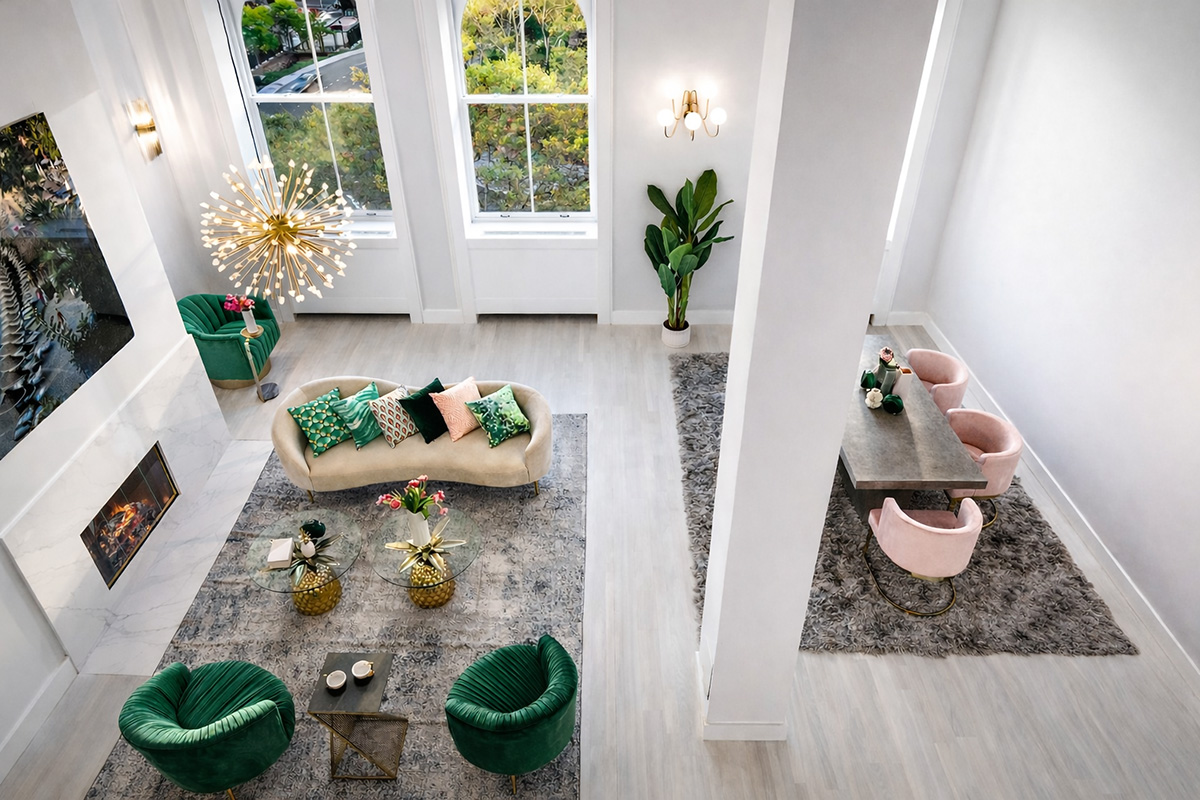
Tribeca Loft Apartment
Exposed Structure – Classic Loft Features
One of the first steps in any loft renovation is a careful assessment of the existing conditions. While each loft is unique, many share defining architectural characteristics that contribute to their identity and may be worth preserving or incorporating into the design.
Common architectural features found in New York City lofts include:
- Exposed brick walls
- Large industrial windows
- Wood, iron, or steel beams and columns
- High ceilings
- Mezzanine levels
- Expansive open floor plans
Design ultimately reflects personal preference and lifestyle. When approaching a loft renovation, we begin by understanding the owner’s needs and aspirations to determine which of these structural elements should remain visible and which may be refined or concealed. Some homeowners choose to highlight the full expression of the loft’s structural framework, while others prefer a more restrained interpretation. The image below shows a cast iron column with a decorative capital alongside an exposed heavy timber beam—both emblematic of classic loft construction.
For a more detailed discussion, see our related article on the architectural characteristics of lofts.
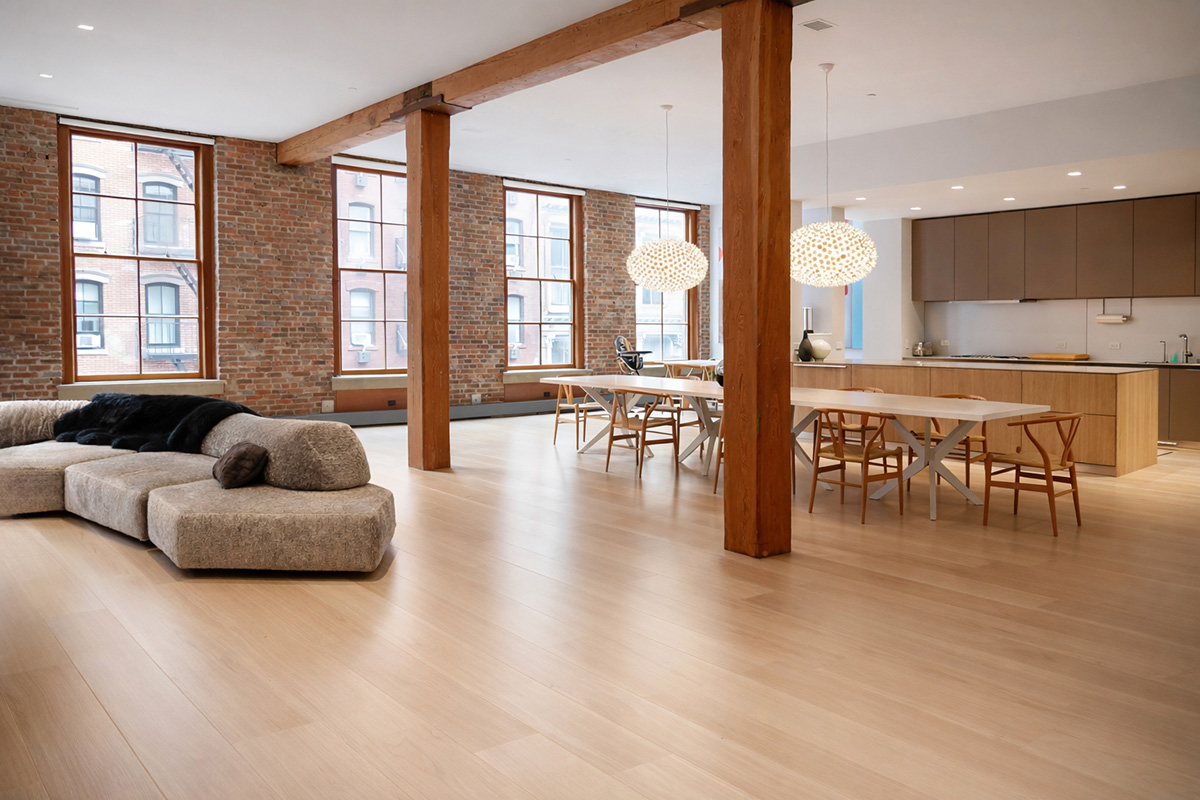
SoHo Renovation
Sprezzatura — A Studied Nonchalance
An overarching design philosophy at Fontan Architecture is sprezzatura — a studied nonchalance. Originally described in Il Libro del Cortegiano, sprezzatura is the art of making the difficult appear effortless.
In architecture, this means a space should never feel overly designed. It should feel inevitable — as though it could be no other way.
True refinement is quiet. Proportion is resolved before it is noticed. Detail is considered without calling attention to itself.
Sprezzatura is not minimalism for its own sake. It is restraint guided by rigor. Every alignment, transition, and material junction is deliberately resolved — yet the result feels natural, unforced, and calm.
We resolve complexity until it disappears. Effortless does not mean simple. It means mastered.
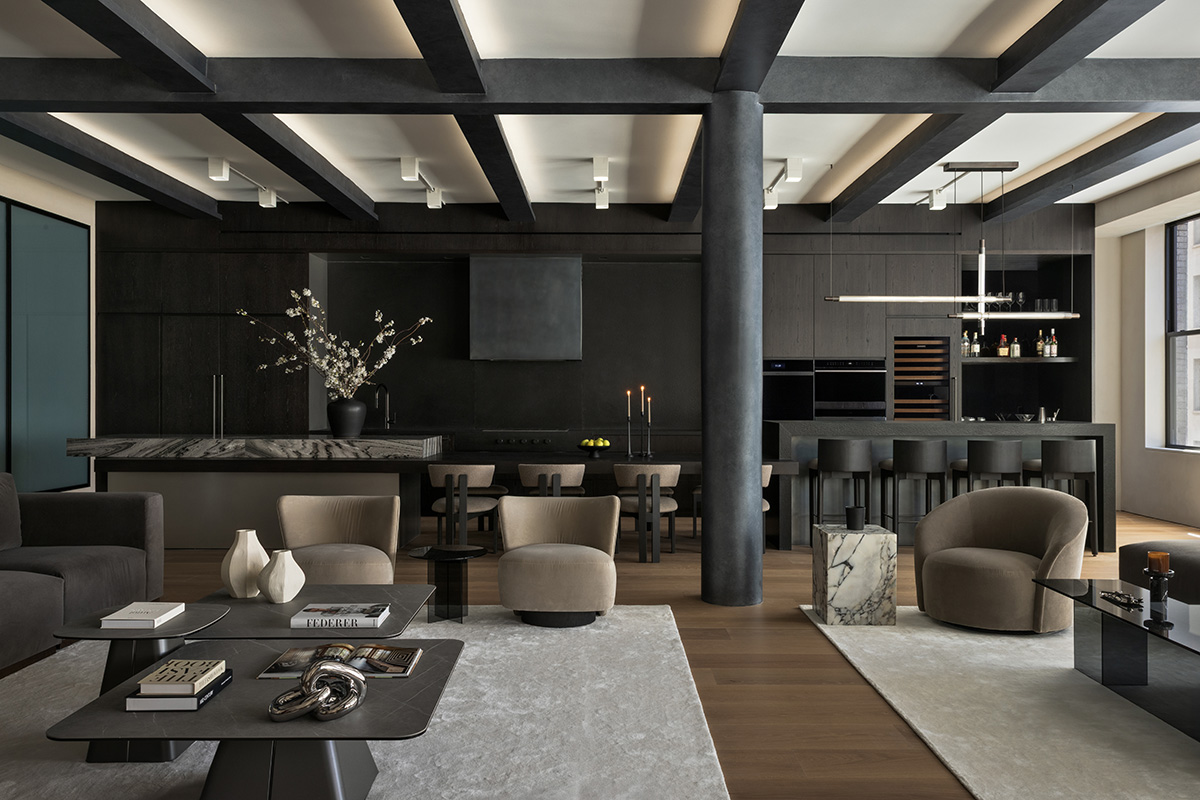
Sprezzatura in Loft Design
Thoughtful Restraint – Don’t Over Design
Restraint is not the absence of design. To over design is to interrupt clarity. When too many gestures compete, the space loses composure. Thoughtful restraint requires discipline — editing, refining, and resolving until the architecture feels inevitable. It is control.
In this space, the architecture is quiet but deliberate. The wood paneling is not decorative; it establishes rhythm, proportion, and warmth. The daybed is not furniture placed within a room — it is integrated into the millwork, becoming part of the architecture itself. Storage is concealed. Lines are continuous. Transitions are resolved. Nothing calls attention to itself, yet every element has been carefully considered.
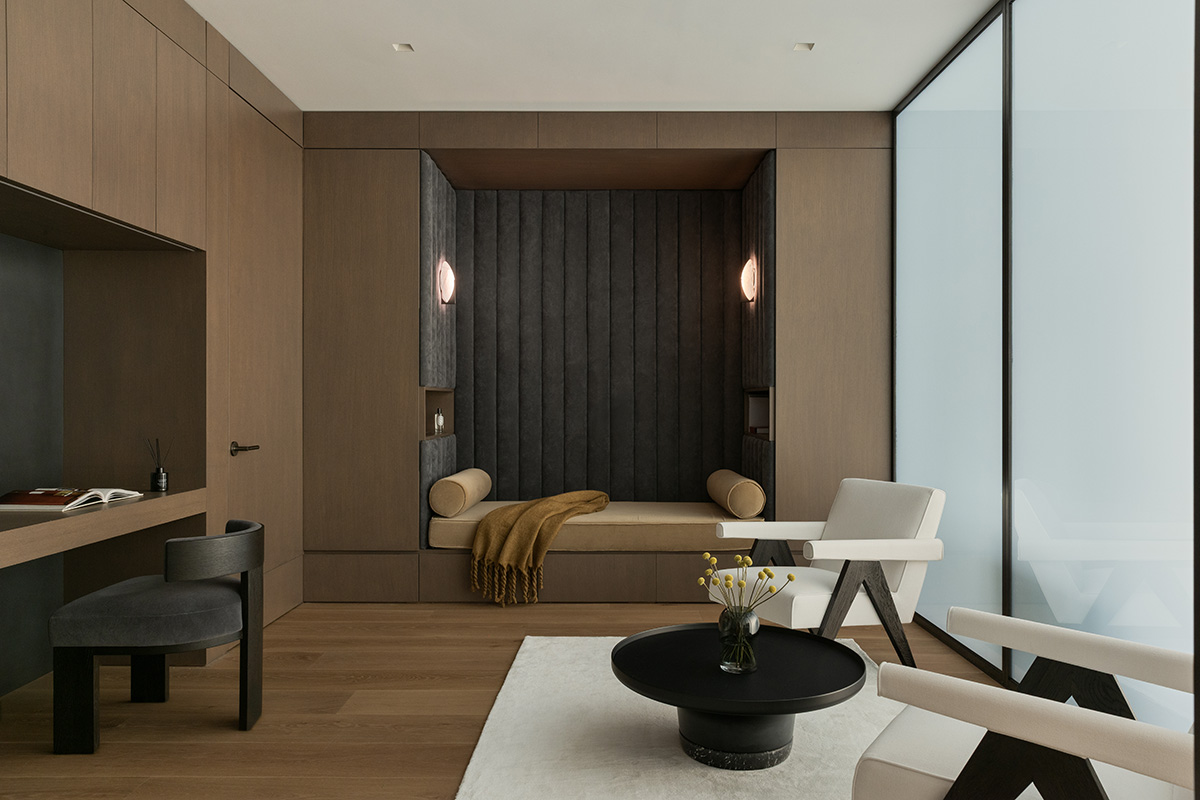
Modern Wood Paneling
Personalization – Make it Your Home
A home is deeply personal. There is no singular definition of what it should be. One thing we consistently tell our clients is this: it is your home. It does not need to conform to trends, expectations, or anyone else’s idea of what is “correct.” It should reflect you.
Our role as architects and designers is not to impose a signature style. It is to interpret your aspirations and translate them into architecture — thoughtfully, rigorously, and with clarity.
In the Manhattan loft shown below, the client requested an industrial aesthetic with darker materials. Having previously owned an all-white penthouse, he wanted contrast — something cooler, more grounded, more aligned with his experience of New York.
The result is a loft defined by depth, texture, and controlled restraint. Darker tones create atmosphere. Industrial elements are refined rather than exaggerated. The space feels intentional, personal, and authentic.
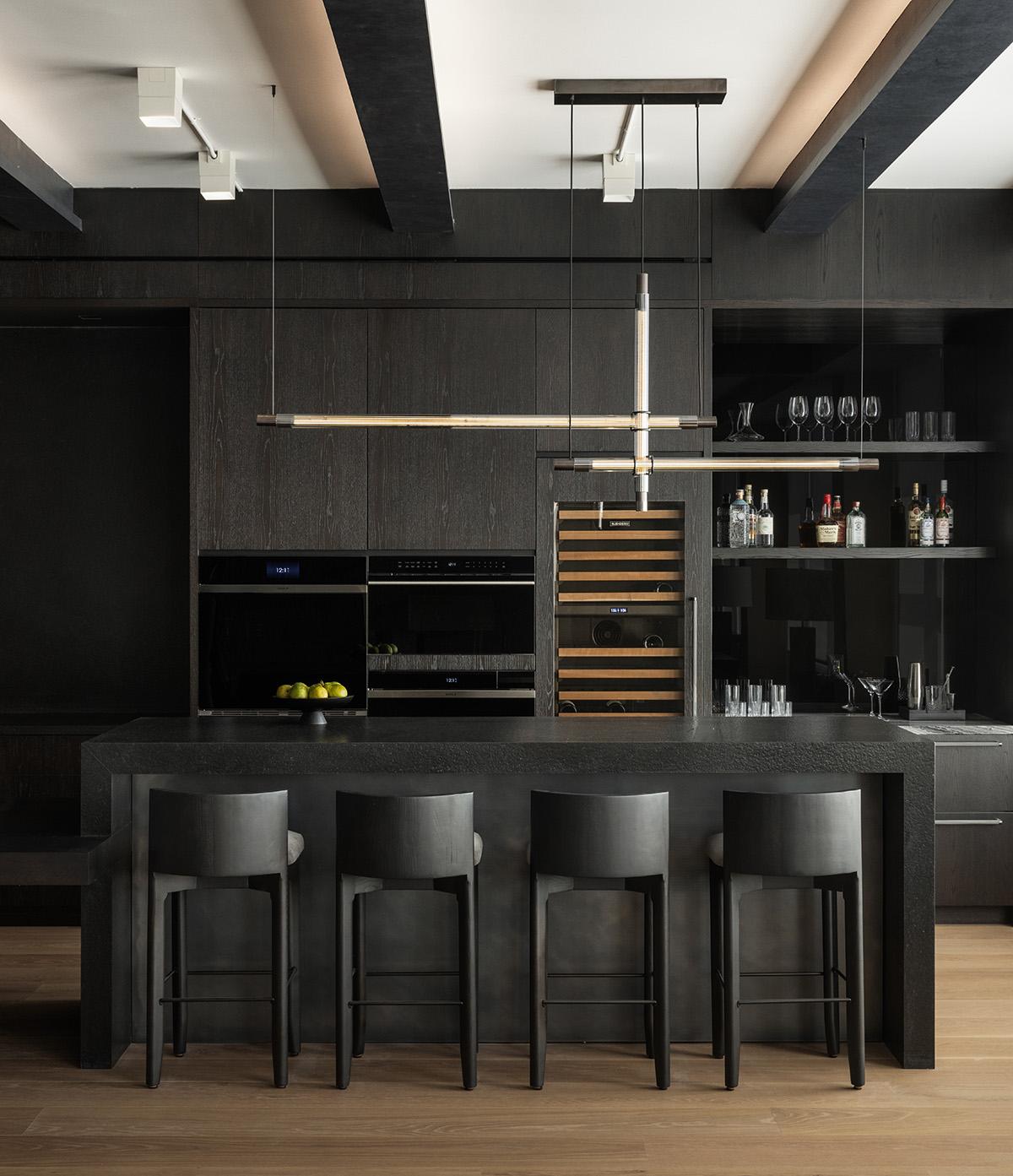
Custom Home Design
Architectural Guidance for New York Loft Renovations
A successful loft renovation begins with a comprehensive architectural vision and a clear understanding of the owner’s lifestyle and priorities. The inherent scale and character of a loft demand careful study and disciplined execution to achieve a highly personalized and thoughtfully crafted residence. For more detail see our related article on Loft Apartment Design.
Whether acquiring a loft or planning a full renovation in New York City, early architectural involvement provides clarity, direction, and strategic foresight. At Fontan Architecture, we guide projects from feasibility analysis through detailed design and construction oversight, aligning technical precision with refined architectural outcomes.
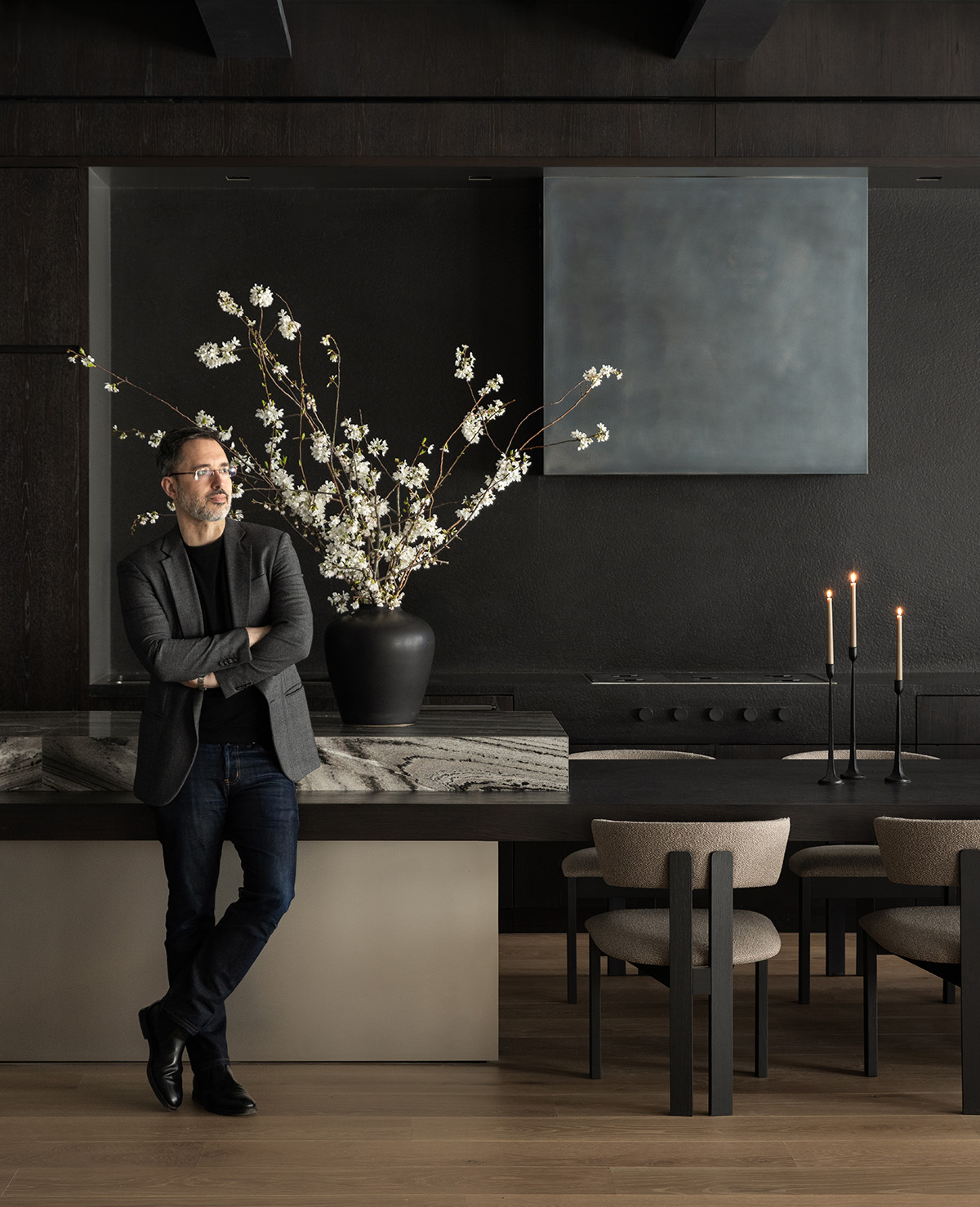
Architect Jorge Fontan in a Loft Designed by Fontan Architecture
Request a Consultation with Fontan Architecture - 212 321 0194
Jorge Fontan, AIA, is an architect and founder of Fontan Architecture based in New York City. The firm focuses on residential design, including new homes and extensive renovations for discerning clients. Through collaborative dialogue that draws on the individuality of each client, projects develop as distinct architectural responses guided by thoughtful planning, precise detailing, and a commitment to creating enduring value.
Jorge Fontan, AIA, is an architect and founder of Fontan Architecture based in New York City. The firm focuses on residential design, including new homes and extensive renovations for discerning clients. Through collaborative dialogue that draws on the individuality of each client, projects develop as distinct architectural responses guided by thoughtful planning, precise detailing, and a commitment to creating enduring value.