Townhouse additions in New York City require a clear understanding of zoning regulations, architectural planning, the physical constraints of the existing building, and landmarks where applicable. These projects often involve expanding rear yard extensions or adding vertical additions. The ability to successfully execute a townhouse addition depends on identifying what is permitted under zoning and translating those limits into a cohesive architectural design.
Your ability to enlarge a townhouse and the extent to which you can is determined by zoning regulations which govern the maximum buildable envelope in New York City. The zoning resolution specifies the limit on allowable floor area, building height, setbacks, lot coverage, and required rear yards to name a few. These regulations define how much additional space can be constructed and how that space can be allocated on the property. A thorough architectural zoning analysis establishes the parameters for any addition and serves as the foundation for architectural planning, design development, and project feasibility.
I am Jorge Fontan, owner of Fontan Architecture, a Manhattan-based architecture firm specializing in high-end residential renovations. Our office approaches townhouse additions through a detailed evaluation of zoning constraints, building conditions, and client objectives to determine the most effective strategy for expansion. We develop each project as a tailored response to the property and the client, coordinating design, regulatory compliance, and construction to deliver cohesive, well-executed architectural solutions. Our office approaches townhouse additions through a comprehensive approach incorporating a design and a detailed zoning analysis developed from extensive experience with complex regulatory conditions, including variances, special permits, and successfully navigating projects with complex zoning restrictions.
Table of Contents
Zoning Framework for Townhouse Additions in NYC
Zoning establishes the legal framework that defines how a townhouse in New York City can be expanded. These regulations control the overall building envelope, including how much floor area can be constructed, how far a building can extend into the lot, and how tall it can rise. For townhouse and brownstone properties, zoning requirements operate within a dense urban fabric where adjacent buildings, shared lot lines, and existing non-complying conditions all influence the potential for expansion.
Townhouse additions are shaped by a combination of interrelated zoning controls rather than a single limiting factor. Floor Area Ratio (FAR) determines the total allowable square footage for the building. Rear yard requirements and maximum lot coverage regulate how much area of the property can be covered by the structure. Height limits and setback requirements influence vertical enlargements, including rooftop additions and penthouse levels. These are just some of the factors that work together to define a three-dimensional envelope within which we develop the architectural design.
A zoning analysis is the first step in evaluating a townhouse addition and establishes the parameters for all subsequent design decisions. We review the zoning district and where applicable special district regulations, confirming allowable floor area, and verifying the existing conditions. Many townhouses in New York City predate current zoning regulations and may include existing conditions that exceed today’s limits. Understanding these conditions allows an architect to identify opportunities for enlargement while maintaining compliance with applicable rules.
In addition to zoning, many townhouses are subject to landmark regulations administered by the New York City Landmarks Preservation Commission (LPC). When a property is located within a designated historic district or is an individual landmark, proposed additions must be reviewed for their impact on the building’s character and the surrounding streetscape. Rooftop and rear yard additions are often subject to visibility and design criteria that extend beyond zoning compliance. For a detailed discussion of these requirements, see our article on Rooftop Additions on Landmark Brownstones in New York City.
Floor Area Ratio (FAR) and Buildable Square Footage
Rear Yard Requirements and Lot Coverage
Rear yard requirements and lot coverage regulations define how much of the lot can be occupied by the building and how much must remain open. These zoning controls directly influence the extent of rear yard extensions and establish the physical limits of how far a building can project into the lot. In New York City, rear yard requirements typically mandate a minimum open space at the rear of the property, while lot coverage limits the percentage of the lot that can be built upon at certain levels.
For properties under 40 feet in width, the typical rear yard requirement is 30 feet, with specific exemptions for shallow lots. Corner lots also have different regulations. This creates a required open area that preserves light, air, and spatial separation between buildings. For townhouse properties, this requirement determines the maximum depth of any rear extension. In many cases, existing buildings extend beyond what current zoning would permit, resulting in legal non-complying conditions. These conditions require careful analysis, as they may be maintained but not always expanded further without modification.
Lot coverage works in conjunction with rear yard requirements by limiting how much of the zoning lot can be covered by the building footprint. This is particularly relevant at lower levels, including ground floors and cellars, where expansions are often considered. Lot coverage can limit development area on the property requiring a coordinated evaluation of all applicable regulations.
Rear yard requirements often become the controlling factor in determining how far a townhouse can be extended. A detailed zoning analysis is required to understand how rear yard requirements and lot coverage apply to a specific townhouse. This includes reviewing the zoning district, confirming applicable requirements, and studying the existing building footprint in relation to the lot. At Fontan Architecture, we evaluate these constraints as part of a broader design process, balancing zoning compliance with spatial planning, light, and proportion. Rear yard additions are developed as integrated architectural solutions that respond to both regulatory limits and the overall composition of the home.
Building Height and Setbacks
Building height and setback regulations define the allowable vertical extent of a townhouse and control how upper portions of the building are shaped. These zoning requirements establish the maximum height a building can reach and, at given heights, require portions of the structure to step back from the street or lot lines as it rises. For townhouse additions, these rules directly influence the feasibility and design of rooftop additions, vertical enlargements, and penthouse levels.
Height limits are determined by the zoning district and are typically expressed as a maximum building height and base height with required setbacks in the base height range. In certain zoning districts there are also requirements for street wall alignment at the front of the building. Setback depth also varies based on conditions such as street width and street wall distance to property line.
Setbacks also play a critical role in maintaining light, air, and the overall character of the streetscape. Any vertical enlargement must be carefully studied to ensure compliance with applicable setback rules, including front setbacks above the street wall. These controls can significantly affect how additional floors are configured and how interior space is organized, particularly in relation to ceiling heights, stair placement, and access to outdoor areas.
A thorough analysis of height and setback regulations is required to determine whether a townhouse can be expanded vertically and to what extent. This process involves reviewing the zoning district, evaluating the existing building height, and studying how additional volume can be introduced within the allowable envelope. At Fontan Architecture, we approach vertical additions as both a zoning and design exercise, integrating regulatory compliance with careful attention to proportion, facade composition, and spatial quality. Rooftop additions are developed to feel cohesive with the existing structure while meeting zoning requirements and supporting the overall architectural intent of the project.
If the existing building is an individual landmark or within a landmark district the zoning regulations must be balanced with LPC requirements for additions adding an additional layer of complexity.
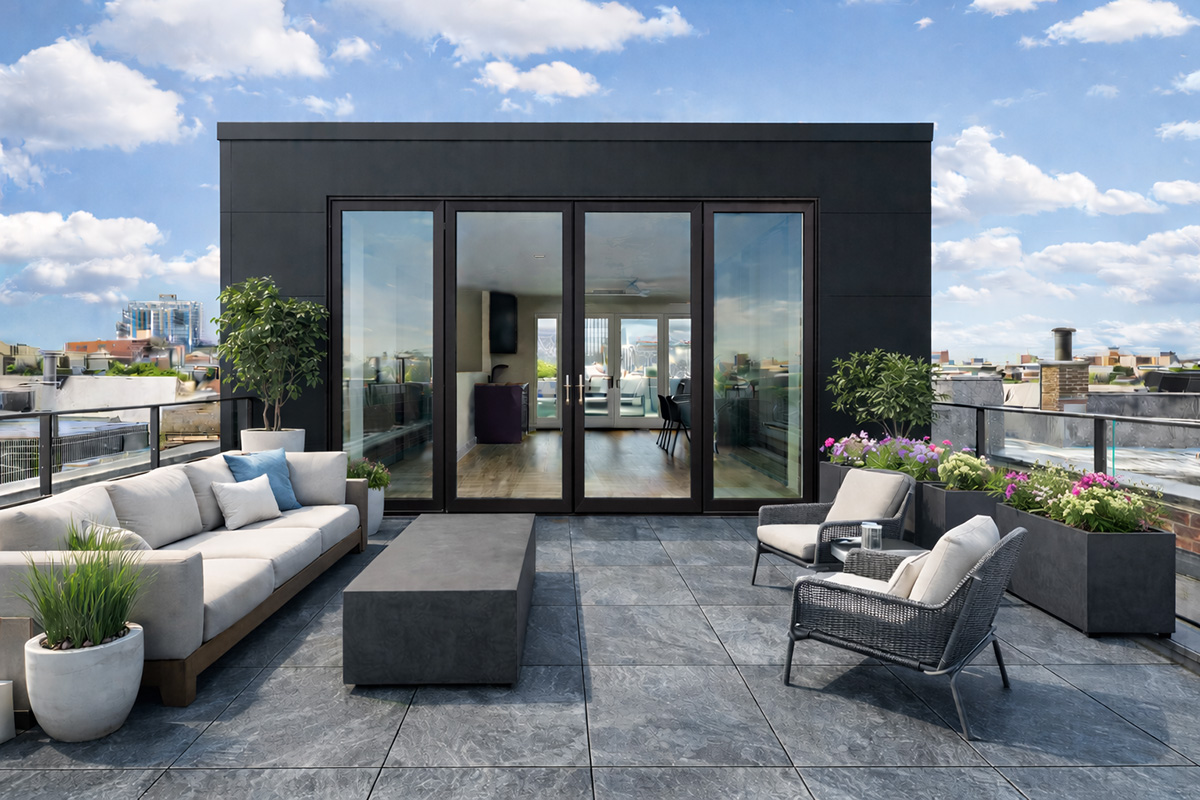
The design of a rooftop addition requires careful consideration of proportion, visibility, and the relationship to the existing structure. Setbacks create an opportunity to reduce the perceived scale of the addition from the street while maintaining interior volume and optimizing views from the upper levels of the home. In many townhouse projects, rooftop additions offer access to light, air, and long-range views that are not available on lower floors, making their placement and configuration a critical part of the overall design strategy.
The architectural approach to a rooftop addition is informed by the character of the existing building and the goals of the project. In some cases, the addition is developed to align closely with the proportions, materials, and detailing of the original architecture, creating a seamless extension of the building. In other cases, a more contemporary intervention is appropriate, using contrast in form and material to clearly distinguish new construction from the historic structure. Both approaches require careful composition to ensure that the addition enhances the overall building while remaining consistent with zoning requirements and, where applicable, landmark considerations.
Zoning Variances and Special Permits
Zoning regulations establish the baseline limits for development, but in certain cases it is possible to modify these restrictions through discretionary approvals such as variances and special permits. These mechanisms allow property owners to pursue development beyond the standard zoning limitations under specific conditions, subject to review and discretionary approval by governing agencies having jurisdiction. Variances and special permits introduce flexibility into the zoning framework, but they require a formal process and a clear justification based on the characteristics of the property and the proposed design.
A zoning variance is granted through the New York City Board of Standards and Appeals and allows relief from specific zoning requirements such as floor area ratio (FAR), rear yard requirements, or other dimensional controls. Variances are discretionary and require a demonstrated hardship related to the property, along with a detailed review process that includes public hearings and agency evaluation. Approval is not guaranteed, and each application is assessed based on its individual merits, the surrounding context, and the ability to meet the required findings under the zoning resolution.
Special permits provide another path for modifying zoning requirements and are typically administered through the New York City Department of City Planning. These approvals are also discretionary and allow for specific modifications where the zoning resolution anticipates flexibility under defined conditions. Like variances, special permits involve a formal review process and require careful coordination of design, documentation, and regulatory strategy.
For example, there is a special permit 74-711 for the preservation of landmark buildings. This permit allows for relief on certain zoning requirements if it benefits the preservation of the historic building.
At Fontan Architecture, we have obtained zoning variances for residential projects in New York City, including relief related to floor area and rear yard requirements for multiple homes. These applications require a comprehensive approach that integrates zoning analysis, architectural design, and coordination with consultants to develop a compelling and well-supported proposal. Variances and special permits are evaluated on a case-by-case basis, and when appropriate, they can provide a pathway to expand a townhouse beyond standard zoning limits while maintaining a high level of design quality and regulatory compliance.
Construction, Approvals, and Project Execution
Townhouse additions in New York City require careful coordination of design, engineering, approvals, and construction. Once zoning parameters are established and the architectural design is developed, the project moves into a phase that involves detailed documentation, regulatory approvals, and preparation for construction. This process requires a clear understanding of existing building conditions, structural requirements, and the logistical constraints of working within a dense urban environment.
A structural assessment is a critical component of the design phase. Existing townhouses may require reinforcement to support additional loads from vertical or rear expansions. This may include evaluating foundations, load-bearing walls, and framing to determine how the building can accommodate new construction. In many cases, underpinning of existing foundations is required, particularly when extending the building or lowering cellars. Work of this nature also requires coordination with adjacent properties, as neighboring buildings are directly affected by excavation and structural modifications along shared lot lines.
The approvals process involves filing the project with the New York City Department of Buildings and obtaining the necessary permits for construction. This includes architectural and engineering drawings, coordination with consultants, and compliance with applicable building codes and zoning regulations. Depending on the scope and location of the project, additional agency approvals may be required, including landmark review where applicable. Clear and coordinated documentation is essential to move the project efficiently through the approval process and into construction.
At Fontan Architecture, we manage townhouse additions as a coordinated process from initial zoning analysis through construction. Our office develops detailed design and construction drawings, works closely with structural engineers and contractors, and oversees the approvals process to ensure that projects are executed with precision. This integrated approach allows us to align zoning, design, and construction into a cohesive strategy, delivering well-executed additions that reflect both regulatory requirements and the architectural intent of the project.
Request a Consultation with Fontan Architecture - 212 321 0194
Jorge Fontan, AIA, is an architect and founder of Fontan Architecture based in New York City. The firm focuses on residential design, including new homes and extensive renovations for discerning clients. Through collaborative dialogue that draws on the individuality of each client, projects develop as distinct architectural responses guided by thoughtful planning, precise detailing, and a commitment to creating enduring value.
Jorge Fontan, AIA, is an architect and founder of Fontan Architecture based in New York City. The firm focuses on residential design, including new homes and extensive renovations for discerning clients. Through collaborative dialogue that draws on the individuality of each client, projects develop as distinct architectural responses guided by thoughtful planning, precise detailing, and a commitment to creating enduring value.