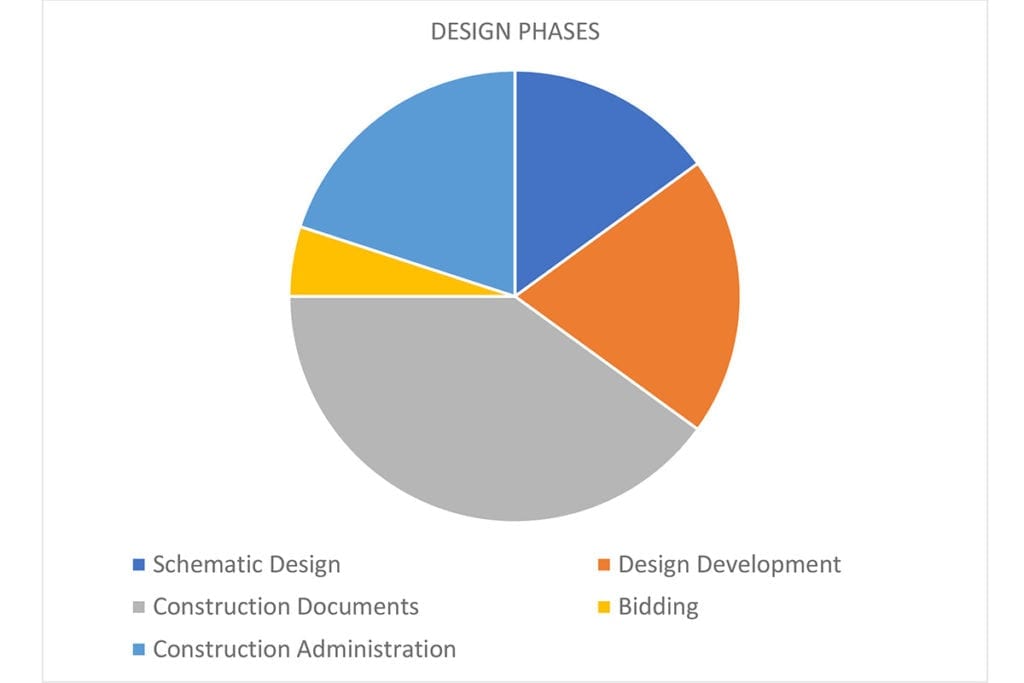
Architectural fees vary based on project scope, complexity, level of customization, and the services required. Design services for construction projects require extensive coordination between design, technical documentation, consultants, contractors, and regulatory agencies. The architectural fee structure reflects the scale of work and the level of professional involvement necessary to execute the project successfully.
Architectural fees are commonly structured as fixed fees, hourly consulting, percentage-based fees, cost-per-square-foot pricing, or hybrid agreements combining multiple billing methods. The appropriate fee structure depends on the project type, construction scope, approval requirements, and the level of architectural coordination required throughout design and construction.
I am Jorge Fontan, owner of Fontan Architecture, a Manhattan-based architecture firm specializing in high-quality residential projects. We approach architectural services as an integrated design and technical process where design excellence, detailing, consultant coordination, DOB filings, and construction execution are developed together.
Table of Contents
Types of Architectural Fee Structures
Architectural fee structures vary depending on the project type, scope of work, and level of involvement required from the architect. Some projects benefit from clearly defined fixed fees, while others require flexible billing structures to accommodate evolving conditions during design and construction.
The most common architectural fee structures include:
- Hourly Fees
- Fixed Fees
- Percentage of Construction Cost
- Cost Per Square Foot
- Hybrid Fee Structures
Hourly Architectural Fees
Hourly architectural fees are commonly used for consulting, feasibility studies, pre-purchase evaluations, existing condition investigations, or project scopes that have not yet been fully defined. Under this structure, the architect bills based on the actual time spent performing services.
Hourly billing provides flexibility for projects where the scope may evolve over time. This can apply to early planning phases, initial consultations, zoning analysis, or advisory services related to property acquisitions.
Architects typically provide an hourly rate schedule identifying billing rates for principals, project architects, and supporting staff. Billing is generally issued monthly based on the hours worked during that period.
For larger projects, hourly billing is often combined with other fee structures. Many clients prefer defined project pricing once the scope and project requirements are clearly established.
Fixed Architectural Fees
Fixed architectural fees are one of the most common fee structures. Under this approach, the architect establishes a defined fee based on the anticipated scope of work, project complexity, construction budget, consultant coordination requirements, and level of architectural detailing.
This fee structure provides clarity for both the architect and the client. The project scope, deliverables, and billing structure are clearly outlined at the beginning of the project.
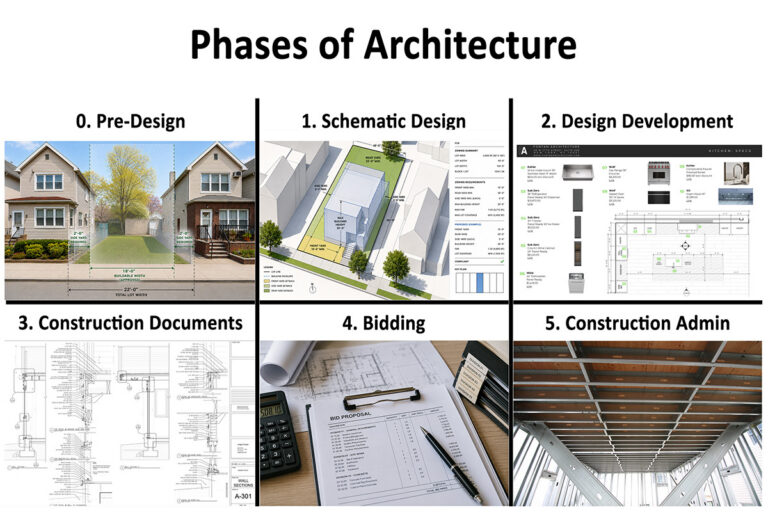
Fixed fees are often organized around project milestones corresponding to phases of architectural services. These may include:
- Schematic Design
- Design Development
- Construction Documents
- Regulatory Approvals
- Bidding
- Construction Administration
Large and highly customized projects may also include monthly billing tied to progress and consultant coordination during active project development.
Percentage-Based Architectural Fees
Some architects structure fees as a percentage of the construction cost. Under this model, the architectural fee is tied directly to the overall project budget.
Percentage-based fees are commonly used for residential projects where the scope and construction budget are expected to evolve throughout the design process. This structure can align the architectural scope with the overall scale and complexity of the project.
For high-end residential projects, percentage-based fees often reflect the extensive coordination required for custom detailing, consultant integration, permitting, and construction oversight. Projects involving landmark approvals, structural modifications, façade restoration, or highly customized interiors typically require a greater level of architectural involvement.
Architectural fees for luxury residences commonly range between approximately 10% and 20% of construction cost depending on project scope, complexity, and services provided.
Architectural Fees Based on Square Footage
Some architects structure fees based on the size of the project using a cost-per-square-foot model. Under this approach, the architectural fee is calculated based on the overall square footage of the renovation.
This fee structure is more common for projects with relatively predictable scopes and building conditions. The pricing may vary depending on the complexity of the work, level of customization, and technical requirements of the renovation.
Square footage alone rarely defines the true complexity of a project. Two projects of equal size may require dramatically different levels of coordination depending on structural work, customization, detailing, building restrictions, or MEP systems.
Hybrid Architectural Fee Structures
Hybrid fee structures combine multiple billing methods within a single project agreement.
For example, an architect may establish a fixed fee for design, construction documents, and DOB filings while using hourly billing for additional consulting, construction site visits, or scope revisions beyond the original agreement.
Construction administration services are often structured with flexibility because the level of coordination required during construction can vary significantly depending on contractor performance, project complexity, and site conditions.
Hybrid fee structures allow architectural services to remain responsive to the realities of complex residential renovations while maintaining clear project organization and billing expectations.
Architectural Coordination for High-End Residential Renovations
Successful projects are built through careful planning, technical rigor, and detailed execution. Architectural services provide the framework that coordinates design intent with construction realities, regulatory approvals, and project management.
At Fontan Architecture, we approach all projects as highly coordinated design and technical processes developed around the specific goals of each client and property. Our projects integrate architecture, detailing, consultant coordination, permitting, and construction administration into a unified process focused on quality and execution.
Request a Consultation with Fontan Architecture - 212 321 0194
Jorge Fontan, AIA, is an architect and founder of Fontan Architecture based in New York City. The firm focuses on residential design, including new homes and extensive renovations for discerning clients. Through collaborative dialogue that draws on the individuality of each client, projects develop as distinct architectural responses guided by thoughtful planning, precise detailing, and a commitment to creating enduring value.

Jorge Fontan, AIA, is an architect and founder of Fontan Architecture based in New York City. The firm focuses on residential design, including new homes and extensive renovations for discerning clients. Through collaborative dialogue that draws on the individuality of each client, projects develop as distinct architectural responses guided by thoughtful planning, precise detailing, and a commitment to creating enduring value.