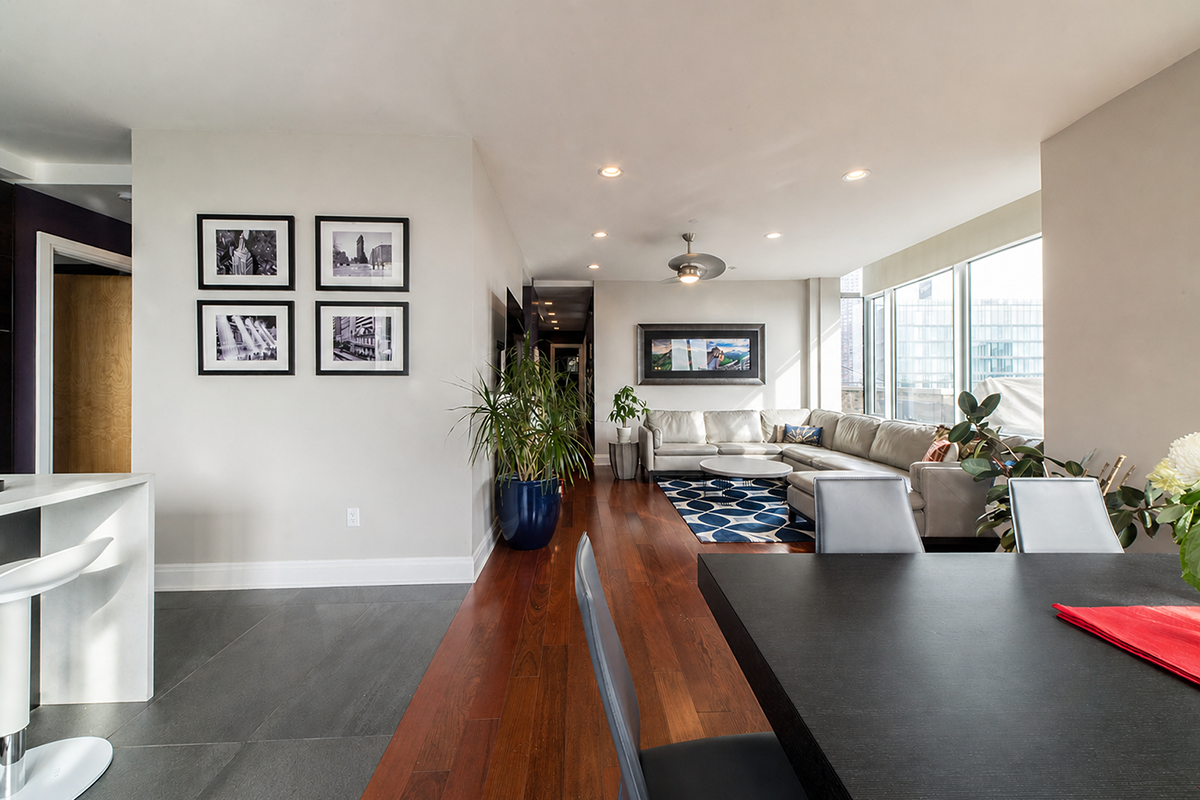
Brooklyn apartment combinations and gut renovations offer the opportunity to transform adjacent units into larger, more functional residences tailored to contemporary living. These projects involve merging separate apartments and fully reworking the interior to improve layout, circulation, natural light, and overall spatial quality.
Combining apartments requires a coordinated design and planning approach that results in a cohesive and fully resolved residence. The final apartment should function and read as if it were conceived as a single unified space. Continuity of design and a thoughtful layout define a successful apartment combination and gut renovation.
I am Jorge Fontan, owner of Fontan Architecture, a Manhattan-based architecture firm specializing in high-end residential renovations. Our work on apartment combinations in New York City focuses on developing fully integrated design solutions that align spatial planning, structural coordination, and building systems into a cohesive whole. We place a strong emphasis on proportion, material quality, and functional performance. We approach each project as a direct response to the client, carefully developing the layout, detailing, and material palette to reflect how the residence will be lived in. Our process emphasizes rigorous coordination and clear communication from concept through construction, ensuring that design intent and technical execution are advanced together to produce a unified, high-quality result. In this article I will discuss an apartment combination we completed in Downtown Brooklyn.
Table of Contents
Project Overview: Downtown Brooklyn Apartment Combination
This project involved the combination of two adjacent apartments in Downtown Brooklyn, where the owners expanded their existing two-bedroom unit by acquiring a neighboring one-bedroom apartment. The goal was to create a larger, more functional residence that could accommodate their evolving needs while improving the overall spatial organization of the home.
We reconfigured the combined units into a three-bedroom apartment with an enlarged living area that serves as the primary gathering space. The renovation included a complete reorganization of the plan to establish improved circulation, natural light, and to enhance the experience within the public and private spaces.
The project was executed as a full gut renovation, including all new finishes, fixtures, and building systems. Every aspect of the apartment was redesigned and coordinated as a unified whole, resulting in a cohesive residence that reflects a clear architectural intent and a high level of material and spatial refinement.
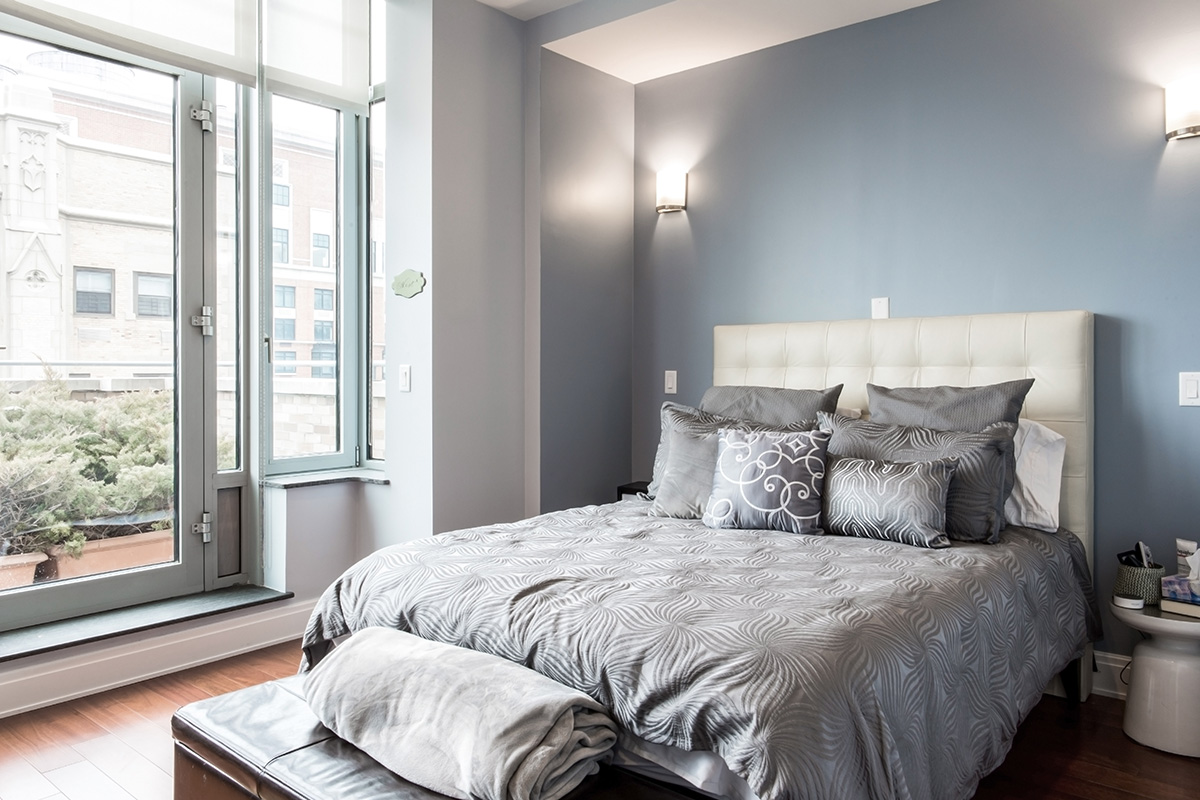
Bedroom in a Brooklyn Heights Apartment Combination
Process and Procedure for Combining Apartments in a Condo
Combining apartments in a condo, requires a coordinated process that addresses design, building requirements, and regulatory approvals. These projects involve alignment with building policies, structural considerations, and city filings.
In a condominium, the process begins with a review of the building’s bylaws and alteration agreement. The design must comply with the condo board’s requirements, including limitations on structural work, mechanical systems, and wet-over-dry conditions. Early coordination with building management and the board is essential to establish the scope and confirm feasibility.
From a technical standpoint, combining units typically involves demolition within the existing apartments, reconfiguring plumbing and mechanical systems, and integrating electrical infrastructure. The architectural design must resolve differences in floor levels, ceiling conditions, and structural layouts to create a cohesive result.
The project also requires filing with the New York City Department of Buildings (DOB) for approvals and permits. Depending on the scope, this may include structural filings and full plan examination. Construction proceeds only after approvals are secured and coordination with the building is in place.
For a more detailed breakdown of the process, see our article Combining Apartments in New York City: Scope, Planning, and Approvals.
Apartment Renovation and Combination Considerations
During the renovation, we identify and take opportunities to optimize the space. For example, there are often inefficiencies within walls and framing around columns, shafts, and risers that were over built during the original construction. This is especially common in modern buildings. This was true in this Brooklyn apartment as well, and we were able to recover usable space, including raising portions of the ceiling by a few inches to gain additional height. We also directed the contractor and coordinated revisions to eliminate miscellaneous dead spaces throughout the apartment.
Another existing configuration issue involves building systems. When combining apartments, we typically adjust sprinkler locations (in sprinklered buildings), as these can become misaligned with the new layout. Our sprinkler engineer ensures all work complies with code requirements and that sprinklers are properly spaced to meet safety standards.
Electrical panels are also a point of concern, as combining apartments typically results in multiple electrical panels, often located on separate risers. This condition is standard, and we typically retain multiple panels, although there is some flexibility in their configuration and location, depending on building requirements.
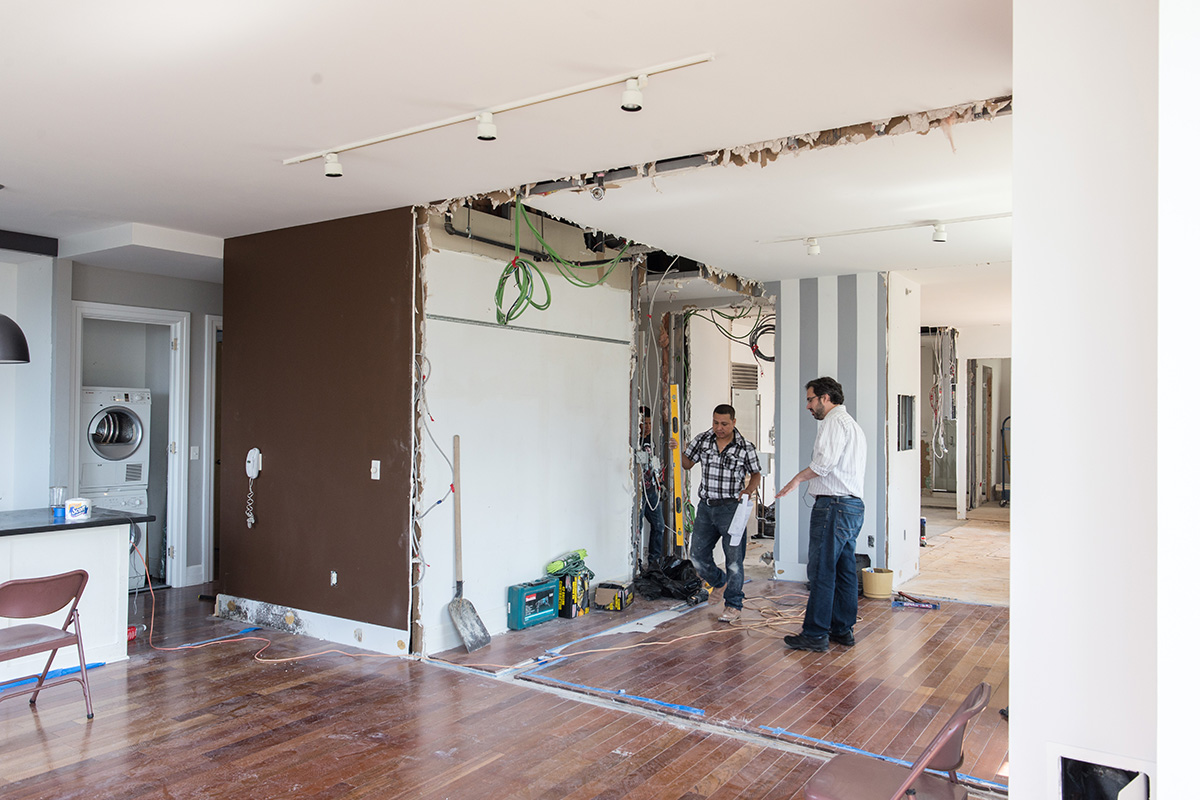
Brooklyn Apartment Architect on Jobsite During Renovation
A Unified Approach to Brooklyn Apartment Combinations
Combining apartments such as this one in Brooklyn requires a comprehensive architectural approach that integrates planning, technical coordination, and design development into a cohesive process. Successful projects resolve spatial organization, building systems, and structural conditions while establishing a clear and consistent architectural language. The goal is to create a residence that functions efficiently and feels complete, with proportion, material quality, and layout working together as a unified whole.
This Downtown Brooklyn apartment combination demonstrates how a thoughtful design strategy and careful execution can transform adjacent units into a larger, more refined home. Through full reconfiguration of the layout, optimization of underutilized space, and coordination of building systems, the apartment was developed as a cohesive residence tailored to the client’s needs. The result is a balanced integration of public and private spaces with improved circulation, increased spatial clarity, and a higher level of overall performance.
Fontan Architecture works on apartment combinations and high-end residential renovations throughout New York City, including Brooklyn, Manhattan, and beyond. We guide clients through the full process, from initial feasibility and design through approvals and construction. Our work emphasizes design excellence, technical rigor, and clear communication, ensuring that each project is executed with precision and aligned with the client’s vision.
Request a Consultation with Fontan Architecture - 212 321 0194
Jorge Fontan, AIA, is an architect and founder of Fontan Architecture based in New York City. The firm focuses on residential design, including new homes and extensive renovations for discerning clients. Through collaborative dialogue that draws on the individuality of each client, projects develop as distinct architectural responses guided by thoughtful planning, precise detailing, and a commitment to creating enduring value.



Jorge Fontan, AIA, is an architect and founder of Fontan Architecture based in New York City. The firm focuses on residential design, including new homes and extensive renovations for discerning clients. Through collaborative dialogue that draws on the individuality of each client, projects develop as distinct architectural responses guided by thoughtful planning, precise detailing, and a commitment to creating enduring value.