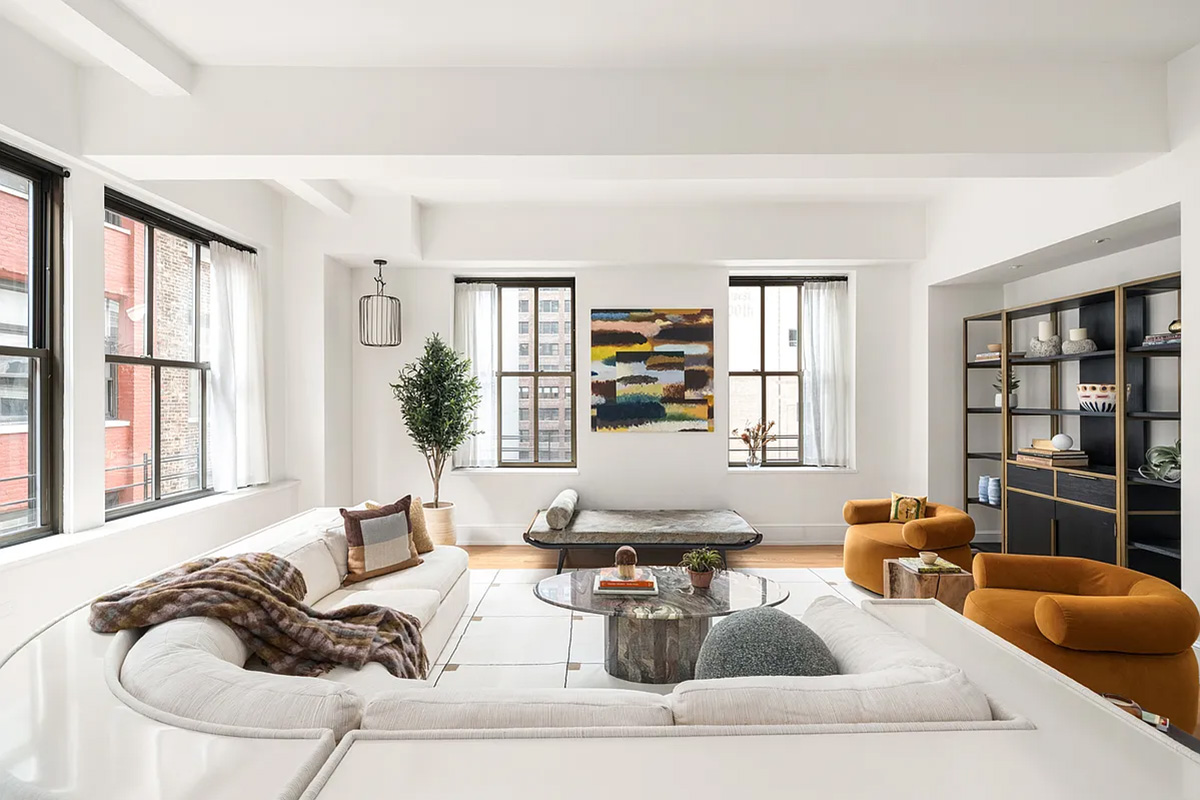
Lofts are among the most distinctive residential spaces in New York City. Originally developed for industrial and commercial uses, many loft buildings have been converted into homes that retain their expansive floor plates, large windows, high ceilings, and open interiors. These characteristics create spaces that feel fundamentally different from conventional apartments and remain highly desirable for homeowners seeking flexibility, natural light, and a sense of openness.
One of the defining qualities of New York City loft living is the open plan. Large uninterrupted spaces allow natural light to penetrate deeper into the apartment while creating visual connections between different living areas. Preserving this openness is often an important objective in loft renovations. While modern lifestyles frequently require additional functions such as home offices, expanded kitchens, and increased storage, introducing too many partitions can diminish the qualities that make a loft feel like a loft.
I am Jorge Fontan, owner of Fontan Architecture, a New York City-based architecture firm specializing in luxury residential design and renovations. At our office, we have worked on many residential renovation projects, including lofts throughout neighborhoods such as SoHo, Tribeca, and Chelsea. In this article, we review a Chelsea loft renovation and discuss how the layout was organized to create distinct living areas while maintaining a strong sense of openness and continuity throughout the home.
Table of Contents
Opening the Loft
The existing loft had been divided into a series of smaller rooms, including a corner room located within the primary living area. While this arrangement increased the number of spaces, it also interrupted the openness that is one of the defining characteristics of loft living. The additional walls limited visual connections across the apartment and reduced the amount of natural light reaching the center of the home.
As part of the renovation, we proposed removing the corner room and opening the space to create a larger and more connected living area. This allowed the corner windows to become part of the main living space, bringing additional natural light deeper into the apartment and expanding views across the loft. The reconfigured layout also established a stronger relationship between the living room, dining area, and kitchen while creating a more flexible environment for everyday living and entertaining.
Rather than introducing conventional walls and enclosed rooms, we designed a home office enclosed with large steel and glass doors. This approach provided a distinct workspace while maintaining visual connections throughout the loft. The result is a more open, light-filled apartment with improved circulation, stronger spatial relationships, and a greater sense of connectivity between the different areas of the home.
I often tell clients, “I can’t make your apartment larger but I can make it feel larger.”
The use of glass is one of the most effective ways to achieve this while maintaining an open living space. By preserving sightlines and allowing light to travel deeper into the apartment, the office enclosure contributes to a greater sense of spaciousness without increasing the actual square footage. The result is a workspace that feels integrated into the loft rather than isolated from it, reinforcing the open and connected character of the home.
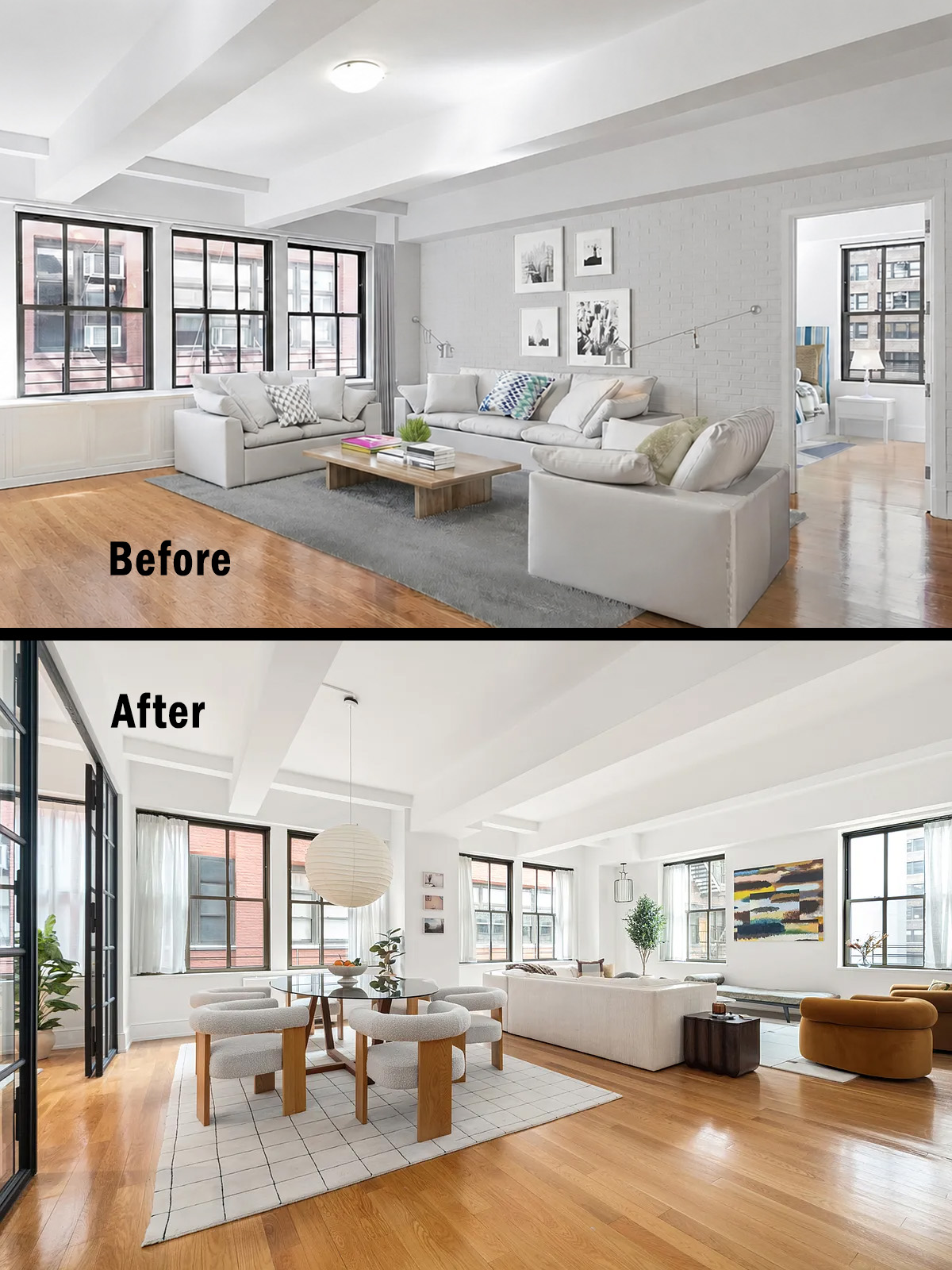
Chelsea Loft Before and After
Creating a Home Office Without Closing Off the Loft
A dedicated home office was an important requirement for this project, but maintaining the openness of the loft remained a primary design objective. Rather than constructing a conventional enclosed room, we designed the office with black metal and glass doors, sidelights, and transoms. This allowed the office to function as a separate workspace while remaining visually connected to the surrounding living areas.
The glass enclosure serves multiple purposes within the overall composition of the loft. It allows natural light to pass through the space, preserves views across the apartment, and helps maintain the sense of openness that is central to loft living. The transparent partitions also contribute to a stronger relationship between the office, dining area, and living room, creating a more connected environment while still providing separation between functions. From many vantage points within the apartment, the glass doors frame views through the space and establish visual axes that help organize the overall layout.
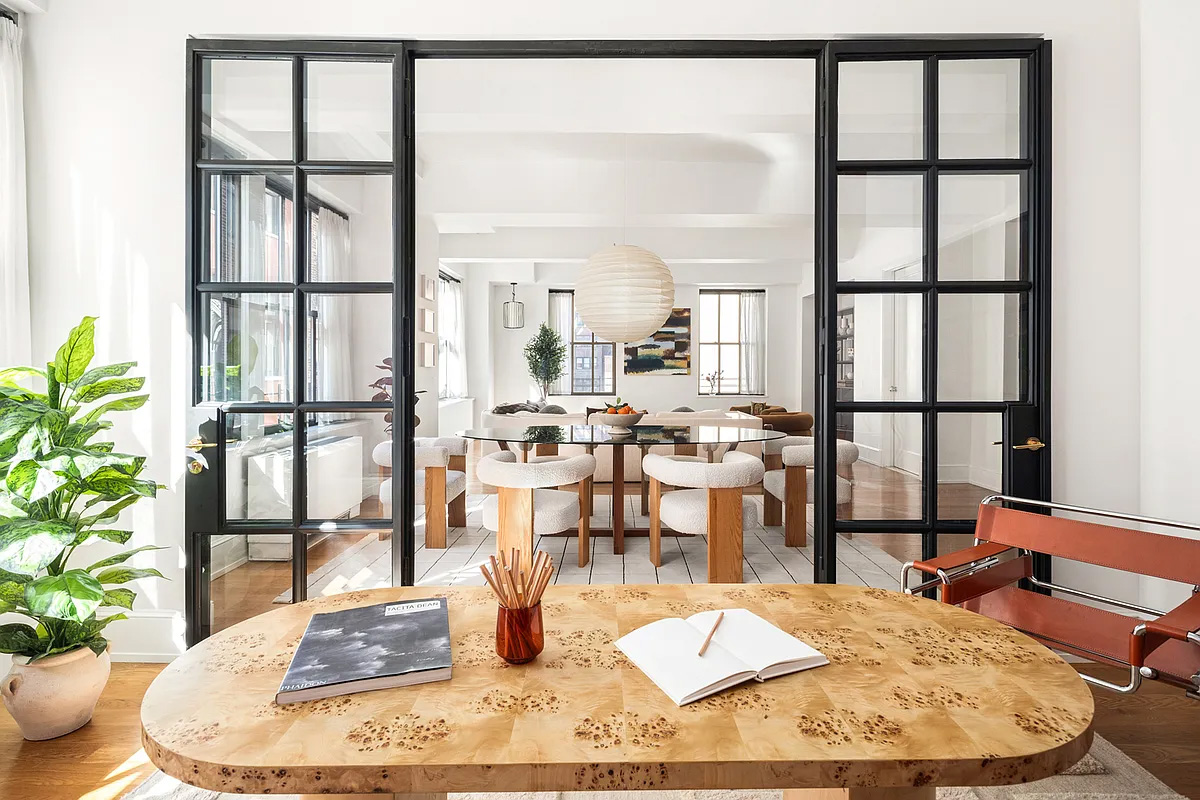
Chelsea loft home office with metal and glass
Defining Space Within an Open Plan
One of the challenges of open-plan design is creating distinct spaces without relying on walls and enclosed rooms. While openness was an important objective in this Chelsea loft renovation, it was equally important that each area of the home have a clear identity and purpose. The goal was not simply to remove partitions, but to create a layout that balanced openness with organization.
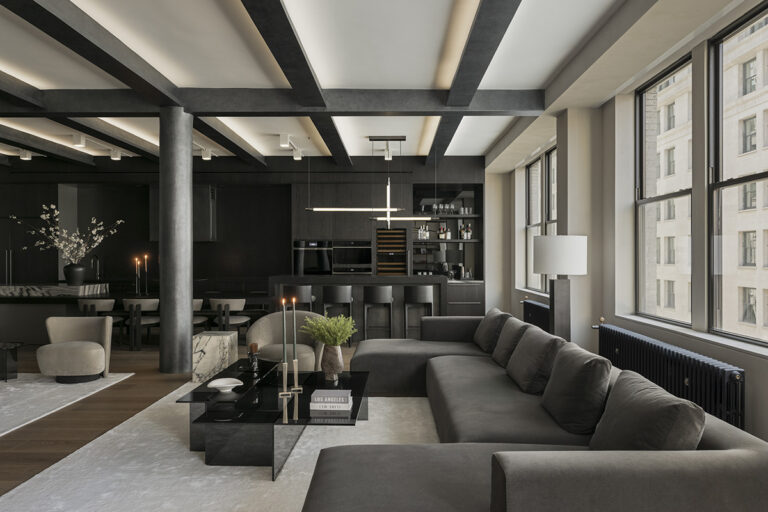
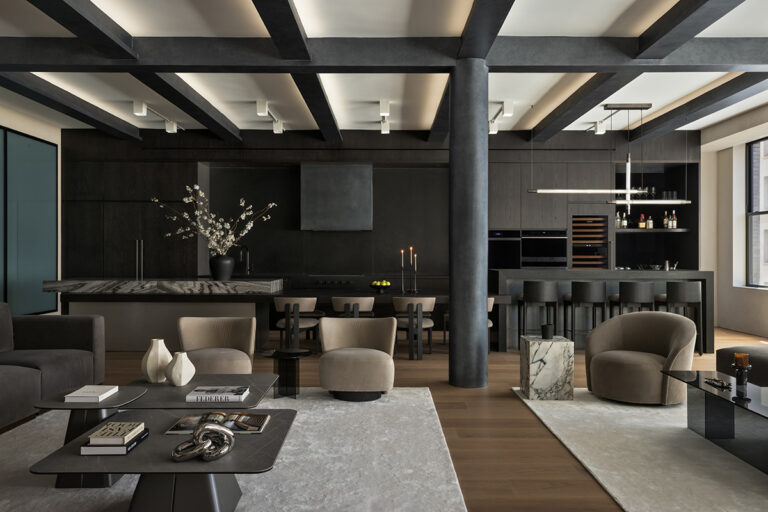
The living room, dining area, home office, and kitchen were arranged as a series of interconnected spaces. Rather than separating these functions with walls, each area is defined by its position within the overall layout, the placement of furniture, and its relationship to adjacent spaces. This approach allows the apartment to feel open and connected while still providing a sense of structure and order.
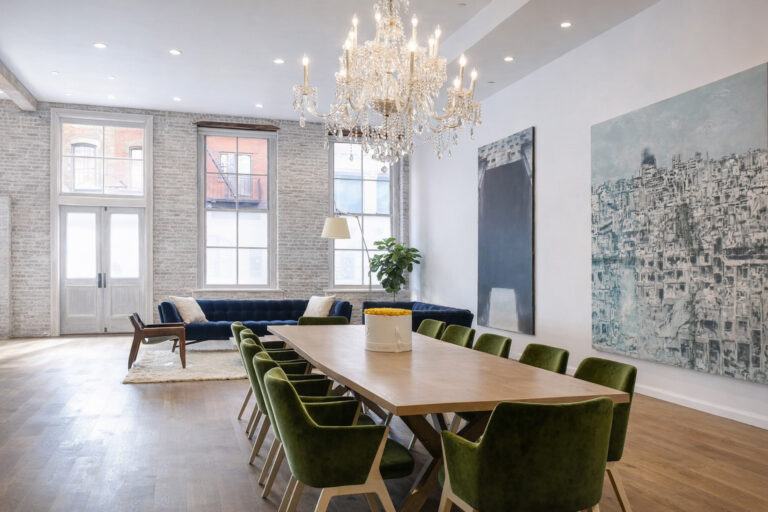
The dining area plays a particularly important role in the composition, acting as a transition between the home office and the main living space. Together, these spaces create a sequence of connected rooms that flow naturally from one to the next. The result is an apartment that feels larger and more open while supporting the practical requirements of daily life.
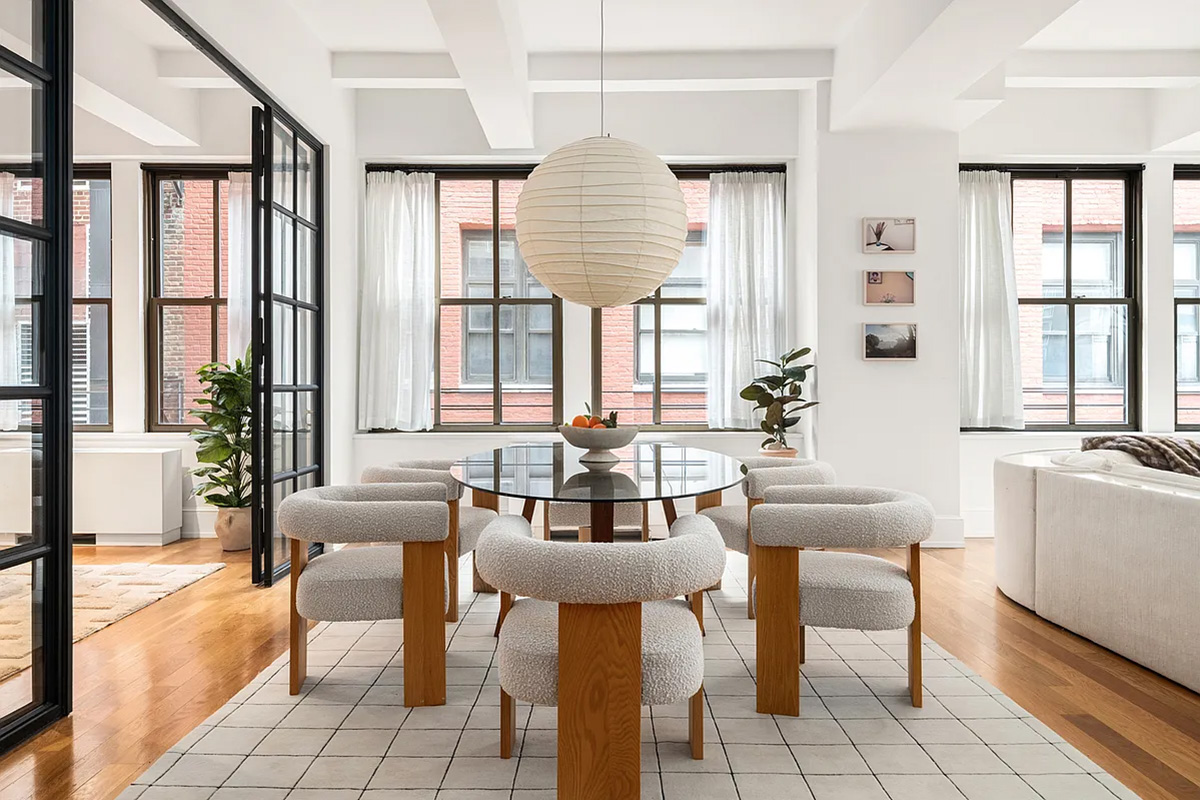
Open Plan Dining Room
Chelsea Loft Renovation: Open Plan Living
Open-plan loft design is about more than removing walls. Successful loft renovations require careful consideration of how spaces relate to one another, how natural light moves through the apartment, and how different functions can coexist within a larger composition. The goal is to create a home that feels open and connected while still supporting the practical requirements of daily life.
In this Chelsea loft renovation, the removal of existing partitions allowed the living spaces to expand and establish stronger relationships with one another. The addition of a glass-enclosed office preserved visual connections throughout the apartment while providing a dedicated workspace. Together with the dining area, living room, and kitchen, these elements create a series of distinct but interconnected spaces that reinforce the openness of the loft.
At Fontan Architecture, we work on loft renovations throughout New York City. Every project is developed around the specific goals of the client and the unique characteristics of the property. If you are interested in loft design, renovation, and bespoke residential interiors, see our article on Loft Apartment Design in NYC: Architecture and Bespoke Interiors.
Request a Consultation with Fontan Architecture - 212 321 0194
Jorge Fontan, AIA, is an architect and founder of Fontan Architecture based in New York City. The firm focuses on residential design, including new homes and extensive renovations for discerning clients. Through collaborative dialogue that draws on the individuality of each client, projects develop as distinct architectural responses guided by thoughtful planning, precise detailing, and a commitment to creating enduring value.
Jorge Fontan, AIA, is an architect and founder of Fontan Architecture based in New York City. The firm focuses on residential design, including new homes and extensive renovations for discerning clients. Through collaborative dialogue that draws on the individuality of each client, projects develop as distinct architectural responses guided by thoughtful planning, precise detailing, and a commitment to creating enduring value.