Why You Need an Architect To Build a House in NYC

by | Last updated May 22, 2026 | Architectural Services, Building a New Home, General Architecture

Building a house in New York City requires architectural planning, design, zoning analysis, technical coordination, permitting, and construction oversight. Every site presents unique opportunities and constraints that shape what you can build and how the project will move through approvals and construction. Custom homes and townhouses in NYC involve complex regulatory requirements, detailed technical development, and a high level of coordination between architects, consultants, contractors, and government agencies.

In New York City, you need a licensed architect to design and file plans for a new house or townhouse. The architect evaluates zoning regulations, develops the design, prepares construction documents, coordinates engineering consultants, files the project with the NYC Department of Buildings, and oversees the architectural execution throughout construction. A well-designed home begins with strong architectural planning that integrates design quality, technical development, and construction coordination from the start of the project.

I am Jorge Fontan, owner of Fontan Architecture, a Manhattan-based architecture firm specializing in high-end residential projects including new home design. Our process begins with open dialogue with our client’s about their needs and preferences along side architectural assessment and feasibility analysis, including zoning, site conditions, design strategy, construction considerations, and project budgeting.


Why You Need an Architect to Build a House in NYC

A licensed architect is required to file plans for a new residential building in New York City. New houses and townhouses are filed with the NYC Department of Buildings as New Building applications, commonly referred to as “NB” filings. The architect prepares the drawings and technical documentation required for DOB review and approval.

Architectural services extend far beyond permitting and filing requirements. The architect establishes the overall direction of the project, including the layout, spatial organization, exterior composition, material palette, construction detailing, and technical coordination. The architect also manages the integration of structural systems, energy code compliance, zoning requirements, and consultant coordination into a unified design and construction package.

For high-end residential projects, architecture shapes the experience of the home. Ceiling heights, circulation patterns, daylight access, room proportions, material transitions, and visual alignment all contribute to the quality of the finished space. Careful architectural planning creates homes that feel cohesive, refined, and tailored to the client’s lifestyle.


Architectural Assessment Before Purchasing Property

Architectural assessment is one of the most valuable early steps when planning a custom home or townhouse project in NYC. Before purchasing land or an existing building for redevelopment, an architect can evaluate the development potential and identify limitations that may affect the project.

This assessment may include:

  • Zoning analysis
  • Floor area calculations
  • Setback and rear yard requirements
  • Side yard requirements
  • Height and sky exposure plane restrictions
  • Landmark regulations
  • Flood zone requirements
  • Site access and curb cut feasibility
  • Existing structural conditions
  • Building envelope opportunities
  • Construction logistics

Early architectural involvement creates clarity around project scope, development potential, and long-term investment value.

Zoning and Feasibility Analysis

Zoning directly shapes the size, form, and configuration of a new home in New York City. Zoning regulations determine how much floor area can be built, where the structure can sit on the property, and how the building relates to neighboring properties and the street.

Architects review zoning regulations during the early stages of project planning to determine the development envelope and identify opportunities within the zoning framework. This analysis often includes:

  • Permitted floor area ratio (FAR)
  • Building height limits
  • Required yards and setbacks
  • Lot coverage limitations
  • Street wall requirements
  • Open space requirements
  • Parking regulations
  • Contextual zoning considerations

For narrow lots and townhouse developments, zoning analysis becomes especially important because dimensional requirements significantly affect interior planning and exterior massing.

In some situations, projects may require discretionary approvals such as variances, special permits, or Landmark Preservation Commission approvals. These projects demand extensive technical documentation and strategic architectural coordination.

Designing a Custom Home in NYC

Designing a custom home involves developing architecture around the way the client lives, entertains, works, and uses their space. Every one of our projects responds directly to the individual client’s needs and preferences.

At Fontan Architecture, we approach custom residential design as a collaborative and highly tailored process. We develop homes with careful attention to spatial proportion, natural light, circulation, material composition, and architectural continuity. Design decisions are coordinated across the entire project so that interiors, exteriors, detailing, and construction systems work together cohesively.

High-end homes require a disciplined level of architectural refinement. Material transitions, millwork integration, façade composition, stair design, lighting coordination, and structural alignment all contribute to the quality of the finished environment.

Construction Documents and DOB Filing

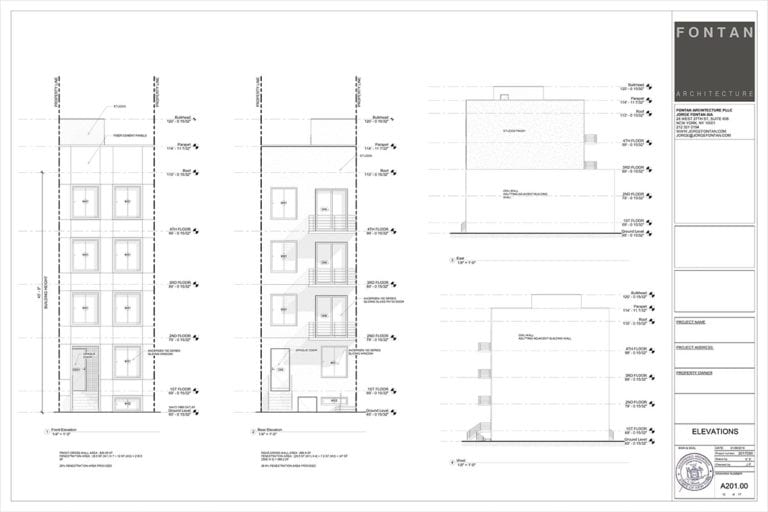
Once the design is developed, the architect prepares construction documents for permitting and construction. These drawings communicate the full scope of the project to the NYC Department of Buildings, engineers, contractors, fabricators, and consultants.

Construction documents typically include:

  • Architectural plans
  • Building sections
  • Exterior elevations
  • Wall assemblies
  • Stair details
  • Door and window schedules
  • Finish schedules
  • Code analysis
  • Zoning diagrams
  • Energy code compliance documentation

The architect coordinates with structural engineers, mechanical engineers, plumbing engineers, and other consultants to integrate all technical systems into the project documentation.

After completion of the construction documents, the architect files the project with the NYC Department of Buildings for review and approval.


Construction Administration and Site Oversight

Architectural involvement continues during construction. Construction administration helps maintain alignment between the design intent, construction quality, and technical execution of the project.

During construction, architects may:

  • Review contractor submittals
  • Respond to RFIs
  • Conduct site visits
  • Review construction progress
  • Coordinate field conditions
  • Clarify construction details
  • Review material installations
  • Assist with quality control
  • Review punch list items
  • Review contractor invoices

For luxury residential projects, construction administration is essential because the quality of execution directly affects the architectural outcome. Careful review during construction supports consistency in detailing, alignment, finishes, proportions, and material integration.


Certificate of Occupancy and Project Completion

At the completion of construction, the project must receive final sign-offs and approvals before occupancy. The architect coordinates with consultants, contractors, and agencies to complete the documentation and inspections required for project closeout.

This process may include:

  • DOB inspections
  • Final consultant sign-offs
  • Energy code sign-offs
  • Plumbing inspections
  • Electrical inspections
  • Elevator approvals where applicable
  • Certificate of Occupancy coordination

A coordinated closeout process helps transition the project efficiently from construction to occupancy.


Building a House in NYC Requires Architectural Leadership

Building a custom home or townhouse in New York City involves design, zoning, permitting, engineering coordination, construction documentation, and construction oversight. Successful projects integrate these components into a cohesive architectural process from the earliest planning stages through construction completion.

Strong architectural planning establishes clarity, improves coordination, and supports a higher level of design execution. High-end residential projects benefit from careful attention to spatial composition, material quality, technical detailing, and construction management throughout the process.

At Fontan Architecture we work on high-end residential projects including renovations and ground-up homes. Our firm provides architectural assessment, zoning analysis, design development, DOB filing, and construction administration for complex residential projects. We develop bespoke homes tailored to each client with an integrated approach that combines architectural design excellence with technical execution and detailed project coordination.

Request a Consultation with Fontan Architecture - 212 321 0194

Jorge Fontan
Jorge Fontan

Jorge Fontan, AIA, is an architect and founder of Fontan Architecture based in New York City. The firm focuses on residential design, including new homes and extensive renovations for discerning clients. Through collaborative dialogue that draws on the individuality of each client, projects develop as distinct architectural responses guided by thoughtful planning, precise detailing, and a commitment to creating enduring value.