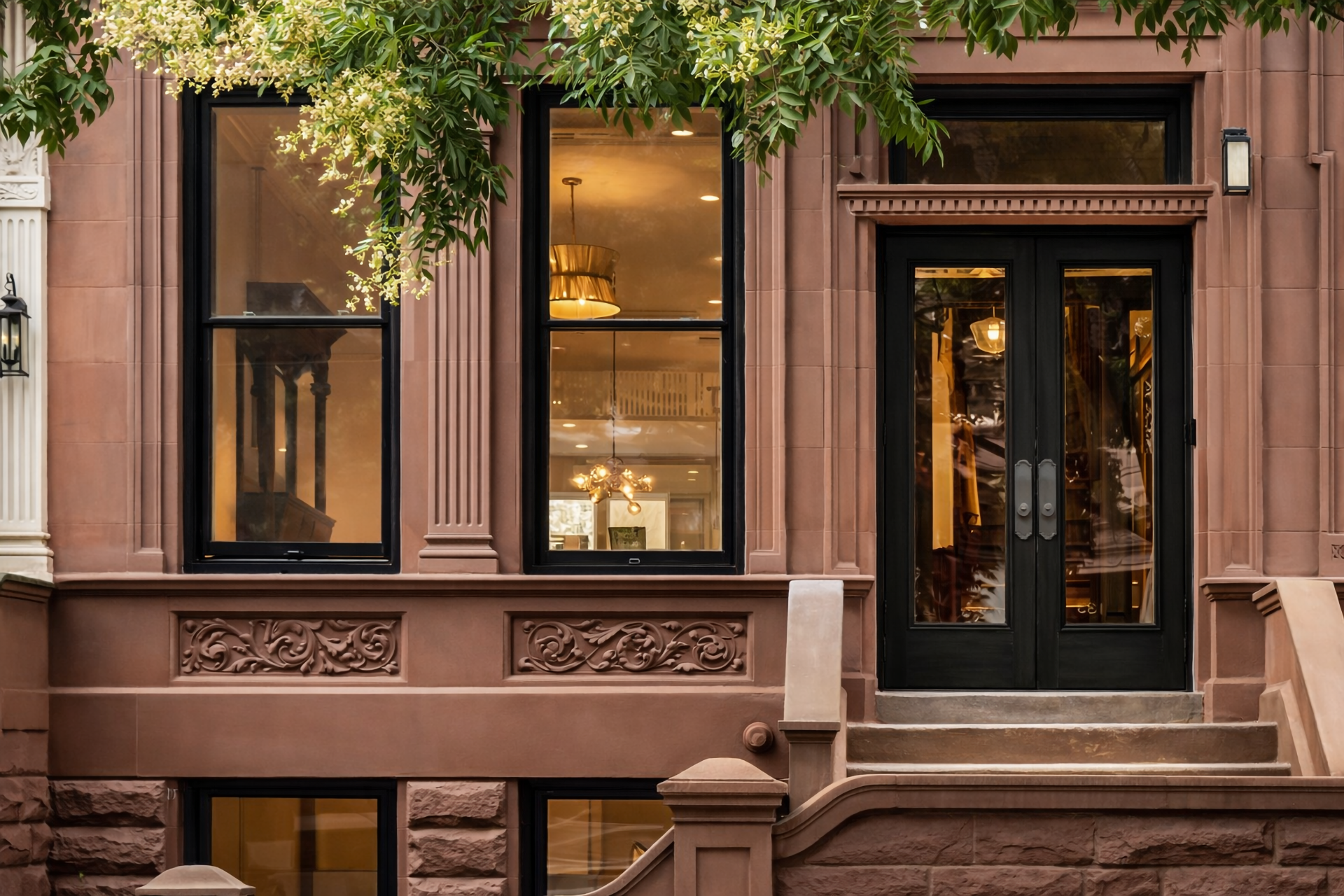
Renovating, restoring, and enlarging a property within a designated historic district or on an individual landmark within New York City requires approval from the New York City Landmarks Preservation Commission (LPC). These approvals are a fundamental part of the process for historic townhouses, brownstones, and other landmarked buildings. The LPC reviews proposed work to ensure that changes maintain the architectural character of the building and align with the surrounding district. Understanding how this approval process works is essential for planning scope, timeline, and design strategy.
In New York City, there are three types of LPC applications: Certificate of No Effect, Permit for Minor Work, and Certificate of Appropriateness. Certificates of No Effect and Permits for Minor Work are reviewed at the staff level and are typically a faster process. A Certificate of Appropriateness requires a full commission review before proceeding. Each application type corresponds to a specific type of alteration based on the visibility, scope, and impact of the proposed work. The appropriate permit type determines the approval timeline, documentation requirements, and degree of design review.
I am Jorge Fontan, owner of Fontan Architecture, a Manhattan-based architecture firm specializing in high-end residential renovations. Our work frequently involves townhouses and brownstones located in landmark districts as well as individual landmarks across New York City. We manage LPC approvals as an integrated part of the architectural process, coordinating design development, documentation, and agency filings from the outset. Our approach aligns design intent with regulatory requirements, allowing projects to move forward efficiently while maintaining a high level of architectural quality. At Fontan Architecture, we integrate design excellence with strong technical execution, ensuring that each project is developed with clarity, precision, and a client-focused approach.
Table of Contents
Certificate of No Effect (CNE)
As an architect working on many landmark properties in New York City, I can tell you that the Certificate of No Effect is the most straightforward and typically the fastest permit to obtain. The CNE is for any application that requires a Department of Buildings (DOB) permit but has no adverse effect on the landmark character of the building.
Interior renovations in landmark districts or on individual landmark buildings require LPC permits, even when no exterior work is involved. For example, we have performed many interior-only renovations on prewar apartments in areas such as the Upper West Side and Upper East Side that all required a Certificate of No Effect.
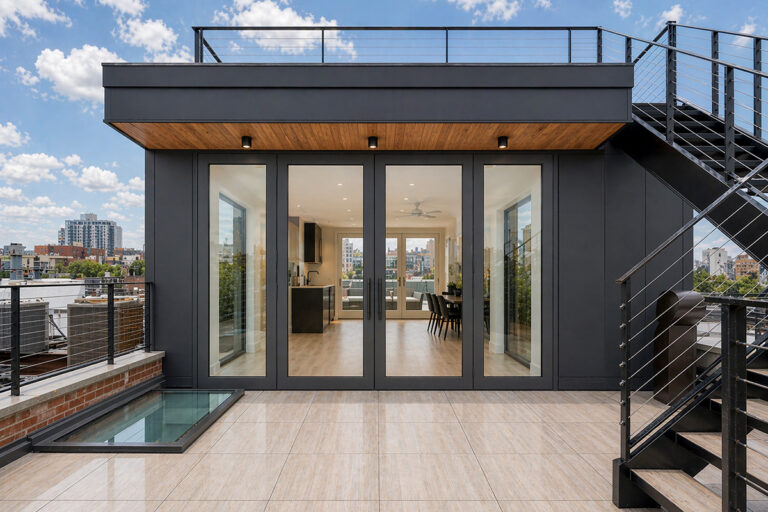
The Certificate of No Effect is a very common staff-level review and can include various project types, including interior renovations, new openings on non-visible secondary facades, and certain additions and enlargements. For example, we recently completed a rooftop addition on a brownstone in a landmark district in Harlem where we provided full architectural services and received a Certificate of No Effect for the rooftop addition and roof deck. Although not all additions qualify for this review type, many do, particularly when visibility and architectural impact are carefully considered during the design process.
For more information you can see our related article on rooftop additions in Landmark Districts.
Certificate of No Effect Project Example Types:
Certificate of No Effect Project Example Types:
- All interior renovations that require Department of Buildings permits
- Most installations of plumbing or mechanical equipment
- Installing ramps
- Any alterations determined by the LPC staff to have no adverse effect on significant features of the building
Expedited Review for a Certificate of No Effect
Some applications for a Certificate of No Effect qualify for expedited review. These applications can be approved in as little as 3 days when the LPC staff determines that the work qualifies and the submission is complete.
Qualifying for an Expedited Certificate of No Effect (XCNE)
- Interior-only work that is not within a designated interior landmark
- No work at the first or second story of a building with a commercial ground floor
- No changes to exterior walls, windows, skylights, or roofs
- Minor or no excavation; underpinning is not included in this application type
Fast Track Review for a Certificate of No Effect
Some applications qualify for fast-track review, which can be approved in approximately 10 days when properly documented.
Qualifying for a Fast Track Certificate of No Effect (XCNE)
- Interior alterations
- Minor restorations on non-visible facades or roofs
- Replacement of windows or doors on non-visible secondary facades
- Modification of window or door openings on non-visible secondary facades
- Non-visible installation of HVAC or other mechanical equipment
- Through-wall or window HVAC equipment on non-visible secondary facades
- Non-visible rooftop and rear yard decks and railings
- Replacement of concrete sidewalks or installation of utilities below grade
Permit for Minor Work
A Permit for Minor Work (PMW) applies to projects where no Department of Buildings (DOB) permit is required and the LPC staff determines that the work is restorative and appropriate to the building.
Permit for Minor Work Project Example Types:
- Window or door replacement in existing openings
- Masonry cleaning and brownstone resurfacing
- Through-window HVAC equipment
Certificate of Appropriateness
A Certificate of Appropriateness is the most complex and involved permit type issued by the Landmarks Preservation Commission. This application requires a full commission review and a community board hearing. Approximately 5% of applications filed at LPC require a Certificate of Appropriateness.
A Certificate of Appropriateness is required when proposed work affects significant protected architectural features or when the scope extends beyond the LPC Rules. These rules establish parameters for staff-level approvals. Projects that exceed these parameters are reviewed by the commission, where the design is evaluated based on its architectural merit, visibility, and impact on the building and surrounding context.
Certificate of Appropriateness projects often involve a higher level of design consideration, particularly when addressing facade composition, additions, or the modification of significant architectural elements. These projects require careful development to ensure that new work is well integrated with the existing structure and appropriate to the historic context.
Certificate of Appropriateness Project Example Types:
- Additions that exceed LPC rules for staff-level review
- Demolitions
- New construction
- Removal of stoops, cornices, and other significant architectural features
One example from our office is a major enlargement of an individual landmark building in Brooklyn that we are currently working on. This addition is highly visible and substantial in scale, requiring full commission review and a detailed presentation of the design.
Community Board Review for Certificate of Appropriateness
Applicants requesting a Certificate of Appropriateness must present to the local Community Board prior to appearing before the Landmarks Preservation Commission public hearing.
Strategies for Review Selection
At Fontan Architecture, we approach every project with a clear understanding of our clients’ schedules, budgets, and design priorities. We begin with an assessment of the scope of work to establish a realistic approval timeline and determine the appropriate LPC application strategy.
Full commission review is a more involved process, and even complex Certificates of No Effect can require careful coordination. We evaluate the range of viable approval pathways at the outset and advise our clients on the most effective approach based on project goals, level of intervention, and overall design intent. This allows for informed decision-making and a more controlled project timeline.
Navigating LPC Permits with Clarity and Precision
Selecting the appropriate LPC application type is a critical step in shaping the direction of a project within a landmarked property or historic district. The distinction between a Certificate of No Effect, Permit for Minor Work, and Certificate of Appropriateness directly impacts project timeline, level of review, and the degree of design flexibility. A clear understanding of these permit types allows for informed decisions early in the process, aligning project scope with regulatory pathways and establishing a realistic framework for execution.
Landmarked townhouse and brownstone renovations in New York City require a coordinated approach that integrates design intent with regulatory strategy. The most effective projects are developed with a full awareness of how proposed work will be reviewed, allowing architectural decisions to advance in parallel with LPC requirements. This alignment supports an efficient approval process and enables a high level of design resolution, particularly on complex renovations, enlargements, and facade work where visibility and architectural impact are central considerations.
At Fontan Architecture, we approach LPC approvals as a strategic component of the overall design process. We evaluate each project at the outset to determine the appropriate application pathway, balancing design objectives with timeline and budget considerations. Our work integrates design excellence with strong technical execution, ensuring that projects are developed with precision and clarity from concept through approvals and construction. We work closely with our clients to deliver tailored solutions that respond to their goals while navigating the LPC process with a high level of coordination and expertise.
Request a Consultation with Fontan Architecture - 212 321 0194
Jorge Fontan, AIA, is an architect and founder of Fontan Architecture based in New York City. The firm focuses on residential design, including new homes and extensive renovations for discerning clients. Through collaborative dialogue that draws on the individuality of each client, projects develop as distinct architectural responses guided by thoughtful planning, precise detailing, and a commitment to creating enduring value.
Jorge Fontan, AIA, is an architect and founder of Fontan Architecture based in New York City. The firm focuses on residential design, including new homes and extensive renovations for discerning clients. Through collaborative dialogue that draws on the individuality of each client, projects develop as distinct architectural responses guided by thoughtful planning, precise detailing, and a commitment to creating enduring value.