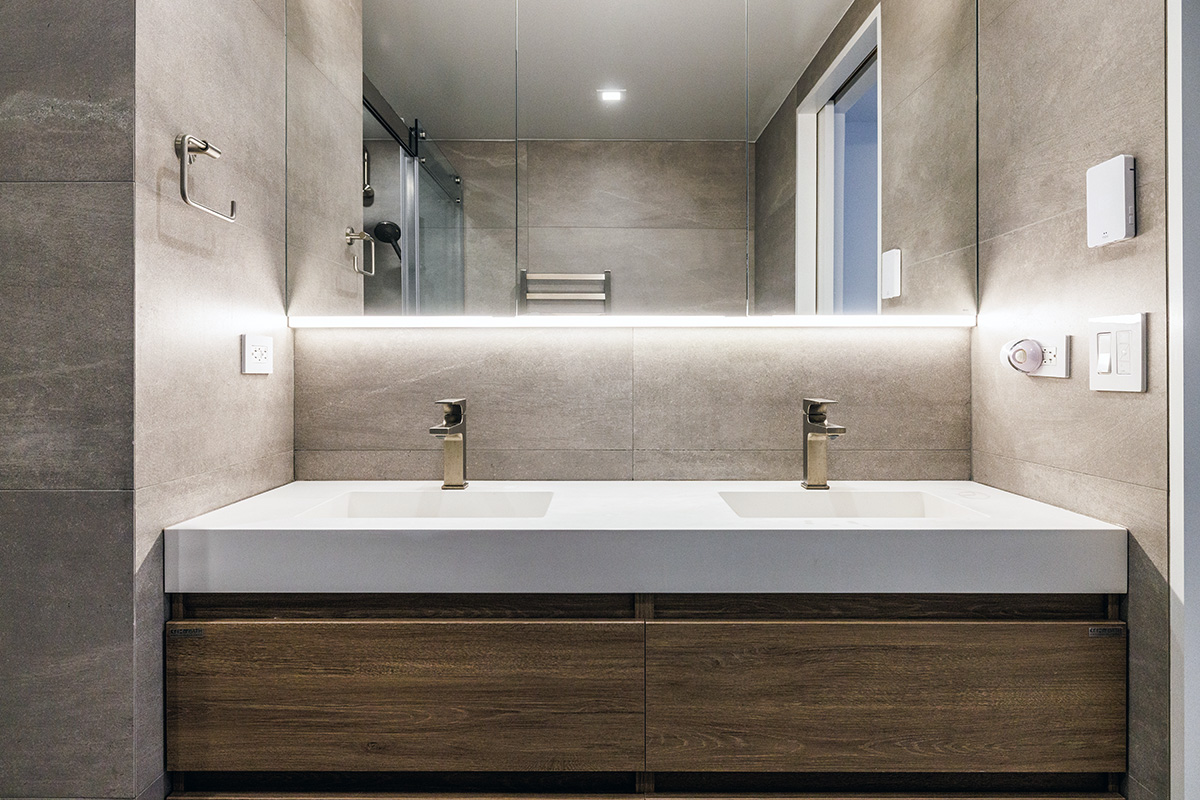
Upper West Side post-war apartment buildings represent a significant portion of the neighborhood’s residential housing stock. Constructed primarily during the mid-twentieth century, these buildings introduced a different model of apartment living than the prewar buildings for which the Upper West Side is often known. Large windows, reinforced concrete construction, modern building systems, and more standardized floor plans created apartments that continue to attract homeowners seeking bright, functional, and adaptable living spaces. Today, many of these apartments are being renovated to support contemporary lifestyles while taking advantage of the flexibility these buildings often provide.
Post-war apartment renovations require a thorough understanding of both the opportunities and constraints created by concrete construction, building systems, co-op and condominium regulations, and the unique design potential of these buildings. The most successful renovations balance technical realities with thoughtful planning to create homes that are highly functional, deeply personal, and tailored to the people who live in them.
I am Jorge Fontan, owner of Fontan Architecture, a Manhattan-based architecture firm specializing in high-end residential design and renovation. We renovate apartments, lofts, townhouses, and work on a variety of residential projects throughout New York City. Our approach combines thoughtful design, technical expertise, and close coordination throughout the design and construction process. We develop highly individualized solutions based on both the client and the property, creating homes that reflect our clients’ lifestyles, priorities, and aspirations while responding to the unique conditions of each residence.
Table of Contents
Existing Conditions in Post-War Apartment Renovations
One of the defining characteristics of post-war apartment renovations is the building’s structural and mechanical infrastructure. Unlike many prewar buildings, post-war apartment buildings are commonly constructed with reinforced concrete floor slabs, concrete columns, and centralized building systems that create both opportunities and constraints for renovation.
Concrete floor construction often influences how kitchens and bathrooms can be reconfigured. Many co-op and condominium buildings do not permit drilling or chipping into structural concrete floor slabs, which can limit the relocation of plumbing fixtures. As a result, careful planning is required when renovating bathrooms and kitchens. In some situations, wall-mounted toilets can provide greater flexibility because the plumbing connections can be coordinated within wall assemblies rather than requiring extensive modifications to the concrete structure below.
Post-war buildings frequently contain poured-in-place concrete columns throughout the apartment. We carefully integrate room layouts, kitchens, bathrooms, and built-ins around these structural elements, as they often occur adjacent to kitchens and bathrooms, within closets, and throughout the apartment. While columns can create design challenges, they can also become organizing elements within the architecture when incorporated thoughtfully into the overall design.
Mechanical systems also influence renovation planning. Vertical ventilation shafts serving kitchens and bathrooms typically extend continuously through the building and cannot be relocated. Plumbing stacks and risers are commonly concentrated within wall cavities adjacent to kitchens and bathrooms, establishing practical limits on where new fixtures can be located. Understanding these existing conditions early in the design process allows renovations to be developed around the realities of the building while maximizing opportunities for improved layouts and contemporary living.
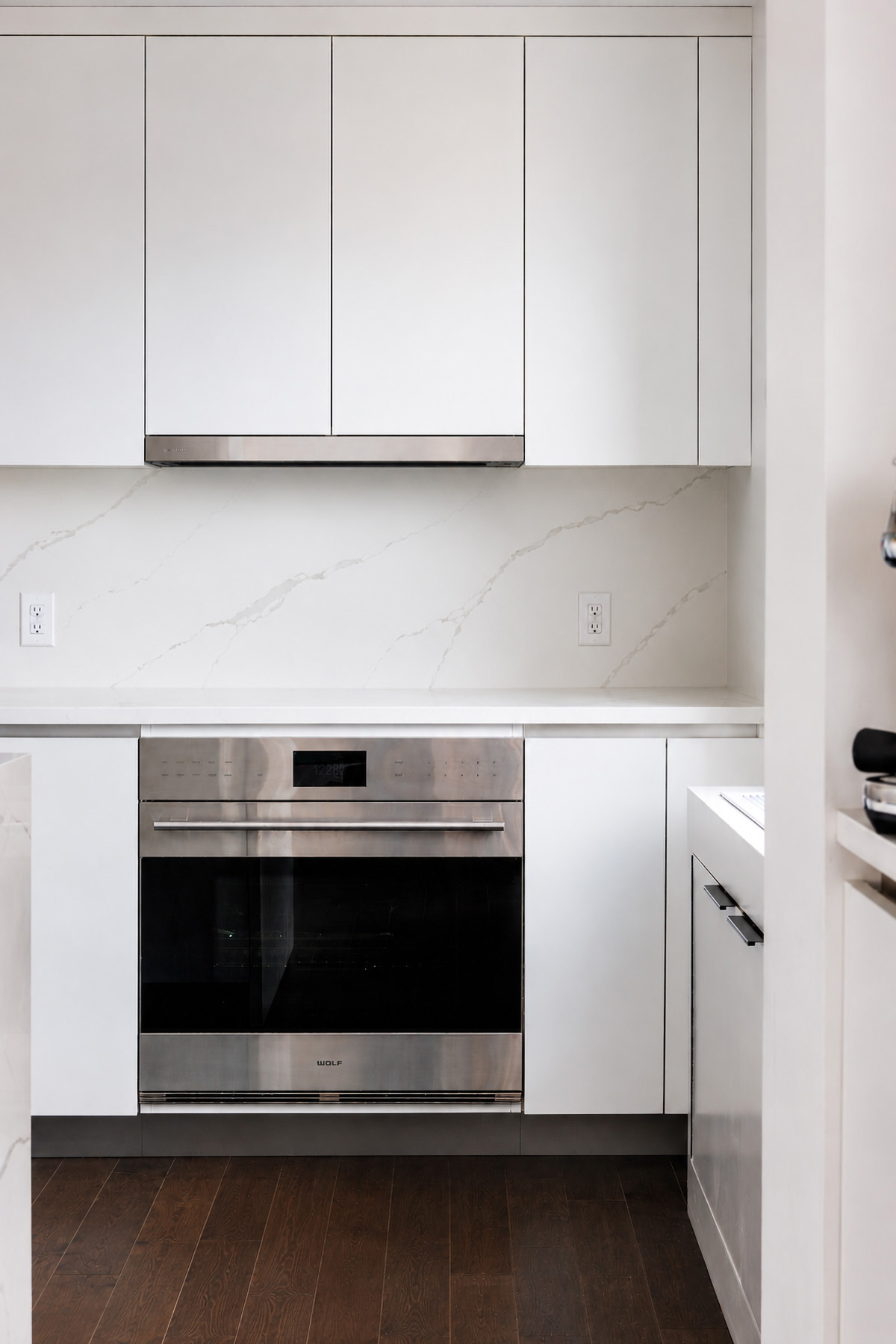
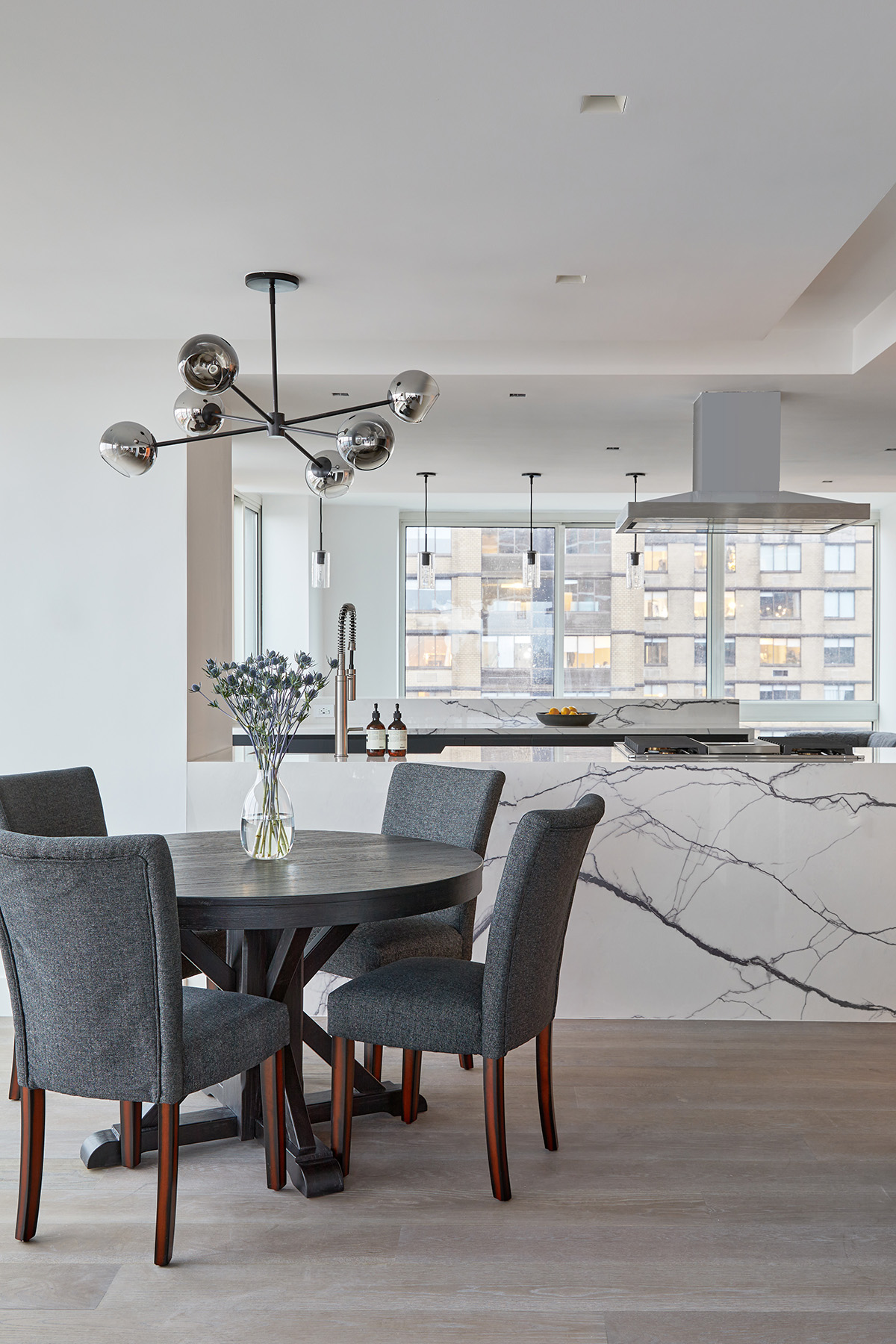
UWS Post-War Kitchen Renovation
Co-op and Condominium Renovations
Before construction can begin, apartment renovations require building review and approval. Most buildings require an alteration agreement that establishes project requirements. Buildings usually also have a reviewing architect or engineer to evaluate proposed work and verify compliance with building policies and technical requirements.
Building regulations can also influence design decisions. Wet-over-dry restrictions, plumbing limitations, structural conditions, and building-specific requirements often affect the feasibility of proposed layouts. Understanding these constraints early allows the design to develop within a realistic framework while minimizing revisions during the approval process.
Successful post-war apartment renovations require careful coordination between the architect, consultants, contractors, building management, and reviewing professionals. By incorporating building requirements into the planning process from the outset, approvals and construction can proceed more efficiently while maintaining the overall design vision for the home.
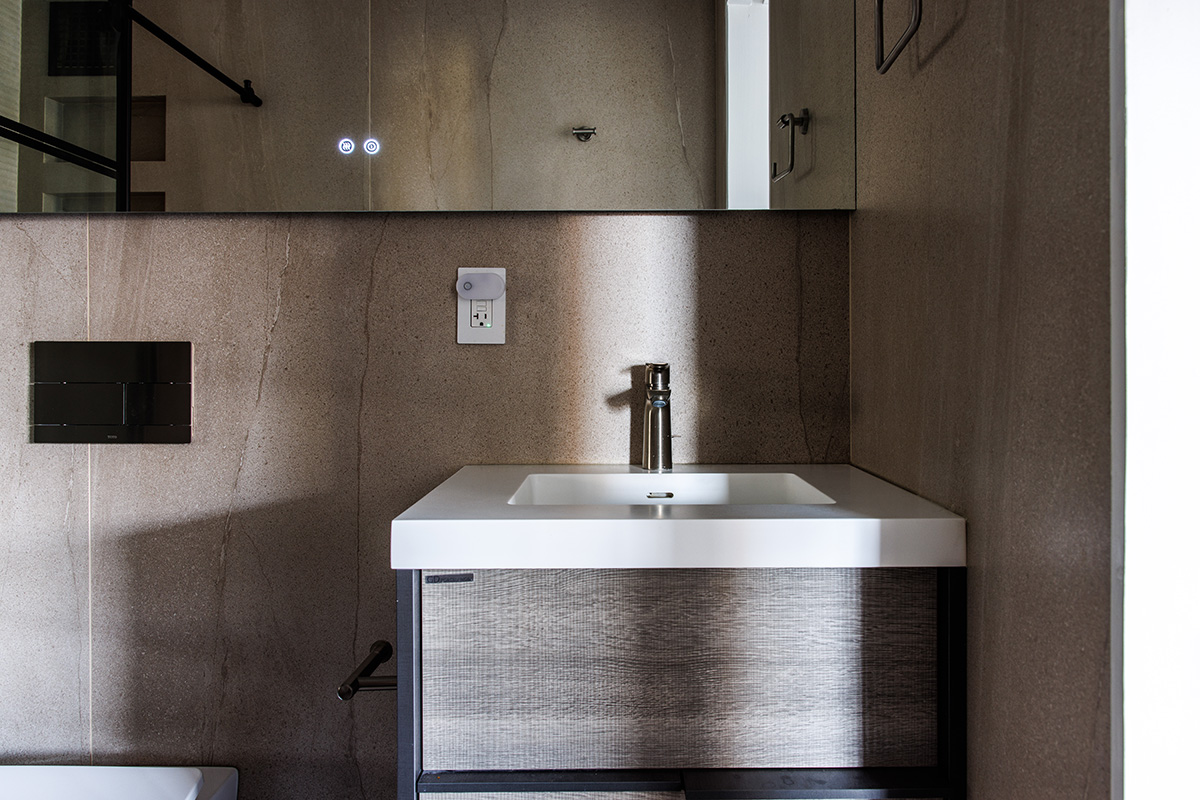
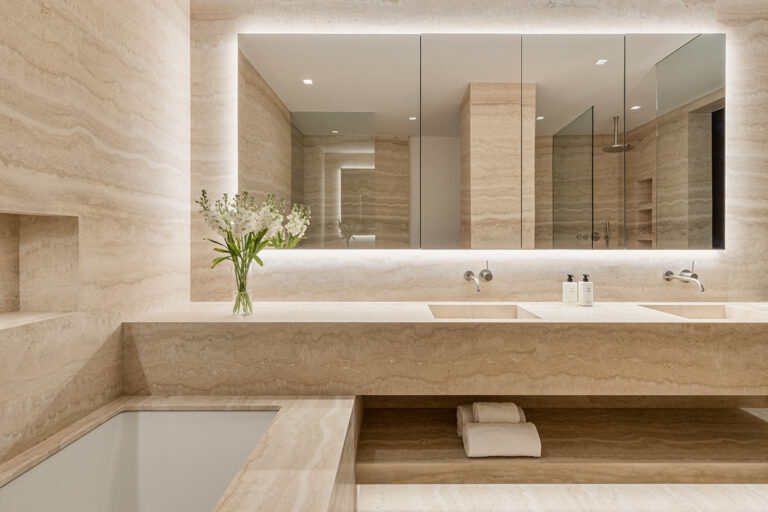
Bathroom from Upper West Side Post-War renovation
Apartment Combinations in Post-War Buildings
Many of the largest apartments on the Upper West Side were not originally designed as large residences. Instead, they evolved over time through apartment combinations. This is particularly common in post-war buildings, where neighboring units often share structural systems and layouts that can create opportunities for expansion when adjacent apartments become available.
We are currently combining three condominium apartments into a single residence on Manhattan’s Upper West Side. The project began with a one-bedroom apartment and expanded over time as the owners acquired neighboring units. Through careful planning, the residence is being transformed from three separate apartments into a cohesive home designed around the way the family lives today.
The challenge in an apartment combination is not simply creating physical connections between apartments. The goal is to create a residence that feels as though it was always intended to exist in its final form. Successful apartment combinations require careful consideration of circulation, room organization, natural light, architectural detailing, and the relationship between public and private spaces. When thoughtfully designed, the complexity of the combination disappears and the home feels natural, unified, and effortless.
For homeowners considering a long-term residence on the Upper West Side, apartment combinations can provide an opportunity to create a larger and more customized home while remaining within a building and neighborhood they already enjoy.
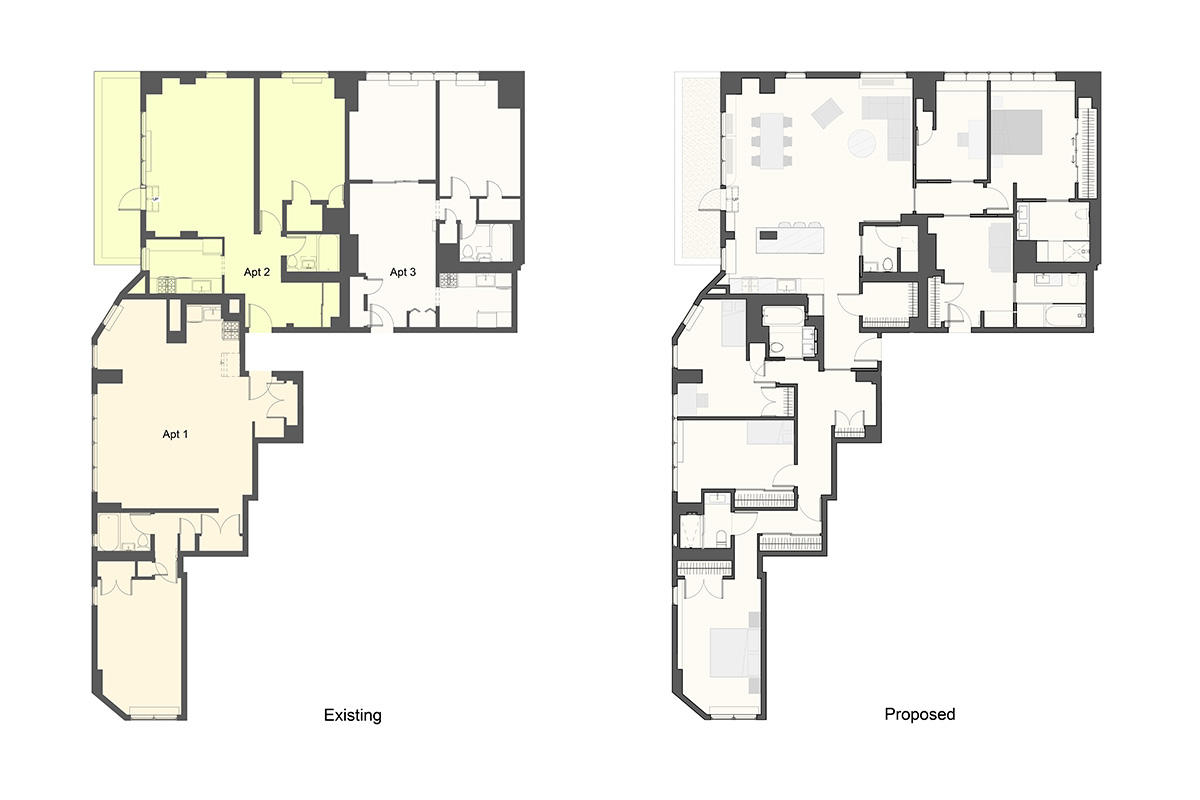
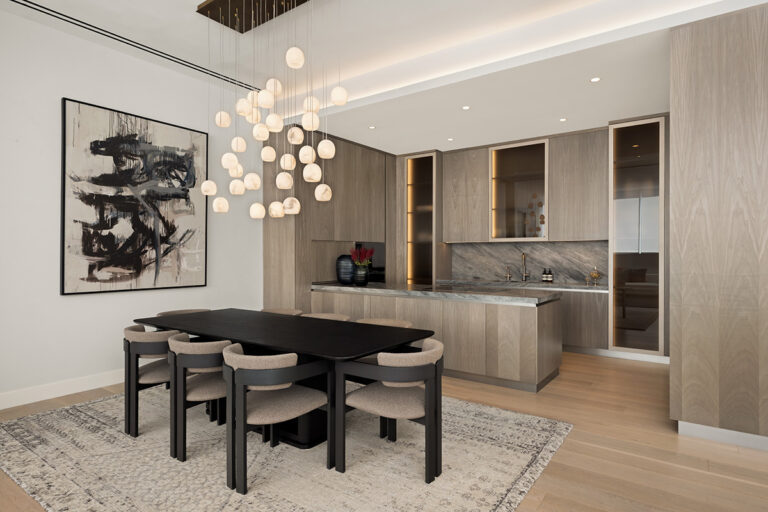
Combining Apartments on the Upper West Side NYC
Designing a Personalized Post-War Apartment
One of the advantages of renovating a post-war apartment is the opportunity to create a highly personalized home. Unlike many prewar apartments, post-war buildings typically contain relatively simple interiors with no historic architectural detailing. While prewar renovations often involve preserving and restoring original features, post-war renovations frequently begin with a more neutral framework that allows greater freedom to reimagine the space.
For many homeowners, this flexibility is one of the greatest strengths of post-war apartments. The existing apartment provides the structure, light, and location, while the interior can be transformed to reflect the specific needs, lifestyle, and aesthetic preferences of its owners. Kitchens can be opened to living areas, layouts can be reorganized, custom storage can be integrated throughout the home, and entirely new architectural identities can be created.
At Fontan Architecture, we begin each project by understanding our clients’ routines, priorities, aspirations, and how they want to experience their home. We organize space around the people who live there, developing layouts, room relationships, architectural character, material palettes, lighting strategies, and custom millwork based on their specific needs and goals. Rather than applying a predetermined style, we develop highly individualized solutions that respond to both the client and the property.
We often use custom millwork to introduce character, organization, and functionality into post-war apartment renovations. We design built-in storage, libraries, media walls, dressing rooms, architectural paneling, and integrated furnishings that help establish a cohesive architectural language throughout the residence. We carefully consider materials, textures, proportions, and details to create homes that feel personal, refined, and enduring.
Our goal is not simply to renovate an apartment. It is to create a home that reflects the people who live there. When thoughtful design, careful planning, quality craftsmanship, and a deep understanding of the homeowner come together, a post-war apartment can become a residence that feels highly personal, distinctive, and uniquely suited to its owners.
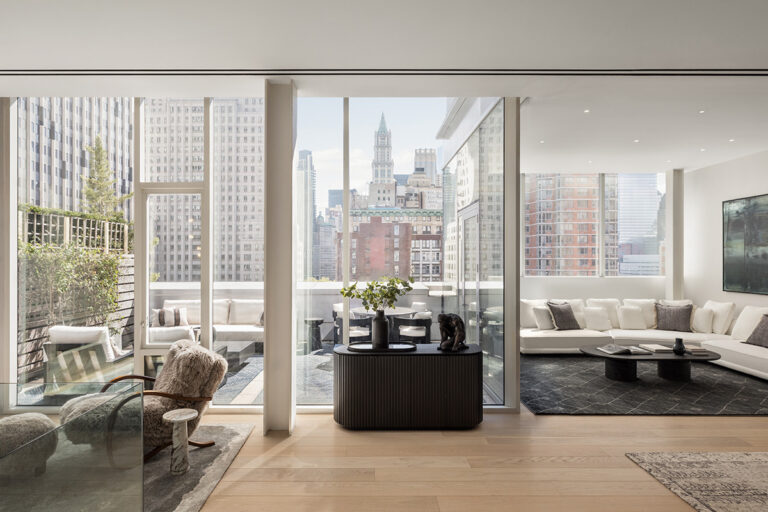
Classic Materials in a Modern Home
UWS Post-War Apartment Renovations & Design
Post-war apartment buildings make up a significant portion of the Upper West Side housing stock and offer unique opportunities for residential renovation. Their concrete construction, structural systems, mechanical infrastructure, and building regulations create a distinct set of considerations that differ from those found in many prewar buildings. Understanding these conditions is an important part of developing successful renovation strategies and realistic design solutions.
At the same time, post-war apartments often provide tremendous flexibility for customization. Without the obligation to preserve extensive historic architectural detailing, homeowners can reimagine layouts, improve functionality, integrate custom millwork, modernize interiors, and create homes that are tailored to their specific lifestyles and priorities. Whether renovating a single apartment or combining multiple units into a larger residence, the goal is to create a home that feels cohesive, personal, and enduring.
At Fontan Architecture, we approach post-war apartment renovations as an opportunity to create highly individualized homes that respond to both the property and the people who live there. Through thoughtful planning, careful coordination, and personalized design, we help our clients transform existing apartments into homes that are uniquely their own.
Request a Consultation with Fontan Architecture - 212 321 0194
Jorge Fontan, AIA, is an architect and founder of Fontan Architecture based in New York City. The firm focuses on residential design, including new homes and extensive renovations for discerning clients. Through collaborative dialogue that draws on the individuality of each client, projects develop as distinct architectural responses guided by thoughtful planning, precise detailing, and a commitment to creating enduring value.
Jorge Fontan, AIA, is an architect and founder of Fontan Architecture based in New York City. The firm focuses on residential design, including new homes and extensive renovations for discerning clients. Through collaborative dialogue that draws on the individuality of each client, projects develop as distinct architectural responses guided by thoughtful planning, precise detailing, and a commitment to creating enduring value.