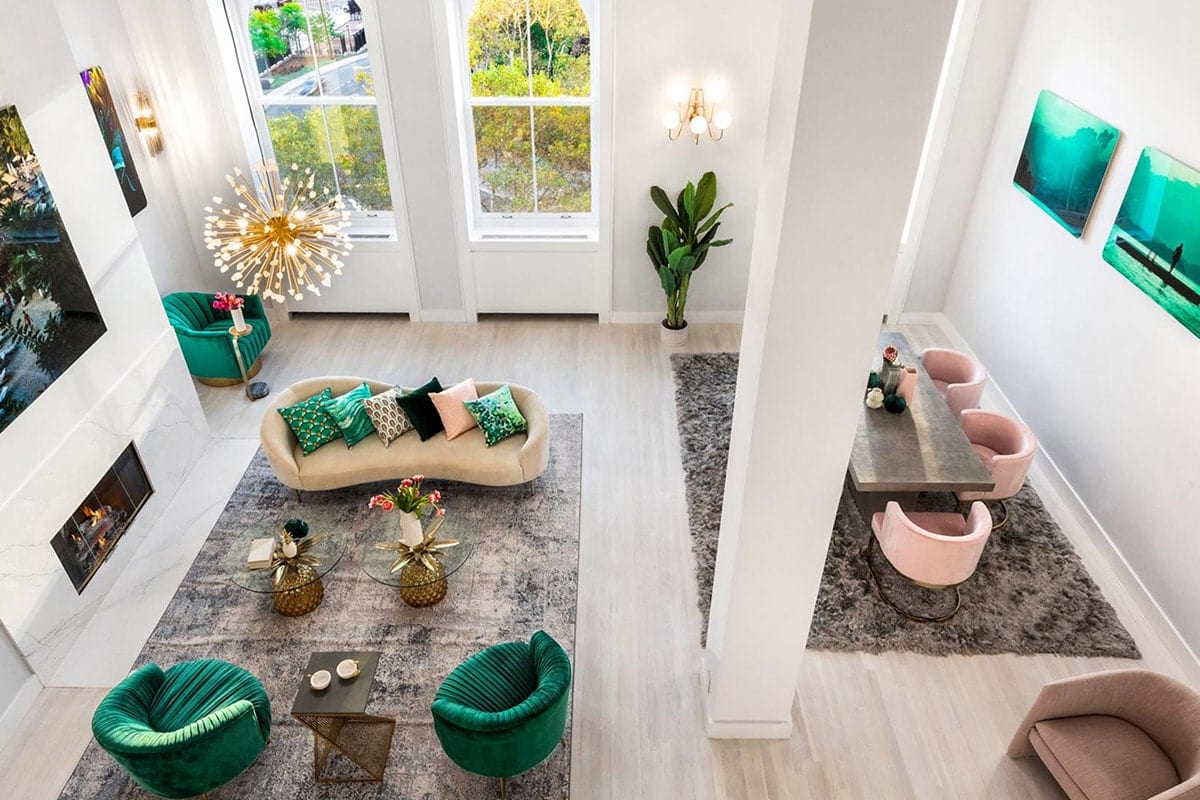
In neighborhoods like SoHo and Tribeca, loft apartments represent one of the most iconic forms of New York living. Originally constructed as manufacturing and warehouse buildings in the late 19th and early 20th centuries, these structures were later converted into residential spaces, creating a distinctive residential type defined by scale, structure, and industrial character.
A true loft apartment in New York City is a residence located in a former commercial or industrial building that has been adapted for residential use. These spaces are typically characterized by expansive open floor plans, high ceilings, structural columns, brick walls, and large windows that bring light deep into the interior.
I am Jorge Fontan, an architect based in New York and owner of Fontan Architecture, a Manhattan-based architecture firm. Our office has completed numerous loft renovations throughout New York City. In this article, I will discuss the history, architectural characteristics, and design considerations that define loft apartments in NYC.
Table of Contents
NYC Loft Apartments
Loft apartments in New York emerged during the 1960s and 1970s, when artists began occupying vacant manufacturing buildings in neighborhoods like SoHo and Tribeca. These former industrial structures offered expansive floor plates, high ceilings, and large windows—qualities that were ideal for studio work but not legally approved for residential use at the time.
As industrial uses declined in Lower Manhattan, many building owners informally rented these spaces for live-work occupancy. However, the buildings lacked residential Certificates of Occupancy and were not compliant with housing and residential fire safety codes. This period of informal adaptation ultimately led to significant legal reform.
In 1982, New York City enacted the 1982 Loft Law to protect occupants of these interim multiple dwellings and require landlords to bring buildings into compliance with residential building codes. The city also implemented zoning changes and special districts to accommodate residential conversion. Over time, these formerly industrial structures were legalized, upgraded, and formally converted into cooperative and condominium loft residences.
Today, authentic loft apartments are among the most sought-after housing types in New York, often commanding premium values due to their scale, character, and architectural history.
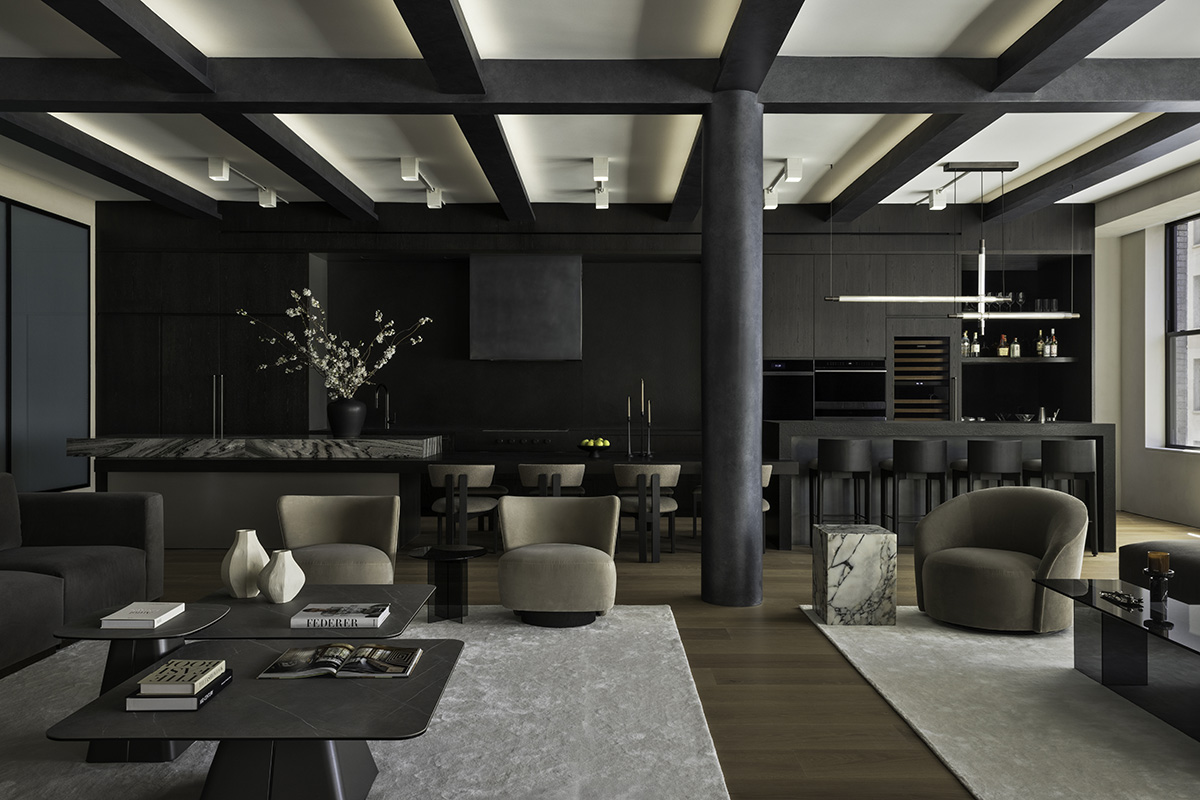
Loft apartment in NYC.
Where Are NYC Lofts Located?
Loft apartments are most strongly associated with former manufacturing districts in Lower Manhattan, particularly SoHo and Tribeca, where cast-iron and warehouse buildings were originally constructed in the late 19th and early 20th centuries. These neighborhoods remain the most iconic concentrations of authentic loft buildings in New York City.
However, loft conversions are not limited to these areas. As industrial uses declined across the city, similar manufacturing buildings were adapted for residential occupancy in other neighborhoods with comparable building stock.
Manhattan
- SoHo
- Tribeca
- NoHo
- Bowery
- Union Square
- Chelsea
- Flatiron District
- Hell’s Kitchen (also known as Clinton)
Brooklyn
- Williamsburg
- Greenpoint
Queens
- Long Island City
While loft buildings are scattered throughout the five boroughs, they are most commonly found in areas that were historically zoned for light manufacturing or warehouse use. Today, many of these former industrial districts have transitioned into mixed-use residential neighborhoods, where authentic loft apartments remain highly sought after.
Large Open Spaces
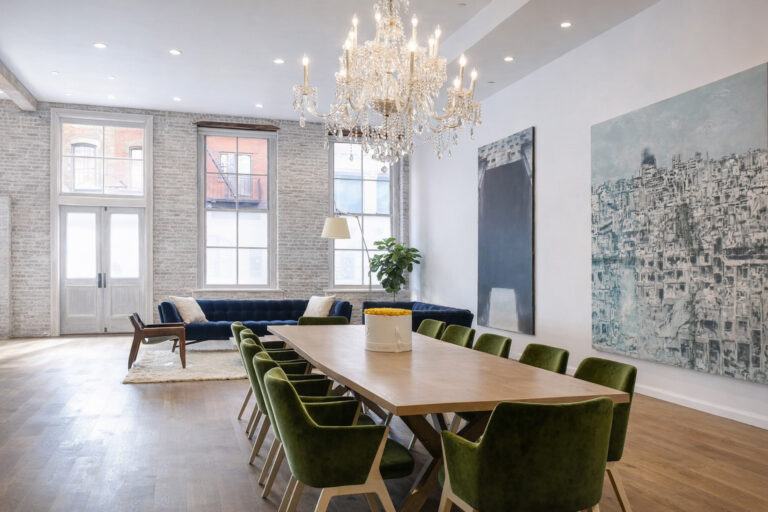
Because loft buildings were originally constructed for manufacturing and warehouse use, they were designed with expansive, uninterrupted floor plates. Industrial operations required flexibility and clear spans, which resulted in large open interiors supported by structural columns rather than interior bearing walls.
In residential conversions, this translates into unusually deep and wide living spaces. Living rooms in authentic New York lofts can extend 30 to 50 feet in depth, creating dramatic scale that is rarely found in conventional apartment buildings.
This openness offers tremendous flexibility in layout, but it also presents design challenges. The structural column grid, building depth, and window placement must all be carefully considered when introducing bedrooms, kitchens, and bathrooms into what was once a single open industrial floor.
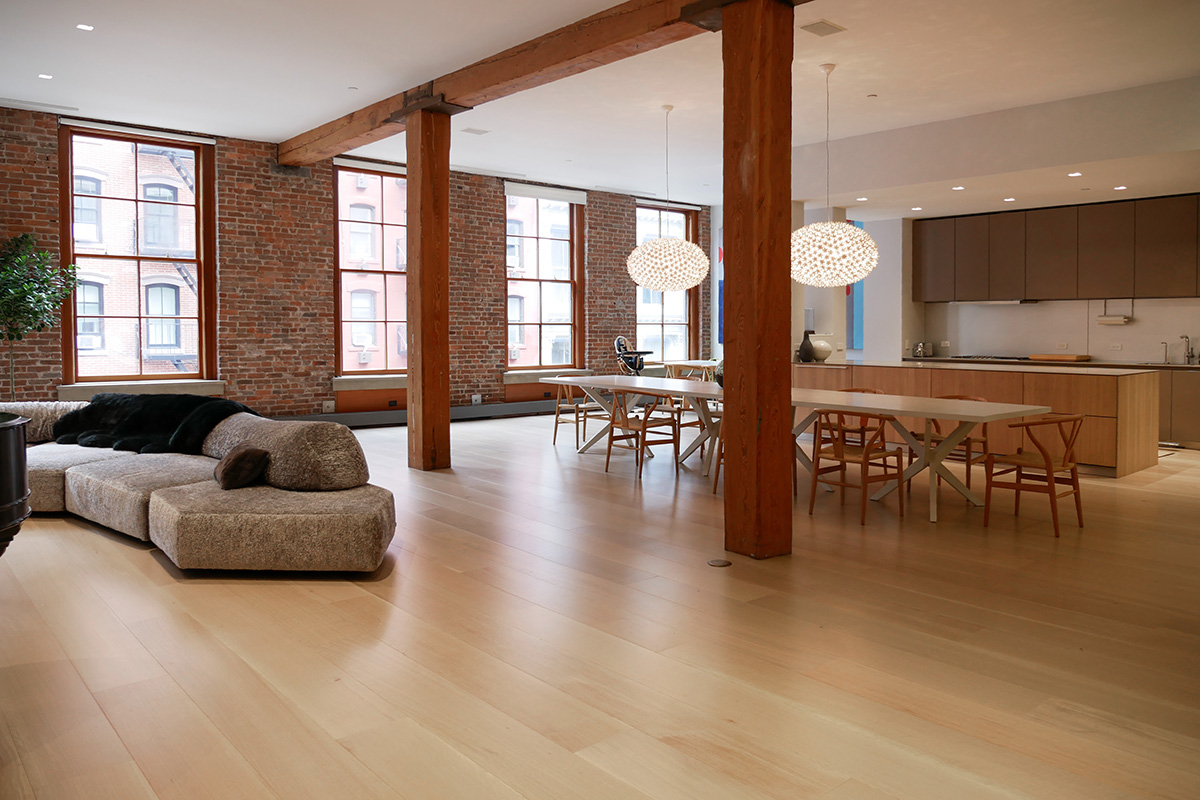
Open Concept Loft Apartment in SoHo
High Ceilings
One of the defining characteristics of a true loft apartment is ceiling height. Because these buildings were originally constructed for industrial and manufacturing purposes, they were designed with generous floor-to-floor heights to accommodate machinery, storage, and freight movement.
In residential use, this often translates to ceilings exceeding 12 feet, and in some cases significantly more. The additional vertical volume creates a sense of openness and scale that is difficult to achieve in conventional apartment buildings.
High ceilings also introduce important design opportunities. They allow for mezzanines, tall interior partitions, dramatic lighting installations, and enhanced natural light penetration from large industrial windows. At the same time, renovation work must carefully address mechanical systems, fire protection, and structural limitations to preserve ceiling height while meeting current building codes.

What is a Loft Apartment?
Columns and Structure
Structural columns are one of the most recognizable features of authentic loft apartments. Because these buildings were designed for industrial use, their floors were supported by repetitive column grids rather than interior bearing walls. This allowed for large, flexible floor plates suitable for manufacturing operations.
In many historic loft buildings, the columns are cast iron with decorative bases and capitals, reflecting late 19th-century construction methods. Later industrial buildings may feature steel columns and beams, while some structures incorporate heavy timber framing with exposed wood joists.
The presence and spacing of columns significantly influence residential layout. When converting or renovating a loft, the structural grid often determines room placement, circulation paths, and furniture planning. While some buyers view columns as obstacles, they are in fact integral to the architectural character of a true loft.
Not every loft apartment contains visible columns—particularly in smaller loft buildings —but in many historic conversions, they remain a defining spatial element.
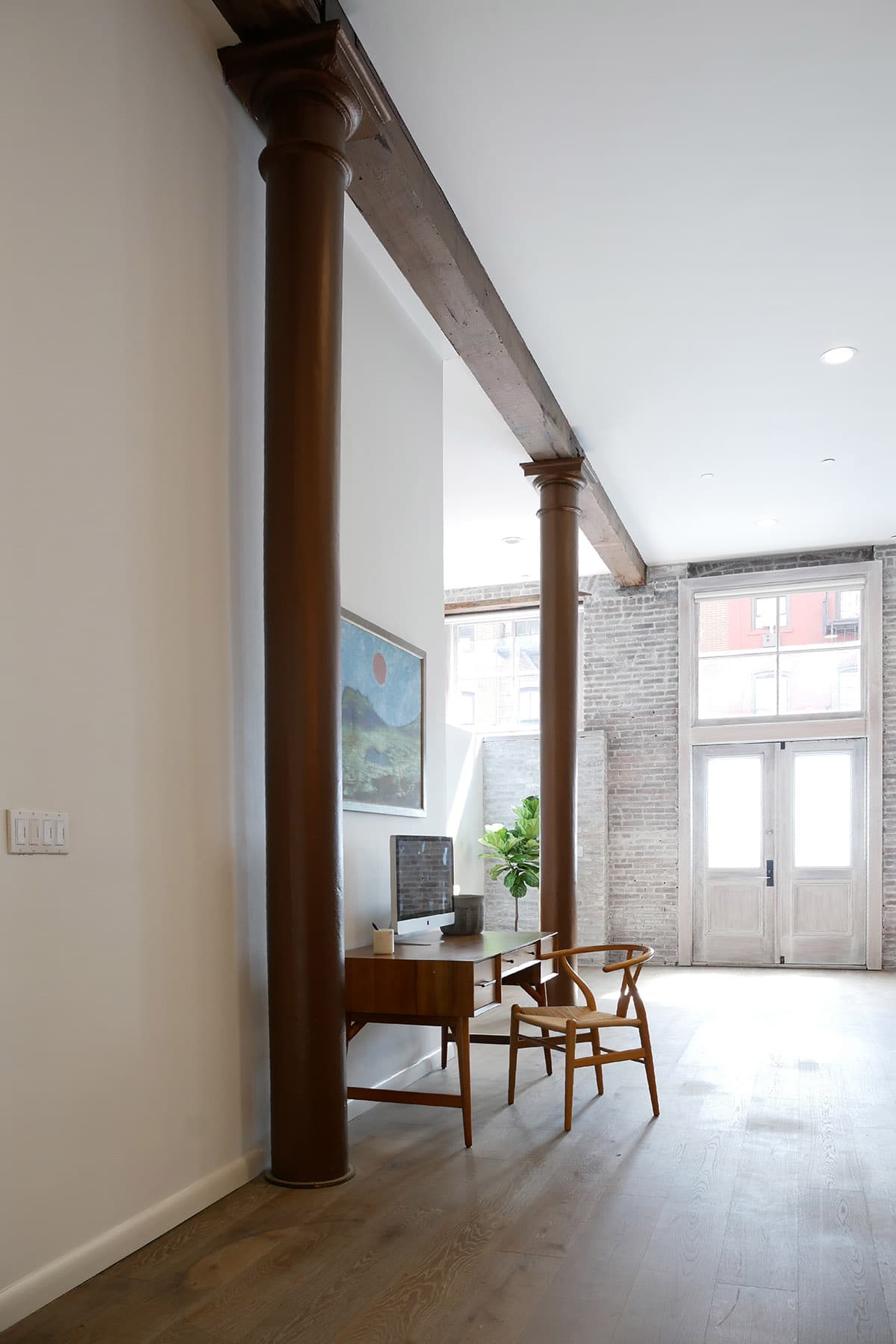
Loft Columns and Beam
Lofts With Exposed Brick
The exterior walls of many historic loft buildings are constructed of thick masonry, typically load-bearing brick. These walls were originally designed to support heavy timber or steel floor systems and to provide fire resistance in industrial buildings.
In residential conversions, exposed brick has become a signature aesthetic feature of loft living. The texture, color variation, and visible construction joints contribute to the industrial character that distinguishes authentic loft apartments from newly constructed imitations.
From a design standpoint, retaining exposed brick requires careful consideration. Issues such as insulation, moisture control, and interior wall furring must be addressed while preserving the integrity of the original masonry.
While some owners choose to cover brick walls for a cleaner aesthetic, many prefer to highlight the material as part of the loft’s architectural history. This comes down to aesthetic preference and the overall design strategy.
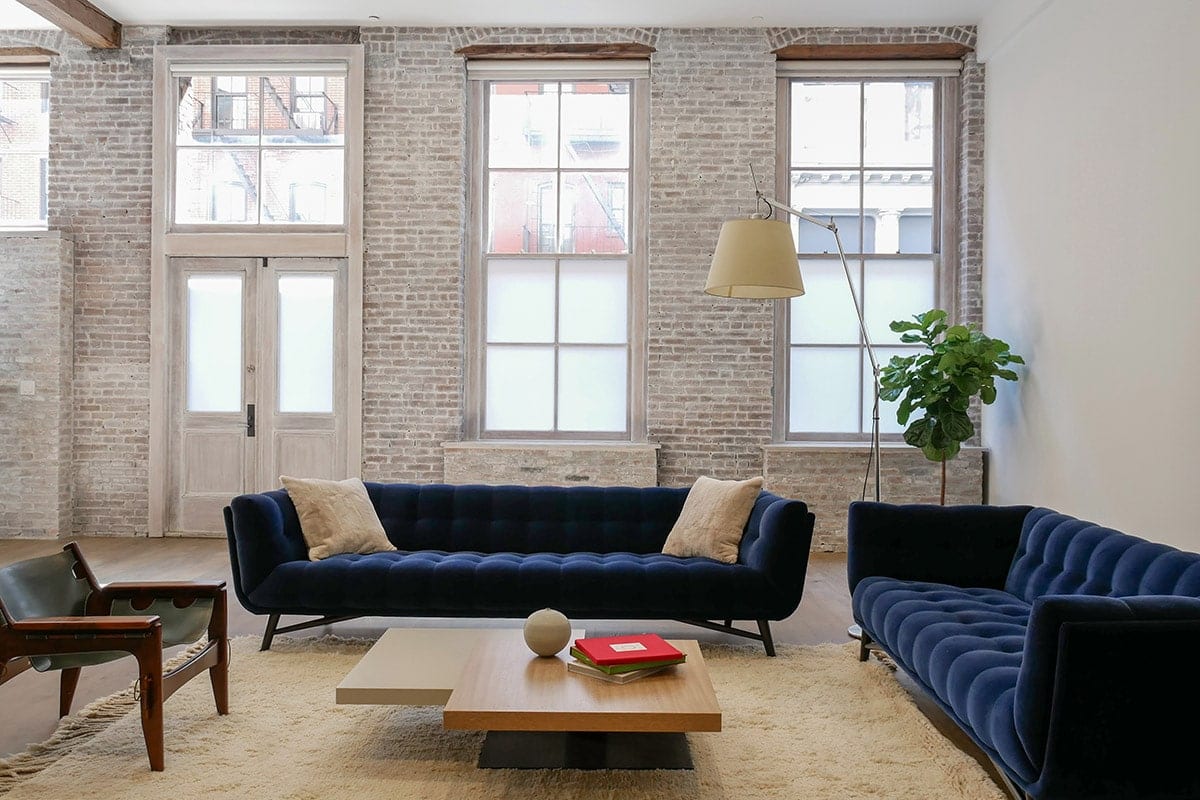
Exposed Brick Loft NYC
Large Loft Windows
Large industrial-style windows are another defining feature of authentic loft apartments. Originally designed to provide maximum daylight for manufacturing floors before the widespread use of electric lighting, these oversized window openings were critical to industrial operations.
Because loft buildings often have deep floor plates—sometimes extending 40 to 50 feet from the façade—window size plays an essential role in bringing natural light into the interior. Tall, multi-pane factory windows allow daylight to penetrate farther into the space, enhancing the sense of openness created by high ceilings and minimal interior partitions.
In many historic loft buildings, the original window openings remain intact. In landmarked districts, window replacement or modification may require formal review to preserve the building’s historic character.
Beyond their functional role, loft windows contribute significantly to the atmosphere of the space—framing urban views and emphasizing the vertical scale of the interior.

Tribeca Loft with Large Windows
Mezzanines in Lofts
Because some loft apartments have exceptional ceiling heights, mezzanines are sometimes introduced to take advantage of the available vertical volume. A mezzanine is a partial intermediate level that does not extend across the full floor plate, allowing the space below to remain visually open.
In loft renovations, mezzanines are often used for sleeping areas, home offices, or secondary living spaces. However, their design requires careful consideration of ceiling height clearances, structural capacity, egress, and building code compliance. Not every loft is suitable for a mezzanine, and in many cases, structural reinforcement or fire protection upgrades may be required.
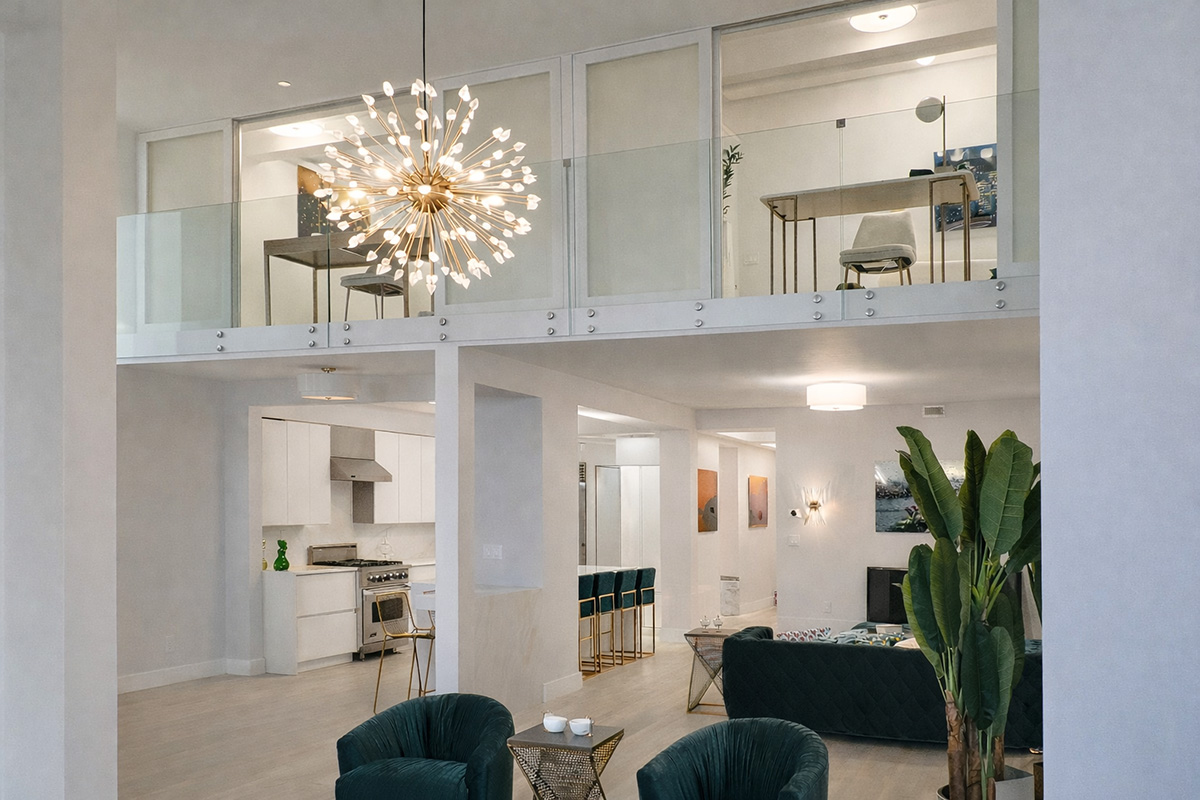
Loft with Mezzanine in Tribeca
Joint Living-Work Quarters for Artists (JLWQA)
Some loft apartments in New York are legally designated as Joint Living-Work Quarters for Artists (JLWQA). This classification emerged during the legalization of former industrial buildings that had been informally occupied by artists in neighborhoods such as SoHo.
Under this designation, the unit is approved for both residential and studio use, but occupancy is generally restricted to individuals who are certified artists under New York City guidelines. In many cases, at least one occupant must meet the city’s criteria for professional artistic practice.
We have written a separate article that explains Joint Living-Work Quarters for Artists in greater detail for those who would like a deeper understanding of the topic.
Real Lofts vs. Buildings Designed to Resemble Lofts
Not all apartments marketed as “lofts” are true industrial conversions. In New York City, an authentic loft refers to a residence created from a building originally constructed for commercial, warehouse, or manufacturing use.
In contrast, some newer residential developments are intentionally designed to evoke loft aesthetics. These buildings may incorporate features such as high ceilings, large windows, or exposed structural elements, but they were built from the outset as residential structures.
While these newer buildings can offer open layouts and industrial-inspired design, they differ fundamentally from historic loft conversions in terms of structural systems, floor plate proportions, and building envelope construction. Authentic lofts often retain original masonry walls, cast iron or steel columns, and industrial-scale windows that reflect their manufacturing origins.
Understanding this distinction is important for buyers and owners, particularly when evaluating building regulations, structural constraints, and renovation potential.
NYC Lofts
This article provides a general overview of loft apartments in New York City. Loft buildings are governed by a complex framework of regulations, including the 1982 Loft Law, oversight by the NYC Loft Board, the Multiple Dwelling Law, the NYC Zoning Resolution, and the NYC Building Code. Understanding how these regulations intersect with historic construction is essential when purchasing or renovating a loft property.
Loft renovations often involve structural coordination, code compliance, and in some cases landmark review. Each building presents unique conditions based on its age, construction type, and Certificate of Occupancy.
If you are considering purchasing or renovating a loft in New York City, our office can assist with feasibility analysis, design, and full architectural services—from initial concept through Department of Buildings approvals and construction administration.
Request a Consultation with Fontan Architecture - 212 321 0194
Jorge Fontan, AIA, is an architect and founder of Fontan Architecture based in New York City. The firm focuses on residential design, including new homes and extensive renovations for discerning clients. Through collaborative dialogue that draws on the individuality of each client, projects develop as distinct architectural responses guided by thoughtful planning, precise detailing, and a commitment to creating enduring value.
Jorge Fontan, AIA, is an architect and founder of Fontan Architecture based in New York City. The firm focuses on residential design, including new homes and extensive renovations for discerning clients. Through collaborative dialogue that draws on the individuality of each client, projects develop as distinct architectural responses guided by thoughtful planning, precise detailing, and a commitment to creating enduring value.